How the Bayraktar TB2 Became a Global Export Product: A Chronology of Six Thresholds

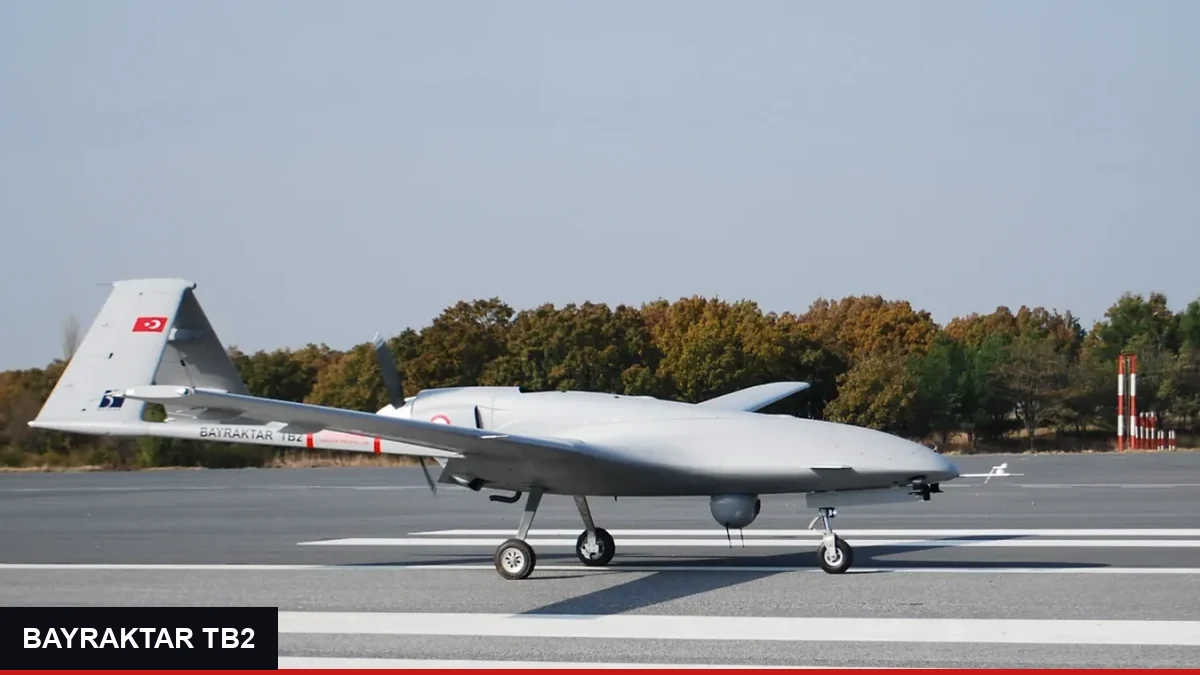
In 2018, Türkiye’s tactical-class armed drone was sold to two countries. Seven years later, at the end of 2025, the manufacturer had signed contracts for the same platform with 36. This file asks what actually changed in those seven years — and finds that the answer has less to do with the aircraft than is usually assumed.
Earlier files in this series compared how quickly programmes turned into products: Europe restarting its MALE effort three times, ANKA and TAPAS diverging within the same class, Russia failing to reach serial production despite a deep aviation base and the two different export models run by Türkiye and China. This file goes one step further: once the product exists, what makes it exportable?
The argument
No single feature explains why a defence system becomes an export product. In the TB2’s case there are six thresholds, and the order matters: a home operator, weaponisation and operational use, a first export contract, an allied customer, supply-chain independence, and production abroad. Many programmes of the same era never cleared one of these — usually the first. A programme that fails a threshold does not become an export product, however good it is technically.
What was counted, and what was not
The commonest error in export reporting is to add four different things to the same total. Signing a contract, completing a delivery, holding talks and operating a system are distinct states. A country may sign and take delivery years later; another may never move past talks. This file keeps the manufacturer’s stated contracted-country count separate from programmes with completed deliveries.
Class boundaries are also preserved. Tactical class and MALE class are not the same thing. The TB2 sits in the tactical class; ANKA, AKSUNGUR and AKINCI belong to other classes and are not placed on the same line as the TB2 in this file’s comparison tables. Loitering munitions are a separate category altogether.
Excluded from this file
- Operator names and order quantities with no official record behind them.
- Unit-cost claims never published by the manufacturer or the buying state.
- “Talks under way” reports counted as operators.
- Platforms of different classes compared in a single table.
| # | Threshold | Cleared by the TB2 | Evidence |
|---|---|---|---|
| 1 | Entering the home force’s inventory | 2014 | Serial deliveries and Turkish Armed Forces service |
| 2 | Weaponisation and operational use | 2015 | First munition release |
| 3 | First export contract | 2018 | Qatar and Ukraine contracts |
| 4 | An allied customer | 2021–2024 | Poland: announced 2021, deliveries completed 2024 |
| 5 | Supply-chain independence | 2020–2021 | Electro-optical subsystem moved onshore |
| 6 | Production abroad | 2024 onwards | Plant under construction in Ukraine |
The programme timeline
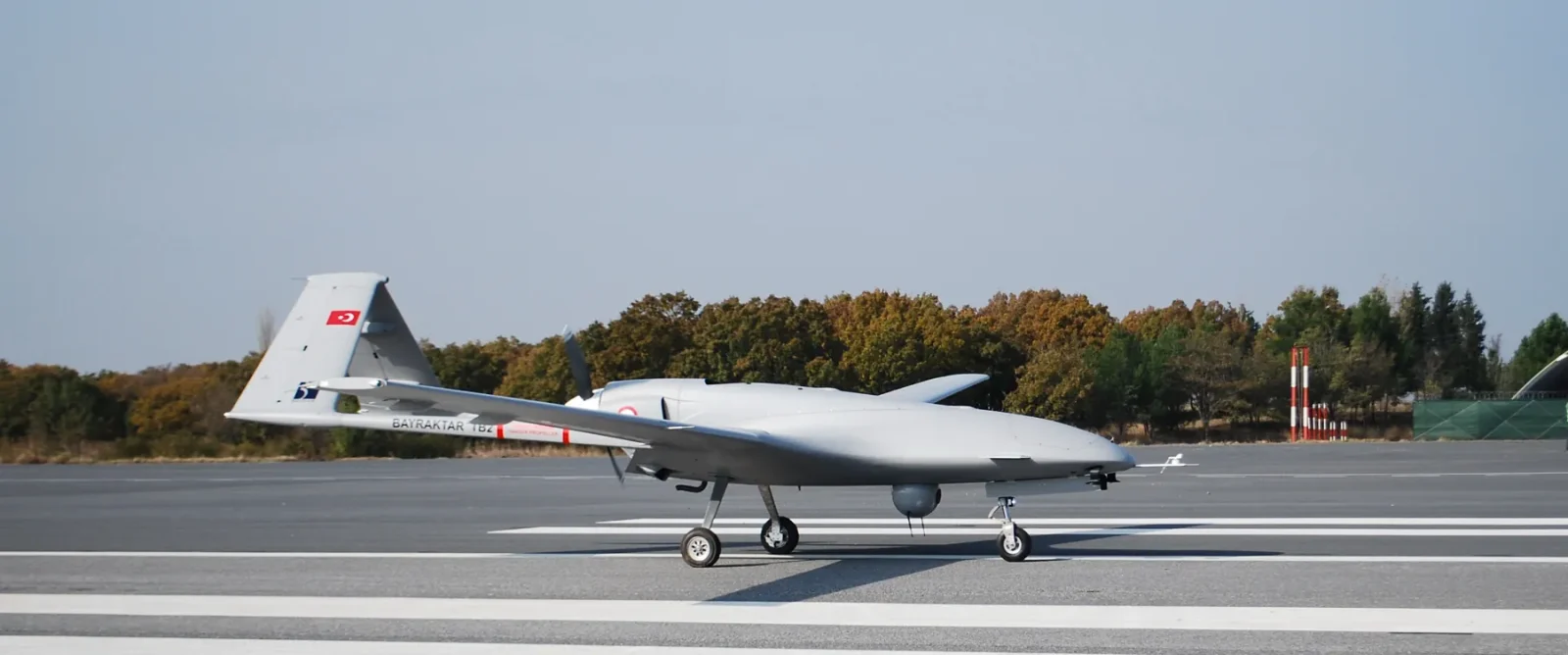
Baykar states that its unmanned aircraft programme began in 2003. Tactical-class development is recorded from 2007 and the demonstration of fully automatic flight from 2009. The distance is worth noting: fifteen years separate the start of the programme from the first export. Export success in this sector is not a sudden jump but a cumulative outcome.
Threshold 1: entering your own force’s inventory (2014)
This is the most underrated threshold in export debates. A defence system that the manufacturer’s own armed forces do not operate struggles to find buyers, for a simple reason: the purchasing state wants to see that the maintenance chain, the spares flow and the training infrastructure genuinely exist. The only proof of that is a working customer relationship at home.
The TB2 cleared it in 2014, when serial deliveries began and the system entered Turkish Armed Forces service. That date is the zero point of the export calendar. The third file in this series shows the inverse case: because TAPAS never passed its qualitative requirement threshold, it never reached a home operator — and the export question therefore never opened.
| Platform | Country | Home service | First export | Gap |
|---|---|---|---|---|
| Bayraktar TB2 | Türkiye | 2014 | 2018 | 4 years |
| Wing Loong I | China | early 2010s | from 2011 | short |
| Orion | Russia | delivered 2020 | none | — |
| TAPAS BH-201 | India | never reached | none | — |
| Eurodrone | EU (4 states) | never reached | none | — |
Wing Loong and Orion are covered in detail in the fifth and fourth files. Chinese dates are approximate because there is no regular manufacturer-level disclosure.
Threshold 2: being armed, and being used (2015)
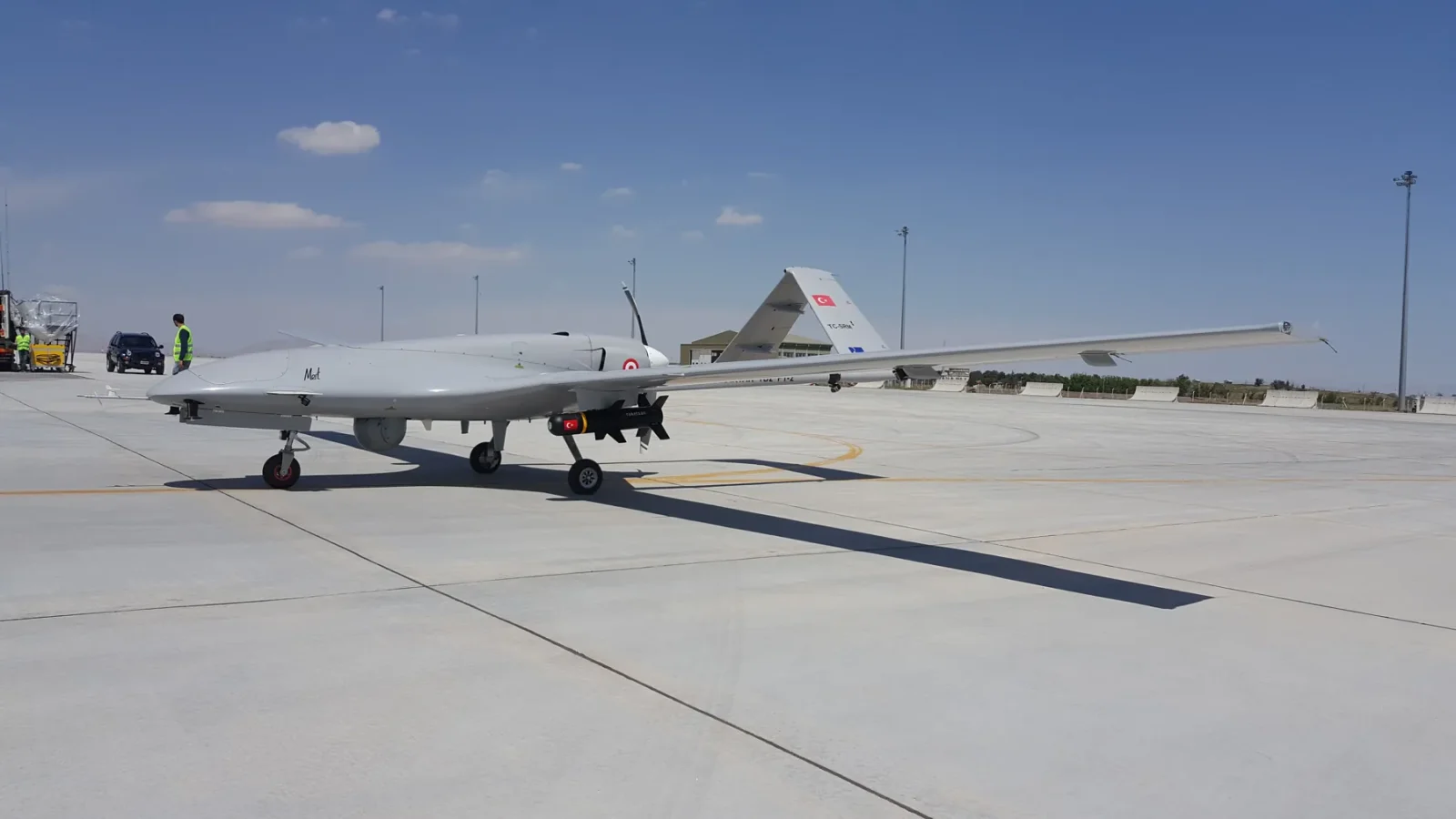
A reconnaissance drone and an armed drone are two different products in a buyer’s eyes. The TB2 made the transition the year after it entered service, releasing a munition for the first time in 2015. That move took the system out of the reconnaissance market and into a much narrower, much better-funded one.
Operational use generates a different kind of evidence again. What decides a purchase is not the catalogue figure but what the system does in the field — a point the TB2’s actual combat record makes in more detail. Endurance data from this period was also placed on the record: on 16 July 2019 the manufacturer announced an uninterrupted flight of 27 hours and 3 minutes and an altitude figure of 27,030 feet. These are measured and published values, of the kind a buyer’s technical delegation can verify.
Threshold 3: the first export contract (2018)
The contracts signed with Qatar and Ukraine in 2018 were the programme’s first export threshold. Who the first customer is matters to everyone who follows: the first buyer demonstrates that the system can be exported at all and that the manufacturer can run an export process end to end.
Türkiye’s regime position mattered here too. As set out in the fifth file, Türkiye is a member of the Missile Technology Control Regime (MTCR). Because the TB2 is a tactical-class system and falls below the regime’s Category I threshold, its export was not subject to the strong presumption of denial applied to MALE-class systems. It reads as a technicality; it is in fact a structural determinant of export volume.
In the Eurodrone row, 2027 is the planned first-flight year, not an achieved one.
The export consequence of a class choice
Placing the TB2 in the tactical class shaped the export table more than any technical decision. It has three practical consequences. The first is regulatory: the MTCR’s Category I threshold covers systems able to carry a 500 kg payload to 300 km, and commits member states to a strong presumption of denial on transfer. Tactical-class systems fall below it, so an export application is handled as routine business rather than as an exception.
The second is operational. Short runway requirements and comparatively low operating costs mean the system can be absorbed by air forces with limited budgets. A buyer unable to build the infrastructure a MALE system demands can bring a tactical-class system to operational status within the same year. The third is scale: because the same budget buys more airframes, fleet size becomes a sharper advantage than the capability edge of a single aircraft.
Taken together, the class choice is the export strategy. Europe’s MALE programmes show the reverse: when a high-capability target pushes both cost and schedule past what the buyer can carry, the programme is restructured before a product ever appears.
A note on class comparison
The export advantage of the tactical class is not a claim of technical superiority. MALE and heavier classes operate in a higher band for payload, endurance and sensor capacity. The tables here place different classes side by side on calendar and export mechanics; they should not be read as a capability ranking.
Interlude: what is the buyer actually looking at?
What makes these thresholds meaningful is the decision logic on the buying side. The items an air force weighs when acquiring an armed drone go well beyond the platform’s catalogue figures. The table below sets out the criteria that recur in public procurement documents and buyer-state statements, against the threshold each one maps to.
| The buyer’s question | Why it is asked | Threshold |
|---|---|---|
| Does the manufacturer’s own force operate it? | Proof that maintenance, spares and training infrastructure genuinely exist | 1 |
| What has the system done in the field? | Measured performance and an operational record, not catalogue values | 2 |
| Have other countries bought it? | Shows export processes and end-user procedures work | 3 |
| Has a country under comparable rules bought it? | Certification and tender compliance have been tested | 4 |
| Does the spares flow depend on a third country? | Whether the supply chain is exposed to someone else’s politics | 5 |
| Can part of the production come to us? | Industrial participation and employment expectations | 6 |
The weighting shifts from buyer to buyer. For a customer with limited access to Western systems, the first two thresholds may be enough; for a NATO member, the fourth and fifth become decisive. The Sahel comparison between Turkish and Chinese systems and the African TB2 operator picture show the same region weighting thresholds differently.
Disclosed contract values
Unit cost is the single most speculated-about figure in defence exports. Only total contract values actually disclosed by the manufacturer or the buying state appear below, and no unit price is derived from them, because the packages differ in scope.
| Buyer | Disclosed value | Scope | Source |
|---|---|---|---|
| Poland | $270 million | 24 air vehicles, 12 ground control stations, munitions, simulators, training, logistics | Ministry of National Defence announcement, 22 May 2021 |
| Kuwait | about $370 million | Scope not itemised by the manufacturer | Manufacturer statement, January 2023 |
Threshold 4: an allied customer (2021–2024)
A NATO or EU member on the export list means something different from the other lines. Procurement in these states runs through public tender law, certification requirements and parliamentary scrutiny. When such a buyer selects the system, it has been accepted not only in the field but on paper.
Poland opened that threshold. Defence Minister Mariusz Błaszczak announced the TB2 purchase on 22 May 2021 under the Gryf unmanned aircraft programme. The contract covered four systems, each of six air vehicles and three ground control stations — 24 air vehicles and 12 ground control stations. Roketsan MAM-L and MAM-C munitions, simulators, spares, training and logistic support were included; the announced value was $270 million. The first six were handed over in October 2022 at Poland’s 12th Unmanned Aerial Vehicle Base, and deliveries were completed on 16 May 2024. The background to Poland’s decision is covered separately.
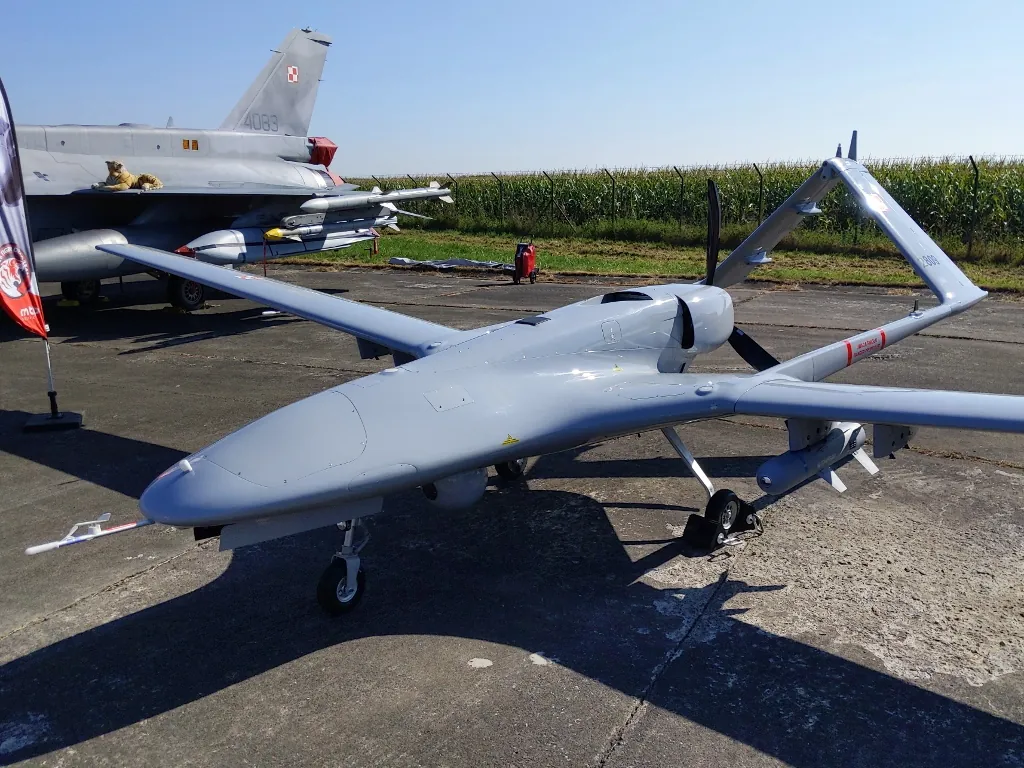
Baykar stated in November 2024 that TB2 operators include six NATO members and four EU members. That line marks the threshold: the customer profile is no longer made up only of states with restricted access to Western systems.
Threshold 5: a supply chain that survives someone else’s politics (2020–2021)
The decisive threshold in this file begins not with a success but with a crisis. In October 2020 Canada suspended the export permits issued for the L3Harris Wescam MX-15D electro-optical reconnaissance and targeting system used on the TB2. In April 2021 the Canadian government cancelled the remaining military export permits for Türkiye. The engine was foreign-sourced as well: the Rotax 912, built in Austria by Canada-headquartered Bombardier Recreational Products.
Why this is a threshold
If a critical subsystem arrives under another state’s export licence, the system is not an export product but a conditional assembly line. The buying state knows the spares flow can be cut by a third country’s political decision. That risk weighs more heavily on a purchase decision than either price or performance.
The answer was to move the critical subsystem onshore. Aselsan’s Common Aperture Targeting System, CATS, was integrated onto the TB2. Baykar puts local industry participation in the platform at 93 per cent. Depth in the subcontractor base — visible elsewhere in the Turkish aerospace product range — is exactly what pays off in these situations: if a company capable of building the subsystem already exists, the crisis shortens from years to months.
| Subsystem | Previous source | Subsequent state | Trigger |
|---|---|---|---|
| Electro-optical reconnaissance and targeting | L3Harris Wescam MX-15D (Canada) | Aselsan CATS family (Türkiye) | Permits suspended October 2020, cancelled April 2021 |
| Engine | Rotax 912 (built in Austria) | Domestic engine work continuing | Supply risk in the same period |
| Munitions | Roketsan MAM-L / MAM-C (Türkiye) | Unchanged — domestic from the outset | — |
No date or model is given in the engine row: no official, verifiable serial-production announcement existed on the subject when this file was prepared. An unverified item is not written into a table as a claim.
Threshold 6: production abroad (2024 onwards)
The last threshold is the point at which a sales relationship becomes a partnership. Baykar has announced construction of a facility in Ukraine to build Bayraktar aircraft; the plant near Kyiv is planned to employ around 500 people. For the buying state, production abroad means two things: part of the technology and the employment arrives in country, and the supply chain is partly freed from the risk of distance.
For the manufacturer it changes the character of the export model. The fifth file examined the co-production dimension of the Chinese model; there is a parallel on the Turkish side, and licensed production of the Karayel-SU abroad is a further example. The difference is that Türkiye does this as an MTCR member and in parallel with NATO members.
What the six thresholds add up to
Clearing the thresholds fed through into export figures with a lag, but steadily. The table below is compiled from the manufacturer’s own published values; third-party estimates are not included.
| Year | Export revenue | Share of revenue | Contracted countries (TB2) |
|---|---|---|---|
| 2021 | $664 million | — | — |
| 2022 | $1.18 billion | — | — |
| 2023 | $1.8 billion | — | 28 (January 2023) |
| 2024 | $1.8 billion | 90% | 34 |
| 2025 | $2.2 billion | 88% | 36 |
Total 2025 revenue was $2.5 billion, with exports at 88 per cent. The company states that 83 per cent of cumulative revenue since the programme began in 2003 has come from exports. AKINCI stood at 16 contracted countries at the end of 2025; together the two platforms reach 37 different countries. Those ratios sit well above sector norms — most manufacturers earn the bulk of their revenue from their own government.
There is a verified reference point on scale as well: Baykar announced on 10 December 2024 that the TB2 fleet had passed one million flight hours, roughly 150 million kilometres. The figure is cumulative across all operators — and it is the most concrete plank of the export case, because a buyer looks at the hours accumulated by those who came before.
Civil use has become part of the export pitch too. According to the manufacturer, 4,091 forest fires were detected using the TB2 between 2020 and 2024. A non-military mission set makes the system a politically less sensitive line item.
After the TB2: are the thresholds rebuilt each time?
Clearing the six thresholds once does not mean the process restarts from zero for the next product. The manufacturer can hand the same customer network, training infrastructure and logistic chain to a new platform. Bayraktar AKINCI is the clearest case: contracts for the class above the TB2 reached 16 countries by the end of 2025. The difference in pace is explained by the channel the first product opened — the AKINCI and MQ-9B comparison sets out what that class involves.
Each class still imposes its own thresholds, though. For an unmanned combat aircraft such as KIZILELMA, the first threshold — entry into the home force’s inventory — stands at the front again, and the export conversation does not open before it. Cases such as Saudi co-production arrangements show that an open channel makes a purchase easier without removing the thresholds.
| Platform | Class | Contracted countries | Note |
|---|---|---|---|
| Bayraktar TB2 | Tactical | 36 | First export 2018 |
| Bayraktar AKINCI | Heavy | 16 | Stood at 10 in November 2024 |
The two operator lists overlap substantially, so the total is not the arithmetic sum: the manufacturer gives 37 different countries for both platforms together.
EM-PDI assessment
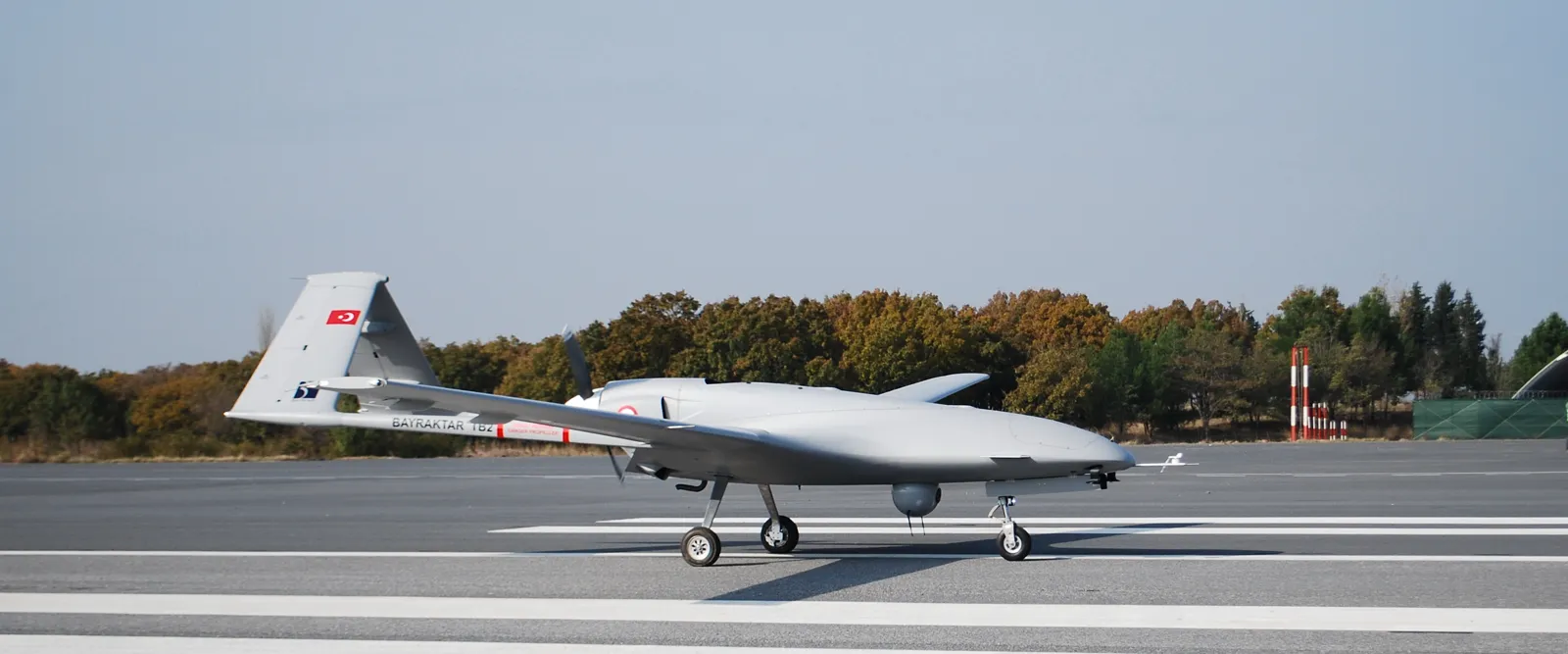
The Envanter Medya Programme Development Index (EM-PDI) is used across this series to score programmes against common criteria. It is an editorial assessment, not an official ranking; the weightings are set out in the first file. The TB2’s high score does not come from technical superiority but from having cleared all six thresholds.
The limits of this comparison
This file is an export chronology, not a capability ranking. The limits are worth stating plainly:
- Class. The TB2 is tactical class. The MQ-9 family, Heron TP and Eurodrone work in a higher band for payload, endurance and sensor capacity.
- Export history. Israeli manufacturers began exporting unmanned aircraft in the 1990s; that record is longer than the TB2’s entire life.
- Scale. China’s per-customer delivery volumes and production capacity are a separate order of magnitude, as the fifth file and the TB2 and Wing Loong II comparison show.
- Contract is not delivery. The country counts here are contract counts. Completed programmes are fewer, and each must be verified separately.
Conclusion: an export product is a sequence, not an event
The TB2’s export record is often pinned on a single operation or a single year. The chronology does not support that. The programme began in 2003, reached a home operator in 2014, was weaponised in 2015, exported in 2018, found an allied customer in 2021, met a supply-chain shock with a domestic subsystem in 2020–2021, and then moved towards production abroad. Each threshold requires the one before it.
That sequence is a yardstick for the other programmes of the same era. Europe’s MALE programmes stalled at the first threshold, and so did TAPAS. The bottom step turns out to be the one no later step can compensate for: nobody buys a system its own maker’s armed forces do not use.
Next in the series
File 7 — AKINCI and the heavy-class strike drone programmes. Bayraktar AKINCI walked the road the TB2 opened, one class up, and cleared the same six thresholds far faster. How was that possible, and why does competition work differently in the heavy class? The full series sits on the Türkiye and World Defence Programmes page.
Frequently asked questions
When was the Bayraktar TB2 first exported?
The first export contracts were signed in 2018. The system had entered Turkish Armed Forces service in 2014, so the manufacturer accumulated four years of operational data with a home customer before selling abroad.
How many countries have signed Bayraktar TB2 contracts?
According to figures released by Baykar, as of the end of 2025 the TB2 had been contracted by 36 countries and the AKINCI by 16, for a combined total of 37 different countries. A signed contract is not the same as a completed delivery, and the two should be tracked separately.
How did Canada’s 2020 export licence decision affect the TB2?
In October 2020 Canada suspended export permits for the L3Harris Wescam MX-15D electro-optical targeting system used on the TB2, and in April 2021 the remaining permits were cancelled. Aselsan’s CATS family was integrated in its place. In the short term the decision created a supply problem; in the medium term it accelerated the move of a critical subsystem onshore.
Which NATO and EU members operate the Bayraktar TB2?
Baykar stated in November 2024 that TB2 operators include six NATO members and four EU members. Poland was the first EU member to field the system: under a contract announced on 22 May 2021, all 24 air vehicles were delivered by 16 May 2024.
What did Poland’s Bayraktar TB2 contract cover?
Four systems were procured under the Gryf programme, each comprising six air vehicles and three ground control stations — 24 air vehicles and 12 ground control stations in total. The package also included Roketsan MAM-L and MAM-C munitions, simulators, spares, training and logistic support. The announced contract value was $270 million.
How many flight hours has the TB2 fleet logged?
Baykar announced on 10 December 2024 that the TB2 fleet had passed one million flight hours, equivalent to roughly 150 million kilometres. The figure is cumulative across all operators, not a single country’s total.
How has Baykar’s export revenue developed?
By the company’s own figures: $664 million in 2021, $1.18 billion in 2022, $1.8 billion in each of 2023 and 2024, and $2.2 billion in 2025. Total 2025 revenue was $2.5 billion, with exports accounting for 88 per cent. Since 2003, 83 per cent of cumulative revenue has come from exports.