The World’s Fastest Fighter Jets (2026): Only One Passes Mach 2.8

Ranking covers aircraft active and series-produced as of 2026.
The question “what is the world’s fastest fighter jet?” has to be narrowed three times before it can be answered: active or retired? series-produced or prototype? peak dash or sustained speed? Skip those filters and you end up ranking a rocket-powered research vehicle as a combat aircraft. This file sets the metric first, then ranks across three separate tables.
How many km/h is Mach? There is no single answer
Mach is not a fixed speed but a ratio: aircraft speed divided by the local speed of sound. That speed depends on temperature — roughly 1,225 km/h at sea level (15°C) and about 1,062 km/h at 11,000 metres (−56.5°C). The same Mach number therefore means different km/h at different altitudes, and fighters reach their maximum Mach figures high up. All conversions in this file use 11,000 metres:
| Aircraft | Mach | km/h (11,000 m) | km/h (sea level) |
|---|---|---|---|
| MiG-31 | 2.83 | 3.005 | 3.467 |
| F-22 Raptor | 2.25 | 2.390 | 2.756 |
| Su-57 | 2.00 | 2.124 | 2.450 |
| F-35 Lightning II | 1.60 | 1.699 | 1.960 |
First table: active, series-produced fighters
| # | Aircraft | Country | Mach | km/h | Status | Note |
|---|---|---|---|---|---|---|
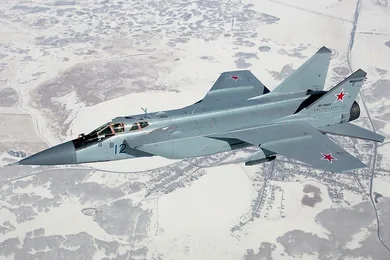
| 1 | MiG-31 | Russia | Mach 2.83 | 3.005 | Active | Heavy interceptor; built for speed, not for turning |
| 2 | F-15 Eagle / F-15EX | United States | Mach 2.50 | 2.655 | Active / in production | The F-15EX reopened the line in the 2020s |
| 3 | Su-27 / Su-30 / Su-35 | Russia | Mach 2.25 | 2.390 | Active / in production | Family shares the same speed envelope |
| 4 | MiG-29 / MiG-35 | Russia | Mach 2.25 | 2.390 | Active | MiG-35 delivered in small numbers |
| 5 | F-22 Raptor | United States | Mach 2.25 | 2.390 | Active | Production closed in 2011 |
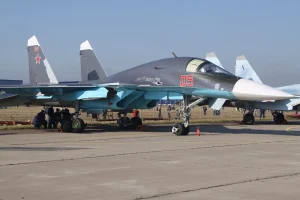
| 6 | Su-57 | Russia | Mach 2.00 | 2.124 | Active / limited production | Delivered in small numbers |
| 7 | Eurofighter Typhoon | Multinational | Mach 2.00 | 2.124 | Active / in production | Tranche 4 in production |
| 8 | J-20 | China | Mach 2.00 | 2.124 | Active | Maximum speed is a claimed figure; no independent verification |
| 9 | Rafale | France | Mach 1.80 | 1.912 | Active / in production | Multirole capability prioritised over top speed |
| 10 | F-35 Lightning II | United States | Mach 1.60 | 1.699 | Active / in production | Low observability took precedence over the speed envelope |
Why is the fastest aircraft an interceptor?
The MiG-31 is not an air superiority fighter but an interceptor. Its job is not to win a turning fight; it is to cross an enormous volume of airspace as quickly as possible and release a long-range missile. That mission statement drove every design decision: a heavy steel-and-titanium structure, two large afterburning turbofans, and manoeuvrability traded away. The result is a speed record still unbroken in 2026.
The table also shows the trend running the other way. The F-35 sits at the bottom at Mach 1.60 — clearly slower than an F-15 designed four decades earlier. That is not regression but a change of priorities: shaping for low radar cross-section and carrying weapons internally narrows the speed envelope. In modern air combat, striking without being seen was judged more decisive than being fast.
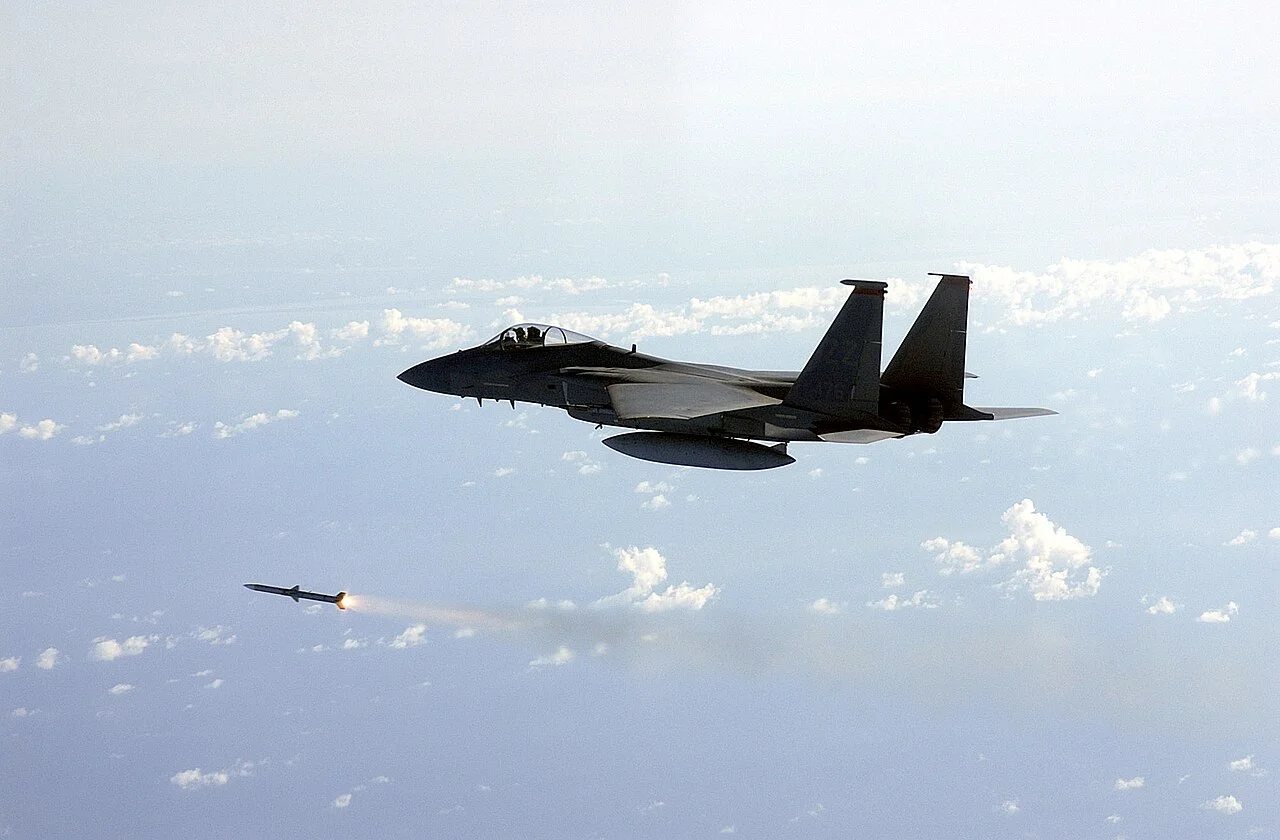
Second table: supercruise (sustained speed without afterburner)
For most aircraft, maximum speed is a figure sustainable for only a few minutes; afterburner consumes fuel in minutes. The real operational value lies in supercruise — supersonic flight without afterburner. It preserves range and keeps the infrared signature low. On this axis the table opens with a completely different leader:
| Aircraft | Mach | km/h | Note |
|---|---|---|---|
| F-22 Raptor | Mach 1.80 | 1.912 | First series-produced aircraft designed for supercruise |
| Eurofighter Typhoon | Mach 1.50 | 1.593 | EJ200 engines developed with this capability in view |
| Rafale | Mach 1.40 | 1.487 | Achievable with M88 engines even carrying external stores |
| Su-57 | Mach 1.30 | 1.381 | Claimed figure; no independent verification |
| Gripen E | Mach 1.10 | 1.168 | Limited capability; condition-dependent |
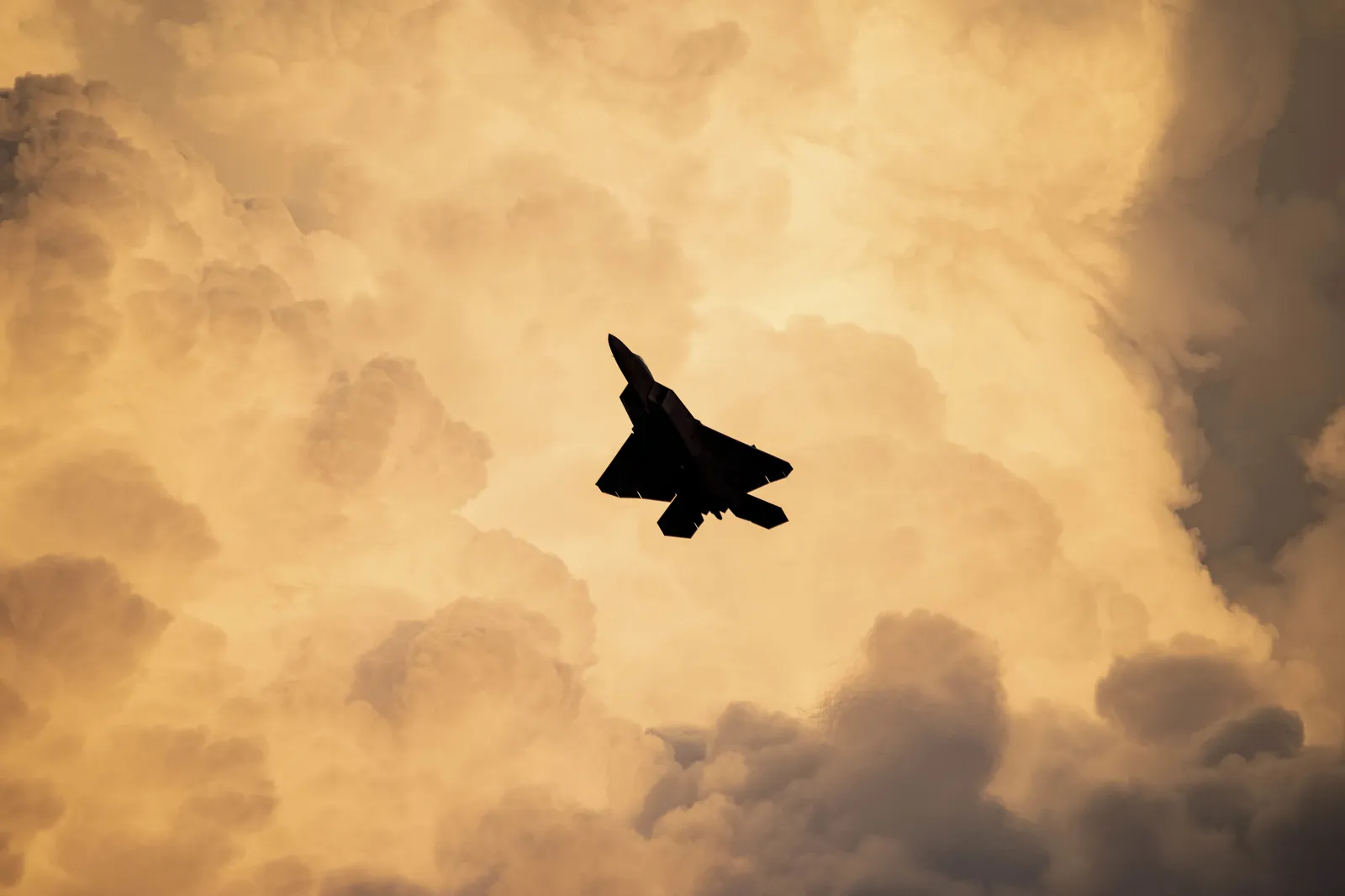
Third table: retired, experimental and disputed records
None of these platforms belongs in the active fighter ranking — either because they are not fighters, or because they are retired, or because their operational status cannot be verified. They remain the best-known names in the history of speed records:
| Platform | Mach | km/h | Category | Status |
|---|---|---|---|---|
| X-15 | Mach 6.70 | 7.115 | Experimental rocket vehicle | Last flight in 1968; not a combat aircraft |
| SR-71 Blackbird | Mach 3.30 | 3.505 | Strategic reconnaissance | Retired in 1998; carried no weapons |
| MiG-25 | Mach 2.83 | 3.005 | Interceptor | Effectively out of inventory; status of any surviving airframes unverifiable |
| F-14 Tomcat | Mach 2.34 | 2.485 | Naval interceptor | Retired by the US in 2006; the operational status of the remaining fleet is disputed |
Where Türkiye sits
The fastest combat aircraft in the Turkish Air Force inventory today is its F-16 fleet, in the Mach 2.00 class. The Eurofighter Typhoon Tranche 4, arriving from 2030, sits in the same class — placing Türkiye in the middle band of this table on the speed axis.
The change comes with KAAN. According to technical data published by Turkish Aerospace, KAAN’s maximum speed is specified as Mach 1.80 at 40,000 feet, with a service ceiling of 16,764 metres and load limits of +9/−3.5 g. That places it in the same band as the Rafale and above the F-35 — and its design priorities follow the same contemporary logic: low observability and sensor fusion ahead of peak speed.
Four things that set a fighter’s speed
Thrust-to-weight ratio
Total engine thrust divided by aircraft weight. The MiG-31’s two large D-30F6 turbofans carry a heavy airframe into the Mach 2.8 band.
Intake design
Air entering the engine must be slowed to subsonic speed. Variable-geometry intakes make that possible at high Mach numbers; fixed intakes narrow the envelope.
Thermal limits
Above Mach 2.5, friction heating pushes aluminium past its limits. That is why the MiG-25 and MiG-31 rely largely on steel and titanium — and why they are heavy.
Shaping and weapons carriage
Low-observable shaping and internal weapons bays narrow the speed envelope aerodynamically. In the current generation, speed has been traded away deliberately.
Frequently asked questions
What is the world’s fastest fighter jet?
Isn’t the SR-71 Blackbird faster?
How many km/h is Mach 2?
Why is the F-35 so slow?
What is KAAN’s maximum speed?
What does supercruise mean?
Sources
- US Air Force official aircraft fact sheets (F-22, F-15, F-35)
- Manufacturer technical publications — Lockheed Martin, Boeing, Dassault, Eurofighter GmbH, Saab
- Turkish Aerospace official technical specifications — KAAN
- Russian Aerospace Forces and manufacturer (MiG, Sukhoi) published technical data
- International Standard Atmosphere (ISA) speed-of-sound tables — for Mach/km-h conversions
- NASA flight research archives — X-15 programme data