The World’s Most Expensive Military Helicopters (2026): One Apache, Five Buyers, Five Prices


Every row is labelled with the cost category it rests on.
Helicopter prices are among the most misread numbers in defence. One report tells you an Apache costs 125 million dollars; another puts the same aircraft at 35 million. Both are correct, because they are measuring different things. This file establishes that distinction first, then opens up exactly what sits inside a foreign military sales package.
Methodology: which number is a helicopter’s price?
Open sources present four distinct kinds of figure for a military helicopter. The gap between them is not measured in percentages but in multiples:
| Type of figure | What it covers | How reliable is it? |
|---|---|---|
| Budget unit cost | What the producing country allocates per aircraft in its own budget | The cleanest basis for comparison; published and verifiable |
| FMS package ÷ units | Helicopters + munitions + simulators + training + spares + logistics support | Published, but it is not the price of the helicopter; often three times the budget unit |
| Export unit band | An approximate per-unit figure stated by manufacturer or buyer | Scope is usually unclear; should be treated as a band |
| Programme unit cost | Total programme including R&D, divided by aircraft count | Inflates artificially if the programme was cut |
Table one: the highest cost per helicopter
The list below ranks military helicopters currently in production by unit cost. The cost-category column appears on every row; without it the list will be misread.
| # | Helicopter | Role | Million USD | Cost category | Note |
|---|---|---|---|---|---|
| 1 | CH-53K King Stallion | Heavy lift | 131,0 | Budget unit cost | Close to 16 tonnes of external load; without a peer in the heavy lift class |
| 2 | CV-22 Osprey | Tiltrotor | 90,0 | Budget unit cost | Tiltrotor architecture; a different class of platform from a conventional helicopter |
| 3 | AW101 Merlin | Multirole | 55,0 | Export unit band | Multirole; anti-submarine and search-and-rescue variants are priced differently |
| 4 | NH90 | Multirole | 50,0 | Export unit band | European joint programme; configuration and price vary by country |
| 5 | Tiger HAD | Attack | 45,0 | Export unit band | Franco-German attack helicopter; programme numbers stayed low |
| 6 | T129 ATAK | Attack | 44,8 | Package ÷ units | The Philippine contract covers six aircraft for 269 million dollars; this is a package figure |
| 7 | MH-60R Seahawk | Anti-submarine | 43,0 | Export unit band | Anti-submarine variant; export packages push the figure markedly higher |
| 8 | CH-47F Chinook Block II | Heavy lift | 38,0 | Budget unit cost | Block II; the most widely operated heavy lift platform |
| 9 | AH-64E Apache Guardian | Attack | 35,0 | Budget unit cost | US budget unit cost; export packages can treble it |
| 10 | UH-60M Black Hawk | Utility | 21,0 | Budget unit cost | The lowest unit cost on the list; high production volume drags it down |
One helicopter, five buyers, five prices
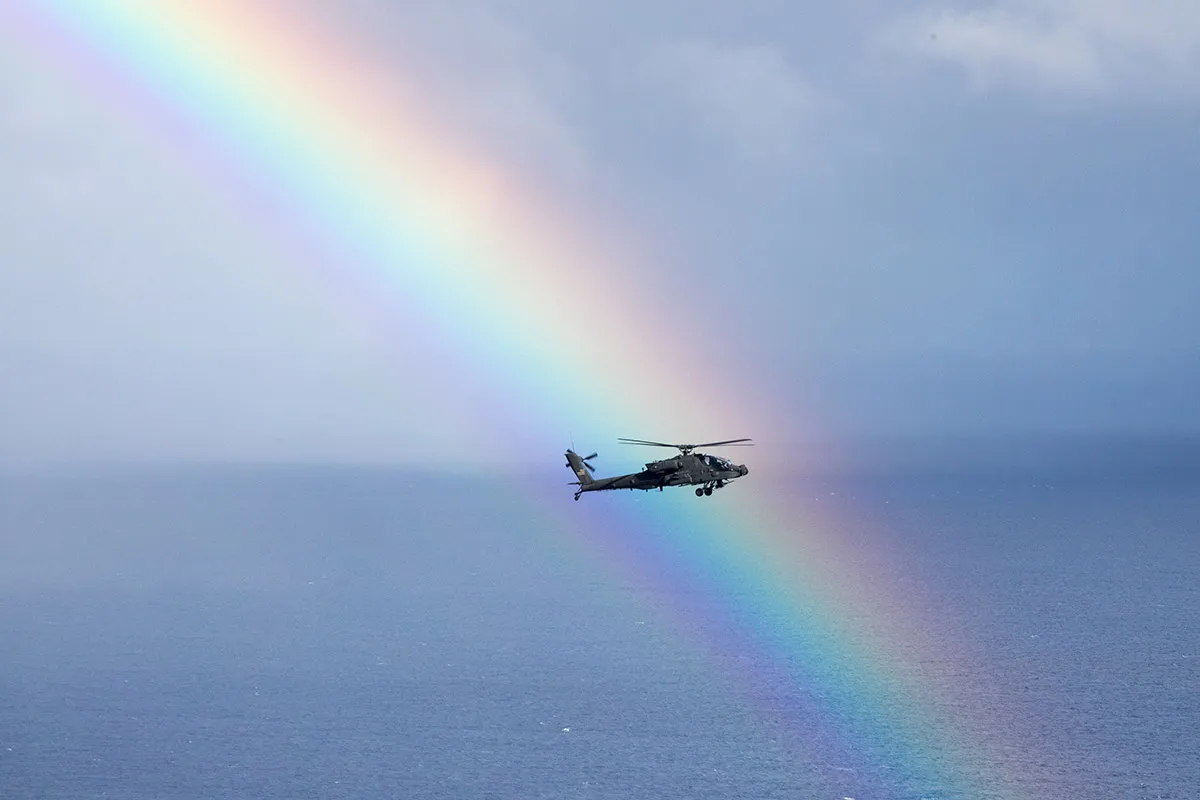
The AH-64E Apache Guardian is the ideal case for seeing this gap: the same aircraft off the same production line, sold to different countries at very different figures. The table below places the American budget number alongside the per-helicopter figure from four export agreements:
| Buyer | Cost category | Units | Agreement (bn USD) | Million USD / aircraft | Note |
|---|---|---|---|---|---|
| USA (own budget) | Budget unit cost | — | — | 35,0 | What its own budget allocates per aircraft; munitions and support sit in separate lines |
| Poland | FMS package ÷ units | 96 | 10,0 | 104,0 | Includes munitions, simulators, training and multi-year logistics support |
| Australia | FMS package ÷ units | 29 | 3,5 | 120,0 | The buy replacing the Tiger fleet; infrastructure and training included |
| Morocco | FMS package ÷ units | 36 | 4,2 | 118,0 | A first-time Apache operator; the entire support base sits inside the package |
| Qatar | FMS package ÷ units | 24 | 3,0 | 125,0 | Small quantity, high support ratio; the highest figure per helicopter |
Why is the gap so wide? Because a country standing up its first Apache fleet is not buying only helicopters. The same agreement brings Hellfire and JAGM missiles, Longbow fire-control radars, spare engines, flight simulators, pilot and technician training, ground support equipment and, usually, five to ten years of logistics support. None of that is the price of the helicopter — and without it the helicopter does not fly.
How many times the helicopter is the package?
The gap reduces neatly to a single number. The chart below shows how many times the US budget unit cost each export agreement works out to, per helicopter:
| Item inside the package | What it is for | Part of the helicopter’s price? |
|---|---|---|
| The helicopter itself | The delivered price of the platform | Yes — this is the budget unit cost |
| Munitions | Hellfire, JAGM, rockets and gun ammunition | No — a separate line |
| Fire-control radar | The Longbow radar; not fitted to every aircraft | No — optional equipment |
| Simulators and training | The base for producing pilots and technicians | No — a one-off setup |
| Spare engines and parts | First-year stock to keep the fleet flying | No — an operating line |
| Logistics support | Multi-year maintenance, technical support and documentation | No — a service contract |
The ratio peaks with countries standing up the type for the first time: Qatar’s 24-aircraft agreement runs at 3.6 times the budget unit. The reason is simple — a small fleet spreads the cost of the support base across fewer helicopters. Poland’s 96-aircraft buy brings the ratio down to 3.0; the more aircraft, the smaller the support share each one carries.
Four things that drive helicopter cost
Lift capacity
Heavy lift helicopters need a more powerful engine, a stronger gearbox and a larger rotor for every kilogram they are meant to carry. The CH-53K tops the list not because of its weapons but because it can carry close to 16 tonnes externally.
Mission system and sensors
A large share of a modern attack helicopter’s cost sits not in the airframe but in the electro-optical targeting system, the fire-control radar and the mission computer. Fit a different mission system to the same airframe and the price moves substantially: an Apache and a Longbow-equipped Apache are not the same price.
Production volume
The UH-60 Black Hawk is the cheapest platform on the list thanks to a production history running into thousands of airframes. The Tiger, built in far smaller numbers than planned, kept a high unit cost — the same production continuity rule that governs tanks and warships applies here unchanged.
The maritime environment
Helicopters that operate from ships need corrosion protection against salt water, folding rotor and tail systems and deck landing aids. The naval version of an airframe always costs more than its land counterpart; that is much of the gap between the MH-60R and the UH-60M.
Where does Türkiye sit in this table?
Türkiye appears through the T129 ATAK — but that row is not a budget unit cost. It is the Philippine contract divided by the number of aircraft. A 269 million dollar contract for six helicopters gives 44.8 million per aircraft, and like the Apache packages it too includes training, spares and support.

We have produced no estimates for the T929 or the Gökbey. When official figures are published this page will be updated and the platforms added to the table.
Türkiye’s real position here is measured less by price ranking than by being one of a small number of countries able to build both its own attack and its own utility helicopter. Getting the T929 ATAK-2 into series production would put an indigenous platform in the heavy class as well.
Frequently asked questions
What is the most expensive military helicopter in the world?
Why does the Apache’s price look different everywhere?
Why does an FMS package cost three times the helicopter?
What is the unit price of the T129 ATAK?
Why do countries buying small fleets pay more per aircraft?
Why do transport helicopters cost more than attack helicopters?
Sources
- US Department of Defense budget justification documents (Aircraft Procurement)
- US Defense Security Cooperation Agency (DSCA) — foreign military sale notifications
- US Government Accountability Office (GAO) — annual assessments of defense acquisition programs
- Presidency of Defence Industries (SSB) — statements on the T129, T929 and T625 programmes
- TUSAŞ official product documentation
- Boeing, Sikorsky, Leonardo and Airbus Helicopters official product literature
- International Institute for Strategic Studies (IISS) — The Military Balance