ANTIDOT 2-U/ES 100: The 30-Kilogram Pod That Lets Turkish Drones Hear Enemy Radars

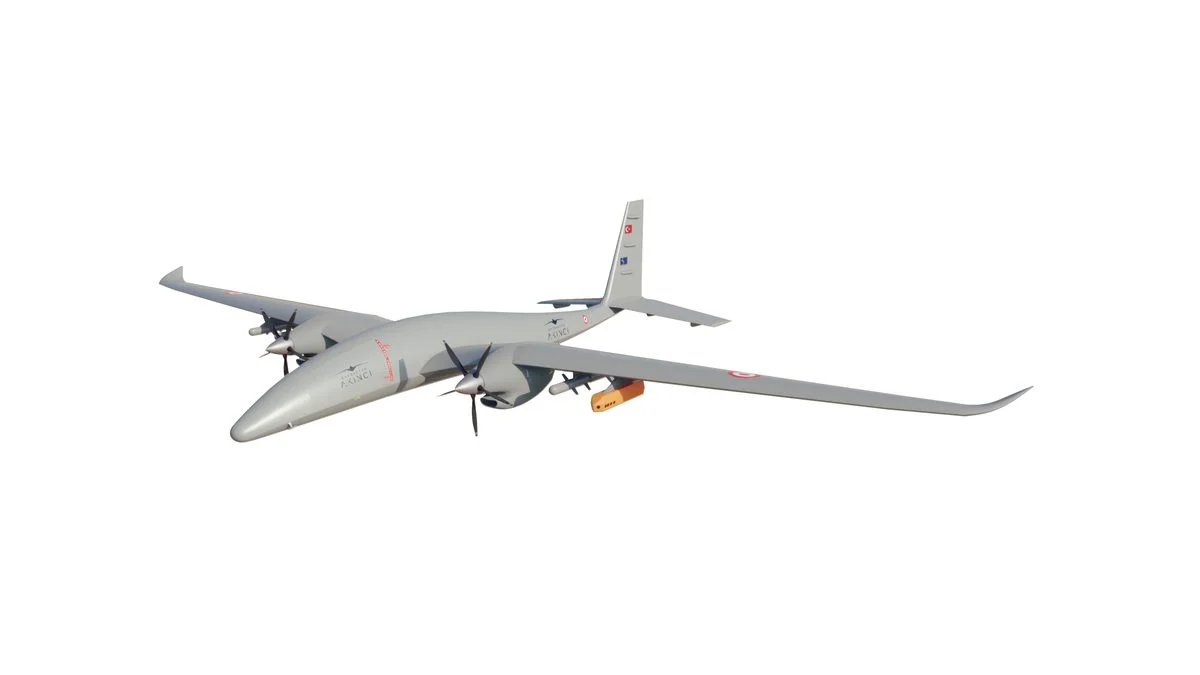
Before the first missile flies in a modern war, the decisive battle has already been fought in silence — over the electromagnetic spectrum. Whoever maps the other side’s air defence radars first knows where the safe corridors run and where the SEAD strikes should fall. ASELSAN’s ANTIDOT 2-U/ES 100 packs that capability into a 30-kilogram pod small enough to hang under a tactical drone.
The ANTIDOT 2-U/ES 100 is an electronic support (ES) system — the intelligence-gathering branch of electronic warfare, concerned with listening rather than jamming. Mounted in an original pod design, it detects the signals of threat air-defence radars, identifies them, records them digitally, and determines both the direction and the location of the emitter with high precision. Every radar that radiates betrays itself; ANTIDOT’s job is to catch the betrayal, catalogue it and pass it on.
How an electronic ear works
The pod’s receiver architecture delivers a wide instantaneous bandwidth with high sensitivity, sweeping broad swathes of frequency and azimuth at once to maximise the probability of detection. Once a signal is caught, the system measures its parameters with high accuracy and records the details — pulse characteristics, frequencies, scan patterns — the fingerprints that distinguish one radar type from another. Threat identification runs automatically or under operator control, turning raw intercepts into a classified emitter library entry.
Key specifications
| Category | Electronic support (ES) system in an original pod design |
| Weight | 30 kg |
| Power consumption | 400 W |
| Mission | Detection, identification, digital recording, direction finding and geolocation of air-defence radars |
| Data transfer | Real time, over the aircraft communication band to the ground control station |
| Platforms | Integrates even on tactical-class UAVs that carry miniature munitions |
Small enough to democratise SIGINT
The engineering achievement here is compression. Capabilities that once demanded dedicated signals-intelligence aircraft now fit in a pod drawing 400 watts. ASELSAN specifically designed the system for integration on tactical-class UAVs that carry miniature munitions — meaning an operator decides before each sortie whether a given hardpoint carries a bomb or an electronic ear. Spread across a drone fleet, that choice turns every patrol into a signals-collection mission and the fleet itself into a distributed listening network.
From intercept to strike planning
ANTIDOT does not hoard what it hears. All required data flows in real time over the aircraft’s communication band to the ground control station, where intercepts accumulate into a live electronic order of battle: which radars are active, where, and of what type. That map drives everything that follows — safe ingress routes for friendly aircraft, target lists for anti-radiation weapons, priorities for the opening strikes of a campaign. It is the information that comes before the fire, and aims it.
Why it matters
From Nagorno-Karabakh to Ukraine, recent wars have shown that finding and suppressing air defences is the prerequisite for everything else air power does — and that a cheap drone with the right sensor can out-collect an exquisite manned platform. With the ANTIDOT 2-U/ES 100, ASELSAN gives Türkiye’s drone fleet a new sense at trivial cost per airframe. In the spectrum war that never stops, Ankara just added a few hundred ears.