





How the Airbus C295 Became the World’s Best-Selling European Military Transport Aircraft

In September 2021, India and Airbus signed a contract for 56 C295 aircraft worth approximately $2.5 billion — a transaction that would have been notable for its size alone. What elevated it to landmark status in global defense procurement was the requirement embedded in the deal: 40 of the 56 aircraft would be manufactured not in Seville but in India, by Tata Advanced Systems Limited, marking the first time a private Indian company would produce a military aircraft on Indian soil. The “Make in India” defense initiative found its most credible implementation yet in a medium tactical transport designed by a Spanish-Indonesian consortium four decades earlier.
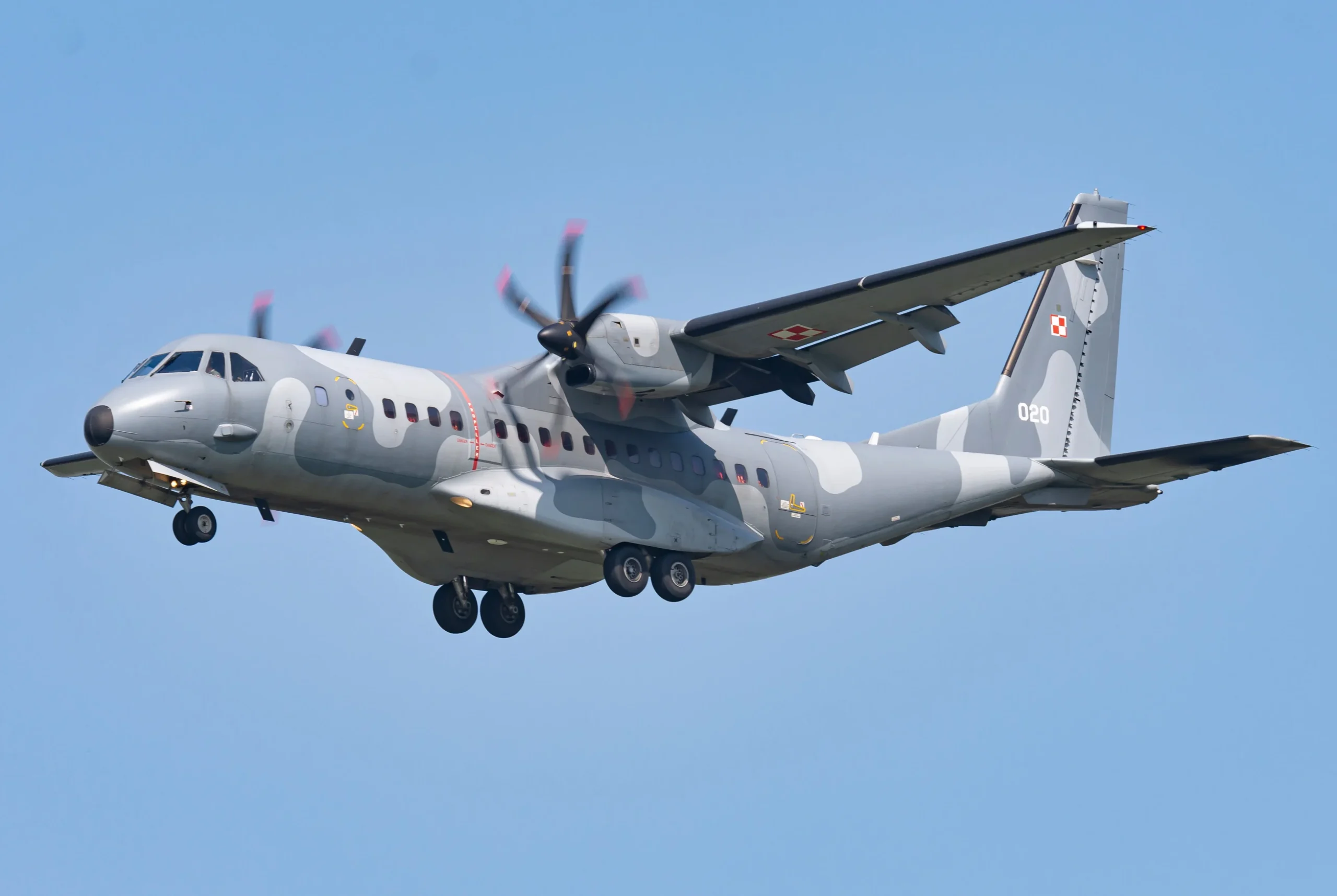
The India contract illustrates why the Airbus C295 — a derivative of the CASA CN-235 that first flew in 1997 — has become the world’s most widely exported European tactical airlifter of the 21st century. With over 278 aircraft ordered by more than 35 nations, the C295 has achieved a global footprint that its premium-priced competitors in the medium tactical transport category have failed to match. Understanding why requires looking beyond the aircraft’s specifications to the sales strategy and technology transfer model that has made it uniquely attractive to a broad range of customers.
The C295 Value Proposition
The C295 occupies a carefully calculated market position between the ubiquitous but aging C-130 family and the more expensive, higher-capacity platforms like the C-17 and A400M. At approximately $50–80 million per aircraft depending on configuration, it is accessible to defense budgets that cannot support C-130J acquisition while offering substantially more capability than lighter platforms in the sub-10 tonne class.
The aircraft’s performance on austere airstrips — approximately 670 meters for takeoff at maximum weight — makes it practical for the kinds of remote, infrastructure-poor operational environments that characterize contemporary conflict and humanitarian response in Africa, Southeast Asia, and Latin America. Its twin Pratt & Whitney Canada PW127G engines provide a mature, globally supported powerplant with well-established maintenance procedures.
Technical Specifications
| Specification | Value |
|---|---|
| First Flight | November 1997 |
| Entry into Service | 1999 |
| MTOW | 23,200 kg |
| Maximum Payload | 9,250 kg |
| Ferry Range | 4,630 km |
| Range (max payload) | 1,300 km |
| Cruise Speed | 480 km/h |
| Engines | 2× Pratt & Whitney PW127G |
| Engine Power (each) | 2,645 shp |
| Troop Capacity | 71 |
| Paratroop Capacity | 49 |
| Minimum Runway | ~670 m |
| Unit Cost (approx) | $50–80 million (variant-dependent) |
Variants: The Key to Market Diversity
The C295’s market success derives substantially from its variant portfolio. The baseline transport is merely the entry point. Maritime patrol, electronic intelligence collection, search and rescue, and medical evacuation configurations transform the platform’s addressable market from the tactical airlift segment into a broad family of capabilities:
- C295 MPA (Maritime Patrol Aircraft): Equipped with search radar, FLIR, AIS transponder monitoring, and sonobuoy deployment capability. The principal competitor to the ATR 72-600MPA and older P-3 Orion variants in the maritime patrol market.
- C295 SIGINT: Intelligence collection variant with specialized antenna arrays. Several operator nations have not publicly confirmed their SIGINT configurations.
- HC-144A Ocean Sentry (US Coast Guard): The most commercially significant validation of the platform — 18 aircraft in active service with the United States Coast Guard for drug interdiction and maritime search and rescue. U.S. government procurement of a European tactical aircraft is itself a testament to the platform’s competitive standing.
Major Export Contracts
| Nation | Aircraft | Approximate Value | Significance |
|---|---|---|---|
| India | 56 | ~$2.5 billion | First private-sector “Make in India” military aircraft |
| Poland | 16 | ~$1.4 billion | 2022 contract; mixed transport/MPA |
| Egypt | 24 | Undisclosed | MPA and transport mix |
| US Coast Guard (HC-144A) | 18 | Undisclosed | Sole non-US source in USCG fixed-wing ISR/SAR fleet |
| Brazil | 12 | Undisclosed | FAB tactical transport; Amazon operations |
| Portugal | 12 | Undisclosed | Transport and MPA |
The India Deal: A Template for European Defense Exports
The C295 India transaction deserves extended analysis because it may represent a template for how European defense manufacturers can succeed in emerging market defense procurement against competition from both U.S. and Russian suppliers. The contract’s technology transfer element — 40 aircraft manufactured in India — was not an afterthought or a concession extracted reluctantly by New Delhi. It was the core commercial argument that differentiated Airbus from competitors offering simpler supply relationships.
India’s Ministry of Defence had explicitly stated that it would prioritize programs enabling domestic industrial development over pure procurement transactions. Airbus’s willingness to structure a partnership with Tata Advanced Systems Limited, including knowledge transfer arrangements that extend beyond simple licensed assembly, aligned precisely with this stated priority. The result was a contract that other potential suppliers — notably Lockheed Martin with the C-130J — could not match on comparable terms.
Competition and Market Position
The C295’s primary competitors in the medium tactical transport category are the Leonardo C-27J Spartan (at a slightly higher payload capacity but higher unit cost) and the CASA CN-235 (its own predecessor, still manufactured in Indonesia and used by Turkey and others). Against the C-27J specifically, the C295 has consistently prevailed in competitive evaluations where price sensitivity is a factor — Italy’s own military preference for the C-27J has not prevented the C295 from dominating the broader market.
FAQ
How does the C295 compare to the C-130J for tactical operations?
The C-130J carries approximately twice the payload of the C295 and has a larger troop compartment, making it superior for heavy-lift and outsized cargo missions. The C295’s advantages are its substantially lower acquisition and operating costs, comparable short-field performance, and lower total support footprint — making it more suitable for nations with smaller defense budgets and simpler logistics systems.
Is the C295 production at Seville or will it move to India?
The first 16 aircraft for India will be manufactured at Airbus’s Seville facility. The remaining 40 will be assembled by Tata Advanced Systems in India under a detailed technology transfer arrangement. Seville remains Airbus’s primary C295 production facility for all other customers.