NATO’s Most Debated Helicopter: The NH90’s Operational Record and Australia’s Warning

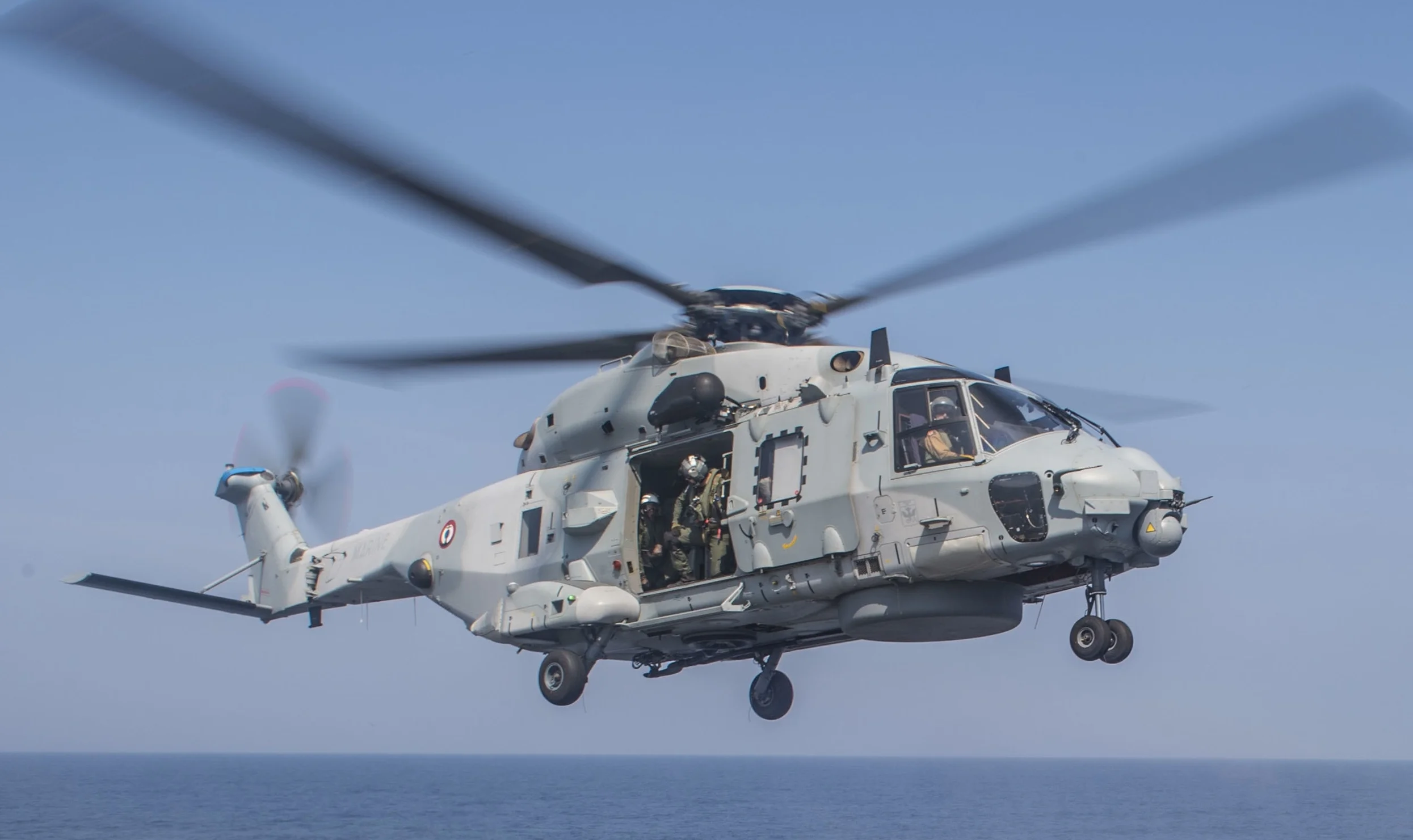
In September 2023, the Royal Australian Air Force formally retired the last of its 47 MRH90 Taipan helicopters — the Australian designation for the NH90 — replacing them with Boeing AH-64E Apaches. The early retirement, made public two years earlier, sent a chill through the NH90 program’s remaining 20-nation customer base. Australia’s stated reasons were blunt: unsustainable maintenance costs, unacceptably low readiness rates, and a shortage of qualified maintenance technicians that showed no prospect of improvement. Canberra had spent over AUD 4 billion on a helicopter that its military deemed unfit for continued service.
The Australian decision crystallized concerns about the NH90 that had been circulating in defense procurement circles for years. Germany’s Bundeswehr had struggled for a decade with spare parts availability and depot maintenance backlogs. Italy had experienced persistent availability challenges. Even Norway — widely regarded as the NH90’s most successful operator — had encountered difficulties establishing sustainable maintenance throughput. The program that was supposed to define European helicopter manufacturing excellence had become, at least in part, a cautionary tale about the hidden costs of complex multinational procurement.
Understanding the NH90 Program
The NH90 was conceived in the 1980s as a next-generation medium utility helicopter that would standardize NATO’s rotary-wing transport and maritime patrol requirements into a single airframe family. The program’s consortium — NHIndustries, managed by Airbus Helicopters, Leonardo Helicopters, and Fokker Aerostructures — represented exactly the kind of European industrial integration that defense policy makers considered essential for the continent’s long-term aerospace competitiveness.
Two variants emerged from this vision: the TTH (Tactical Transport Helicopter) for land-based operations and the NFH (NATO Frigate Helicopter) for shipborne maritime roles. The divergence in mission requirements created a paradox: while sharing a common airframe, the two variants differ substantially in their avionics suites, mission systems, and operational profiles — reducing the economies of scale that commonality was supposed to generate while maintaining the integration complexity that commonality inevitably creates.
Technical Specifications
| Specification | TTH | NFH |
|---|---|---|
| First Flight | December 18, 1995 | |
| Entry into Service | 2007 (Germany, Italy) | |
| MTOW | 10,600 kg | 11,000 kg |
| Max Speed | 291 km/h | 291 km/h |
| Range | 800+ km | 800+ km |
| Engines | 2× Rolls-Royce/Turbomeca RTM322 (or GE T700) | |
| Engine Power (each) | ~2,100 shp | |
| Troop Capacity (TTH) | 20 | — |
| Unit Cost | ~€35–45M | ~€50–60M |
The Two Faces of NH90 Operations
The NH90’s operational record is not uniformly negative — and any fair assessment must acknowledge significant variation in operator experience. Norway stands out as the clearest counterexample to the maintenance narrative. The Royal Norwegian Air Force’s NH90 NFH fleet, operating from frigates in the demanding North Atlantic environment, has achieved reasonable operational availability and has been integrated effectively into Norwegian ASW and maritime patrol operations. Norwegian investment in comprehensive maintenance infrastructure and operator training appears to have made a material difference.
Italy, despite availability challenges, has deployed NH90s in Afghanistan, Mali, and multiple humanitarian relief operations. French TTH aircraft have conducted tactical transport in the Sahel alongside the Tiger HAD and A400M — providing the rotary-wing component of France’s expeditionary capability in West Africa. Qatar and Oman operate NH90s in the demanding Gulf environment without the public availability complaints that have characterized German and Australian experiences.
The Readiness Problem: A Systemic Analysis
Why does operator experience vary so dramatically? Defense analysts who have examined the NH90’s maintenance record consistently identify several structural factors:
- Complexity of the maintenance system: The NH90’s digital architecture is sophisticated by design, but this sophistication requires a depth of technical expertise that many operators’ maintenance pipelines have struggled to develop. Unlike the UH-60 Black Hawk, for which a global maintenance ecosystem exists with decades of practitioner knowledge, the NH90’s fault diagnosis and repair procedures demand specialized training that is difficult and expensive to sustain.
- Spare parts supply chain: The multi-nation manufacturing consortium creates a supply chain of unusual complexity. Components manufactured in different countries by different companies under different quality systems must be integrated and exchanged — a process that, in practice, has generated extended lead times and availability gaps.
- Operator investment variation: Nations that invested heavily in NH90-specific maintenance infrastructure and training — notably Norway — have achieved significantly better results than nations that expected the platform to be maintainable with legacy helicopter technician pipelines.
Selected Operators
| Nation | Variant | Qty | Assessment |
|---|---|---|---|
| Italy | TTH + NFH | 116 | Largest fleet; availability challenges acknowledged |
| Germany | TTH + NFH | 122 ordered | Persistent readiness issues; Bundesrechnungshof criticism |
| France | TTH + NFH | 69 | Sahel operations; moderate availability record |
| Norway | NFH | 14 | Best operator record; strong maintenance investment |
| Australia | MRH90 | 47 (retired) | Early retirement 2023; replaced by AH-64E |
| Qatar | TTH | 16 | Gulf’s largest NH90 fleet; generally positive reports |
| New Zealand | TTH | 9 | Similar maintenance concerns to Australia |
The Lessons for Future Programs
The NH90 program offers several lessons that extend well beyond helicopter procurement. First, total cost of ownership analysis must include maintenance workforce development as a first-class cost, not a footnote. The acquisition price of a modern military helicopter may be a fraction of the cost of building and sustaining the technical workforce required to maintain it over a 30-year service life. Second, operator experience varies enormously based on investment in sustainment infrastructure — programs should establish minimum sustainment standards as conditions of purchase, not optional enhancements. Third, the Australian decision demonstrates that early retirement is a real option when total operating costs prove unsustainable — and that the political embarrassment of an early retirement does not make it less rational than continuing to operate a system that cannot be maintained effectively.
FAQ
Why did Australia choose the AH-64E Apache over a different NH90 replacement?
Australia’s requirement was specifically for an armed reconnaissance helicopter — a mission the NH90 was never optimized for. The AH-64E’s mature global support network, established training ecosystem, and extensive combat-proven record made it the lowest-risk choice for a nation that had already spent a decade managing NH90 maintenance challenges.
Is the NH90 program still financially viable?
With over 800 aircraft ordered across 20+ nations, the program remains financially viable for the consortium. Australia represented less than 6% of total orders. However, Australia’s decision combined with Germany’s ongoing availability issues has created reputational headwinds that may influence future export decisions by prospective customers evaluating long-term operational economics.