





The World’s Most Expensive Warships (2026): It Isn’t Size That Costs, It’s Density

Figures come from official budget documents and audit reports; each row is labelled with the cost category it rests on.
Warship costs are among the most misleading numbers in defence — because there is no single price. For one and the same vessel you may hold four different figures: the cost of the lead ship, the cost of a repeat ship in series production, the total programme divided by the number of hulls, and the construction line alone. Those can differ by a factor of two. This file labels every row with which one it is, and then converts them all into a single comparable measure: cost per tonne.
Methodology: which number is a warship’s “price”?
Open sources give four distinct kinds of cost for a warship. The gap between them is not a rounding error — it can be a factor of two:
| Type of figure | What it covers | Why it comes out different |
|---|---|---|
| Lead ship cost | Building the first hull plus class-specific engineering and tooling | One hull carries the entire learning cost of the class — always the highest number |
| Budget unit cost | The budget line for a repeat ship in series production | The most realistic basis for comparison; the learning curve is complete |
| Programme ÷ number of hulls | Total programme value including R&D, divided by hull count | Inflates artificially if the programme was cut — the Zumwalt is the textbook case |
| Construction cost | Shipyard build line only, excluding R&D | Leaves R&D outside, so it understates the real burden of the programme |
Table one: highest cost per hull
The list below covers warships currently in build or in service with the highest cost per hull. The cost category behind each row is shown in its own column; a reading that ignores that column will misread the ranking.
| # | Ship | Country | Type | bn USD | Cost category | Note |
|---|---|---|---|---|---|---|
| 1 | Columbia-class SSBN | USA | Ballistic missile submarine | 15,2 | Lead ship | Lead boat of the class; the series average is markedly lower |
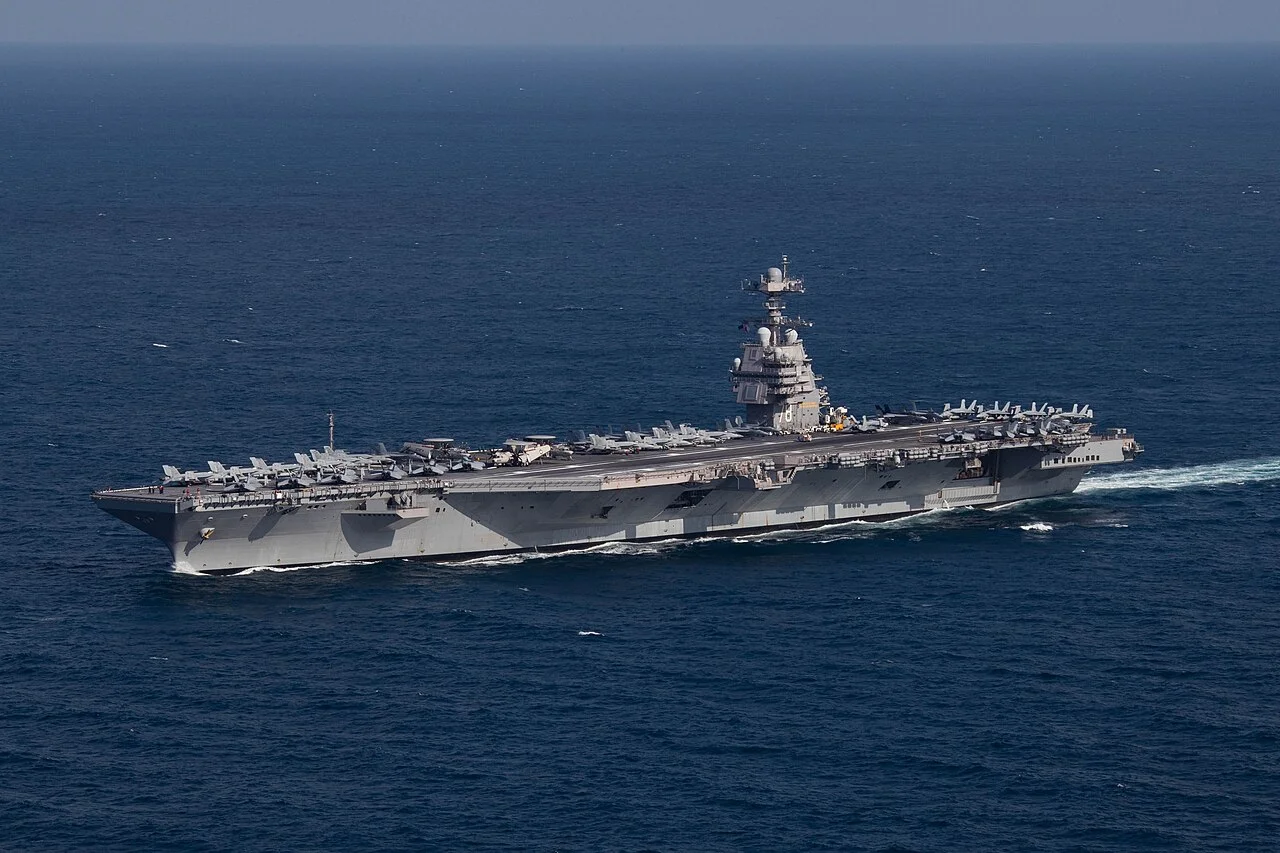
| 2 | Gerald R. Ford (CVN-78) | USA | Aircraft carrier | 13,3 | Construction cost | Lead ship of the class; the second hull, CVN-79, came in cheaper |
| 3 | Dreadnought-class SSBN | UK | Ballistic missile submarine | 10,0 | Programme ÷ ships | Programme value divided by hull count; per-ship cost not disclosed separately |
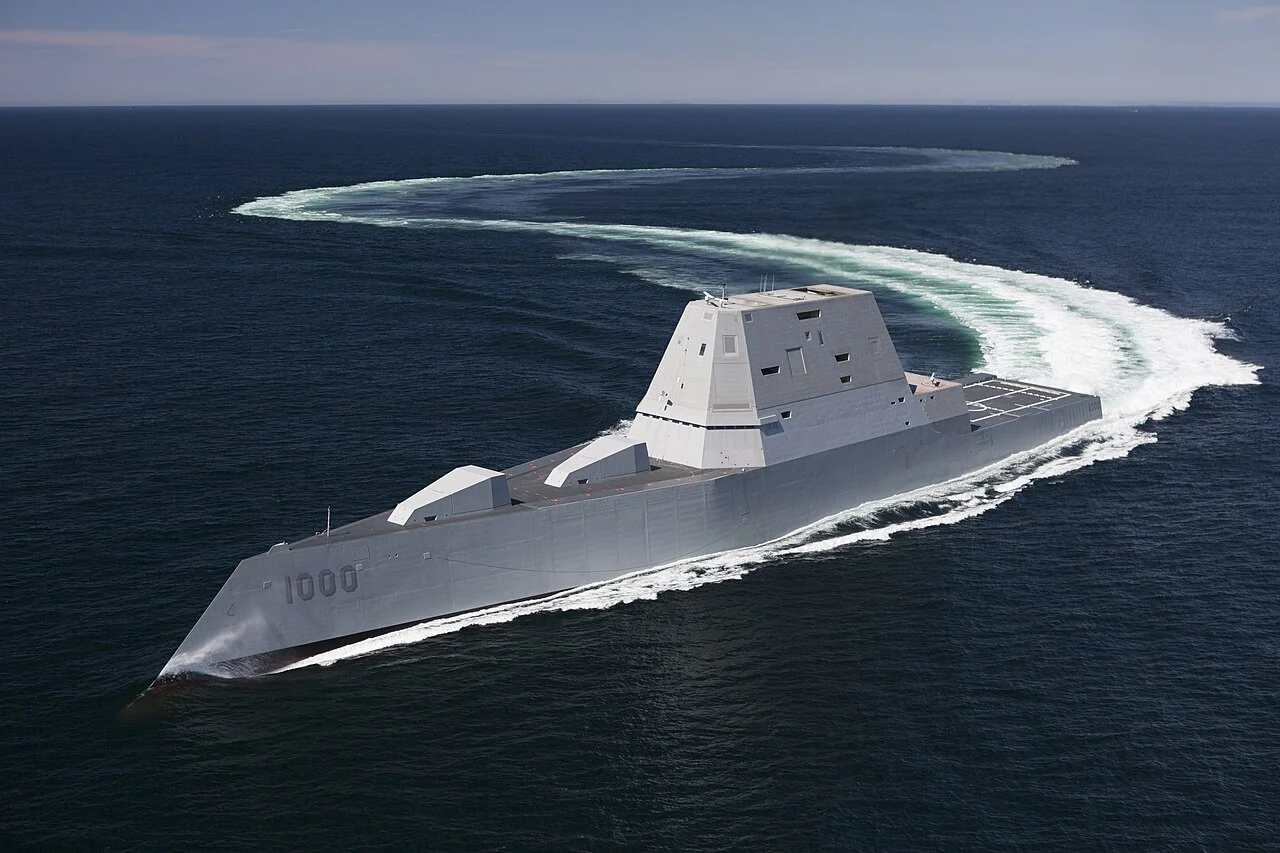
| 4 | Zumwalt (DDG-1000) | USA | Destroyer | 7,5 | Programme ÷ ships | Programme cut from 32 ships to 3; the figure is a product of that cancellation |
| 5 | Virginia Block V SSN | USA | Attack submarine | 4,3 | Budget unit cost | Block V is costlier than earlier blocks thanks to the added payload module |
| 6 | America-class LHA | USA | Amphibious assault ship | 3,4 | Budget unit cost | Carrier-sized but conventionally powered |
| 7 | Queen Elizabeth class | UK | Aircraft carrier | 3,1 | Construction cost | Cost per hull across a two-ship programme |
| 8 | Arleigh Burke Flight III | USA | Destroyer | 2,2 | Budget unit cost | Costlier than earlier flights because of the new radar and its power demands |
| 9 | Astute-class SSN | UK | Attack submarine | 2,0 | Budget unit cost | Nuclear attack submarine; British programme |
| 10 | Type 45 Daring | UK | Destroyer | 1,3 | Programme ÷ ships | Six-ship programme; unit cost derived by programme division |
The Zumwalt paradox: what made the ship expensive was not the ship
The most contested row on the list is the Zumwalt-class destroyer. At roughly 7.5 billion dollars per hull it is routinely called the most expensive destroyer in the world. But that figure comes out of programme decisions rather than engineering complexity.
The distinction matters, because the headline “world’s most expensive destroyer” implies the ship was badly or extravagantly designed. Most of the number is an accounting consequence of cutting the buy. In a defence programme, reducing quantity is not automatically a saving; more often it raises the price of every remaining unit.
The one comparable measure: cost per tonne
Comparing ships of different size by absolute price is like comparing the price of a lorry with that of a motorcycle. The meaningful measure is how much ship the money bought. Switch to it and the ranking inverts completely:
| Ship | Type | Displacement (t) | bn USD | k USD / t |
|---|---|---|---|---|
| Columbia-class SSBN | Ballistic missile submarine | 20.810 | 15,2 | 730,4 |
| Dreadnought-class SSBN | Ballistic missile submarine | 17.200 | 10,0 | 581,4 |
| Zumwalt (DDG-1000) | Destroyer | 15.656 | 7,5 | 479,0 |
| Virginia Block V SSN | Attack submarine | 10.200 | 4,3 | 421,6 |
| Astute-class SSN | Attack submarine | 7.400 | 2,0 | 270,3 |
| Arleigh Burke Flight III | Destroyer | 9.700 | 2,2 | 226,8 |
| Type 45 Daring | Destroyer | 8.500 | 1,3 | 152,9 |
| Gerald R. Ford (CVN-78) | Aircraft carrier | 100.000 | 13,3 | 133,0 |
| America-class LHA | Amphibious assault ship | 45.000 | 3,4 | 75,6 |
| Queen Elizabeth class | Aircraft carrier | 65.000 | 3,1 | 47,7 |
The finding fits in a single sentence: what makes a warship expensive is not size but density. A nuclear submarine packs a pressure hull, nuclear propulsion and acoustic stealth into a confined volume; a carrier is much the same technology spread across a vastly larger hull. A tonne of Queen Elizabeth costs 48,000 dollars while a tonne of Columbia costs 730,000 — a gap approaching fifteenfold.
What else could the same money buy?
This is the most concrete question in any defence budget debate: how many other ships could be bought for the price of one carrier? The chart below divides the 13.3 billion dollar construction cost of a Gerald R. Ford by the unit cost of each other vessel.
The arithmetic is not by itself a policy recommendation — a carrier and ten destroyers do not perform the same mission and neither substitutes for the other. But it does explain why naval planning turns endlessly around the same question: a few powerful hulls, or many mid-sized ones? The naval fighting in Ukraine and the uncrewed-surface-vessel attacks in the Red Sea have reopened that argument in recent years.
The gap between the lead ship and the ships that follow
The first ship of a class is almost always its most expensive. Class-specific design, tooling, yard setup and the workforce’s learning process all land on a single hull. On the second and third ships those items disappear and the cost falls sharply.
Four things that drive warship cost
Nuclear propulsion
A nuclear reactor is the single item that multiplies a ship’s cost outright. It is not only hardware: it means dedicated shipyard infrastructure, certified personnel, lifetime fuel management and a decommissioning obligation. That three of the four most expensive ships here are nuclear-powered is no coincidence.
Quieting and the pressure hull
A submarine’s most expensive attribute is not its weapons but its silence. Vibration isolation, acoustic coatings and pressure-hull fabrication have no equivalent line item on a surface ship of the same tonnage. That is the real reason submarines sit at the top of the cost-per-tonne table.
Build quantity and yard continuity
Unit cost falls as a yard keeps building hulls of the same class; break the run and the skilled workforce disperses, pushing the cost of the next hull back up. Defence economists call this production continuity, and it explains why cutting quantity so rarely delivers the saving it promises.
Sensors and the combat system
A large share of a modern destroyer’s cost sits not in steel but in the radar and combat management system. The Arleigh Burke Flight III is costlier than earlier flights chiefly because of its new radar and the power and cooling infrastructure that feeds it.
Where does Türkiye sit in this table?
No Turkish-built ship appears in the table — not because Türkiye does not build at this scale, but because the contract values have not been publicly disclosed. Placing an unverified figure in the table would compromise the whole ranking. Türkiye’s work in this category is therefore presented separately, without any cost claim.
No unit cost has been officially disclosed for any of these. When one is, this page will be updated and the ship added to the table.
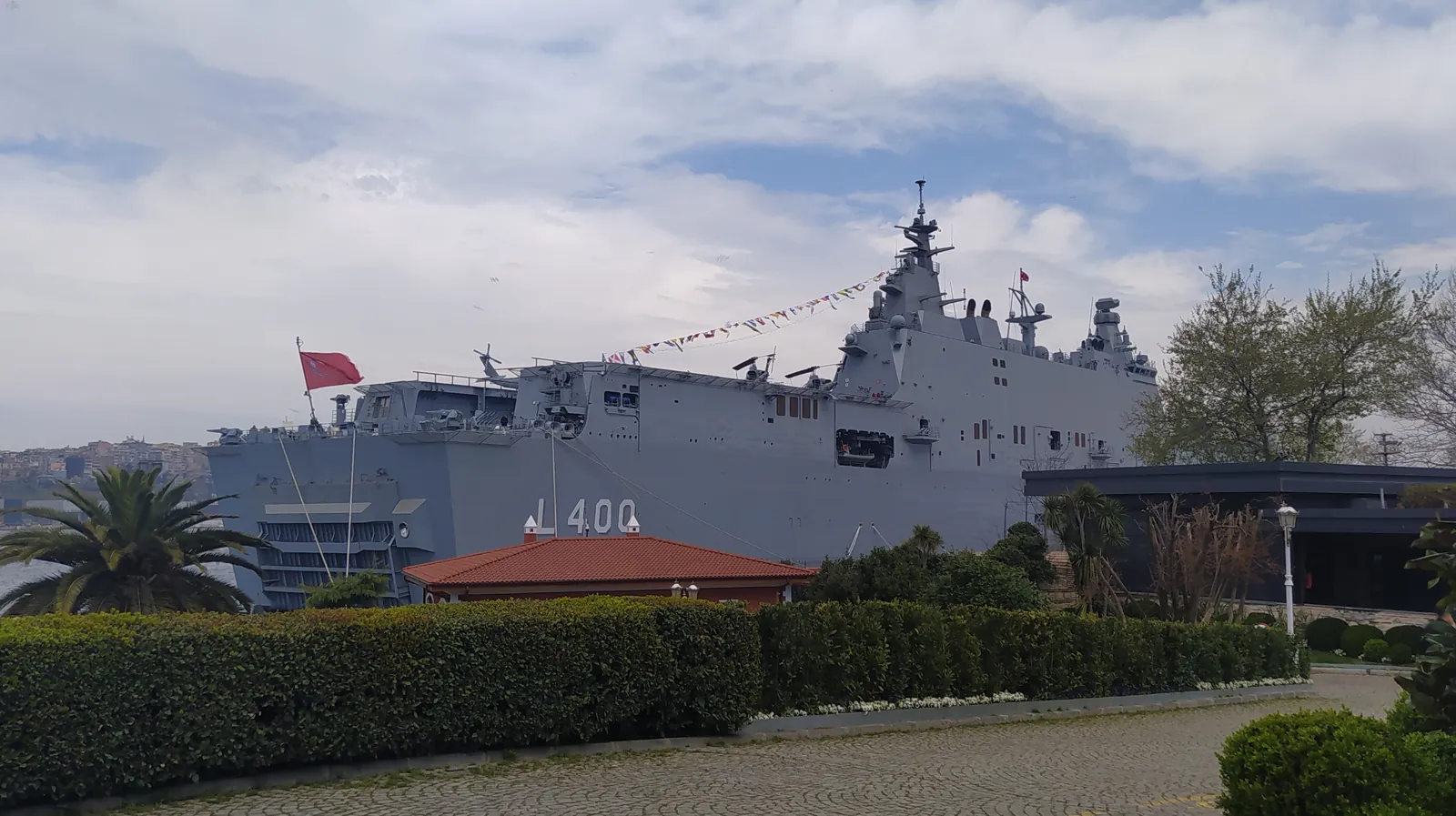
Türkiye’s standing in this field is measured less by cost ranking than by yard capacity. The country builds frigates and amphibious ships for its own navy while also signing export contracts. As cost data is released, the Türkiye entry in this file will be expanded on the basis of that data.
Frequently asked questions
What is the most expensive warship in the world?
Why do carriers come out cheap per tonne?
Is the Zumwalt really the world’s most expensive destroyer?
How much cheaper are follow-on ships than the lead ship?
Why is TCG Anadolu not in the table?
How many destroyers could you buy for the price of a carrier?
Sources
- US Government Accountability Office (GAO) — annual assessments of defense acquisition programs
- US Congressional Research Service (CRS) — reports on Navy shipbuilding programmes
- US Navy budget justification documents (Shipbuilding and Conversion, Navy)
- UK Ministry of Defence — Equipment Plan, and National Audit Office (NAO) reports
- Presidency of Defence Industries (SSB) — statements on the MILGEM, TF-2000 and MUGEM programmes
- International Institute for Strategic Studies (IISS) — The Military Balance