Where and How the GÖKBEY Is Built: Turkish Aerospace’s Kahramankazan Facilities and the Production Process

The GÖKBEY (T625) utility helicopter is designed and built at Turkish Aerospace’s (TUSAŞ) main campus in Kahramankazan, a district northwest of Ankara. Earlier parts of this series covered the cockpit, rotor system, performance and mission variants. This article turns to manufacturing: which facility does what, the stages a GÖKBEY passes through before delivery, which subsystems arrive from outside, and what the company has and has not disclosed about production capacity.
The Kahramankazan campus
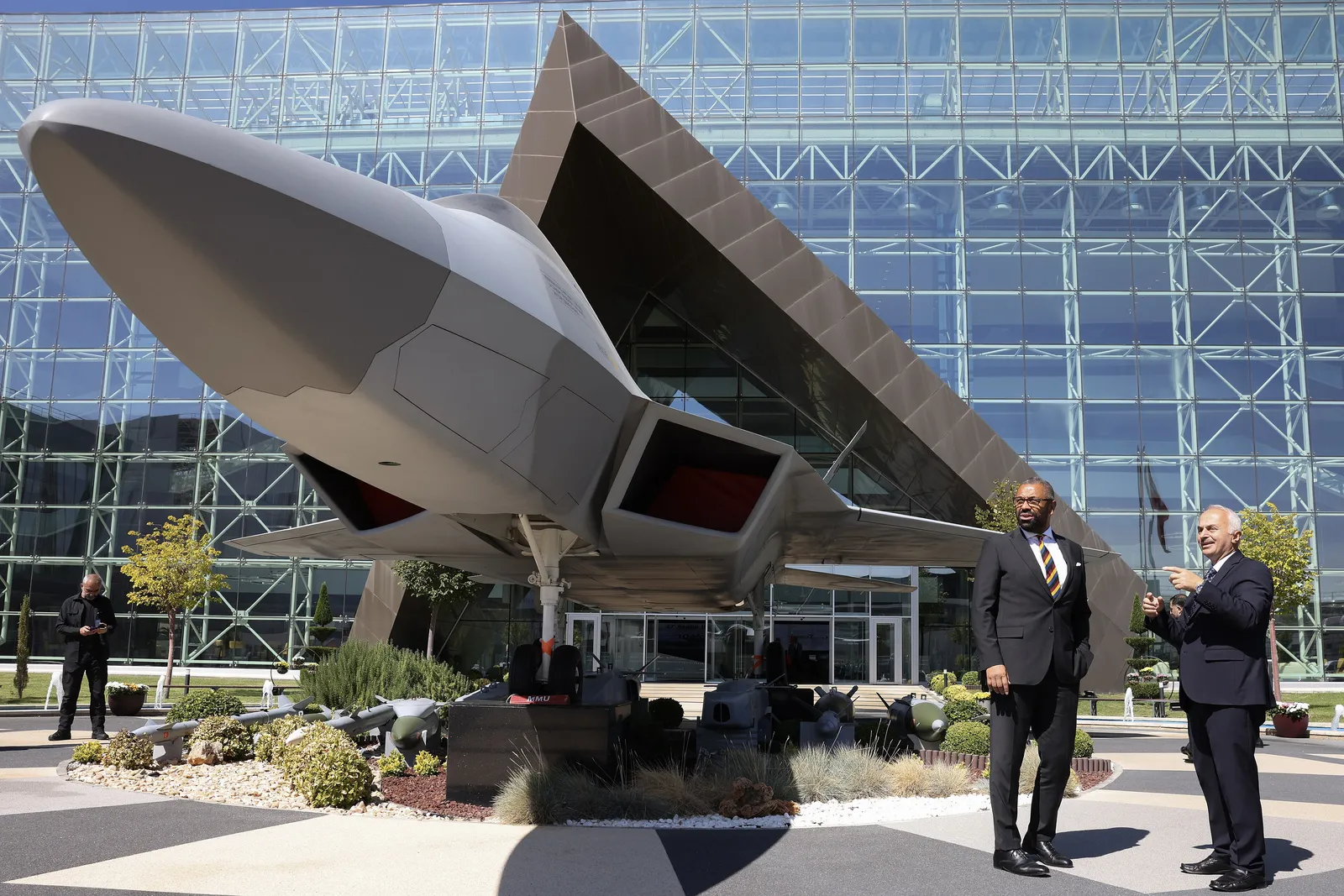
Turkish Aerospace’s headquarters and principal production plant occupy a single site in Kahramankazan, in the Akıncı area, laid out as an aircraft manufacturing campus with its own runway access. Design offices, composite and metal part production, fixed-wing and rotary-wing final assembly halls, a flight line and test infrastructure share the site. The HÜRKUŞ trainer, HÜRJET, KAAN fighter and ANKA unmanned programmes are run from the same campus; GÖKBEY is the product of its rotary-wing division.
How the programme started
GÖKBEY began with the Original Helicopter Programme contract signed in 2010 between the Presidency of Defence Industries (SSB) and Turkish Aerospace. The goal was a utility helicopter designed and built in Turkey. The prototypes first flew on 6 September 2018 with LHTEC CTS800-4AT engines. The first flight with the domestic TEI-TS1400 engine followed on 19 April 2023. The first delivery went to the Gendarmerie General Command on 29 October 2024, and the first serial-production helicopter, J6004, was handed over on 19 August 2025.
The stages of building a GÖKBEY
As in other medium helicopter programmes, production moves through five main stages. The duration of each stage and the exact workflow inside the campus have not been officially published; the sequence below is based on Turkish Aerospace’s public presentations and standard industry practice.
In composite production, panels are laid up in moulds and cured in an autoclave. Because GÖKBEY’s primary structure is largely composite, this facility is the first link in the line. The rotor blades are composite as well; their fatigue and damage tolerance give them a longer service life than metal blades. Once the fuselage is joined, the engines, the 13.20-metre main rotor, tail rotor, transmission and wiring are installed. Finally the helicopter moves to the flight line for ground runs and acceptance flights.
Where the subsystems come from
GÖKBEY is not built in one place. Two major subsystems arrive at Kahramankazan from other cities. The TS1400 turboshaft is developed and produced by TEI in Eskişehir. The cockpit displays, mission computer and four-axis digital autopilot come from ASELSAN’s plants in Ankara. Current serial helicopters fly with CTS800-4AT engines; the 57-unit package ordered at IDEF 2025 is planned for delivery with the TS1400 from 2028.
Annual line capacity, the number of helicopters in assembly at any one time and the time an airframe spends on the line have not been officially disclosed. For the 57-unit order only the starting year of deliveries (2028) has been published.
What changed from prototype to series
Prototype manufacturing treats each airframe almost individually: parts are reworked and the design changes as test results come in. Serial production means repeating a frozen configuration. For GÖKBEY the concrete marker of that shift is the handover of the first serial helicopter, tail number J6004, in 2025, following the first delivery in 2024. Not all differences between the serial and prototype configurations have been published; the switch to the TS1400 stands out as the largest change the line will have to absorb in the coming years.
Production milestones
Frequently asked questions
Where is the GÖKBEY built? At Turkish Aerospace’s main campus in Kahramankazan, Ankara. Composite production, final assembly and flight testing take place on the same site.
Is the engine built there too? No. The TS1400 is produced by TEI in Eskişehir, and the CTS800-4AT on current serial aircraft is supplied by LHTEC.
How many GÖKBEYs can Turkish Aerospace build per year? Annual capacity has not been officially disclosed.
When was the first serial GÖKBEY delivered? The first serial helicopter, J6004, was delivered on 19 August 2025.
When will the 57-unit order be delivered? Deliveries are planned from 2028 with the domestic TS1400 engine; a detailed schedule has not been published.