No Soldiers, No Tanks: Ukraine Marched Robots Down Khreshchatyk

Ukraine marked the 35th anniversary of its independence on 24 August 2026 without a single marching soldier. There were no tank columns and no formations of heavy armour on Khreshchatyk. What came down Kyiv’s main avenue instead was, by the organisers’ description, the world’s first military parade composed entirely of unmanned systems.
What went past
Dozens of multi-role unmanned ground vehicles moved along the boulevard: machines built for combat, reconnaissance, logistics resupply and casualty evacuation. That last category is worth pausing on. Drone surveillance has turned the ground behind the line of contact into a kill zone deep enough that pulling a wounded soldier out by hand has become extraordinarily dangerous, and the job has steadily been handed to robots.
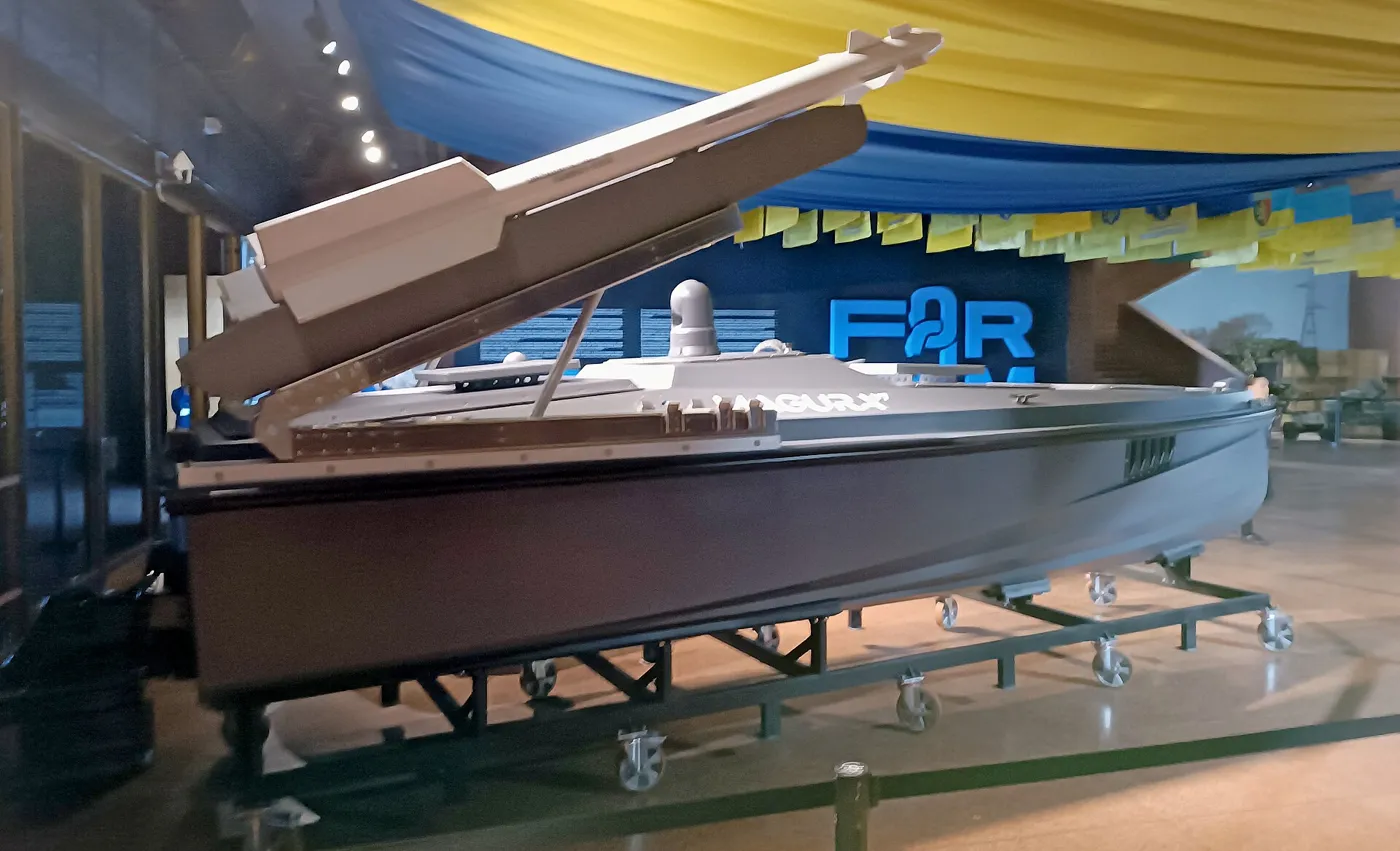
Overhead flew interceptor drones designed to bring down incoming aerial attacks, alongside reconnaissance and strike types. On the Dnipro, the naval kamikaze drones that made their reputation against Russia’s Black Sea Fleet took part, accompanied by reconnaissance variants and naval drones fitted with anti-aircraft missiles.
A doctrine statement, not just a display
Parades traditionally do two jobs — morale at home, capability signalling abroad. Ukraine’s version does both while carrying a third message: this is now how the country fights.
There is institutional weight behind that claim. In 2024 President Volodymyr Zelenskyy signed legislation creating the Unmanned Systems Forces as a separate branch of the military, making Ukraine the first country to organise an independent service around unmanned systems. Standing a fourth combat branch alongside land, air and naval forces is a formal declaration that the drone is a primary instrument of war rather than a supporting one.
The practical reasons
Some of the format is simple necessity. Pulling troops and heavy platforms off the front to parade them in the capital is expensive in operational and security terms, and a crowded parade in a city under missile and drone threat is itself a target.
But it is not only necessity. The drone industry Ukraine has built in three years now runs at an annual output measured in millions of units and is the country’s fastest-growing defence sector. Building the parade around that industry serves as a showcase for domestic audiences and prospective partners alike.
Ukraine’s drone sector by the numbers
The industrial base behind the parade bears no resemblance to the one that existed in 2022, when production started with a few dozen small workshops. It is now an ecosystem of hundreds of firms. Short-range FPV drones account for the bulk of the volume.
The product range has broadened as well. Fibre-optic guided drones became their own category because a physical cable is immune to jamming. Long-range one-way attack drones opened a separate line aimed at refineries and logistics nodes deep behind the front. Naval drones established a third category entirely, as an asymmetric answer to major surface combatants.
Ground robots are the hard part
Of the three domains, the unmanned ground vehicles on Khreshchatyk represent the most difficult engineering problem. Air and water are comparatively predictable media. Ground is broken terrain, mud, rubble and shifting surfaces, and a UGV that completes a casualty evacuation needs both mobility and communications that survive interruption.
Ukraine has run a natural selection process by fielding many competing designs at once. Logistics and casualty evacuation matured faster than assault roles, largely because they do not demand full autonomy and can be run under operator control. Putting those vehicles at the front of a parade suggests the capability has moved from demonstration to daily use.
What it means elsewhere
Kyiv staged something many armies have so far only discussed on paper: a force structure in which humans stay in the decision loop but leave the point of contact. Ukraine did not choose this model so much as get pushed into it by a manpower shortage that made robotic substitution unavoidable. That does not make the resulting data any less valuable to everyone else watching.
Sources
- Ukrainian official Independence Day event announcements, 24 August 2026
- Euronews, Interfax-Ukraine, United24 Media, 24 August 2026
- Ukrainian Unmanned Systems Forces founding legislation, 2024
Image note: the cover photograph shows a Magura-family unmanned surface vessel displayed in Kyiv.