The Levant’s Strongest Militaries (2026): Israel Far Ahead

The Levant — the land corridor formed by Israel, Syria, Lebanon, Jordan and Iraq along the eastern Mediterranean — is one of the most conflict-dense five-country regions on Earth. The legacy of Syria’s civil war, the Israel-Hezbollah front, Iraq’s militia networks and Jordan’s stabilising role combine to make this a single stretch of map holding five completely different military models at once.
The power gap between these five countries is among the sharpest found anywhere in the Middle East: on one side, one of the most technologically advanced militaries on Earth; on the other, a state still trying to rebuild from more than a decade of civil war.
So which Levant country fields the strongest military in 2026? How large is Israel’s technological edge, why does Iraq carry such a large tank inventory, and where does Syria’s army stand in the post-Assad era? We start the countdown at number five.
The ranking below is based on GlobalFirepower’s 2026 overall Power Index (PwrIndx) and covers the five countries of the Levant. The index combines tanks, aircraft, ships, manpower and budget into a single score, with a lower score indicating a stronger force.
#5Lebanon
Power Index · In the shadow of economic collapse
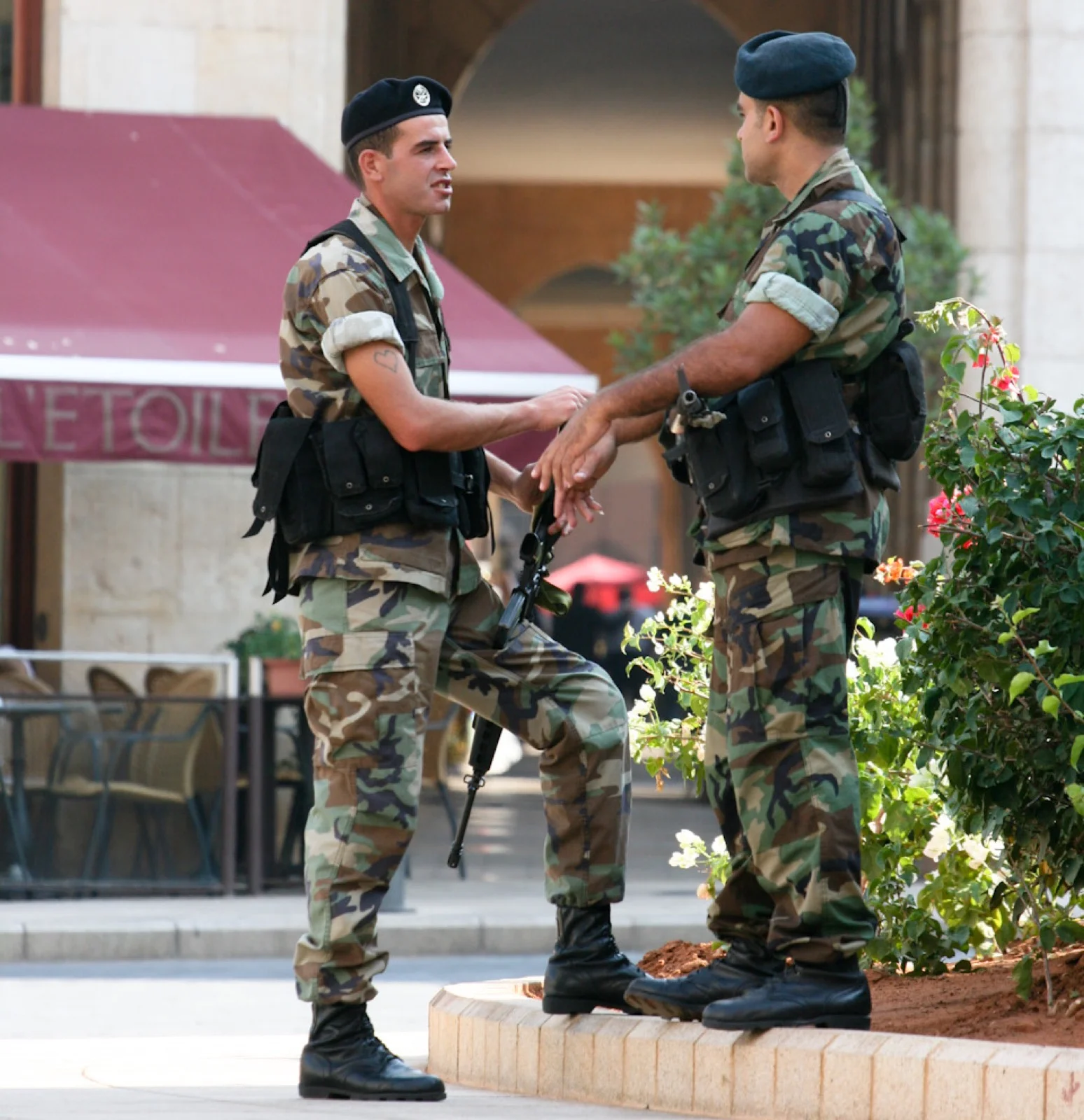
The Lebanese Armed Forces have absorbed the heaviest institutional toll of the country’s deep economic crisis, running since 2019. 80,000 active personnel is a modest figure on paper, and the collapse in salary value has pushed actual readiness even lower.
The inventory holds 334 tanks but zero fighter jets; air power is limited to a handful of light trainer aircraft and helicopters. An $800 million budget is among the lowest in the region and depends heavily on US and French military assistance programmes.
The Lebanese Army’s real role is as the country’s neutral institution, holding the sectarian balance together; but along the southern front with Israel, actual military initiative largely sits with a non-state actor. That dual structure means Beirut doesn’t hold full classical sovereignty over its own security architecture.
Lebanon has the lowest defence budget on this list and fields no fighter jets at all.
| Capability | Total |
|---|---|
| Power Index | 2.6521 |
| Active personnel | 80,000 |
| Tanks | 334 |
| Total aircraft | 80 |
| Helicopters | 68 |
| Warships | 48 |
| Defence budget | $800.00 million |
The next country is rebuilding its army from scratch after thirteen years of civil war.
#4Syria
Power Index · Rebuilding after civil war
Syria is undergoing deep political and military transformation following the civil war that began in 2011 and ran for more than thirteen years. The inventory has shrunk sharply compared with the pre-war era: 168 tanks and 104 aircraft sit far below pre-2011 figures.
100,000 active personnel reflects a command structure that shifted repeatedly throughout the war and the ongoing process of integrating different armed factions. A $145.9 million budget is among the lowest in the region; economic devastation and infrastructure loss severely limit modernisation capacity.
Syria’s military future hinges on internal political stability and the normalisation of relations with the international community. Russia’s effort to preserve its regional presence and Türkiye’s northern-border security priorities remain the two external factors shaping Damascus’s rebuilding process.
Syria’s tank inventory has shrunk by nearly 90% compared with the pre-civil-war era.
| Capability | Total |
|---|---|
| Power Index | 1.8861 |
| Active personnel | 100,000 |
| Tanks | 168 |
| Total aircraft | 104 |
| Helicopters | 39 |
| Warships | 12 |
| Defence budget | $145.93 million |
The next country carries a large inventory under a heavy internal-security burden.
#3Jordan
Power Index · The region’s stabilising buffer
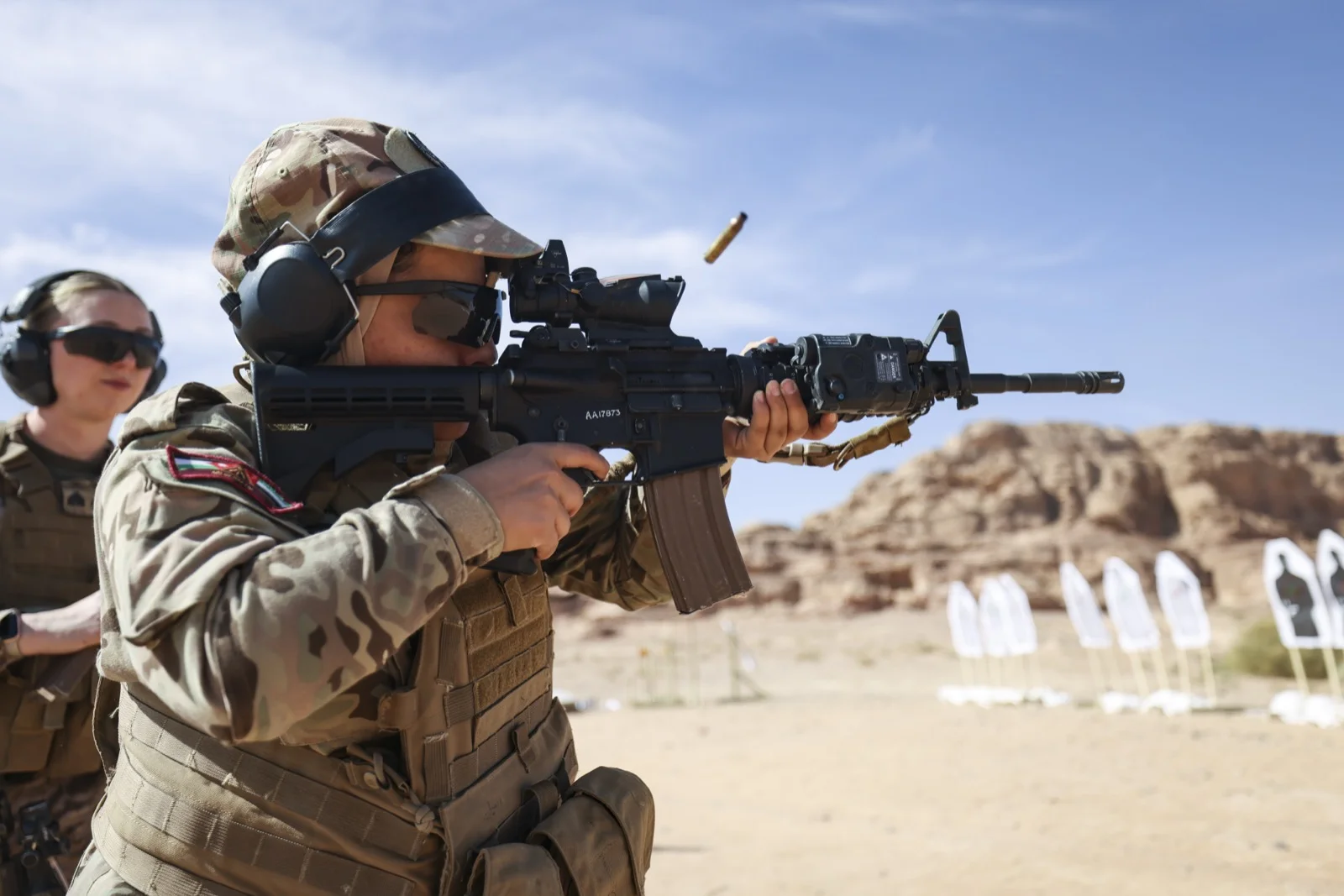
Squeezed between Syria, Iraq and Israel, Jordan occupies one of the region’s most sensitive geographic positions as a buffer state. That position has pushed it to build a land force strikingly large for its size: 1,508 tanks, the highest figure on this list — even more than Israel’s inventory.
With 114,500 active personnel and a $2.67 billion budget, Jordan is one of the most stable US military partners in the region; annual US military assistance plays a decisive role in modernising the inventory. An F-16 fleet and a Challenger tank inventory are the concrete products of that partnership.
Amman’s defence doctrine centres less on direct confrontation than on preserving stability and securing its borders. Countering smuggling and arms trafficking across the Syrian border makes up much of the army’s day-to-day operational load; the country also carries the security burden of hosting a large Syrian refugee population.
Jordan’s 1,508-tank inventory even outnumbers Israel’s 1,300 — the region’s largest land force.
| Capability | Total |
|---|---|
| Power Index | 1.5581 |
| Active personnel | 114,500 |
| Tanks | 1,508 |
| Total aircraft | 279 |
| Helicopters | 159 |
| Warships | 27 |
| Defence budget | $2.67 billion |
The runner-up shares its large inventory with an internal state-versus-militia dilemma.
#2Iraq
Power Index · State-and-militia duality
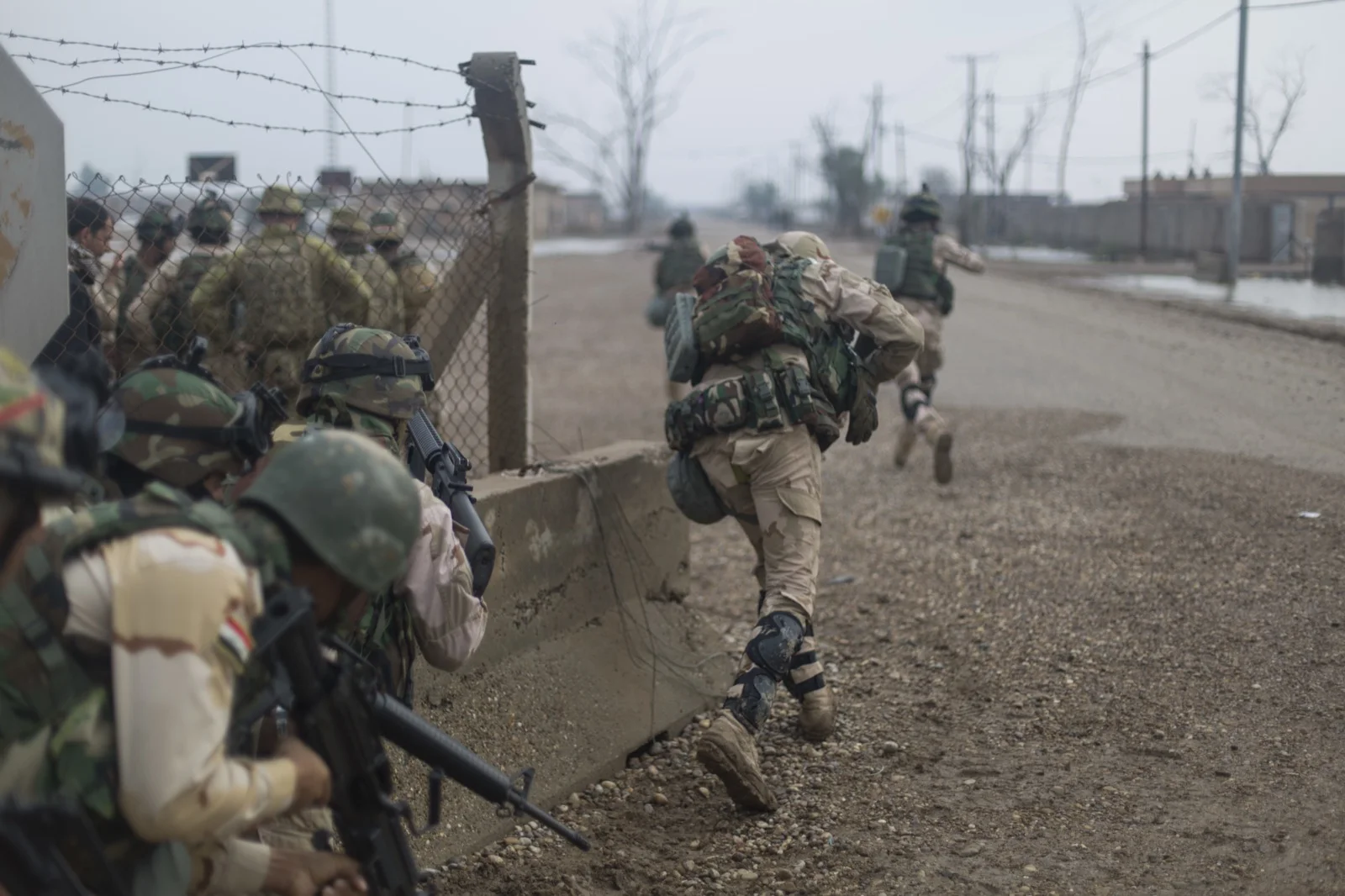
Iraq runs a military rebuilt from scratch since 2003. 193,000 active personnel and a 1,188-tank inventory were built up substantially after the hard-fought campaign against ISIS between 2014 and 2017.
An $8 billion budget is among the mid-to-upper range for the region; an M1 Abrams tank fleet and F-16 squadron are products of deepening military cooperation with the United States. Alongside the official army, however, Iranian-linked militias under the Popular Mobilisation Forces (PMF) umbrella form a parallel power centre within Iraq’s security architecture.
That dual structure means Iraq doesn’t fully fit the classical definition of a unitary military power. Baghdad’s biggest test going forward is bringing the official army and militia structures under a single command — a step decisive for both internal stability and regional credibility.
Iraq’s 183-helicopter fleet is the highest figure on this list — even above Israel’s inventory.
| Capability | Total |
|---|---|
| Power Index | 0.8115 |
| Active personnel | 193,000 |
| Tanks | 1,188 |
| Total aircraft | 360 |
| Helicopters | 183 |
| Warships | 67 |
| Defence budget | $8.00 billion |
At the top sits the region’s most technologically advanced — and most contested — military.
#1Israel
Power Index · The Levant’s technology leader
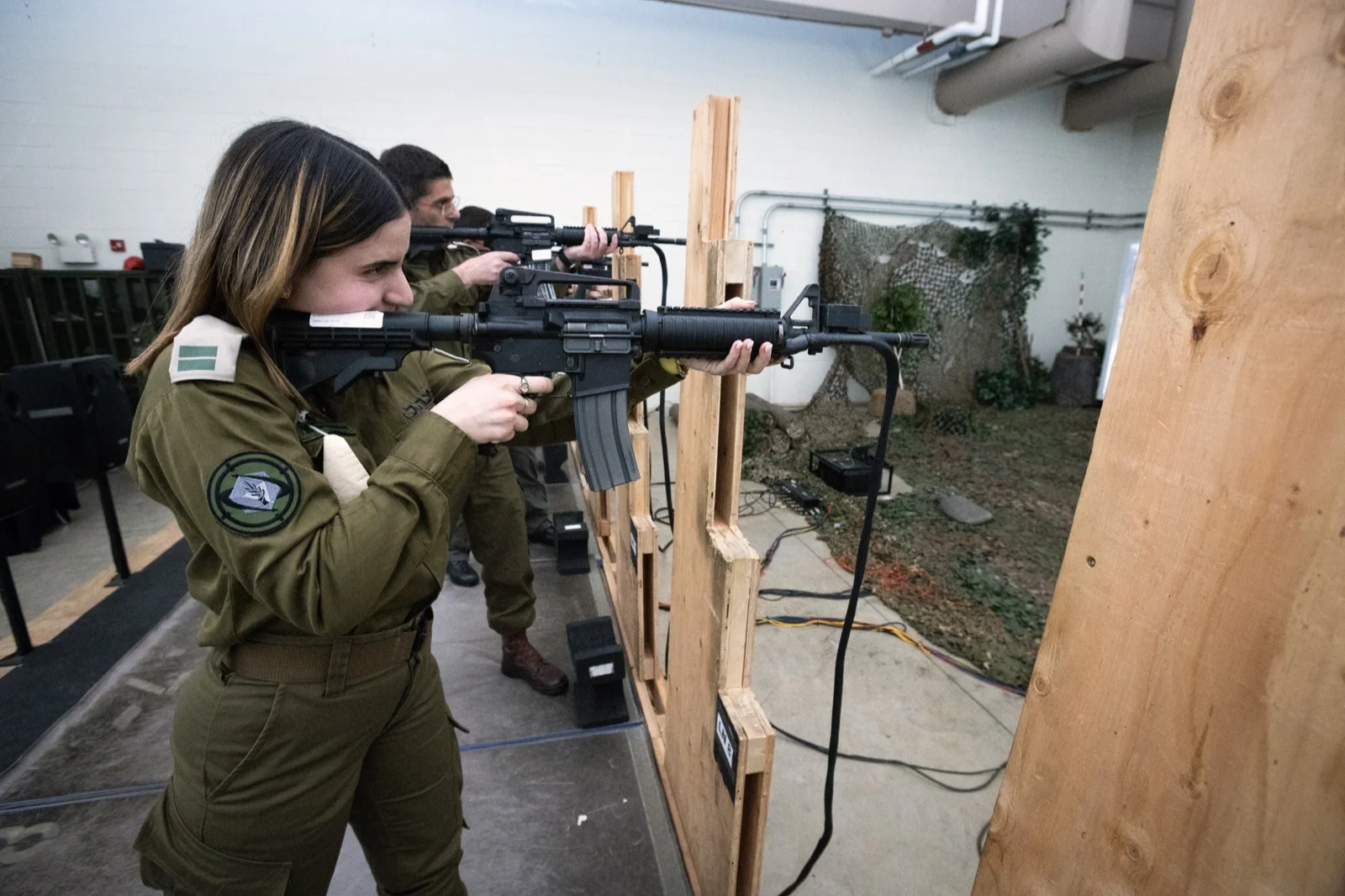
Israel holds the Levant’s uncontested strongest military; a Power Index score of 0.2707 means it’s more than three times stronger by that measure than second-ranked Iraq. A $34.6 billion defence budget exceeds the combined total of the other four countries in the region.
At 169,500 active personnel, the numbers look modest on paper, but the Israel Defense Forces’ real strength runs deep in technology: a 597-aircraft fleet including F-35I Adir jets, and multi-layered missile defence systems like Iron Dome and David’s Sling give the country a degree of air superiority unmatched anywhere in the region.
Israel’s defence industry — companies like Rafael, IAI and Elbit — ranks among the world’s leading arms exporters, well beyond simply supplying its own military. A multi-front threat perception — Hezbollah, Iran-backed militias and Palestinian resistance groups — keeps Israel at a permanently high readiness level.
Israel’s defence budget exceeds the combined total of the other four Levant countries — Iraq, Jordan, Syria and Lebanon.
| Capability | Total |
|---|---|
| Power Index | 0.2707 |
| Active personnel | 169,500 |
| Tanks | 1,300 |
| Total aircraft | 597 |
| Helicopters | 127 |
| Warships | 82 |
| Submarines | 6 |
| Defence budget | $34.60 billion |
What the Levant’s power balance tells us
This five-country table lays out one of modern Middle East’s sharpest military asymmetries. Israel alone manages more than half the region’s combined defence budget, while Lebanon and Syria struggle to keep their armies functioning under crisis and post-war conditions.
The second finding is that tank count doesn’t track with the Power Index in a straight line. Jordan carries the largest land inventory on this list with 1,508 tanks, but trails far behind Israel in air power and technological depth. That shows platform count alone doesn’t define modern military effectiveness — integration and technology do.
The third trend is the regional weight of non-state actors. Iraq’s PMF militias and Lebanon’s Hezbollah sit outside official army inventories but represent decisive power centres in actual military capacity. That reality points to gaps in any purely state-centric measure of military strength in the Levant.
Finally, Syria’s case proves how quickly this region can change. Thirteen years of civil war turned what was once one of the region’s strongest militaries into a tertiary power. The Levant’s next decade will hinge on how fast Syria rebuilds, how Iraq resolves its state-militia balance, and how the Israel-Hezbollah front evolves.
The Levant’s strongest militaries: comparison table (2026)
| # | Country | Power Index | Active personnel | Tanks | Total aircraft | Warships | Defence budget |
|---|---|---|---|---|---|---|---|
| 1 | Israel | 0.2707 | 169,500 | 1,300 | 597 | 82 | $34.60 billion |
| 2 | Iraq | 0.8115 | 193,000 | 1,188 | 360 | 67 | $8.00 billion |
| 3 | Jordan | 1.5581 | 114,500 | 1,508 | 279 | 27 | $2.67 billion |
| 4 | Syria | 1.8861 | 100,000 | 168 | 104 | 12 | $145.93 million |
| 5 | Lebanon | 2.6521 | 80,000 | 334 | 80 | 48 | $800.00 million |
A new ranking tomorrow
Coming next: NATO’s biggest defence budgets, and North Africa’s military balance.
Sıkça Sorulan Sorular
Which country fields the Levant’s strongest military?
Israel. According to GlobalFirepower’s overall Power Index, it’s the region’s uncontested leader; its $34.6 billion budget exceeds the combined total of the other four countries.
Which countries were included in the Levant for this ranking?
This gallery covers Israel, Iraq, Jordan, Syria and Lebanon — the five countries forming the eastern Mediterranean’s land corridor.
Why does Jordan have more tanks than Israel but a weaker Power Index score?
The Power Index weighs air power, naval power, technology level and budget alongside tank count. Israel leads in most of those categories despite Jordan’s larger tank inventory.
Why has the Syrian Army shrunk so much?
The civil war that began in 2011 caused the loss of a large share of the country’s inventory, fractured its command structure, and drove severe economic devastation. The country is now in a rebuilding phase.
Are Iraq’s militia forces included in this ranking?
No. GlobalFirepower data covers official state armies; groups like the Popular Mobilisation Forces are treated as a separate security actor and are not included in this inventory.
Sources
- GlobalFirepower 2026 overall Power Index and Middle East regional ranking
- IISS The Military Balance
- SIPRI Military Expenditure Database
- Official statements from the relevant ministries of defence
- Source: https://www.globalfirepower.com/