Strongest Military in Africa 2026: Full Country Ranking

Egypt currently fields the largest and most heavily equipped military in Africa, followed by Algeria and Nigeria, according to commonly cited open-source indices such as Global Firepower (GFP), cross-checked against SIPRI and IISS Military Balance data. No single index captures true combat readiness, so this ranking should be read as a guide to scale and equipment diversity, not a prediction of outcomes in any conflict.
Table of Contents
- Methodology and sourcing
- 2026 Africa military strength ranking (Top 15)
- Egypt
- Nigeria
- Ethiopia
- South Africa
- Morocco
- Kenya, Ghana and East/West Africa mid-tier forces
- Turkish equipment in African militaries
- Frequently asked questions
- Sources
Methodology and sourcing
Global Firepower’s PowerIndex is a widely quoted aggregate of personnel numbers, equipment counts and select economic/logistic factors. It is not an official military data source, and it does not directly measure training quality, readiness, morale, logistics endurance or doctrine — all of which decide outcomes far more than raw equipment counts. Where possible, the figures below are cross-referenced against the Stockholm International Peace Research Institute (SIPRI) military expenditure database and the International Institute for Strategic Studies (IISS) Military Balance, both of which are considered more rigorous than GFP alone. Personnel and budget figures are rounded, approximate, and reflect the most recent publicly available editions of these datasets at the time of writing; national defence ministries rarely publish complete order-of-battle data, so all totals should be treated as estimates rather than verified counts.
Countries in active internal conflict (notably Sudan and Libya) are listed with their nominal, pre-fragmentation force structure where relevant, but their actual unified operational capacity is materially lower than the paper totals suggest. This is noted explicitly in the table rather than left implicit.
2026 Africa Military Strength Ranking (Top 15)
| Rank | Country | Active Personnel (approx.) | Defence Budget (approx., latest available year) | Notable Force Profile |
|---|---|---|---|---|
| 1 | Egypt | ~450,000 | ~$4.5–6bn | Largest air force and armoured fleet on the continent; diversified US/Russian/French/Chinese inventory |
| 2 | Algeria | ~130,000 (plus large reserve/gendarmerie) | ~$18–25bn | Africa’s largest defence budget; mostly Russian-sourced air defence and armour |
| 3 | Nigeria | ~230,000 (all services) | ~$3–4.5bn | Largest West African force; extensive counter-insurgency experience in the Northeast and Northwest |
| 4 | South Africa | ~75,000 | ~$3–3.5bn | Most technologically diversified domestic defence industry (Denel, Paramount); force size has shrunk over the past decade |
| 5 | Ethiopia | ~200,000+ (post-Tigray war estimate, uncertain) | Not consistently disclosed | Large land force with recent large-scale combat experience; airpower comparatively limited |
| 6 | Morocco | ~230,000 (incl. reserves) | ~$5.5–6.5bn | Heavy US/French equipment ties; growing Turkish UCAV and naval cooperation |
| 7 | Angola | ~110,000 | ~$1.5–2bn | Large legacy Soviet-era armoured inventory |
| 8 | Sudan | Nominal ~200,000+; actual unified command fractured since 2023 | Not reliably disclosed amid conflict | Paper strength high, but force is split between SAF and RSF; not a single operational command |
| 9 | Kenya | ~25,000 | ~$1.2–1.4bn | Regional stabilisation role (AU/Somalia missions); modernising in phases |
| 10 | Tunisia | ~35,000 | ~$1.1bn | Compact, mostly US/French-equipped force |
| 11 | Uganda | ~45,000 | ~$0.4–0.6bn (official; actual security spend believed higher) | Extensive AU mission experience (Somalia) |
| 12 | Libya | Nominal ~ tens of thousands; divided between rival administrations | Not reliably disclosed | No single unified command since 2014; distinct eastern and western force structures |
| 13 | Ghana | ~15,000 | ~$0.25–0.3bn | Small but professionalised force with strong UN peacekeeping footprint |
| 14 | Tanzania | ~27,000 | ~$0.3–0.4bn | Largest East African force by personnel after Ethiopia |
| 15 | DR Congo | ~130,000 (nominal) | Not reliably disclosed | Large nominal force strained by long-running eastern insurgencies |
Figures are rounded approximations compiled from GFP, SIPRI and IISS-style public reporting and should not be treated as verified official statistics. Where a government has not published current data, this is stated rather than estimated silently.
Egypt: the continent’s largest force by scale
Egypt’s advantage is diversity of supply: US-made F-16s, French Rafales, Russian air defence systems and a large indigenously assembled armoured fleet give Cairo redundancy that few African states can match. The Egyptian Air Force is generally assessed as the most capable on the continent by aircraft count, though sanctions-related US restrictions on some systems and the complexity of operating four different national equipment ecosystems simultaneously are recurring maintenance and interoperability challenges noted in open-source defence reporting.
Nigeria: West Africa’s largest force, shaped by counter-insurgency
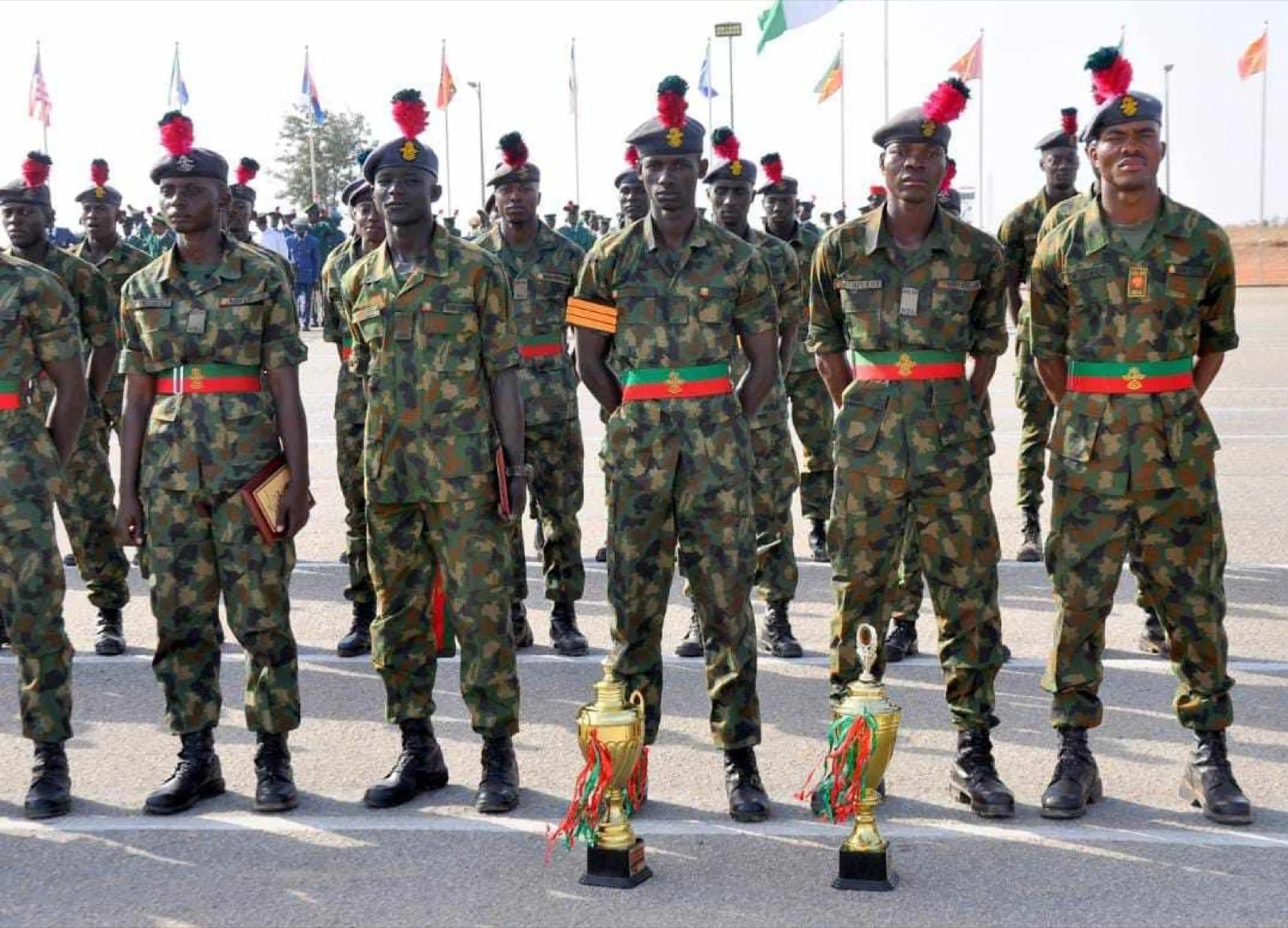
Nigerian Army soldiers at a military ceremony. (Wikimedia Commons)
Nigeria’s force structure has been shaped less by conventional inter-state deterrence and more than a decade of counter-insurgency operations against Boko Haram and its ISWAP offshoot in the Northeast, plus banditry in the Northwest. This has pushed procurement toward close air support, ISR and light attack platforms rather than heavy armour. Nigeria confirmed acquisition of Bayraktar TB2 unmanned combat aerial vehicles in 2021, which entered service alongside domestically assembled armoured personnel carriers and a mixed Chinese/Western fixed-wing inventory. Nigeria’s rotary-wing modernisation continues in parallel — see our coverage of Bell’s AH-1Z Viper attack helicopter production for Nigeria.
Ethiopia: large land force, recent large-scale combat experience
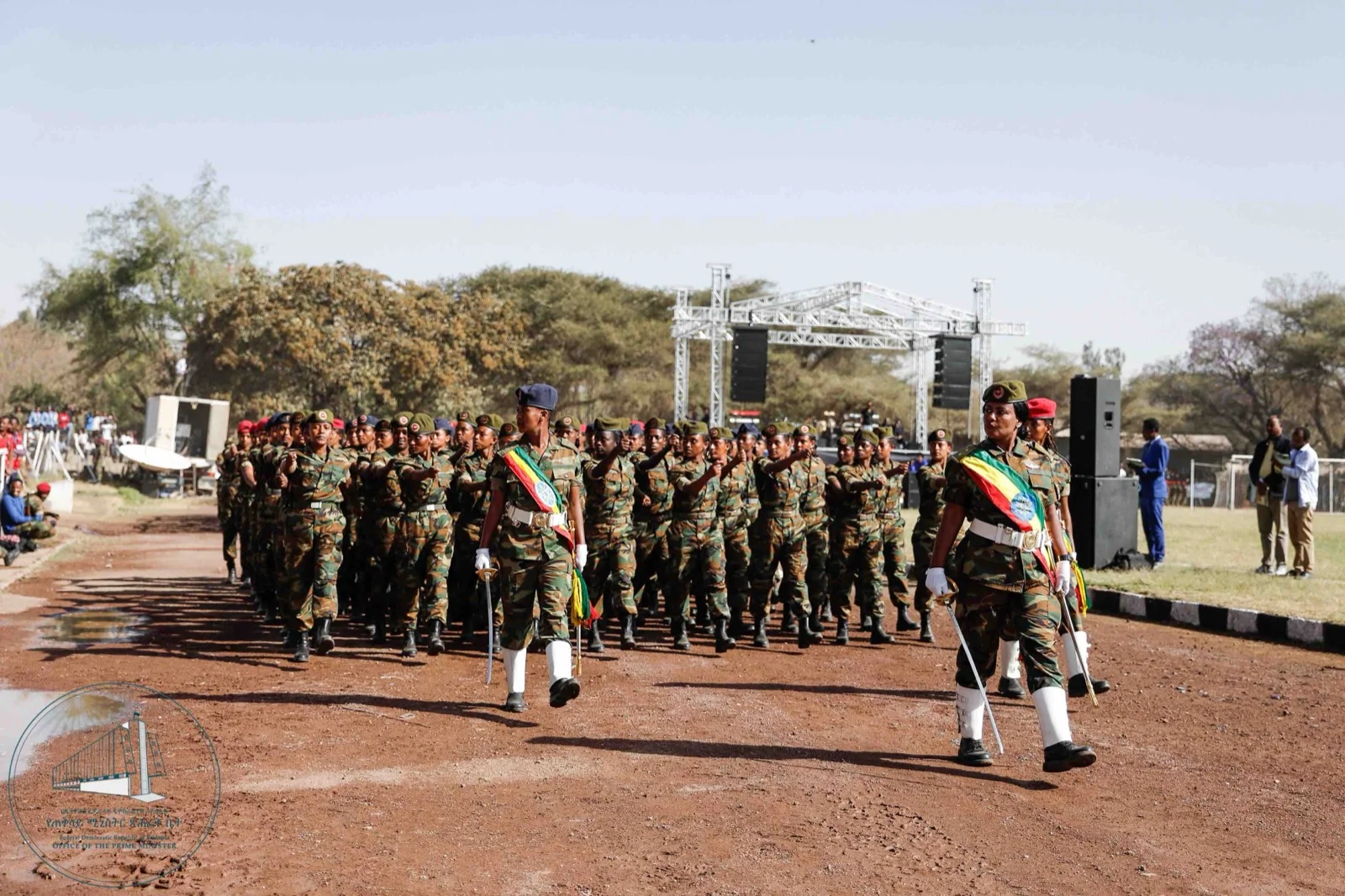
Ethiopian National Defence Force soldiers marching in a military parade. (Wikimedia Commons)
Ethiopia’s ground force expanded significantly during the 2020–2022 Tigray conflict, giving the Ethiopian National Defence Force (ENDF) recent large-unit combat experience that few African militaries currently have. Ethiopia’s use of Bayraktar TB2 UCAVs during that conflict is well documented in open-source and NGO reporting. Ethiopia’s airpower and naval capacity (the country is landlocked) remain comparatively limited relative to its land force size, and consistent, current budget disclosure is not publicly available.
South Africa: smaller force, deepest domestic defence industry
South African National Defence Force motorised infantry with Mamba armoured vehicles. (Wikimedia Commons)
South Africa fields a smaller active force than a decade ago — a trend widely attributed in South African parliamentary and defence-review reporting to sustained budget pressure — but retains the continent’s most vertically integrated domestic defence industrial base through Denel and private firms such as Paramount Group, which export armoured vehicles and light aircraft across Africa and the Middle East — part of a broader global picture covered in our look at the world’s most-exported armoured vehicles.
Morocco: US/French core, growing Turkish cooperation
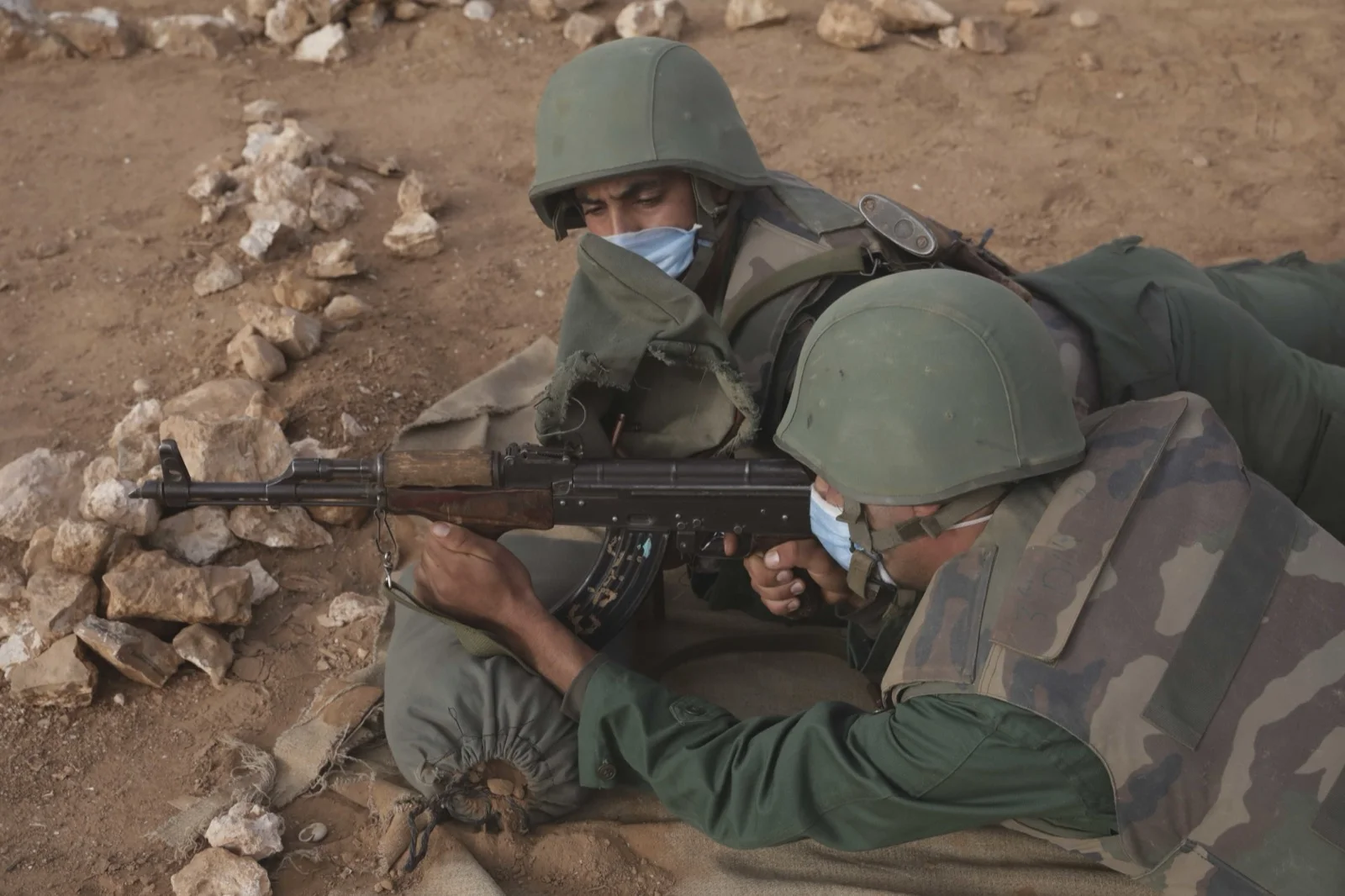
Royal Moroccan Armed Forces troops during Exercise African Lion. (Wikimedia Commons)
Morocco’s force structure remains anchored in US and French platforms (F-16s, Abrams-family armour), but Rabat has diversified in recent years, including confirmed acquisition of Bayraktar TB2 UCAVs (operational since 2021) and expanding naval cooperation discussions with Turkish shipyards. As with any procurement relationship, publicly confirmed contracts should be distinguished from reported interest or unverified claims; this article only labels a country a “confirmed operator” where acquisition or operational use has been documented in open reporting.
Kenya, Ghana, Tanzania, Uganda: the professionalised mid-tier
Kenya, Ghana, Tanzania and Uganda do not rank among Africa’s largest forces by raw personnel or budget, but each carries outsized regional weight through sustained African Union and UN peacekeeping deployments — Uganda and Kenya in Somalia via ATMIS/AUSSOM, Ghana and Tanzania in various UN missions. Kenya has pursued phased modernisation of its air and land forces; as of publication there is no confirmed Turkish UCAV acquisition by Kenya, Ghana or Tanzania, distinguishing them from Nigeria, Ethiopia and Morocco.
Turkish equipment in African militaries: confirmed vs. reported
Turkish defence exports have grown quickly across Africa over the past five years, led by Baykar’s Bayraktar TB2 and Aselsan’s sensor and communications systems. It is important to separate confirmed operators from reported interest, since procurement rumours circulate widely in regional media:
- Confirmed Bayraktar TB2 operators in Africa (documented acquisition or operational use in open reporting): Morocco, Ethiopia, Nigeria, Niger, Burkina Faso, Togo, Mali, Somalia.
- Reported/unverified interest: additional Sahel and East African states have been named in regional media as exploring UCAV procurement, but without a confirmed contract or delivery these should be treated as unverified claims, not operator status.
Turkey’s pitch across these markets typically centres on cost-effectiveness relative to Western equivalents, shorter delivery timelines, and a growing willingness to include technology-transfer or local-assembly components in contracts — factors regularly cited by African defence officials in public statements, alongside comparable offers from China and, in a smaller number of cases, from European and Gulf suppliers. The same technology-transfer pattern is visible outside Africa too, for example in Saudi Arabia–Türkiye defence industry relations, which moved from straight licensing to co-production over 2017–2026.
Frequently Asked Questions
Which country has the strongest military in Africa in 2026?
By most published aggregate indices, Egypt ranks first, driven by the size and diversity of its air force and armoured inventory, followed by Algeria and Nigeria.
Is Global Firepower’s ranking official military data?
No. GFP is a privately compiled open-source index. It is useful for rough comparison of scale but does not measure readiness, training or doctrine, and should be read alongside SIPRI and IISS data.
Does South Africa still have Africa’s most advanced military?
South Africa retains the continent’s deepest domestic defence-industrial base, but its active-duty force size and equipment inventory have both declined over the past decade due to budget constraints, according to South African parliamentary defence reporting.
Which African countries operate Turkish Bayraktar TB2 drones?
Confirmed operators include Morocco, Ethiopia, Nigeria, Niger, Burkina Faso, Togo, Mali and Somalia, based on documented acquisitions or confirmed operational use.
Are Sudan and Libya included in this ranking on the same basis as other countries?
They are listed with nominal pre-fragmentation force data, but both currently lack a single unified operational command due to ongoing internal conflict, which is noted directly in the ranking table rather than reflected in a misleadingly high rank.
Sources
- Stockholm International Peace Research Institute (SIPRI) – Military Expenditure Database
- International Institute for Strategic Studies (IISS) – The Military Balance
- Global Firepower – PowerIndex rankings (used as a supplementary, non-official comparative index)
- Respective national ministries of defence, where public disclosures exist
- Open-source reporting on Bayraktar TB2 acquisitions and operational use (Reuters, AP, and specialist defence outlets)
Last updated: 21 September 2026.