Saudi Arabia–Türkiye Defence Industry Relations: From Licence to Co-Production (2017–2026)

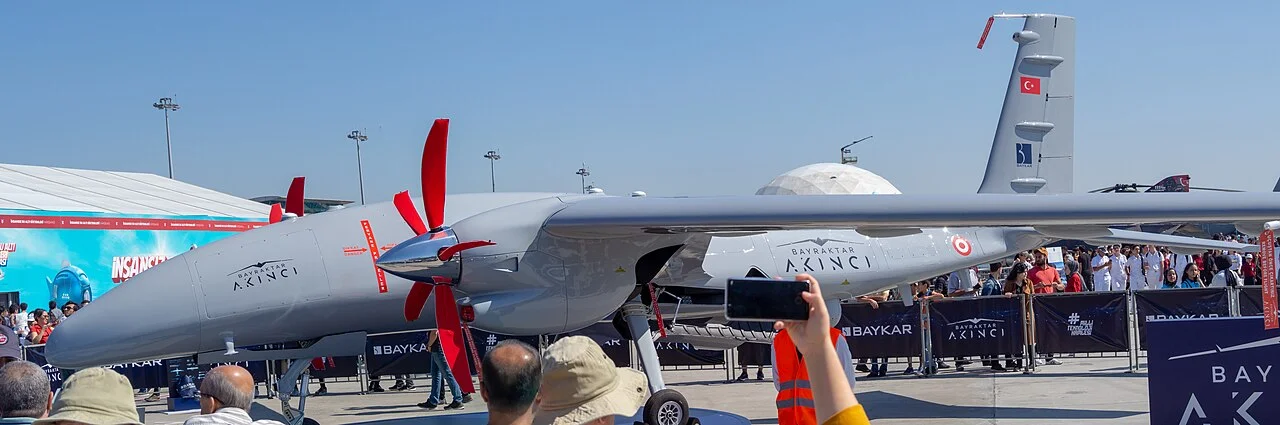
The Saudi Arabia–Türkiye defence industry line is a first in this series: it opened not with a product sale but with a licence. The Karayel-SU licence signed in Dubai in 2017 turned into production in the Kingdom in 2021; the 2023 AKINCI contract came with a commitment of up to 70% local content; in 2025 three Turkish companies signed technology-transfer agreements for land systems. This file reads nine years in one table and writes every item with its status.
This is the series’ third bilateral file. Saudi Arabia’s AKINCI decision was examined in the second file as a single procurement; that data is not repeated. What is added is the rest: the Karayel licence, the localisation agreements, SAMI’s memoranda, the land-systems complex, the KAAN talks and the Mecca Pact. The pattern set in the Pakistan and Poland files applies: contract, memorandum, talks and statement are written apart. The Turkish original is here.
Short answer: opened by a licence, deepened by local share
None of the nineteen files before this one began with a licence. In the Gulf, Qatar and Kuwait bought finished systems; the Balkans were donations and small fleets; Poland deepened through subsystem integration. The Saudi line opened in 2017 when a Turkish company (Vestel Savunma, now Lentatek) licensed a Saudi company (Intra Defense Technologies) to build a tactical armed drone, and in 2021 Intra and AEC actually started building it. Six years later the AKINCI contract carried the same logic into the heavy MALE class: sale plus up to 70% local content. In 2025 technology-transfer agreements with Nurol Makina, FNSS and Aselsan extended it to land systems. The line climbed three rungs: licence → local share → local complex. That is the new component this file adds to the Turkish package: the localisation ladder.
| Area | Item | Turkish company | Saudi party | Date | Status |
|---|---|---|---|---|---|
| Tactical UCAV | Karayel-SU licensed production | Vestel Savunma / Lentatek | Intra, AEC | Nov 2017 contract; Mar 2021 production | In production (Intra: 40 aircraft, 2021–2025) |
| Heavy MALE | Bayraktar AKINCI main contract | Baykar | Ministry of Defense | 18 Jul 2023 | Contract; quantity and value undisclosed |
| Localisation | Airframe, electrical, assembly, integration, test | Baykar | SAMI | 6 Aug 2023 | Agreement; lines being set up |
| Localisation | Electro-optical surveillance and targeting | Aselsan | NCMS | 6 Aug 2023 | Agreement |
| Localisation | Guidance kits and guided munitions | Roketsan | NCMS | 6 Aug 2023 | Agreement |
| UAV / space / electronics | Manufacturing capability, centre of excellence, electronics | Baykar, Fergani, Aselsan | SAMI | Jul 2024 | MoU (not a contract) |
| Land systems | Vehicles, armoured combat vehicles, turrets | Nurol Makina, FNSS, Aselsan | SAMI Land | 24 Jul 2025, IDEF | Technology-transfer agreement; SLIC Q4 2025 |
| Fighter | KAAN | TUSAŞ | — | Feb 2026 statements | Talks |
| Framework | Mecca Pact (trilateral defence agreement) | — | — | 7 Aug 2026 | Signed; Turkish ratification in progress |
Three things the table says. Six of nine items involve localisation or technology transfer: the line is about building industry more than selling products. The Turkish side has six companies; the Saudi side is almost a single entity, SAMI and its subsidiaries. And unlike Pakistan and Poland there is no reverse flow; what flows back is production scale, not product.
What did Saudi Arabia need?
Saudi Arabia holds one of the world’s largest defence budgets and the largest in the Middle East; its inventory is American, European and, over the last decade, Chinese. Vision 2030’s defence target is a single sentence: localise 50% of spending by the end of the decade. That target gained an institutional tool in 2017 when the Public Investment Fund founded SAMI. The need was therefore never only “which system” but “which system, with what local share” — and the Turkish line answered that question in a way no other buyer in the series received. The Karayel licence was the first trial in 2017; AKINCI scaled it up in 2023; land systems took it beyond drones in 2025.
Karayel-SU: the line that began with a licence
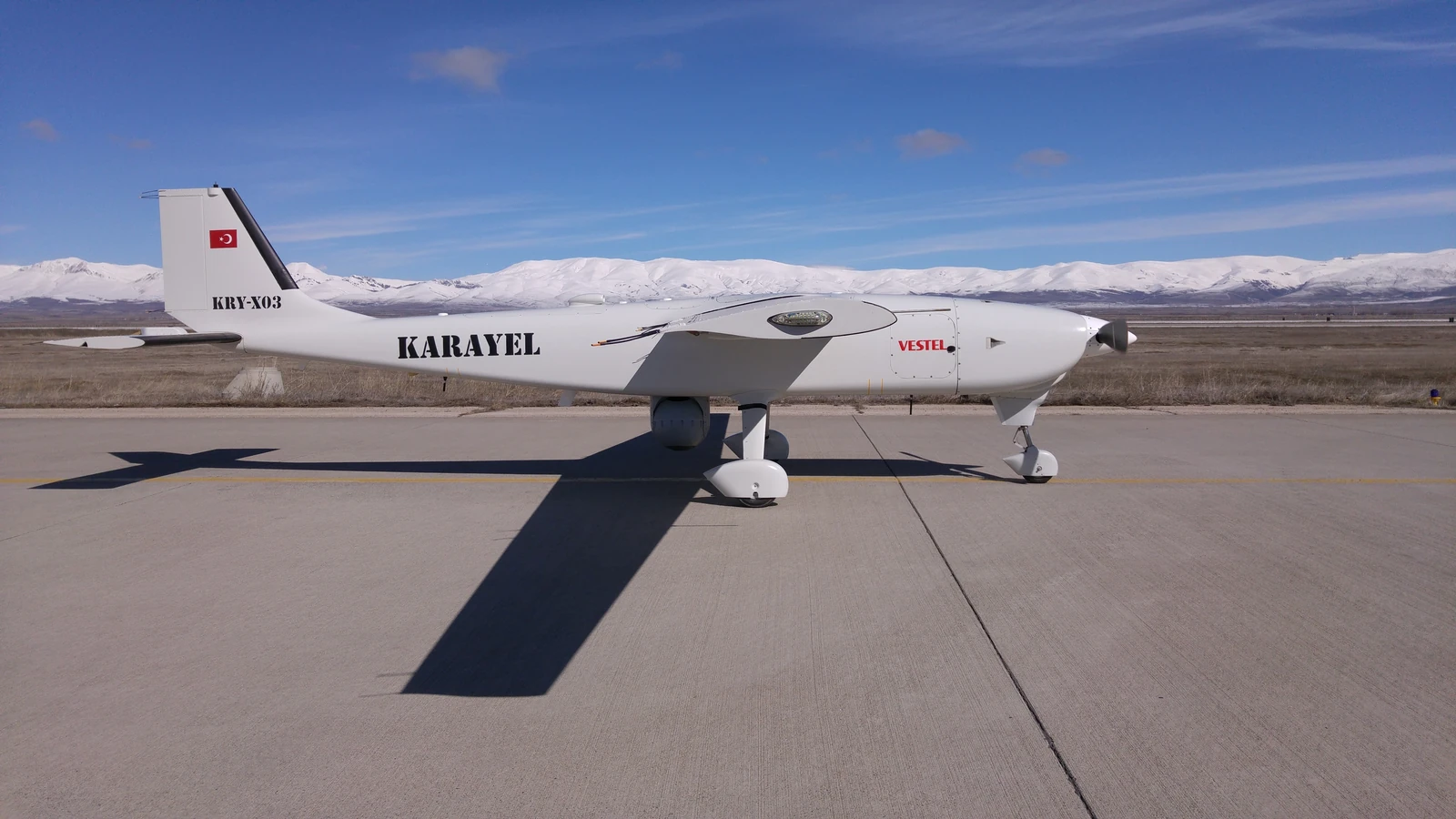
At the Dubai Airshow in November 2017 Vestel Savunma and Intra Defense Technologies signed a contract for licensed production of the Karayel-SU in Saudi Arabia. In March 2021 Intra and the Advanced Electronics Company (AEC) began production, AEC supplying electronics and Vestel the critical components. Intra announced a batch of 40 aircraft for 2021–2025; in Saudi service the aircraft is reported under the name Haboob. At WDS in Riyadh in February 2026 Intra displayed the Karayel with the locally developed Shalfa guided munition and said most of the munition’s manufacturing content was being localised in the Kingdom. Lentatek’s licence route is the quiet branch of Turkish drone exports outside Baykar and TUSAŞ, and the only case in the series where licence came before product.
AKINCI: a sale plus seventy percent
The AKINCI contract signed on 18 July 2023 during President Erdoğan’s visit to Jeddah was described by Baykar as the largest defence and aerospace export contract in the history of the Turkish Republic; quantity and value were not officially disclosed, and international press reported roughly $3 billion. The reasoning — endurance, munition independence, a closed US line — is in the second file. This file’s subject is what came nineteen days later, on 6 August 2023: SAMI–Baykar (airframe structures, electrical systems, ground equipment, final assembly, integration, testing and maintenance), NCMS–Aselsan (electro-optical surveillance and targeting) and NCMS–Roketsan (guidance kits and guided munitions), with a target of up to 70% local content. On 13 October 2025 the first Saudi operators graduated at Çorlu; Baykar has said production lines are being set up, with no date yet for the first local assembly. The AKINCI–MQ-9B comparison shows where the class sits.
SAMI: one buyer, six Turkish companies
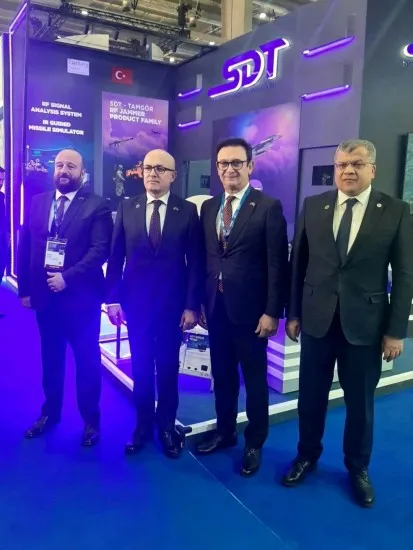
The Saudi counterpart on almost every item is the same: SAMI or its subsidiaries (NCMS, SAMI Land). In July 2024 in Riyadh, with Defense Minister Prince Khalid bin Salman witnessing, SAMI signed three memoranda: with Baykar on UAV manufacturing capability and intellectual-property transfer, with Fergani Space on a centre of excellence for space technologies, with Aselsan on localising advanced electronics. All three are memoranda; no contract has been announced, and the file writes them as such. But the three signatures show the line’s direction of growth — from drones into space and electronics. Among Aselsan’s export markets Saudi Arabia now appears on three separate lines: AKINCI subsystems, land turrets and electronics.
Land systems: SLIC and three agreements
At IDEF in Istanbul on 24 July 2025 SAMI Land signed technology-transfer agreements with three Turkish companies: Nurol Makina for military vehicle production, FNSS for armoured combat vehicles and weapon turrets, Aselsan for local manufacture of combat turret systems. Turkey’s SSB president Haluk Görgün and GAMI governor Ahmed Al-Ohali attended. Production is planned at the SAMI Land Industrial Complex (SLIC), due to open in the fourth quarter of 2025: 4×4, 6×6 and 8×8 armoured vehicles and armed turrets. Quantities and values were not disclosed. Turkish armoured vehicles sold as finished products in the Balkans and Africa are here transferred as production technology; unlike the Romanian joint venture, the line is built under the roof of the Saudi complex rather than the Turkish company.
Why no price is written
There is not a single official value in this file. Neither side disclosed the AKINCI contract value; the Karayel licence, the SAMI Land agreements and the memoranda are equally undisclosed. Local share is one reason: part of the value goes not to the Turkish company but to the Saudi production line, and the two accounts are separate. The file therefore makes no unit-price comparison with the Kuwaiti and Qatari packages, and the cost-effectiveness score reflects that uncertainty.
Training and munitions
Training runs on two levels: operator training in Türkiye (first graduation 13 October 2025, Çorlu) and production training in Saudi Arabia under the test-and-maintenance clause of the SAMI–Baykar agreement. Munitions are an upgraded version of the series’ most repeated component, “munitions in the same package”: the Roketsan–NCMS agreement provides for producing guidance kits and guided munitions in the Kingdom, and on the Karayel line Intra developed its own Shalfa munition. The third-country licence problem thus disappears not only in sale but in production. The munition-integration model that turned the TB2 into an export product has, on the Saudi line, become local munition production.
Alternatives and complements
| Item | Turkish offer | Other line | Outcome |
|---|---|---|---|
| Tactical UCAV | Karayel-SU licence | Indigenous Saqr programme; Chinese CH-4 | Karayel in local production; CH-4 in service |
| Heavy MALE | AKINCI + up to 70% local share | Wing Loong II (local assembly); MQ-9 not cleared | AKINCI; Chinese line continues |
| Electro-optics / guidance | Aselsan, Roketsan (with NCMS) | Chinese and European subsystems | Turkish subsystems, local production |
| Land vehicles and turrets | Nurol, FNSS, Aselsan (SAMI Land) | US, French, South African lines | Technology-transfer agreement |
| Air defence | — | Patriot, THAAD (US) | US line; no Turkish offer |
| Fighter | KAAN (talks) | F-15, Eurofighter; F-35 request | No decision |
The row to read is the second: Saudi Arabia added the Turkish line beside the Chinese one, not in its place. CH-4 has been in service since 2014 and a Wing Loong II local-assembly deal dates from 2017; AKINCI arrived in 2023. The dual-sourcing pattern seen in Africa applies here at larger scale, and the file makes no superiority claim. Air defence is entirely a US line — Patriot and THAAD — and the SİPER–Patriot comparison shows where the Turkish offer stands in that segment, but there is no air-defence item on the Saudi line. Analysts discussed KORKUT and HİSAR-O after the Mecca Pact; the file records that as analysis, not as an item.
KAAN: talks, not a contract
Saudi talks on KAAN have been public since 2025. TUSAŞ general manager Mehmet Demiroğlu said in February 2026 that they were in their final stages; President Erdoğan said on 5 February 2026 that they continued. The press reported quantities and a production line; this file writes neither. If the talks become a contract, the Saudi line would carry the series’ first fighter export and KAAN’s place in the fifth-generation class would open a new comparison in the Gulf — as the Egypt discussion already does in Africa. If not, the line stays where it is, in drones and land systems. The file makes no forecast.
The Saudi version of the Turkish package
In the Gulf we counted four components: record, munitions, permission and production share. The Balkans added donation and in-alliance reference, Central Asia the full catalogue, Pakistan the buyer’s shipyard and reverse flow, Poland subsystem integration and alliance logistics. The Saudi line adds one component and enlarges another: the localisation ladder and one buyer, many companies.
The localisation ladder
Production share appeared only on the Saudi row of the Gulf file; this file shows that row has three rungs. First rung, licence (Karayel-SU, 2017): the Turkish company gives the design, the Saudi company builds. Second rung, local share (AKINCI, 2023): the Turkish company sells the product, up to 70% of airframe and subsystems are built in the Kingdom, and three Turkish primes sign separately with three Saudi partners. Third rung, complex (SAMI Land, 2025): Turkish companies transfer technology and production happens under the roof of a Saudi complex. The difference from Indonesia’s co-development and Pakistan’s buyer shipyard is that every rung on the Saudi side connects to a single industrial builder.
One buyer, many companies
On the Turkish side: Baykar, Lentatek, Aselsan, Roketsan, Nurol Makina, FNSS and, at talks stage, TUSAŞ. On the Saudi side: SAMI, NCMS, SAMI Land, Intra and AEC — all tied to the Vision 2030 localisation goal. This differs from the UAE, which enters the Turkish sector as an investor; Saudi Arabia enters as a producer. The “permission from a single capital” component seen in Central Asia applies here too, with local-production permission on top: Türkiye is the party allowing its own product to be built in another country.
What changed in nine years?
The timeline shows three phases: 2017–2021 licence and production start, 2023 AKINCI and the localisation agreements, 2024–2026 memoranda, land systems and a framework agreement. The turning point is 2023: a main contract and three localisation agreements within nineteen days.
What is official and what is in talks
| Item | Source | Status | Note |
|---|---|---|---|
| Karayel-SU licensed production | Vestel/Lentatek, Intra statements | Official; in production | 40 aircraft 2021–2025 per Intra; Haboob name per press |
| AKINCI main contract | Baykar statement, 18 Jul 2023 | Official contract | Quantity and value undisclosed; ~$3bn per press |
| Three localisation agreements | SAMI, Baykar, Aselsan, Roketsan, 6 Aug 2023 | Official agreement | Up to 70% local share; lines being set up |
| Operator training | Baykar, 13 Oct 2025 | Official | First graduation at Çorlu; no delivery schedule |
| SAMI memoranda | SAMI, Jul 2024 | MoU | Baykar, Fergani, Aselsan; no contract |
| SAMI Land agreements | SAMI, SSB, 24 Jul 2025 | Technology-transfer agreement | Nurol, FNSS, Aselsan; no quantity or value |
| Shalfa munition | Intra, WDS Feb 2026 | Manufacturer statement | Integrated on Karayel; built in the Kingdom |
| KAAN | TUSAŞ and Presidency, Feb 2026 | Talks | No quantity or schedule |
| Mecca Pact | Three governments, 7 Aug 2026 | Framework | Ratification in progress; industry clause not yet a contract |
The table shows where the next rung lies: if the KAAN talks and the Mecca Pact’s industry clause become contracts, the Saudi line moves from drones and land systems to fighters. Today both are talks and framework; the pact’s industrial dimension is on analysts’ agenda and its deterrence clause is being tested by regional events.
EM-PFI assessment
The score assesses the whole relationship, not one contract. The AKINCI decision was scored separately in the second file; the whole relationship — Karayel licence, SAMI Land agreements, munition production — sits in the series’ upper band on technology transfer and local production.
| Criterion | Weight | Score | Rationale |
|---|---|---|---|
| Operational need | 20 | 18 | Long endurance, guided-munition independence, vehicle renewal |
| Technical fit | 15 | 13 | Heavy MALE and tactical UCAV; modular architecture suited to local build |
| Geography and climate | 10 | 9 | Desert climate; Karayel built locally since 2021 |
| Inventory compatibility | 10 | 7 | US- and China-heavy inventory; Turkish line a separate layer |
| Logistics | 10 | 8 | Air and sea routes; local production shortens the chain |
| Cost-effectiveness | 10 | 8 | Value undisclosed; local share spreads cost between two parties |
| Delivery and production | 10 | 8 | Operators graduated; AKINCI lines being set up; SLIC on schedule |
| Technology transfer | 5 | 4 | Licence, 70% local share, turret technology; design transfer limited |
| Local production | 5 | 4 | Karayel in production; AKINCI and land systems being set up |
| Modernisation path | 5 | 4 | KAAN in talks; Mecca Pact industry framework |
| Total | 100 | 83 | Strong preference |
The breakdown inverts the series’ backbone: most files showed fast delivery and low industrial share; here industrial share is high and delivery and cost less certain. It is the mirror image of Poland: integration without production there, production without alliance logistics here.
Risks and limits
This section exists not to weaken the Turkish product but to make the file usable.
| Item | Status | What it means |
|---|---|---|
| AKINCI quantity and value | No official disclosure | Unit cost and fleet scale cannot be derived; press figure kept as press |
| Local production schedule | Lines being set up; no first-assembly date | Localisation at commitment stage; no output announced beyond Karayel |
| Memoranda | SAMI–Baykar/Fergani/Aselsan (2024) not yet contracts | Not written even as forecast |
| KAAN | Talks | No quantity, schedule or production line; not written |
| Weight of the Chinese line | CH-4 and Wing Loong II in service | Turkish line came beside, not instead of, the Chinese line |
| Air defence and fighters | US and European lines | Turkish line in drones and land systems; not on main platforms |
| Mecca Pact | Ratification in progress; industry clause a framework | Industrial effect not yet a contract |
| Reverse flow | None | One-way flow of products and technology |
Where is this line going?
Back to the opening definition: a line opened by a licence and deepened by local share. Saudi Arabia took from Turkish industry what the US and Chinese lines did not give — permission to build locally. The Karayel licence, AKINCI’s 70%, the land-systems complex: three versions of the same sentence. In return Turkish companies gained production scale in the country with the Gulf’s largest budget and a reference in one of the region’s strongest militaries. No other line in the series carries so high a local-share commitment; Pakistan is deeper through joint design and Poland more bound through alliance logistics, but neither is as production-centred. Nine items in nine years, six Turkish companies and a one-way flow: that is the line’s measure.
The next rung depends on two items: the KAAN talks becoming a contract and the Mecca Pact’s industry clause becoming working groups and production lines. If both do, the Saudi line carries the series’ first fighter export; if not, it stays as it is — licence, local share, complex — and that is already an upper rung. WDS 2028 and the first locally assembled AKINCI are the places to watch. This file wrote only what was signed or entered production.
Reading the line from Washington and Beijing
For a reader who follows the US and Chinese lines into the Gulf, the Saudi–Turkish line is neither a replacement nor a rival. The US line holds the main platforms — fighters, air defence, heavy armour — and the MQ-9 was never cleared for the Kingdom. The Chinese line filled the armed-drone gap from 2014 with CH-4 and, from 2017, Wing Loong II local assembly, but with limited local content. The Turkish line entered where the other two left room: a licensed tactical drone, a heavy MALE with a 70% local-share commitment and, from 2025, land-systems technology transfer. Three lines coexist in one inventory, each in its own segment, and this file makes no claim about which is superior. The one sentence to take away: the Saudi line is the only case in the series where Turkish industry sold a country not a product but permission to produce — beginning with a licence and continuing with a percentage.
Frequently asked questions
What has Saudi Arabia bought from Türkiye?
Verified items: licensed production of the Karayel-SU (Vestel Savunma–Intra contract, November 2017; Intra and AEC began production in March 2021), the Bayraktar AKINCI main contract (18 July 2023) and the three localisation agreements that complete it (SAMI–Baykar, NCMS–Aselsan, NCMS–Roketsan, 6 August 2023; up to 70% local share), and SAMI Land’s technology-transfer agreements with Nurol Makina, FNSS and Aselsan (IDEF, 24 July 2025). SAMI’s July 2024 memoranda and the KAAN talks are not contracts.
How many AKINCIs, and for how much?
Not officially disclosed. Baykar described the contract as the largest defence and aerospace export contract in the history of the Turkish Republic; international press reported roughly $3 billion. This file keeps the press figure as a press figure and writes no quantity. The reasoning behind the decision is in the series’ second file (Turkish).
What do the localisation agreements cover?
Three agreements signed on 6 August 2023. SAMI–Baykar: airframe structures, electrical systems, ground equipment, final assembly, system and payload integration, testing and maintenance. NCMS–Aselsan: electro-optical surveillance and targeting systems. NCMS–Roketsan: guidance kits and guided munitions. The target is up to 70% local content in the Kingdom — the highest local-share commitment in the series.
How is the Karayel-SU built in Saudi Arabia?
Under a licence contract signed by Vestel Savunma (Lentatek since 2022) and Intra Defense Technologies at the Dubai Airshow in November 2017. In March 2021 Intra and the Advanced Electronics Company (AEC) began production: AEC supplies electronics, Vestel the critical components. Intra announced a batch of 40 aircraft for 2021–2025; in Saudi service the aircraft is reported under the name Haboob. At WDS in February 2026 Intra displayed the Karayel with the locally developed Shalfa munition.
What is SAMI and why is it on every agreement?
Saudi Arabian Military Industries, founded in 2017 by the Public Investment Fund, is the main vehicle for Vision 2030’s goal of localising 50% of defence spending. The Saudi side of the AKINCI localisation, the drone-space-electronics memoranda and the land-systems agreements is SAMI or its subsidiaries. The buyer works through one industrial builder; the Turkish side involves six companies.
What are the SAMI Land agreements?
Signed at IDEF in Istanbul on 24 July 2025: Nurol Makina for military vehicle production and technology transfer, FNSS for armoured combat vehicles and weapon turrets, Aselsan for local manufacture of combat turret systems. Production is planned at the SAMI Land Industrial Complex (SLIC), due to start operating in the fourth quarter of 2025: 4×4, 6×6 and 8×8 armoured vehicles and armed turrets. Quantities and values were not disclosed.
Will KAAN be sold to Saudi Arabia?
No decision. TUSAŞ general manager Mehmet Demiroğlu said in February 2026 that talks were in their final stages; President Erdoğan said on 5 February 2026 that talks continued. The press reported numbers; this file writes none and keeps KAAN at talks status.
How does the Mecca Pact affect the relationship?
The trilateral defence agreement signed by Türkiye, Saudi Arabia and Pakistan on 7 August 2026 pairs a mutual-defence clause with a commitment to develop defence cooperation in all its dimensions. Turkish parliamentary ratification is in progress. The industrial effect has not yet become a contract; the file records the pact as a framework and makes no forecast.
What were Saudi Arabia’s alternatives?
In the heavy MALE class, the Chinese CH-4 (in service since 2014) and Wing Loong II (2017 local assembly deal); the US MQ-9 line was not cleared for sale to the Kingdom. Saudi Arabia added the Turkish line alongside the Chinese one, not in place of it; the file makes no superiority claim.
What has Türkiye bought from Saudi Arabia?
This file verifies no reverse flow — the difference from the Pakistan and Poland files. The relationship is a one-way flow of products and technology; what flows back is industrial investment and production scale.
How real is Turkish production in Saudi Arabia?
Three levels. Karayel-SU has been in production since 2021 (Intra statement). For AKINCI, Baykar has said production lines are being set up; no date for the first local assembly has been given. The land-systems complex was announced with a Q4 2025 start. The file writes the three at separate statuses.
Where does this relationship sit in the series?
The third bilateral file. Pakistan was joint design and a buyer’s shipyard; Poland was subsystem integration and alliance logistics; the Saudi line is the localisation ladder — the only line that began with a licence and continued with a percentage share. EM-PFI 83/100, ‘Strong preference’ band.
What does the EM-PFI score mean?
Saudi Arabia × Turkish defence industry: 83/100. Among the series’ highest on technology transfer and local production; lower on inventory compatibility and cost because the inventory is US- and China-heavy and the contract value is undisclosed. It is Envanter Medya’s editorial assessment.
What happened in October 2025?
On 13 October 2025 the first Saudi AKINCI operators completed training at Baykar’s Çorlu facility — the first publicly announced operational step after the contract. No delivery schedule was disclosed.
What comes next?
On the verified calendar: local AKINCI production, the SLIC production start and completion of the Karayel-SU batch. KAAN is in talks, the Mecca Pact is a framework and SAMI’s Fergani and Aselsan memoranda remain memoranda. This file writes only what was signed or entered production.
Other files in the series
The “Why They Chose the Turkish Defence Industry” series goes beyond individual export headlines to examine the buyer’s need, the alternatives on the table and the contract structure.
- Why do Gulf states choose Turkish drones?
- Why is the Turkish defence industry growing in the Balkans?
- Why are Central Asian states turning to Turkish drones?
- Pakistan–Türkiye defence industry relations
- Poland–Türkiye defence industry relations
The full series and regional breakdowns are on the Türkiye defence exports hub (Turkish).
Sources and method
- Baykar statements — Saudi AKINCI contract (18 July 2023); localisation agreement with SAMI (6 August 2023); first Saudi operators’ graduation (13 October 2025)
- SAMI statements — NCMS–Aselsan and NCMS–Roketsan agreements (6 August 2023); memoranda with Baykar, Fergani Space and Aselsan (July 2024); SAMI Land agreements with Nurol Makina, FNSS and Aselsan (IDEF, 24 July 2025)
- Vestel Savunma / Lentatek and Intra Defense Technologies statements — Karayel-SU licence contract (Dubai Airshow, November 2017); production start and 40-aircraft batch (March 2021); WDS 2026 Shalfa display
- TUSAŞ and Turkish Presidency statements — KAAN talks (February 2026)
- Turkish, Saudi and Pakistani government statements — Mecca Pact (7 August 2026)
- Saudi Vision 2030 documents — 50% localisation target; SAMI founding (2017)
- SIPRI, March 2026 — Türkiye’s export ranking and recipients
- International defence press — items at talks or statement status marked in the tables
Method note. Every item is written with its status — contract, agreement, memorandum, talks, statement; memoranda and talks are not presented as contracts. AKINCI quantity and value are undisclosed and therefore not written; the press figure is marked as press. The Karayel-SU quantity rests on an Intra statement and the Haboob name on press reports. The Chinese line is written as a coexisting line, not a rival; no superiority claim. The Mecca Pact is written as a framework with no forecast of its industrial effect. EM-PFI is Envanter Medya’s editorial assessment, not an official index.