Türkiye and Russia’s Military Drone Programmes: Why a Great Aviation Industry Came Late


Russia holds one of the world’s oldest aircraft design traditions. Sukhoi, MiG, Tupolev, Yakovlev — all were building combat aircraft before Türkiye had an aviation industry at all. Yet it came late to unmanned aircraft, and by 2026 the table reads the opposite way to what that heritage would suggest. This file sets the two timetables side by side to show why a large aviation base was not enough on its own.
The short answer
Russia’s delay in unmanned aircraft is not an engineering problem. The issue is when, and by which route, the system began to be built. The Russian army’s reconnaissance drone gap became visible in the 2008 Georgia war; Moscow responded by buying 12 unmanned aircraft from Israel in 2009 and signing a $400 million joint production agreement in October 2010. In other words Russia started six years after Türkiye signed the ANKA contract, and did so through licensed production rather than original design.
That route broke in 2014: when Israel halted component supply, Russia had to indigenise a platform it had been assembling, in a hurry. The original programmes — Orion, Altius, Okhotnik — had begun in 2011, but results came slowly. Orion first flew in October 2016 and was delivered to its user in April 2020. By that date Türkiye’s TB2 had been in the inventory for six years, armed for five and exported for two. The first export contract for a Russian-designed drone was announced only in December 2024.
How this comparison was built
This is the fourth file in the series. The first set out the eight-country picture, the second the Türkiye–Europe axis and the third the ANKA–TAPAS pair. Here the comparison is not between single platforms but between the whole of two countries’ unmanned aircraft programmes, because on the Russian side there is no single flagship — there are several programmes running in parallel.
The programme start is taken as the formal development decision or contract date. For Russia that means the 2011 Inokhodets, Altius and heavy-class contracts; the 2009–2010 Israeli purchase and licence agreement are treated as a separate starting branch. For Türkiye it is December 2004 for ANKA and 2007 for Baykar’s tactical-class work.
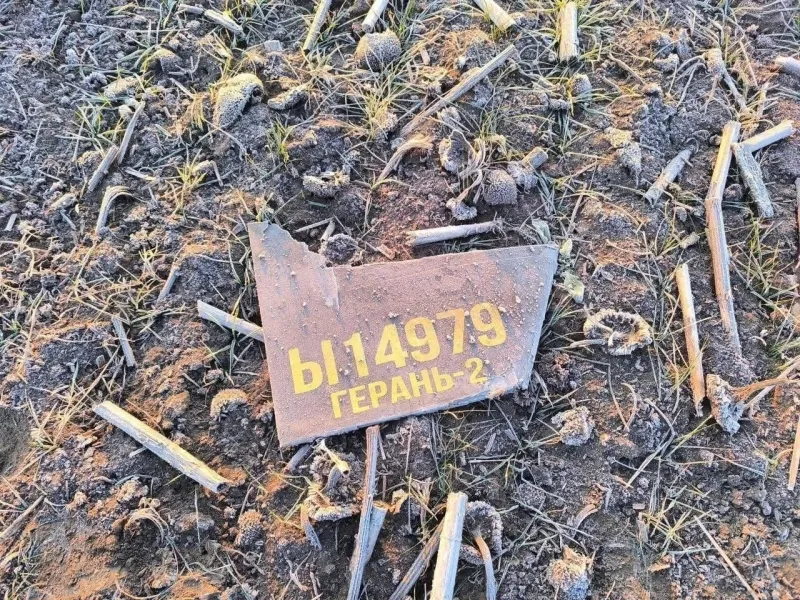
Class separation is especially critical in this file. Geran-2 and similar platforms are loitering munitions; they are not MALE drones or unmanned combat aircraft and are excluded from the measurement tables. Without that distinction, Russia’s production scale gets confused with programme development performance — and the two measure different things.
2008: Russia’s starting moment
The modern era of Russian unmanned aircraft programmes did not begin with a technology breakthrough but with a deficiency becoming visible. In the 2008 Georgia war Russian forces were left without effective unmanned reconnaissance on the battlefield, while the other side was flying Israeli-built long-endurance tactical UAVs. The result was a capability gap openly discussed in Russian military literature.
Moscow’s response was fast but indirect. Within a year of the war, 12 unmanned aircraft were bought from Israel Aerospace Industries for roughly $53 million. In October 2010 the two sides reached a much larger step: a joint production agreement worth about $400 million. The production licence passed to the Ural Civil Aviation Plant (UZGA) in Yekaterinburg and assembly began in 2012. The platform was named Forpost in Russian service and operated in Syria from 2015.
The dating here is decisive for the whole file. When Russia took that first step, Türkiye’s ANKA contract was six years old and Baykar’s tactical-class work was in its third year.
The licence route broke in 2014
Licensed production is a sensible shortcut on paper: buy a mature design, build the assembly capability, indigenise over time. That is exactly what Russia planned. But in 2014, following the annexation of Crimea, Israel halted component supply and the shortcut closed.
UZGA then developed an indigenised version: the engine was replaced with a domestic unit, and the ground control station and data link were rebuilt with Russian production. The resulting Forpost-R entered the inventory from 2019. Russia therefore had to indigenise not gradually as planned but under embargo pressure and at speed.
This is one of the most instructive parallels in the series. Türkiye had a comparable experience in the 2000s, discovering that dependence on foreign critical subsystems can be cut off at the moment of operations. Both countries learned the same lesson; but Türkiye learned it while building the programme, Russia while the programme was running.
| Dimension | Licensed production (Russia, 2009–2010) | Original design (Türkiye, 2004–2007) |
|---|---|---|
| Reaching first capability | Fast — assembly began in 2012 | Slow — ANKA flew in 2010, TB2 entered the inventory in 2014 |
| Initial cost | High upfront: 12 platforms for $53 million, licence for $400 million | Long-run R&D spending |
| Supply risk | Dependent on the supplier country | Dependent on the domestic chain |
| Embargo resilience | Component flow cut in 2014 | The programme suffered no comparable interruption |
| Design knowledge | Assembly knowledge transferred, design source not | Design knowledge held by domestic institutions from the outset |
| Export possibility | Closed to re-export | Exports opened in 2018 |
The first row also shows why the licence route was a reasonable choice: Russia reached a usable field reconnaissance capability earlier than Türkiye brought its own platform into service. The route was not wrong at the outset; its fragility appeared only when the relationship with the supplier country changed. The scale of the industrial base behind these programmes is set out in our review of Russian military inventory.
A shared timeline
Turkish and Russian drone programmes: 2004–2026
The left column shows events on the Turkish side, the right column those on the Russian side.
Sources: Baykar and TUSAŞ statements; public programme records relating to the Russian defence ministry, Kronshtadt, UZGA and Sukhoi.
Critical transition times
The chart below counts years from each programme’s own start, not calendar years, so Russia’s later start does not distort the comparison.
Milestones by programme age
Red dashed bars mark stages not reached to date.
Envanter Medya compilation. The ANKA row is included as the MALE-class reference line.
What the chart shows is more than a speed difference. Every bar on the Turkish side marks a completed transition: entered service, armed, exported. On the Russian side two bars never closed — Altius stopped at three demonstrators, and Okhotnik’s serial production was planned for the second half of 2024 but did not begin; two aircraft have been built. Orion did complete its transitions, but reached each of them two to four years later.
The starting conditions were not the same
Most of the differences favoured Russia
- Aircraft design tradition: Russia’s design bureaus carry decades of fighter, bomber and transport aircraft experience.
- Engine industry: Russia is one of a handful of countries producing its own turbofan and turboprop engines.
- Budget and scale: the Russian defence budget was markedly larger than Türkiye’s throughout the comparison.
- Subsystem base: an established industry existed in radar, electronic warfare, sensors and communications.
- Combat experience: Russia made intensive use of the opportunity to test its programmes in real operational conditions.
The list is here to sharpen the file’s question. Russia started with an older aviation tradition, its own engine industry and a larger budget, and still fell behind on the items that turn a design into a product. An industrial base does not determine a programme’s speed on its own.
Compound delay: how five years became ten
Russia began its modern drone effort roughly five to seven years after Türkiye. But the 2026 picture does not show a five-year gap; on some items the difference exceeds ten years. The reason is that developing unmanned aircraft is a cumulative process.
The mechanism works like this. Once a platform enters service it starts producing field data; that data corrects the next configuration; the corrected configuration becomes exportable; exports return data from different climates and operating conditions and feed the production line independently of domestic demand. Türkiye entered that loop in 2014. Russia reached the first link of the same loop — delivery of an original design to a user — only in 2020, and opened the export link in 2024.
The initial five-year gap was therefore multiplied at every turn of the loop. This is the local form of a finding that recurs across the series and is set out in the ANKA–TAPAS file under the heading “flight hours are the real fuel of maturity”. Starting late is a recoverable disadvantage on its own; starting late and entering the feedback loop late compounds into something much harder to recover.
Institutional continuity: the Altius case
The finding that recurs in every file of this series is that what ends a programme is usually not technical difficulty but a break in continuity. The Russian Altius programme is the textbook example.
It began in October 2011 with a contract worth roughly 3 billion roubles signed with OKB Sokol in Kazan. The first demonstrator, Altair, flew in August 2016 — a reasonable schedule. The programme then entered an institutional crisis: in April 2018 the general director of OKB Sokol was detained on suspicion of embezzling 900 million roubles allocated to Altius. At the end of 2018 the defence ministry transferred the project to UZGA. Under the new contractor a third demonstrator, Altius-U, flew in 2019, and a state contract for a first batch was reported in February 2021.
Fifteen years on, the result is three demonstrators. For comparison: over the same period ANKA entered a user inventory, was exported to three countries and became the subject of a joint production memorandum abroad. Both programmes flew, technically. One changed prime contractor; the other did not.
The cost of a contractor change is not only lost calendar time. The new contractor has to re-seat the inherited design in its own production infrastructure, supplier network and quality system; part of the test campaign is effectively repeated. So the programme’s age keeps advancing while its maturity clock resets. The mechanism seen in the move from Talarion to Telemos to Eurodrone in the European file is fundamentally the same as the one seen in Altius: restarting costs more than delay.
Russia’s unmanned inventory: class and design origin
Assessing Russian unmanned systems under a single heading would be misleading; the inventory is markedly divided by class and by design origin. The table below shows that division.
| Platform | Class | Design origin | Status |
|---|---|---|---|
| Forpost / Forpost-R | Tactical reconnaissance UAV | Israeli design, licensed production | In service, in serial production |
| Orion / Inokhodets | Medium-altitude reconnaissance-strike | Original Russian design | In service, exports just opened |
| Sirius / Inokhodets-RU | Medium-altitude, improved | Original Russian design | Contracted in 2021 |
| Altius | Long endurance | Original Russian design | Three demonstrators; no serial production |
| S-70 Okhotnik | Unmanned combat aircraft | Original Russian design | Two aircraft; serial production has not begun |
| Geran-2 | Loitering munition | Iranian design, licensed production | In mass production — excluded from the measurement tables by class |
The pattern is this: both systems that reached mass production are of foreign design origin, and none of the original Russian designs has yet reached that volume. That is not a verdict on Russian engineering but an observation about programme management: producing a design and converting a design into volume production are separate capabilities, and Russia has so far achieved the second only with ready-made designs.
The heavy unmanned combat class: two different trajectories
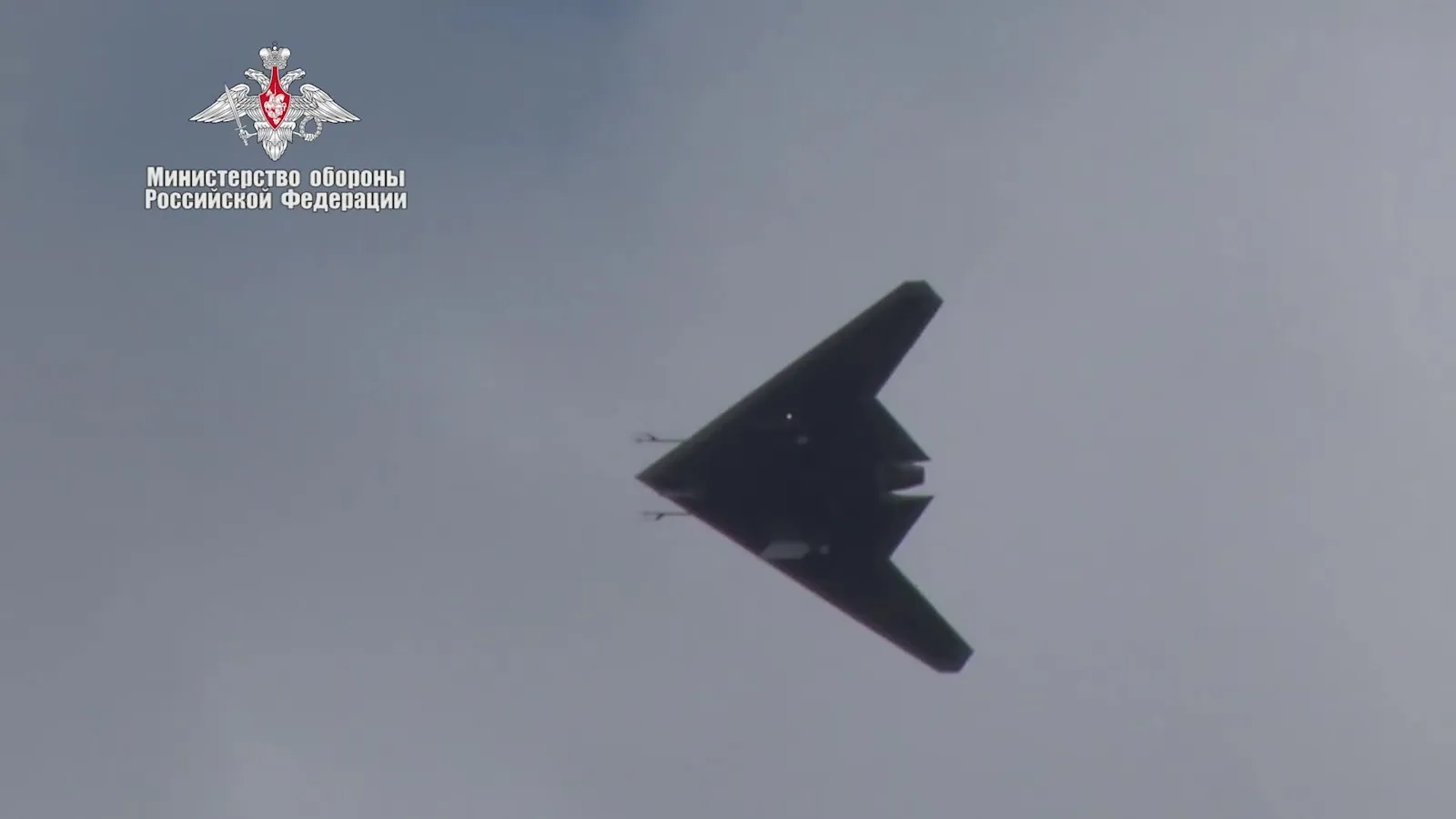
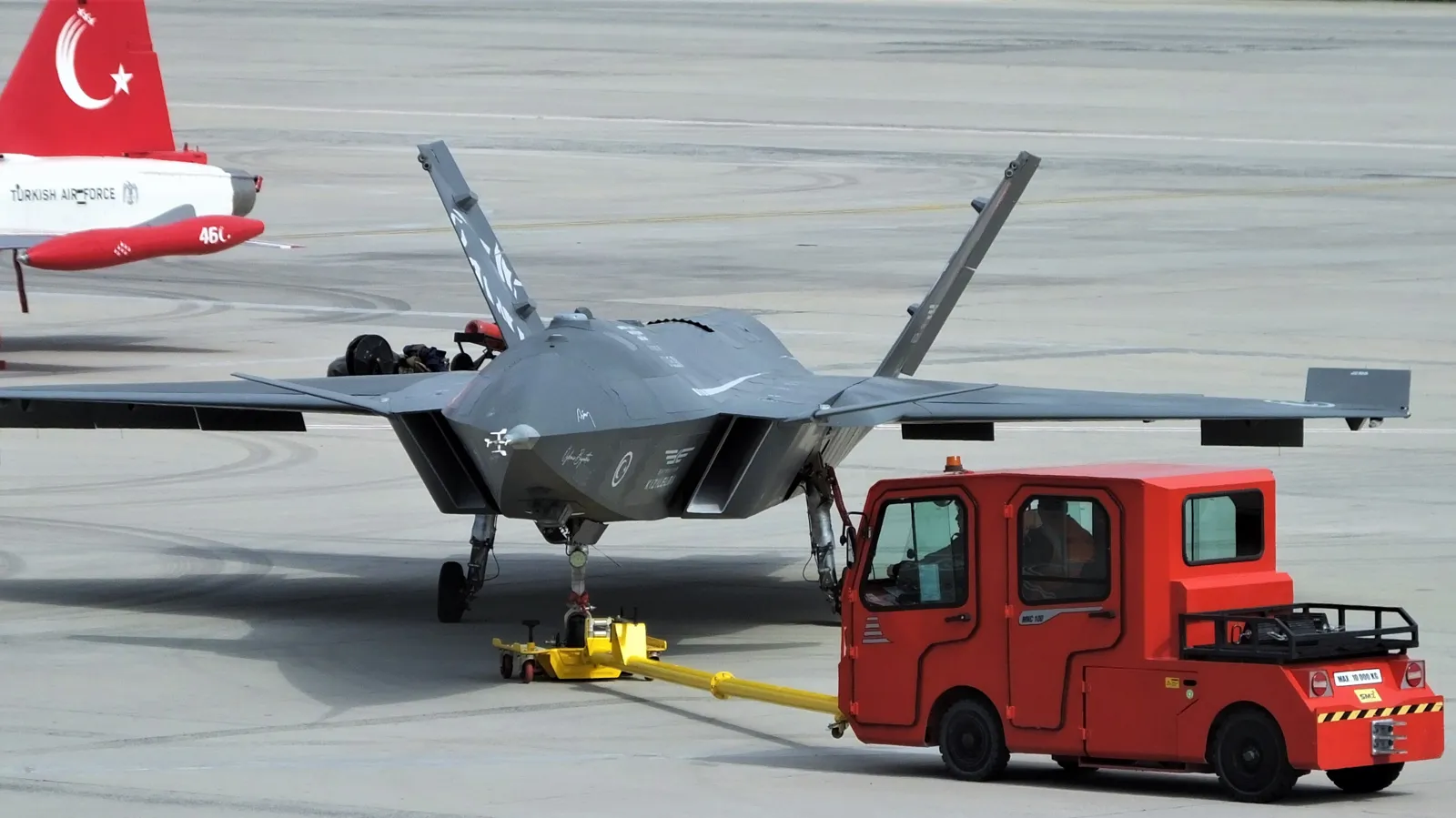
This is the area where Russia held the schedule advantage, and the file records it plainly. Sukhoi was tasked with the heavy unmanned combat aircraft in 2011; a first mock-up for ground testing was built in 2014, a prototype was photographed in July 2017, and the S-70 Okhotnik made its first flight of roughly twenty minutes at 600 metres on 3 August 2019. On 27 September 2019 footage was released of it flying alongside a manned Su-57. Türkiye’s platform in the same class, KIZILELMA, first flew in 2022; Russia had started three years earlier.
The head start did not guarantee the outcome. In January 2024 the Novosibirsk regional administration announced that serial production would begin in the second half of the year; it did not, and the programme has remained limited to two aircraft. On 5 October 2024 an S-70 was shot down near Kostiantynivka in Ukraine by an air-to-air missile fired from a Russian Su-57. On the Turkish side, KIZILELMA progressed from first flight to a production prototype and then to a beyond-visual-range air-to-air firing trial.
Exports: two different scales
Exports are the hardest measure of whether a programme became a product, because the buyer puts up its own money and its own operational risk. On this item the distance between the two countries is larger than on any other.
| Measure | Türkiye | Russia |
|---|---|---|
| First export contract | 2018 (TB2) | December 2024 (Orion-E) |
| Countries under contract | 36 for TB2, 16 for AKINCI | Publicly: one Asian country and Ethiopia |
| Overseas production | ANKA joint production memorandum in Kazakhstan | No public example |
| Total flight hours | TB2 alone passed one million (December 2024) | No public programme-level figure |
| Licence-origin platform | None | Forpost family (Israeli design), Geran-2 (Iranian design) |
The last row is one of the file’s most striking findings. The two most widespread unmanned systems in the Russian inventory are both of foreign design origin. The original Russian designs — Orion, Altius, Okhotnik — occupy a far more limited place in numerical terms. Production volume and design independence are not the same thing. On the Turkish side the scale of activity shows up in official statistics as well, with licensed production abroad, and in the field, from AKINCI deliveries to Mali to the first recorded air-to-air engagement between two armed unmanned aircraft.
Where Russia leads
These are not headings to dismiss
- Mass production in loitering munitions. In December 2022 a contract was signed for serial Geran-2 production in the Alabuga special economic zone, and according to publicly reported data the facility reached output of thousands of units a month. Türkiye has no single-type line at that scale. This is not a design achievement but a serial manufacturing and supply chain achievement — and it is real.
- Electronic warfare. The electronic warfare capability Russia deploys against and alongside unmanned systems rests on an established industrial base.
- An early move in the heavy UCAV class. Okhotnik’s 2019 first flight and its trial alongside a manned fighter put Russia three years ahead in that class.
- Volume of combat data. Russian programmes have long been tested in real operational conditions, which is a source that feeds the feedback loop.
The limits of this comparison
Points to keep in mind
The two countries concentrated on different classes. Russia concentrated mass production in a single loitering munition line; Türkiye moved towards product diversity, developing separate platforms in the MALE, heavy, jet and long-endurance categories. The two strategies cannot be measured with the same ruler, and this file assesses each on its own terms.
The engine industrial bases are of different depth. Russia’s turbofan and turboprop production tradition is broad; Türkiye, having reached a domestic engine in the drone class, is now moving towards the jet class. The two bases are not the same and that should be on the record.
Public data on Russian programmes is limited. Because official figures are not published for items such as production quantity and flight hours, some rows in this file are left as “no public figure”. That is the deliberately cautious side of the comparison.
Where the Turkish programmes made the difference
Four decisions
- An early start. The ANKA contract came in 2004 and tactical-class work in 2007. Russia’s modern drone effort falls in 2009–2011. That five- to seven-year difference worked like compound interest.
- Original design instead of licence. Türkiye did not take the shortcut; that made for a slower start but a route resilient to embargo. The interruption Russia experienced in 2014 did not hit the Turkish programme in the same way.
- Contractor continuity. The prime contractor did not change in the Turkish programmes. Altius changing contractor in 2018 is the most concrete item of lost time in this file.
- Opening exports early. From 2018 exports fed the production line independently of domestic demand and diversified field data. The breadth of the resulting portfolio is visible in TUSAŞ’s product range and in the AKSUNGUR deliveries that opened the maritime patrol role.
Delays and interruptions
| Programme | Item | Status | Publicly stated cause |
|---|---|---|---|
| Forpost | Indigenisation | Became compulsory after 2014 | The supplier country halting component shipments |
| Altius | Change of contractor | Transferred to UZGA at the end of 2018 | Embezzlement investigation in the contractor’s management |
| Altius | Serial production | Limited to three demonstrators | The programme was restructured |
| Okhotnik | Serial production | The second-half-2024 plan did not happen | No public official explanation |
| Orion | Delivery to the user | Nine years after contract (April 2020) | Development and state testing process |
| ANKA (Türkiye) | First serial delivery | 14 years after contract (February 2018) | Maturing of the satellite-linked configuration |
The EM-PDI comparison
The Envanter Medya Programme Development Index is an editorial framework scoring, out of 100, how far a programme became a product in a user’s hands; it does not score technical superiority. Weights: operational service 20, serial production 15, exports 15, production scale 10, technological independence 10, subsystem integration 10, schedule performance 10, modernisation continuity 5, user diversity 5.
EM-PDI: Turkish and Russian unmanned aircraft programmes
Scores are consistent with earlier files. Loitering munition platforms are excluded by class.
EM-PDI is an editorial assessment, not an official index.
Forpost’s 49 points need particular explanation. The platform is in service, in serial production and has been used in combat, scoring highly on those items. But it scores low on technological independence and exports, because the design is of foreign origin and is not available for re-export. Orion’s 52 comes from the opposite distribution: the design is original, but production scale and user diversity are limited.
Category-by-category verdict
| Category | Ahead | Basis |
|---|---|---|
| Aviation industrial base | Russia | Decades of aircraft design tradition |
| Engine industry depth | Russia | Turbofan and turboprop production base |
| Schedule priority in the heavy UCAV class | Russia | Okhotnik 2019, KIZILELMA 2022 |
| Loitering munition production scale | Russia | A line producing thousands of units a month |
| Electronic warfare | Russia | Established industrial accumulation |
| Programme start timing | Türkiye | ANKA 2004, tactical class 2007 |
| Design independence | Türkiye | The two most widespread systems in the Russian inventory are of foreign design |
| Transition to serial production | Türkiye | Two programmes on the other side never reached it |
| Exports and user diversity | Türkiye | 36 countries against exports that have only just begun |
| Programme continuity | Türkiye | No contractor change or interruption |
The table summarises the file’s argument cleanly: Russia leads on capability items, Türkiye on conversion into a product items. An industrial base sets a programme’s ceiling; how long it takes to turn that into a product is set by start timing, route choice and institutional continuity. Where the Turkish industry now sits globally is examined in our review of Turkish Aerospace’s world ranking, and the wider alliance context in our ranking of NATO’s strongest militaries.
Today, and the next five years
Two lines are separating on the Russian side. Loitering munition production is established at large scale and is the most visible capability in the short term. In the original MALE and UCAV programmes the real question is volume: Orion has opened to export, Sirius has been contracted, but Okhotnik’s serial production has not begun. What quantities these programmes reach over the next five years will determine how far Russia recovers design independence in unmanned aviation — in a field where Chinese platforms are expanding fast.
On the Turkish side the question has changed. “Will it become a product?” is behind us; it has been replaced by a class-escalation question: what volume AKINCI reaches in the heavy class, KIZILELMA in the jet class and AKSUNGUR in the long-endurance class. Scale is now the Turkish agenda too — and the same test applies to the imported alternatives that shaped this market, such as the Heron TP.
The next file in the series compares the drone export models of Türkiye and China, where the central question is how two different export strategies shaped market share and user diversity in different ways.
Frequently asked questions
Why did Russia come late to unmanned aircraft?
No single cause explains it, but three factors are clearly traceable in public records: a doctrine that prioritised manned aviation and missiles, the licensed production route chosen after 2008 being broken by the 2014 embargo, and interruptions in programme management — the change of prime contractor on Altius in 2018 being the most concrete example. A lack of aviation capability is not on that list; Russia’s aircraft design tradition is far older than Türkiye’s.
Does Russia’s Geran-2 output not put it ahead?
The comparison cannot be made without separating classes. Geran-2 is a loitering munition, not a MALE drone or an unmanned combat air vehicle. It is also not an original Russian design but licensed production of the Iranian-origin Shahed-136. The production scale Russia has reached in that field is real and notable, but it is not a measure of how its own MALE or UCAV programmes converted into products.
Are Orion and the Bayraktar TB2 in the same class?
Yes — both are medium-altitude reconnaissance-strike platforms and are comparable. The Orion programme began in 2011, TB2 R&D in 2007. Orion was delivered to its user in 2020 and used in combat in 2022; the TB2 entered the inventory in 2014, was armed in 2015 and began being exported in 2018.
Can the S-70 Okhotnik and KIZILELMA be compared?
Partly. Both are in the unmanned combat aircraft class, but the Okhotnik is markedly heavier and designed to operate alongside a manned fighter. On programme schedule Russia was ahead: Okhotnik flew on 3 August 2019 and KIZILELMA in 2022. However, Okhotnik’s serial production was planned for the second half of 2024 and did not happen; two aircraft have been built to date.
Does Russia export its own drones?
Only recently. In December 2024 the first export contract for the Orion-E reconnaissance-strike system was announced with an Asian country, and in January 2026 a system was delivered to Ethiopia. For comparison, Türkiye’s TB2 was under contract with 36 countries at the same date. The gap owes less to production capability than to the timing of market entry.
Why is the 2008 Georgia war treated as a turning point?
Because it showed clearly that the Russian army lacked an effective unmanned reconnaissance capability on the battlefield, while the other side was operating Israeli-built long-endurance tactical UAVs. Shortly after the war Russia bought 12 UAVs from Israel Aerospace Industries and in October 2010 signed a $400 million joint production agreement. Türkiye had chosen the indigenous design route in the same years.
Does this file declare Türkiye superior?
No. The areas where Russia leads are covered in their own section: the mass production scale reached in loitering munitions, electronic warfare capability, and a three-year head start in the heavy unmanned combat class. The limits of the comparison are also recorded separately: the two countries concentrated on different classes and cannot be measured with the same ruler.
Sources and method
The dates, quantities and contract data in this file are compiled from manufacturer statements, procurement authority announcements and the public records of programme authorities. Unverifiable claims about production quantity, exports or cost have been excluded. Where official figures are not published for some items on the Russian side, the text says so explicitly.
- Baykar and TUSAŞ official statements — TB2, AKINCI, KIZILELMA and ANKA milestones, flight hours and numbers of countries under contract.
- Russian defence ministry and Kronshtadt announcements — the Inokhodets programme, Orion’s first flight, the April 2020 delivery, the Sirius contract and the Orion-E export contract.
- UZGA and programme records — Forpost licensed production, Forpost-R indigenisation and the transfer of the Altius project.
- Sukhoi and Russian official audiovisual releases — S-70 Okhotnik first flight (3 August 2019) and the flight alongside a Su-57.
Editorial note: the distinction between an order, a delivery, a negotiation and an operational user is preserved. Class separation is applied with the same rigour: loitering munitions, MALE drones and unmanned combat aircraft are separate classes and are not mixed in the measurement tables. No Russian programme is described as “failed”; programmes that did not reach serial production are described exactly as they stand.
Started in the Same Era
This is the fourth file in the series. Earlier files: 1 — drone programmes that started in the same era · 2 — the MALE programmes of Türkiye and Europe · 3 — ANKA and TAPAS. The full index is on the series hub page.
Also available in Turkish.