ANKA and TAPAS: Same Class, Two Different Outcomes — The MALE Drone Programmes of Türkiye and India

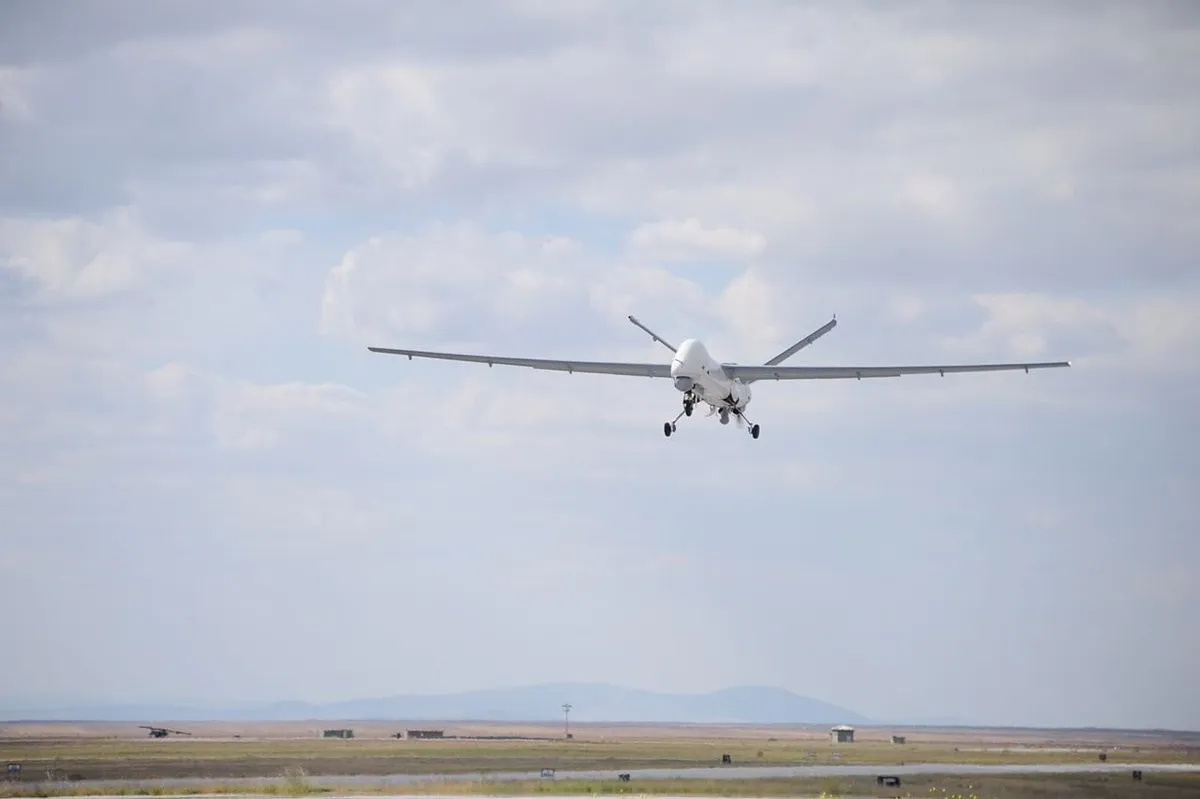
Two countries set out, in the same class and in adjacent periods, to build their own medium-altitude long-endurance unmanned aircraft. They reached first flight at almost identical speed: ANKA six years after contract, TAPAS five years after approval. The paths separated afterwards. Within a decade one was exported to three countries and had passed 400,000 flight hours; the other lost its mission-mode status. The point of divergence was not the engine. It was the decisions taken after the first flight.
The short answer
Contrary to the common assumption, the difference between ANKA and TAPAS BH-201 did not arise in prototype development speed. Türkiye signed its contract in December 2004 and flew on 30 December 2010 — six years. India approved the project in 2011 and flew on 16 November 2016 — five years. Up to that point India was a year ahead.
The divergence happened in the eight years after first flight. Three years after flying, with the platform still immature, Türkiye signed the ten-aircraft ANKA-S serial production contract on 25 October 2013 and did the maturing inside the contract. India defined its qualitative requirements as a pass threshold: no order until 30,000 feet and 24 hours were achieved. TAPAS reached 28,000 feet and 18 hours in March 2022, did not clear the bar, and on 14 January 2024 ceased to be a mission-mode project. Both programmes met the same technical problem — engine power and altitude. What made the difference was an administrative choice about whether that problem had to be solved before the order or after it.
How this comparison was built
This is the third part of a series, following the general drone programme picture and the Türkiye–Europe MALE file. The first two looked at multi-country tables; this one takes a single pair, because ANKA and TAPAS are the most directly comparable programmes in the set: both were developed by a state research and production body, both were their country’s first indigenous MALE attempt, both chose the twin-boom pusher-propeller architecture, and both targeted a similar payload.
On both sides the programme start is the formal development decision or contract date; concept work, feasibility studies and announcements do not count. The comparison runs on programme age rather than calendar year: ANKA’s sixth year falls in 2010, TAPAS’s sixth year in 2017. That is a methodological choice in India’s favour, because the autopilot software, composite materials and satellite communications environment of 2011 were more mature than those of 2004.
Class boundaries are held. ANKA-3, turbofan-powered and low observable, is an unmanned combat air vehicle demonstrator and does not appear in the measurement tables; it appears in the timeline only as context.
Why the two programmes are comparable
The most common error in comparative analysis is measuring dissimilar programmes with the same ruler. ANKA and TAPAS do not carry that risk, because their similarities are structural rather than superficial. Both were developed by the state’s research and production organisation: TUSAŞ in Türkiye, the Aeronautical Development Establishment under DRDO in India. Both were their country’s first indigenous MALE attempt, with no design inheritance to build on. Both chose the classical twin-boom, pusher-propeller MALE architecture and targeted a payload in the 350-kilogram band. And the primary mission definition of both is intelligence, surveillance and reconnaissance.
The differences are equally clear and are addressed separately below: TAPAS was designed with a larger airframe and a higher altitude target, and India’s operating environment is markedly harder than Türkiye’s. Both points are recorded at the outset so that the comparison is read fairly.
Up to first flight, the two programmes moved at the same speed
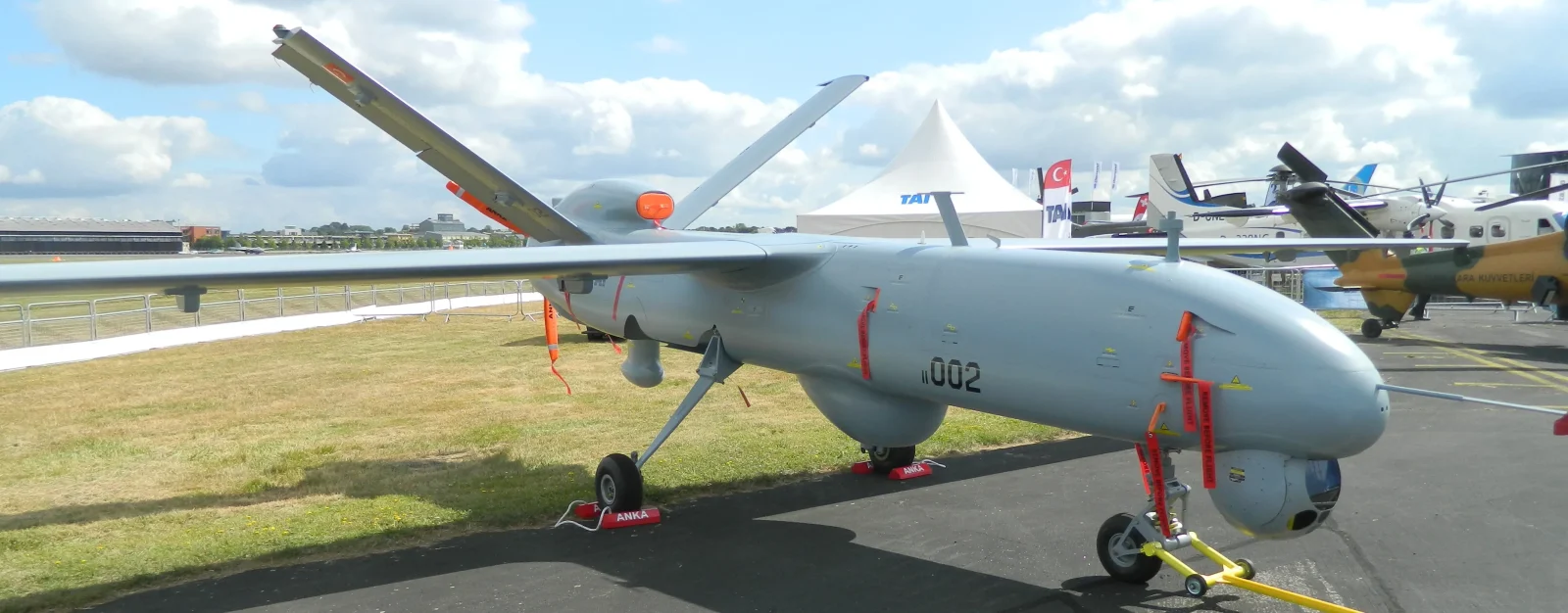
This is the most surprising finding in the file. Türkiye’s ANKA contract was signed in December 2004; the platform was rolled out on 16 July 2010 and flew on 30 December 2010. From contract to first flight: six years. India’s Rustom-II project was approved in 2011 with a budget of ₹1,540.74 crore; ADE announced in February 2012 that the design was complete, full-power taxi tests began at Kolar in September 2013, and the platform flew at Challakere on 16 November 2016. From approval to first flight: five years.
Measured by programme age, India therefore completed the prototype phase one year faster. That directly refutes the widespread assumption that TAPAS was weak as an engineering effort. The problem did not lie in design or production capability.
Critical transitions, measured by programme age
Each bar counts years from that programme’s own start date. Red dashed bars mark stages that were never reached.
Sources: SSB and TUSAŞ statements, TEI, DRDO/ADE public programme notifications. Envanter Medya compilation.
The starting conditions were not the same
Before reading the comparison
This file does not declare a winner in advance. The ground the two programmes started from was markedly different, and most of the differences were in India’s favour:
- Institutional aviation history: India’s state aircraft manufacturer HAL was founded in 1940, its defence research organisation DRDO in 1958 and its electronics manufacturer BEL in 1954. TUSAŞ was founded in 1973 and ASELSAN in 1975. India began with a far older institutional structure.
- Prior UAV experience: DRDO had experience from the 1990s with the Nishant tactical UAV and the Lakshya target drone.
- Economic scale: India’s economy in 2011, when the programme started, was several times the size of Türkiye’s in 2004, and its defence budget was markedly larger in nominal terms.
- Supplier access: India could draw on a diversified supply network spanning Russia, Israel, France and the United States.
- A more ambitious target: TAPAS’s 20.6-metre wingspan is larger than ANKA’s 17.5 metres. India aimed at a bigger, higher-flying platform.
- A harder operating environment: the line of actual control on India’s northern frontier is a mountain front above 4,000 metres. The 30,000-foot ceiling requirement was not an arbitrary bureaucratic bar but a real operational necessity.
These points are not a list of excuses; they are the honest ground of the comparison. India started with a larger economy, older institutions and a broader supply network, and set a harder target. That the outcome nonetheless ran the other way sharpens this file’s real question: why did resources and institutional depth not determine programme speed on their own? India’s wider force posture is set out in our India–Pakistan military strength comparison.
A shared timeline
The chart below places the two programmes side by side on calendar years. The left column shows events on the Turkish side, the right column those on the Indian side.
ANKA and TAPAS: 2004–2026
Dates compiled from manufacturer, procurement authority and programme authority statements.
Sources: SSB, TUSAŞ, TEI, Anadolu Agency; DRDO/ADE notifications and presentations to the Indian parliamentary defence committee.
The point of divergence: the eight years after first flight
Aligning the eight years following each first flight makes the divergence visible. For ANKA that window is 2010–2018; for TAPAS it is 2016–2024.
| Programme year | ANKA (Türkiye) | TAPAS BH-201 (India) |
|---|---|---|
| First flight | 30 December 2010 | 16 November 2016 |
| +2 years | Test campaign and acceptance process under way | Prototype lost (AF-6, 17 September 2019) |
| +3 years | Ten-aircraft ANKA-S serial production contract (25 October 2013) | 8 hours at 16,000 ft (October 2020) |
| +5 years | Serial production and satellite-linked configuration maturing | 25,000 ft and 10 hours (December 2021) |
| +6 years | Ground segment and training infrastructure being built | 28,000 ft and 18 hours (March 2022) — below the threshold |
| +7 years | First ANKA-S delivery (February 2018) | 200th flight, first presentation to the three services (27 June 2023) |
| +8 years | First flight on the domestic TEI-PD170 engine (27 December 2018) | Mission-mode project closed (14 January 2024) |
The table shows one thing very clearly: TAPAS was technically progressing. Altitude rose from 16,000 feet to 25,000 and then 28,000; endurance stretched from 8 hours to 18; autonomous take-off and landing was demonstrated in November 2021; the flight count passed 200. The programme did not stop — it simply could not catch the line drawn for it. What ANKA did in the same period was different: instead of waiting for maturity and then taking an order, it took the order and went on maturing.
Two procurement philosophies: threshold test and incremental maturing
This distinction is one of the most important structural findings in the series and reflects a choice in each country’s procurement culture. India’s joint service qualitative requirements system requires a platform to clear a predefined performance threshold before it can enter the inventory. The logic is sound: user services are not forced to accept a platform below the capability they need.
For indigenous development programmes, however, the model produces a heavy side effect. No order comes before the threshold is cleared; no serial line is built without an order; without a line, unit cost does not fall and user feedback does not flow. The Turkish model instead brings an immature platform inside an early order and runs development and production in parallel.
| Dimension | Incremental maturing (Türkiye) | Threshold test (India) |
|---|---|---|
| Timing of the order | Before maturity, three years after first flight | On clearing the qualitative threshold — which was not cleared |
| Funding of maturation | From inside the serial production contract | From the R&D budget only |
| User feedback | Continuous flow from the field from 2018 | Limited to the test range |
| Where the risk sits | The procurement authority takes it on early | The developing institution carries it to the end |
| Weakness | An early order can put an inadequate platform into the inventory | The programme may never become a product |
| Outcome in this case | ANKA reached the user in 2018 | TAPAS lost its status in 2024 |
The table should not be read in one direction only. Incremental maturing carries its own risk: a platform that has not cleared the threshold can enter service, and the force may have to live with a capability below its requirement. Türkiye took that risk knowingly with ANKA. India’s model refused to pass the same risk to the user — a defensible choice, whose price was the programme itself.
The engine: a bottleneck shared by both programmes
In the MALE class, ceiling and endurance are set directly by the engine. Both programmes flew on imported engines and both tried to indigenise. The results diverged.
On the Turkish side the TEI-PD170 turbodiesel, developed by TEI, made its first flight fitted to an ANKA on 27 December 2018 and then entered serial production. Counted from the contract, engine independence took fourteen years — not a short time. But the critical point is this: the engine delay did not stop the platform being used operationally. ANKA kept flying in the inventory in its imported-engine configuration and the domestic engine entered the fleet progressively once ready.
For TAPAS the engine issue determined the programme’s fate. The prototypes flew on two 100-horsepower NPO Saturn 36T turboprops; 220-horsepower domestic engines were planned for the production configuration. The gap between prototype power and target altitude is the technical basis for stalling at 28,000 feet and 18 hours. The plan for a first flight on the domestic engine was reported to the Indian parliamentary defence committee in 2025 — meaning engine independence fell after the programme had lost its status.
| Measure | ANKA (Türkiye) | TAPAS BH-201 (India) |
|---|---|---|
| Prototype engine | Imported diesel engine | 2 × NPO Saturn 36T turboprop, 100 hp |
| Domestic engine | TEI-PD170 turbodiesel | Domestic engine of VRDE origin, 220 hp (planned) |
| First flight on domestic engine | 27 December 2018 | Reported as a 2025 plan |
| Effect of the engine delay | Operational use continued | Target altitude and endurance not achieved |
| Status today | In serial production | Field validation continuing |
Flight hours: the real fuel of maturity
A platform matures in the field, not in the laboratory. TUSAŞ states that the ANKA family has passed 400,000 flight hours, the bulk of them from operational use after 2018. Sensor performance, data-link dropouts, maintenance intervals, human-machine interface problems — all of these surface only on real missions, and each corrects the next configuration.
The 200 flights TAPAS had reached by 27 June 2023 accumulated across four prototypes under test-range conditions. That figure is not a sign of failure — it is a respectable number of development flights. But it is not comparable to the volume of feedback generated by operational use. The programme never reached the stage where it would produce the data needed to correct itself. This is a different view of the pattern identified in the European MALE file: a programme that cannot enter the feedback loop keeps chasing its target without catching it.
Serial production, exports and an overseas production base
ANKA’s serial production began with the 2013 contract, and exports became a second source of demand supporting the continuity of the line. Tunisia signed in 2020 as ANKA’s first export user. According to an Anadolu Agency report of November 2021, the contract with Kazakhstan covered three ANKA aircraft and two ground systems, together with a logistics support package of technical documentation, training and spares, for delivery by 2023. Chad is also among ANKA’s users.
The real significance of exports for the programme is not the quantity but the continuity. The memorandum TUSAŞ signed with Kazakhstan Engineering covers joint production and maintenance, repair and overhaul, along with technology transfer — meaning ANKA’s first production base outside Türkiye. A platform becoming producible in another country is the most concrete evidence that its design has reached documentation and repeatability maturity. The breadth of the Turkish industry’s product line is visible in TUSAŞ’s current product range.
TAPAS never reached a serial production contract; the four platforms built were for development and test. Exports never arose for a platform that had not entered its own services.
| Measure | ANKA / ANKA-S | TAPAS BH-201 |
|---|---|---|
| Serial production contract | 25 October 2013 — 10 aircraft | None |
| First delivery to a user force | February 2018 | Did not happen |
| Known export users | Tunisia, Kazakhstan, Chad | None |
| Overseas production | Joint production memorandum with Kazakhstan | None |
| Total flight hours | 400,000+ across the family (TUSAŞ) | 200+ flights across four prototypes (June 2023) |
| Programme status | Continuing, expanding through derivatives | Outside mission mode; technologies transferred to Archer-NG |
Where the Turkish programme made the difference
Four decisions
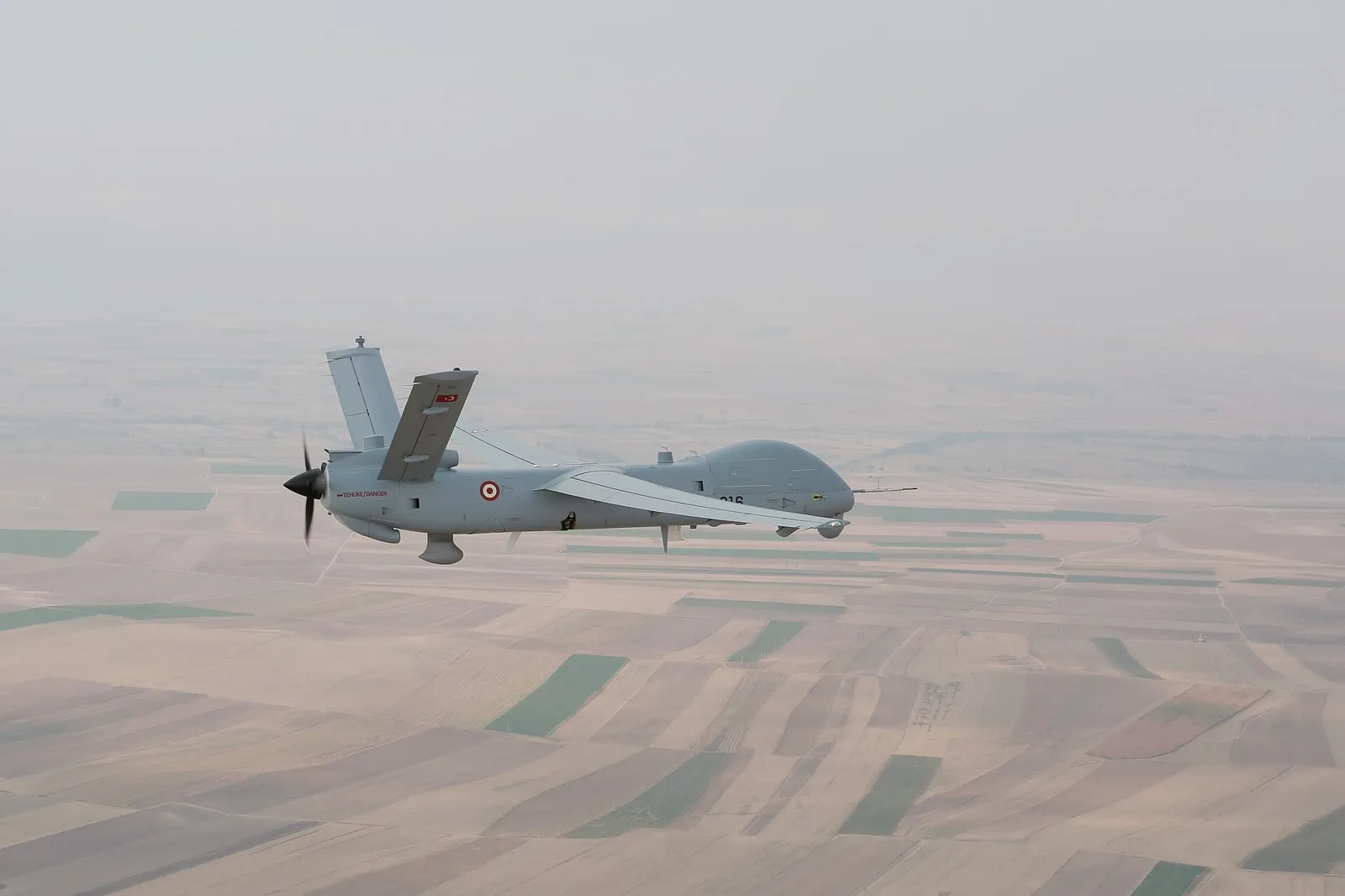
- An early order. The ten-aircraft ANKA-S contract of 25 October 2013 was awarded before the platform was mature. That created continuous funding and institutional ownership for the maturing process.
- A single-counterparty architecture. The procurement authority dealt with one counterparty in TUSAŞ, and TUSAŞ was solely responsible towards its subcontractors. The engine was managed as a separately budgeted sub-programme and followed through to the end.
- Continuity. The programme was never suspended, redefined or stripped of its status at any stage.
- A family strategy. ANKA did not remain a single platform; ANKA-S, ANKA-3 and AKSUNGUR opened into different classes from the same engineering pool. Each new platform was built on the field experience of the one before it — a pattern that continues with KIZILELMA in the jet-powered class.
The limits of this comparison
Points to keep in mind
ANKA’s strength comes from its continuity, not its speed. The programme took fourteen years from contract to the first ANKA-S delivery. What sets ANKA apart is not a calendar record but the fact that it was never suspended at any stage — and that is precisely what this file measures.
Export quantities are not public. TUSAŞ does not publish a total export figure for ANKA; only users verifiable from public sources are counted here. The figures in the tables are therefore a verifiable floor, not a ceiling.
The two countries managed the capability gap differently. India turned to imports while waiting for its indigenous programme; the Israeli-origin Heron family has long been in its inventory and provides real capacity in long-range maritime surveillance. Türkiye chose instead to bring its own platform into service. The two choices carry different risks and this file assesses each on its own measure.
Where India is strong
It would be wrong to draw a general verdict about the Indian defence industry from the TAPAS outcome. Over the same period DRDO produced uninterrupted results in the missile field — a ballistic missile family, air defence systems and a jointly produced cruise missile. The problem was not institutional capability but the specific configuration of this programme.
Nor was the TAPAS work wasted. Its autonomous flight software, ground control station architecture and sensor integration were transferred to Archer-NG, a platform resized for high-altitude conditions and developed with weapon integration in view. A programme losing its status and a technology being lost are not the same thing.
India’s procurement scale is a source of strength in its own right. The 97-platform MALE acquisition the country has planned is among the largest unmanned aircraft procurements anywhere. Press reporting suggests TAPAS will fall outside that acquisition; that has not been officially confirmed and is not presented here as settled fact. Indian large-scale procurement generally runs over long timescales, as our coverage of the 60-aircraft transport tender illustrates.
Delays and their causes
| Programme | Item | Duration / status | Publicly stated cause |
|---|---|---|---|
| ANKA | Domestic engine integration | Eight years after first flight (2018) | Development and qualification time for the domestic turbodiesel |
| ANKA | Contract to first serial delivery | 14 years (2004 → February 2018) | Maturing of the satellite-linked configuration |
| TAPAS | Prototype loss | 17 September 2019, AF-6 | Data link loss |
| TAPAS | Altitude target | Stalled at 28,000 ft (March 2022) | Target 30,000 ft — prototype engine power insufficient |
| TAPAS | Endurance target | Stalled at 18 hours (March 2022) | Target 24 hours |
| TAPAS | Programme status | Out of mission mode on 14 January 2024 | Joint service qualitative requirements not met |
The EM-PDI comparison
The Envanter Medya Programme Development Index is an editorial framework scoring, out of 100, how far a programme became a product in a user’s hands. It does not score technical superiority. Weights: operational service 20, serial production 15, exports 15, production scale 10, technological independence 10, subsystem integration 10, schedule performance 10, modernisation continuity 5, user diversity 5.
EM-PDI: MALE-class programme development scores
Scores are consistent with earlier files in the series; TB2 is included as a reference line.
Scores rest on publicly verifiable data. EM-PDI is an editorial assessment, not an official index.
TAPAS’s 19 points are not the score of a technical failure but of a failure to become a product: operational service, serial production, exports, production scale and user diversity are all zero, and the entire score comes from technological accumulation and subsystem integration. Archer-NG’s 22 is similarly an early-stage score and would be expected to rise as the programme advances.
Category-by-category verdict
This series does not declare a single winner. Each category is judged on its own measure, and the result table shows separately who leads where.
| Category | Ahead | Basis |
|---|---|---|
| Prototype development speed | India | Five years from approval to first flight; six in Türkiye |
| Ambition of the requirement | India | 20.6 m wingspan and a 30,000 ft requirement for a front above 4,000 m |
| Transition to serial production | Türkiye | Contract three years after first flight; none on the other side |
| Operational service | Türkiye | In user inventory since February 2018 |
| Field experience | Türkiye | 400,000+ flight hours across the family |
| Exports and overseas production | Türkiye | Three user countries and a joint production memorandum in Kazakhstan |
| Engine independence | Türkiye | Completed in 2018; validation continuing on the other side |
| Institutional depth and supplier network | India | Older aviation institutions, diversified supply access |
| Managing the capability gap | India | Capability sustained with imports while the indigenous programme ran |
| Programme continuity | Türkiye | Never suspended at any stage |
Türkiye leads on the items that turn a design into a product; India on starting capability and the ambition of the requirement. That confirms the file’s central argument: what determines programme speed is not the resource but the decision architecture through which the resource is used.
Today, and the next five years
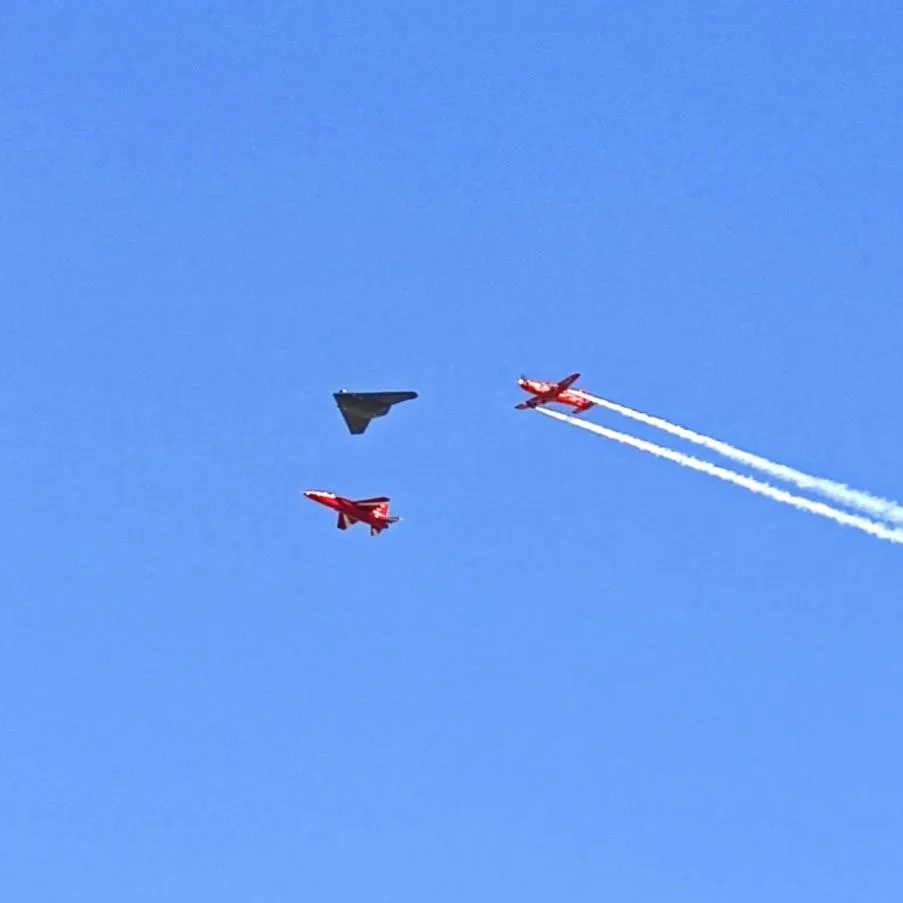
On the Turkish side the ANKA family continues to expand; platforms opening into different classes, such as AKSUNGUR and ANKA-3, have emerged from the same engineering pool. The question in front of the programme is no longer whether it will become a product but how far it can step out of the TB2’s shadow in the export market: as a larger and more expensive platform, ANKA addresses a different buyer profile. Recent activity gives a sense of the market — from AKINCI deliveries to Mali to the first recorded air-to-air engagement between armed unmanned aircraft over Sudan, and the industry’s global position is examined in our review of Turkish Aerospace’s world ranking.
On the Indian side two lines are advancing in parallel. TAPAS is continuing field validation with the domestic engine and retains its role as a technology demonstrator. Archer-NG stands out as the next-generation platform, sized for high-altitude conditions and aiming at weapon integration. How India’s large-scale MALE acquisition takes shape will determine what share indigenous programmes reach over the next five years — in a market where Chinese platforms are also competing hard.
The next file in the series applies the same framework to the military drone programmes of Türkiye and Russia, where the central question is why a country with a broad aviation industrial base came late to unmanned aircraft.
Frequently asked questions
Did ANKA and TAPAS start in the same year?
No. The ANKA development contract was signed in December 2004; the project approval for TAPAS — then called Rustom-II — came in 2011. The roughly seven-year gap is handled here by programme age rather than calendar year: each programme is counted from its own start. That method favours India, because the technology environment of 2011 was more mature than that of 2004.
Is TAPAS a failed programme?
TAPAS lost the mission-mode status it was aiming for: on 14 January 2024 it ceased to be a mission-mode project on the grounds that it could not meet joint service qualitative requirements. It never entered the inventory of any Indian service and never reached a serial production contract. But the programme did not close entirely: its autonomous flight software, ground control station and sensor architecture were transferred to Archer-NG. The accurate phrasing is not “closed” but “did not reach its intended role; the technology base was handed on”.
Why could TAPAS not reach 30,000 feet?
There is no single official explanation in open sources. What is known is that the prototypes were powered by two 100-horsepower NPO Saturn 36T turboprops, while the production configuration planned 220-horsepower domestic engines. That gap between prototype power and target altitude is the technical basis for stalling at 28,000 feet and 18 hours.
How many countries have received ANKA?
TUSAŞ states that the ANKA family has entered the inventories of several end users but does not publish a total export figure. The publicly verified users are Tunisia, Kazakhstan and Chad. According to an Anadolu Agency report of November 2021, the Kazakhstan contract covered three ANKA aircraft and two ground systems; a separate memorandum with Kazakhstan Engineering envisages ANKA’s first production base outside Türkiye.
Why is ANKA-3 excluded from this comparison?
ANKA-3 is a turbofan-powered, low-radar-cross-section unmanned combat air vehicle demonstrator; it is not in the MALE class. Class boundaries are held at table level throughout this series. Its first flight on 28 December 2023 appears in the timeline as context, not in the measurement tables.
How is India closing its MALE gap?
On two tracks. In the short term with imports: the Israeli-origin Heron family has long been in Indian service and the Heron TP covers the upper end of that requirement. In the longer term, DRDO’s Archer-NG is being developed with technology inherited from TAPAS and an airframe resized for high-altitude conditions.
What is the right measure for the ANKA programme?
Completeness rather than a calendar record. ANKA took fourteen years from contract to the first ANKA-S delivery. Its defining characteristic is that it ran without interruption: the programme was never suspended, never changed prime contractor and never lost its status — at least one of which happened to most of the programmes compared in this series.
Sources and method
The dates, quantities and performance data in this file are compiled solely from manufacturer, procurement authority, programme authority and official news agency statements. Unverifiable claims about orders, exports or costs have been excluded.
- TUSAŞ — ANKA product page: design values, ANKA-S serial production contract (October 2013), 400,000+ flight hours across the family.
- TUSAŞ — announcement of the Kazakhstan joint production memorandum.
- TEI — TEI-PD170 turbodiesel aviation engine; first flight on ANKA, 27 December 2018.
- Anadolu Agency, 27 November 2021 — export of three ANKA and two ground systems to Kazakhstan, logistics support package and delivery schedule.
- DRDO / Aeronautical Development Establishment programme notifications — TAPAS BH-201 approval budget, first flight, altitude and endurance milestones, 200th flight, and the status change of 14 January 2024.
- Presentations to the Indian parliamentary defence committee — domestic engine flight plan.
Editorial note: the distinction between an order, a delivery, a negotiation and an operational user is preserved throughout. A platform under evaluation is not the same as a platform in service. For TAPAS the phrase “did not reach its intended role; the technology base was handed on” is preferred over “failed”: although the programme did not enter serial production or operational service, development activity continues.
Started in the Same Era
This is the third file in the series. Earlier files: 1 — drone programmes that started in the same era · 2 — the MALE programmes of Türkiye and Europe. The full index is on the series hub page.
Also available in Turkish.