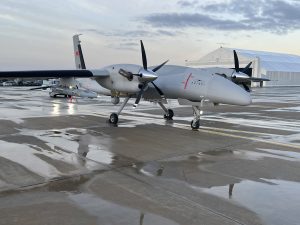
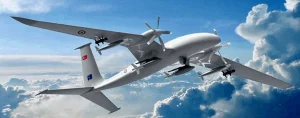
Drone Programmes That Started in the Same Era: Where Are They in 2026?

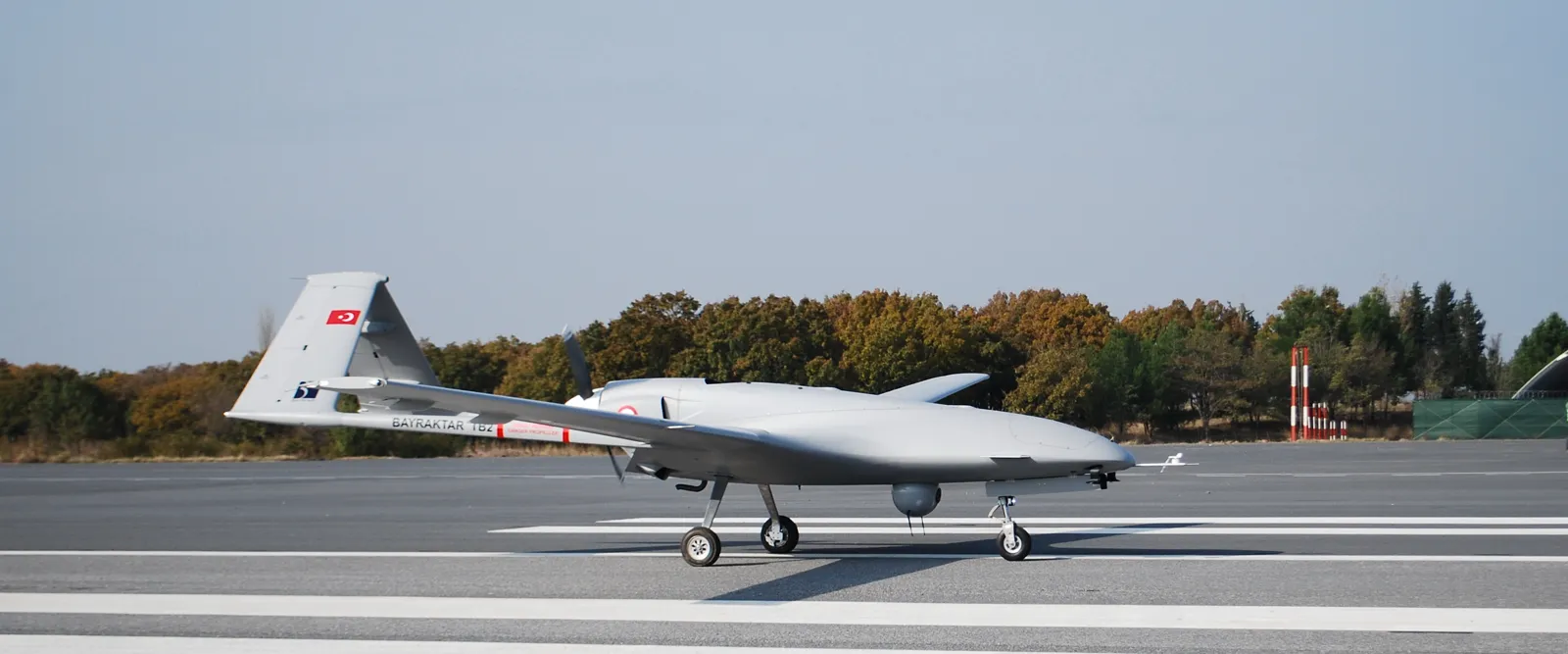
Between 2004 and 2011, at least eight countries set out to build a medium-altitude unmanned aircraft of their own. They started with different budgets, different industrial bases and, in several cases, far more aerospace experience than Türkiye had. Two decades later the results diverge so sharply that the interesting question is no longer who won, but what separated them.
The short answer
The programmes that turned into products share three traits, and none of them is a technological edge. They started early, they owned their design rather than assembling someone else’s, and nobody interrupted them. The programmes that stalled were not short of engineers; they were short of continuity — a cancelled contract, a change of prime contractor, a purchase commitment that never arrived.
December 2007 makes the point better than any table. That month, France, Germany and Spain signed EADS to build Talarion. In the same year, a small Turkish company began tactical-class UAV research with a fraction of the money. Talarion was closed in its fifth year without ever entering service. The Turkish programme put an aircraft into national service in year seven, armed it in year eight, and exported it in year eleven.
How this comparison was built
Every programme here is measured from its own formal starting point: a development decision, a signed contract or a budgeted approval. Concept studies, feasibility work and press announcements do not count as a start. Progress is then measured in programme years, not calendar years — so a programme approved in 2011 is judged on what it achieved by its fifth year, not on where a 2004 programme stood in 2016.
Class boundaries are held firm. Medium-altitude long-endurance aircraft, high-altitude aircraft, unmanned combat air vehicles and loitering munitions are four different categories with different engineering problems and different procurement logic. Mixing them produces flattering but meaningless tables, and this series does not do it.
One more rule matters. A programme is described as having failed only if it meets a hard test: it was cancelled, it never reached serial production, it never entered operational service, or it has been suspended for years. Everything else is described as having moved at a different pace. Several programmes in this comparison are slow but alive, and the difference is not cosmetic.
| Programme | Country | Formal start | Type of start | Status in 2026 |
|---|---|---|---|---|
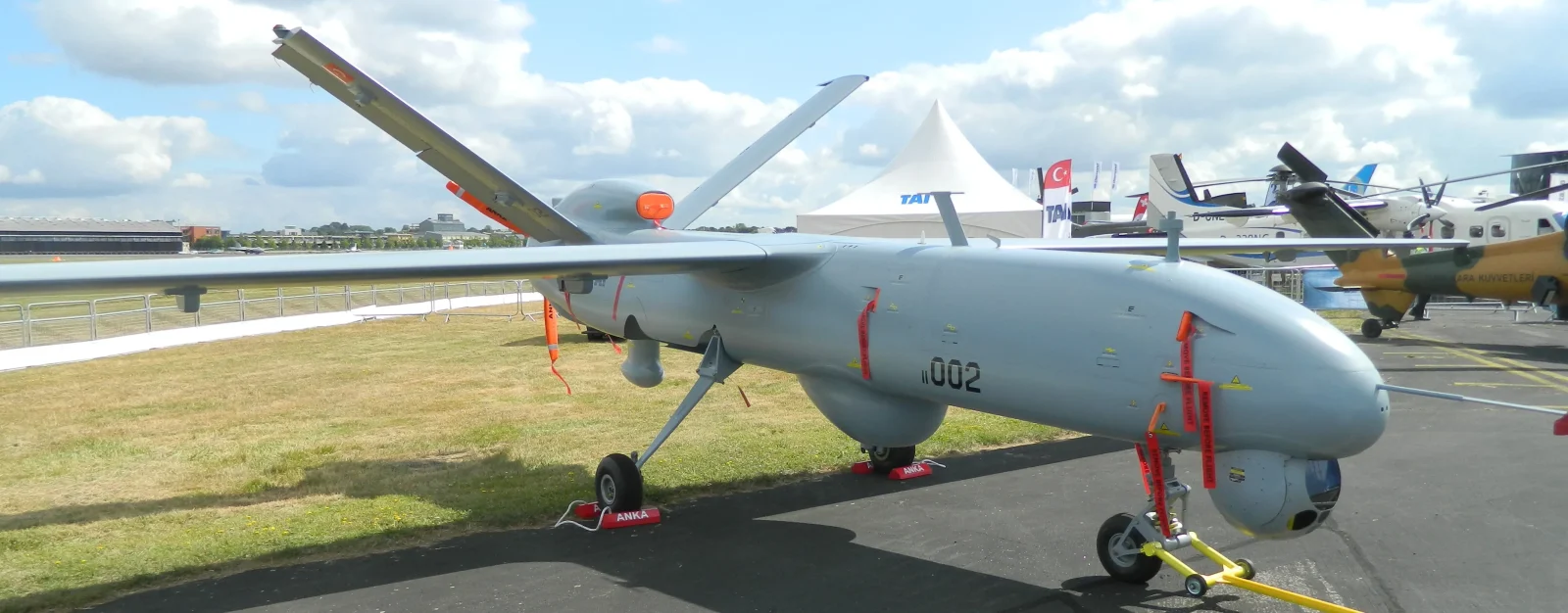
| ANKA / ANKA-S | Türkiye | December 2004 | Development contract | In service, serial production, exported |
| Bayraktar TB2 | Türkiye | 2007 | Company-funded R&D | In service, exported, one million flight hours |
| Talarion | France, Germany, Spain | December 2007 | Contract with EADS | Cancelled in 2012 |
| KUS-FS | South Korea | 2008 | National programme launch | Production aircraft rolled out, service planned from 2027 |
| Hermes 900 | Israel | Mid-2000s development | Company programme | In service since 2012, multiple operators |
| TAPAS BH-201 | India | 2011 | Budgeted approval | Removed from mission-mode status in 2024 |
| Orion / Inokhodets | Russia | 2011 | Ministry of Defence contract | In service since 2020, first export contract in 2024 |
| Wing Loong family | China | Serial export from 2013 | Production programme | Largest delivered volume in the set |
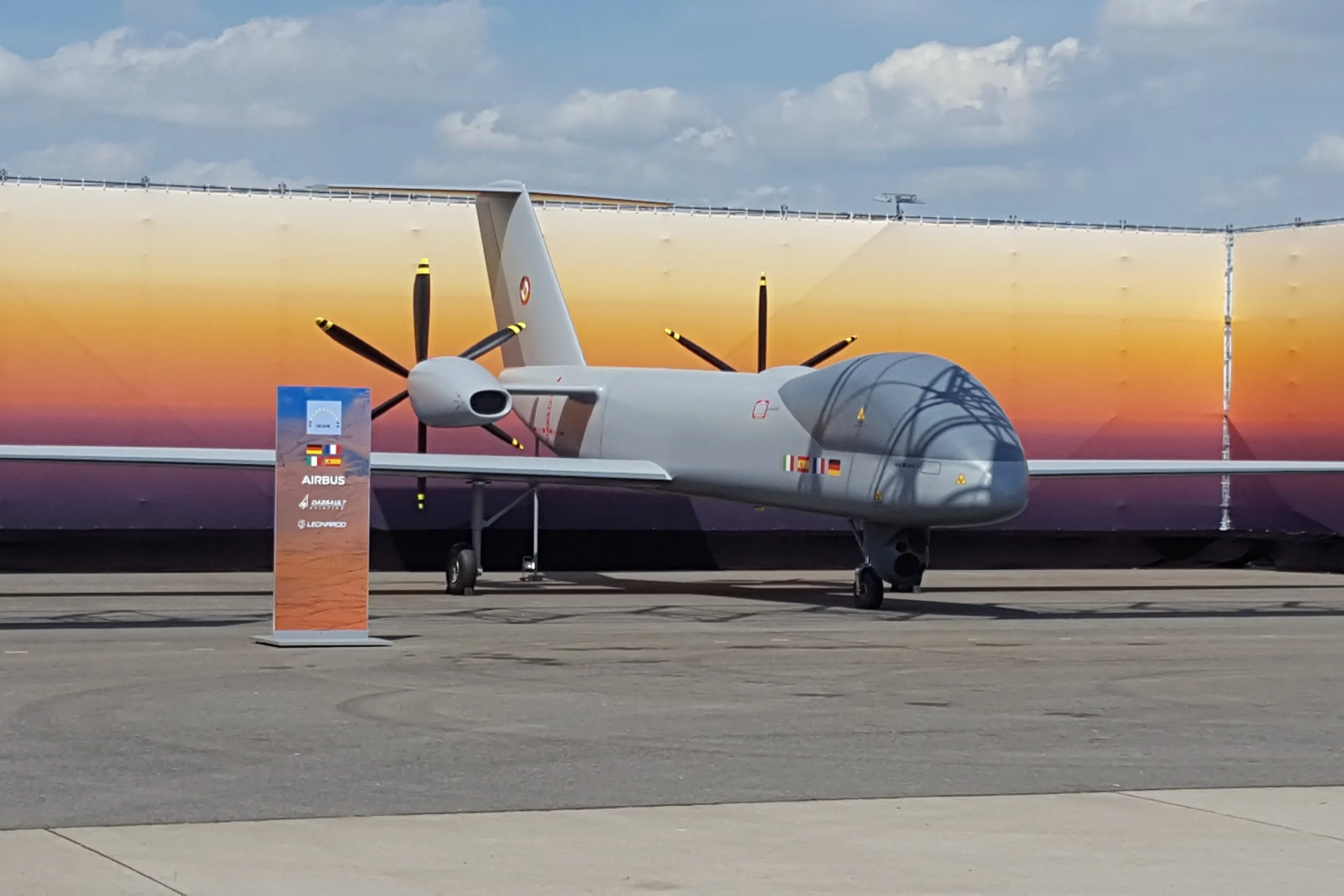
| Eurodrone | Germany, France, Italy, Spain | February 2022 contract | Contract following two earlier attempts | In development, first flight due 2027 |
Why these programmes are comparable at all
A fair objection to any comparison like this one is that the programmes were never trying to do the same thing. That objection has limits. All nine set out to build an unmanned aircraft in the medium-altitude, long-endurance class or immediately adjacent to it; all nine were state-backed or state-contracted; and all nine were framed by their own governments as a route to reducing dependence on imported systems. The requirements differ in altitude, endurance and payload, and those differences are noted where they matter — India’s 30,000-foot target, for instance, follows from a genuinely harder operating geography.
What makes them comparable is not the specification. It is that each one faced the same sequence of hurdles: get to a flying prototype, qualify it, contract serial production, deliver to a user, keep the line running, and find a second customer. Programmes fail or stall at identifiable points in that sequence, and those points are what this file measures. Where a programme’s own requirement changed mid-course, that is treated as part of its schedule performance rather than as an excuse removed from the record.
A shared timeline
Placing the programmes on one axis shows how close their starting points were, and how far apart their outcomes ended up.
Programmes of the same era, 2004–2026
The left column tracks Turkish programmes; the right column tracks everyone else.
Sources: Baykar and TUSAŞ statements; OCCAR; DRDO; Korea Aerospace Industries; Russian Ministry of Defence records; SIPRI.
The milestone sequence, side by side
Every programme has to clear the same four gates: fly, qualify, deliver, export. The table below records only dates that are published by the manufacturer, the procurement authority or the programme authority. Where a gate has not been cleared, the cell says so instead of estimating.
| Programme | First flight | First delivery or service entry | First export |
|---|---|---|---|
| ANKA / ANKA-S | 30 December 2010 | First ANKA-S delivery, February 2018 | Yes — exported |
| Bayraktar TB2 | Development from 2007 | Turkish inventory, 2014 | 2018 |
| Hermes 900 | December 2009 | Israeli service, 2012 | Multiple operators |
| Orion / Inokhodets | October 2016 | First system delivered, April 2020 | First export contract announced December 2024 |
| TAPAS BH-201 | 16 November 2016 | Not reached | Not reached |
| KUS-FS | Flight testing from early 2026 | Production aircraft rolled out April 2026; service planned 2027 | Not reached |
| S-70 Okhotnik | 3 August 2019 | No serial production | Not reached |
| Eurodrone | Planned for January 2027 | Not reached | Not reached |
| Talarion | Never flew | Never entered service | None |
Read down the last two columns and the pattern is blunt. Of the nine, four have delivered an aircraft to an operational user, and three have found a customer outside their own armed forces. Everything else in this file is commentary on why those two columns look the way they do. Türkiye’s position in the export column is visible in the delivery model as well — Turkish platforms now reach customers through direct sale and through licensed production abroad.
How long each programme took
The chart below counts years from each programme’s own start. Red dashed bars mark transitions that never happened.
Critical transitions, measured in programme years
Shorter is faster. A dashed bar means the programme did not reach that milestone.
Envanter Medya compilation from official programme records.
Two figures deserve attention. Israel’s Hermes 900 went from first flight to service in three years — the fastest transition in the set, and a reminder that this is not a story about one country outperforming everyone. And the fourteen years between the ANKA contract and the first ANKA-S delivery are worth reading carefully: the defining feature of that programme is not its calendar but the fact that it was never suspended, never changed prime contractor and never lost its status. Every other long-running programme in this chart failed at least one of those three tests, which is why several of them are drawn as dashed bars and ANKA is not.
Europe: three attempts, no product
Europe’s difficulty was never engineering capacity. It was that the partnership had to be rebuilt from scratch each time, and that purchase commitments arrived too late to hold the programme together.
| Programme | Start | Partners | Outcome |
|---|---|---|---|
| Talarion | December 2007 | France, Germany, Spain | Cancelled February 2012 — founding nations gave no purchase commitment |
| Telemos | 2010 | United Kingdom, France | Abandoned July 2012 after a change of government in France |
| Eurodrone | February 2022 contract | Germany, France, Italy, Spain | €7.1 billion for 20 systems; first flight planned for January 2027 |
The Eurodrone contract covers 20 systems, 60 aircraft and 40 ground control stations. The 2016 planning documents envisaged service entry in 2025; the aircraft had not flown by mid-2026, and France has moved its own procurement funding out to 2035. None of this makes Eurodrone a failure by the test used in this series — it is contracted, funded and progressing. It does make it the slowest-moving programme in the comparison.
There is a second European story running alongside the institutional one, and it points the other way. Italy’s Leonardo and Türkiye’s Baykar have formed a joint venture, LBA Systems, which began aircraft integration work in Italy. A European prime contractor buying into a Turkish unmanned platform is a reasonable measure of how the balance of this particular market has moved since 2007.
India and South Korea: two different kinds of slow
India’s TAPAS BH-201 was approved in 2011 and flew on 16 November 2016 — five years, faster than several programmes here. It then spent eight years chasing a qualitative requirement it could not quite reach. Having achieved 28,000 feet and 18 hours in March 2022 against a target of 30,000 feet and 24 hours, it was removed from mission-mode status on 14 January 2024. Its autonomous flight software, ground station architecture and sensor integration were transferred to the follow-on Archer-NG programme.
South Korea’s KUS-FS took a different route to the same slowness. Begun in 2008, the programme reached a 12-aircraft contract only in December 2023; fuselage integration and full-scale flight testing followed in early 2026, with the first production aircraft rolled out in April 2026. Service entry is planned from 2027 with deliveries running into 2028 — roughly nineteen years from start to service. What Korea bought with that time is an unusually high localisation rate, reported at around 90 per cent, and a 26-metre airframe with an endurance target beyond 30 hours.
| TAPAS BH-201 (India) | KUS-FS (South Korea) | |
|---|---|---|
| Start | 2011 approval | 2008 programme launch |
| Time to first flight | 5 years | Extended development, testing from 2026 |
| What went wrong | Requirement threshold never met | No single failure; the schedule simply stretched |
| Requirement | 30,000 ft and 24 hours | 26 m airframe, endurance target beyond 30 h |
| Achieved | 28,000 ft and 18 hours in March 2022 | Production aircraft rolled out |
| Continuity | Mission-mode status lost January 2024 | Never suspended; contracted December 2023 |
| Where it stands | Technology inherited by Archer-NG | Service planned from 2027, deliveries into 2028 |
The contrast is instructive. India moved quickly to a prototype and then stalled at the acceptance threshold. Korea moved slowly throughout but never lost the thread. Only one of the two is heading for service. India’s wider force posture, and the operating environment that produced that 30,000-foot requirement, are covered in our India–Pakistan military strength comparison.
Russia and China: volume without the same design independence
Russia contracted its Orion programme in 2011, flew it in October 2016 and delivered the first system in April 2020 — nine years, and slower than the calendar suggests, given how much aerospace capability the country already had. Its heavy unmanned combat aircraft, the S-70 Okhotnik, first flew on 3 August 2019 but has not reached serial production. The first export contract for the Orion-E was announced only in December 2024. The scale of the aerospace base this programme was built on is set out in our survey of Russian military inventory.
China’s record is the mirror image. SIPRI data covering 2013 to 2023 shows more than 200 armed UAVs delivered to 17 countries, with the United Arab Emirates, Saudi Arabia, Egypt and Pakistan the largest recipients and the Wing Loong I the most widely delivered single model. On volume into a single market, China leads this comparison outright — and the reach is still expanding — Turkish and Chinese platforms now compete directly in the Sahel. The industrial base behind that volume is profiled in our review of Chinese military inventory.
The two platforms have also now met in the air. In 2026 a Turkish AKINCI downed a Chinese CH-95 over Sudan — the first recorded air-to-air engagement between two armed unmanned aircraft from different export ecosystems. It is a single incident and should not be read as a verdict on either platform, but it does show how far both export programmes have travelled from the drawing boards of 2011.

Israel: the benchmark nobody mentions
Any honest version of this comparison has to put Israel at the top alongside Türkiye. The Heron family traces back to the mid-1990s; the Hermes 900 first flew in December 2009 and entered Israeli air force service in 2012 — three years, the fastest transition in the set. Israeli platforms are in service across multiple continents and have been for long enough to have gone through several modernisation cycles. On the index used here, the Heron and Hermes family scores 94, exactly level with the Bayraktar TB2. The larger Heron TP (Eitan) is the clearest illustration of what a twenty-year-old design lineage delivers: an aircraft mature enough that Germany and India both built procurement around it rather than around a domestic alternative.
Israel’s position also explains why the index in this file does not produce a single winner. Two programmes share the top score for different reasons — one on depth of lineage and operator base, the other on speed of export growth and production scale — and flattening that into a ranking would hide the more useful finding.
What the Turkish programmes did differently
Four decisions
- An early start. The ANKA contract was signed in December 2004 and tactical-class research began in 2007 — before most of the programmes it is compared with here.
- Design ownership. Turkish programmes were not built on licensed foreign designs, which meant no external supplier could halt them.
- Continuity. No Turkish programme in this comparison changed prime contractor, was suspended or lost its status. Several competing programmes did at least one of those things.
- Early export. Exports from 2018 fed the production line independently of domestic demand and diversified the operational data coming back. Baykar’s export revenue rose from $664 million in 2021 to $2.2 billion in 2025.
The compounding effect matters more than any single decision. A platform in service generates field data; field data corrects the next configuration; the corrected configuration wins exports; exports return data from new climates and new operators. Türkiye entered that loop in 2014. Most of the programmes here entered it years later, or not at all.
| Stage | What happened | Published evidence |
|---|---|---|
| Domestic service | TB2 enters the Turkish inventory | 2014 |
| Armed configuration | First munition fired | 2015 |
| First export | Deliveries begin outside Türkiye | 2018 |
| Production scale | Export revenue growth | $664 million in 2021 to $2.2 billion in 2025 |
| Operational depth | TB2 fleet flight hours | One million hours passed on 10 December 2024 |
| Second platform | AKINCI reaches export customers | Deliveries including recent shipments to Mali |
| Customer base | Contracted operators | TB2 with 36 countries, AKINCI with 16, as of 2026 |
The same loop is visible on the institutional side. TUSAŞ has moved from a single unmanned platform to a portfolio — the company’s current product range spans jets, unmanned aircraft and satellites, and its AKSUNGUR deliveries gave the navy a maritime patrol capability the ANKA line alone could not cover. On the sales side, agreements such as the Baykar, Roketsan and ASELSAN package with Saudi Arabia show export moving from single platforms to bundled industrial relationships. Where that leaves the company in global terms is examined in our review of Turkish Aerospace’s world ranking.
Where the other programmes lead
Not a single-winner table
- Israel matches Türkiye at the top of the index and reached service faster than anyone else in the set.
- China leads decisively on delivered volume into a single market.
- Europe retains the deepest base in aero engines, certification frameworks and sensor technology — the areas where the Eurodrone programme’s difficulty has never been technical.
- South Korea reports the highest localisation rate of any programme here, at around 90 per cent.
- India started from a far deeper institutional base — its state aerospace and electronics organisations predate their Turkish counterparts by decades — and set a more demanding altitude target driven by real operational geography.
- Russia retains an aero-engine and heavy-airframe base that few countries in this comparison can match, and its loitering munition production runs at a scale nobody else here approaches.
The limits of this comparison
Programme development speed is one measure among several, and it is not the same thing as capability. A slow programme can produce a more capable aircraft than a fast one; a widely exported platform is not automatically the best-performing platform in a contested environment. This file measures how reliably an intention became a delivered product, which is a procurement question rather than a technical one.
Two further caveats apply. Programmes operate under different disclosure regimes, so the published record is thicker for some countries than others — absence of a published milestone is not evidence that it did not happen. And requirements were not identical: an aircraft built for 30,000 feet is solving a harder problem than one built for 25,000, and the tables here do not adjust for that.
The EM-PDI index
The Envanter Medya Programme Development Index scores how far a programme turned into a product in users’ hands, out of 100. It does not score technical superiority. Weights: operational service 20, serial production 15, exports 15, production scale 10, technological independence 10, subsystem integration 10, schedule performance 10, modernisation continuity 5, user diversity 5.
EM-PDI: programme development scores
Two programmes share the top score. This is deliberate.
Scores are based on publicly verifiable data as of August 2026.
Category-by-category verdict
| Category | Leader | Basis |
|---|---|---|
| Speed to operational service | Israel | Hermes 900: first flight to service in three years |
| Export breadth | Türkiye | TB2 under contract with 36 countries |
| Delivered volume, single market | China | 200+ armed UAVs to 17 countries, 2013–2023 |
| Localisation rate | South Korea | Reported at around 90 per cent for KUS-FS |
| Engine and certification base | Europe | Deepest industrial foundation in the set |
| Ambition of the requirement | India | 30,000 ft and 24 hours for high-altitude frontier operations |
| Loitering munition scale | Russia | Production volume unmatched in this set |
| Programme continuity | Türkiye | No contractor change, suspension or status loss |
| Turning design into product | Türkiye and Israel | Level at the top of the index |
What the next five years will decide
Three questions will settle how this table looks in 2031. Whether Eurodrone flies in 2027 and holds its schedule thereafter. Whether India’s Archer-NG converts the TAPAS inheritance into a serial programme. And whether the advantage built in the propeller-driven MALE class carries upward into the jet-powered unmanned combat class, where the engineering problem is genuinely harder and the field is more crowded. The Bayraktar KIZILELMA and the TB3 are the two programmes to watch on that question, and the same test faces every country in this comparison — nobody has yet fielded a jet-powered unmanned combat aircraft in numbers.
The broader lesson holds regardless of how those three questions resolve. Across two decades and eight countries, the variable that best predicted whether a programme produced a delivered aircraft was not budget, industrial depth or aerospace heritage. It was whether the programme was allowed to run without interruption. That is a procurement decision, not an engineering one, which is why it is repeatable — and why it is worth identifying precisely.
Frequently asked questions
What does “the same era” mean in this comparison?
It means programmes whose formal development decision or contract falls between 2004 and 2011, and which set out to build a comparable class of aircraft. The comparison is measured in programme years rather than calendar years, so a programme that began in 2011 is judged from 2011 — not against what another country had already achieved by then.
Why did the Turkish programmes turn into products so consistently?
Because of three decisions rather than any single technical breakthrough: an early start, a preference for indigenous design over licensed assembly, and unbroken programme continuity — no Turkish programme in this comparison changed prime contractor or lost its status. Israel scores equally highly on the index and China leads on single-market delivery volume, so this is not a one-country story.
Is Eurodrone a failed programme?
Not by the definition used here. A programme is only described as failed if it was cancelled, never reached serial production, or never entered service. Eurodrone is under contract, funded and in development; its first flight is planned for 2027. What can be said factually is that it has slipped badly against the 2025 service-entry date set out in the 2016 plan.
Which programme in this comparison was actually cancelled?
Talarion. France, Germany and Spain contracted EADS in December 2007; the founding nations never committed to a purchase and Cassidian closed the programme in February 2012, in its fifth year. French parliamentary estimates put the projected total cost at around €2.9 billion. It never entered operational service.
How is the EM-PDI score calculated?
It is an Envanter Medya editorial index, not an official one. Weights: operational service 20, serial production 15, exports 15, production scale 10, technological independence 10, subsystem integration 10, schedule performance 10, modernisation continuity 5, user diversity 5. It measures how far a programme turned into a product in users’ hands — not which aircraft is technically superior.
Does an order count the same as a delivery?
No, and the distinction is enforced throughout this series. An order, a delivery, a negotiation and an operational user are four different things. A platform being evaluated by an air force is not the same as that air force operating it, and this series never reports the former as the latter.
Where does China fit in this picture?
China is the volume leader. According to SIPRI data covering 2013 to 2023, China delivered more than 200 armed UAVs to 17 countries, with the United Arab Emirates, Saudi Arabia, Egypt and Pakistan the largest recipients. The most widely delivered single model was the Wing Loong I. On delivered volume to a single market, no other supplier matches this record.
Sources and method
Dates, quantities and contract values in this file are compiled from manufacturer statements, procurement authorities and programme authorities. Unverifiable claims about orders, exports or costs have been excluded. Where a figure is not published, the file says so rather than estimating.
- Baykar and TUSAŞ official statements and product pages.
- OCCAR — Eurodrone contract scope and schedule.
- DRDO and Aeronautical Development Establishment programme records.
- Korea Aerospace Industries and Korean procurement announcements.
- Russian Ministry of Defence and Kronshtadt announcements.
- SIPRI arms transfers database for Chinese export volumes.
- French parliamentary estimates for the Talarion programme cost.
- Turkish Ministry of National Defence export permit statistics.
Editorial note: this series keeps the distinction between an order, a delivery, a negotiation and an operational user. It also keeps MALE, HALE, UCAV and loitering munition as separate classes. Where a programme is slow but alive, it is described that way rather than as a failure.
Started in the Same Era
This is the opening file in a comparative series on defence programme development. The full index is on the series hub page.
Also available in Turkish.