NATO Selects Saab GlobalEye to Replace Its Ageing E-3 AWACS Fleet

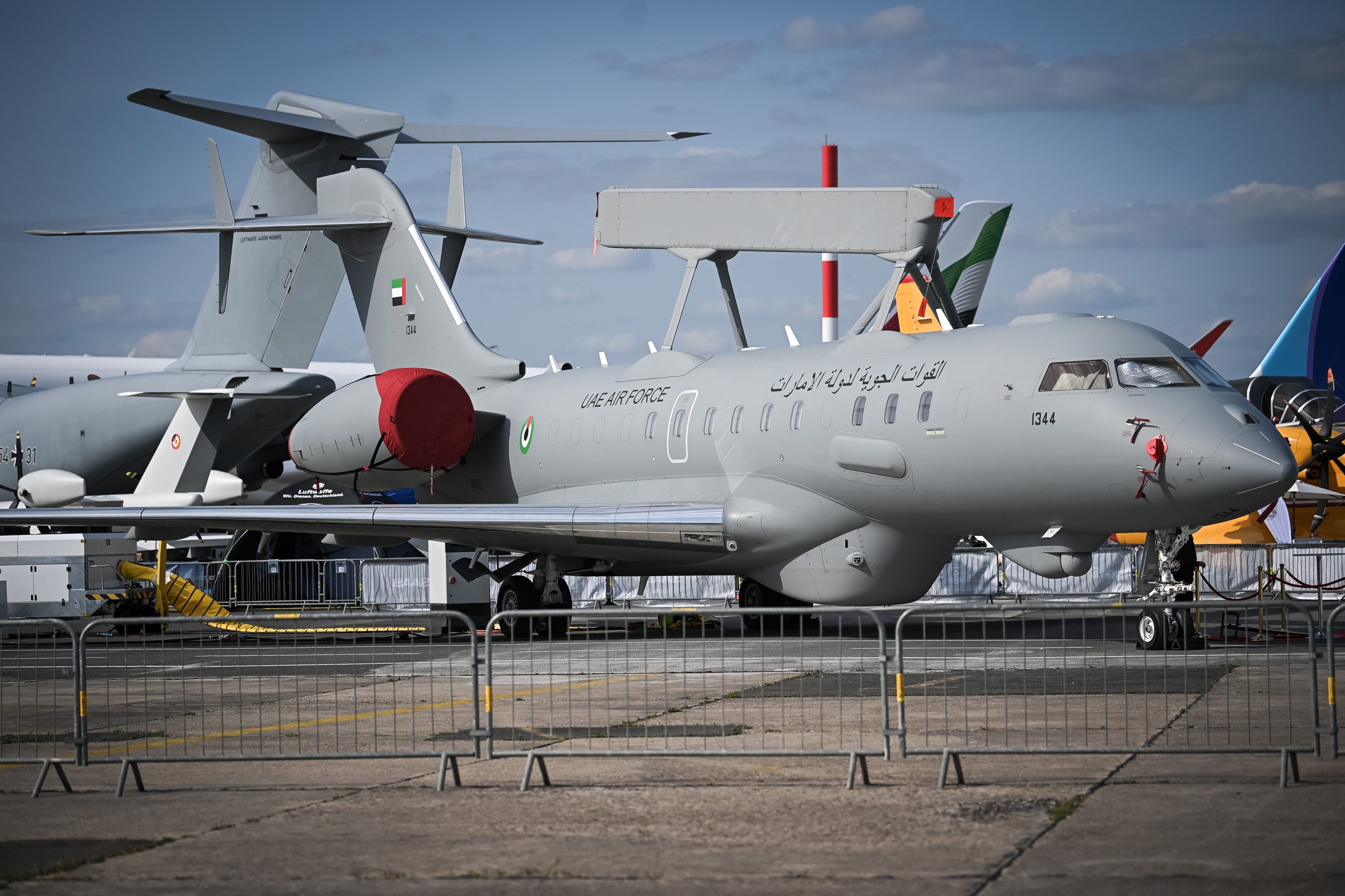
NATO has selected Sweden’s Saab GlobalEye as its future airborne early-warning and control platform to replace the ageing Boeing E-3A AWACS fleet, with talks potentially covering up to ten aircraft.
NATO has selected Sweden’s Saab GlobalEye as its future airborne early-warning and control (AEW&C) platform to replace the long-serving Boeing E-3A AWACS fleet. The decision was announced by Secretary General Mark Rutte at the Ankara summit on 7 July, with Saab confirming that talks could cover up to ten aircraft.
Saab says the announcement means GlobalEye has been chosen as NATO’s future AEW&C solution, though no contract has yet been signed. Negotiations with the NATO Support and Procurement Agency (NSPA) are set to begin, with no timeline released.
What GlobalEye is
The Saab GlobalEye is a multi-domain AEW&C aircraft built on the Bombardier Global 6500 business jet. It combines Saab’s Erieye Extended Range AESA radar with additional surveillance sensors and a multi-domain command-and-control suite, tracking air, maritime and land targets simultaneously at long range.
Early-warning aircraft act as the eyes and ears of the battlespace, detecting threats from low-flying cruise missiles to drones and cueing friendly forces. GlobalEye’s ability to track drones and missiles was highlighted as a key reason for the selection.
An 11-nation buy
The acquisition is a joint effort by 11 NATO members: Belgium, Canada, Denmark, Germany, Latvia, Lithuania, Luxembourg, the Netherlands, Norway, Romania and Sweden. Because the E-3A fleet is one of the few assets the alliance operates collectively, choosing its successor is a strategic question for NATO’s long-term air-picture capability.
Türkiye and regional context
GlobalEye’s Erieye radar lineage is the extended-range branch of the same Erieye family carried by Türkiye’s Boeing 737-based “Peace Eagle” (E-7T) early-warning aircraft. NATO’s choice therefore rests on a sensor family that overlaps with Turkish capability. How the selection converts into a contract, and the delivery timeline, will be central to NATO’s air-surveillance modernisation in the period ahead.
Sources: official NATO and Saab statements and international aviation outlets.