Spain Weighs Expanding HÜRJET Order From 30 to 45 Jets, TAI Chief Confirms

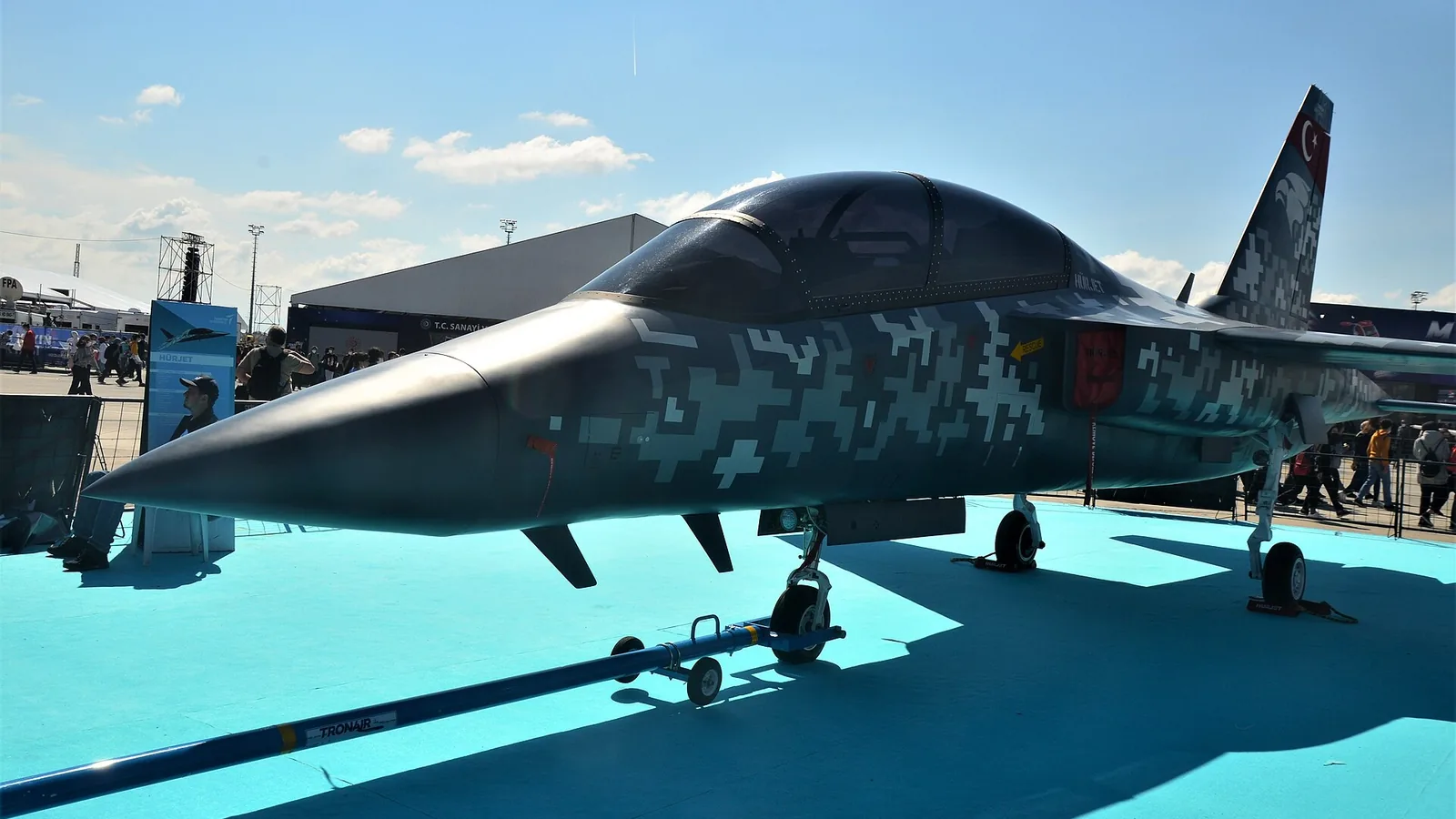
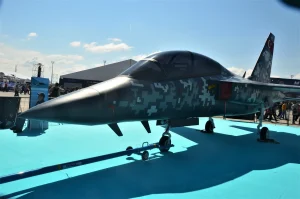
Turkish Aerospace (TAI/TUSAŞ) CEO Mehmet Demiroğlu said at an event in Turkey that Spain is considering adding 15 more HÜRJET jet trainers to its existing order, which would take the total fleet from 30 to 45 aircraft. Spanish trade outlet Infodefensa reported that industry sources confirmed the option is under review, though Spain’s Ministry of Defence has not made an official statement on the additional purchase.
Spain’s current HÜRJET contract was awarded in December 2025 to a joint venture between TAI and Airbus Defence and Space, with reported program values ranging from €1.56 billion to €2.6 billion depending on the source. The industrial partnership was formally signed in April 2026 at Airbus’s Getafe facility near Madrid.
The 45-aircraft figure isn’t new, but remains unconfirmed
Spain’s government approved the purchase of up to 45 HÜRJET aircraft in a Royal Decree (848/2025) issued in September 2025, but the firm contract was limited to an initial batch of 30, leaving the remaining 15 as an option. Demiroğlu’s comments suggest that option is now being actively discussed, though no signing date has been announced.
Under the program, HÜRJET will replace Spain’s SF-5M fleet, in service since the 1960s. Deliveries are planned to begin in 2028, with 21 Turkish-built aircraft arriving in their initial configuration for pilot training; the remaining aircraft will be converted to the Spanish-specific “Saeta II” configuration between 2031 and 2035.
Fifteen Spanish companies in the supply chain
The Airbus-led program involves 15 Spanish defense companies integrating systems tailored to Spanish requirements. It also includes construction of an Aircraft Conversion Center in Albacete and renovation of the training center at Talavera la Real air base, along with operation and maintenance services.
Demiroğlu has previously described Spain’s purchase as a significant milestone for Turkish aerospace exports, noting it marks HÜRJET’s entry into the inventory of a NATO and European Union member state — the aircraft’s first firm export order.
Competing in a crowded trainer market
HÜRJET competes in the advanced jet trainer and light attack segment against South Korea’s KAI T-50, the Italian-American M-346, and Boeing’s T-7A Red Hawk. Powered by a single General Electric F404 turbofan, it represents TUSAŞ’s first major jet trainer export success.
If the additional 15-aircraft option is exercised, the program would strengthen TAI’s position in the European trainer market and expand the scope of its industrial partnership with Airbus. Neither side has set a timeline for a formal signing.
NATO spending targets and a co-production model
Spain’s defense budget has grown markedly in recent years as Madrid aligns with NATO spending targets. The HÜRJET purchase stands out as a program that serves both fleet modernization and allied industrial cooperation goals at once, since the contract builds aircraft in Turkey and customizes them in Spain — effectively a co-production model between the two countries’ industries.
For TUSAŞ, HÜRJET is part of a broader export diversification strategy that runs alongside its KAAN national fighter program. The company continues to market HÜRJET to countries in Europe, the Middle East, and Southeast Asia seeking jet trainers, and an expanded Spanish order would give those marketing efforts a concrete reference case.
Sources
- Infodefensa, “Defensa planea la compra de otros 15 aviones Saeta, la versión ‘españolizada’ del Hurjet de la turca TAI”, October 14, 2026 — https://www.infodefensa.com/texto-diario/mostrar/6051707/espana-abre-puerta-compra-otros-15-aviones-hurjet-turca-tai. Used for the TAI CEO’s statement and industry sourcing.
- Janes, “Spain awards Hürjet procurement contract”, December 2025 (archive) — https://www.janes.com/osint-insights/defence-news/defence/spain-awards-hurjet-procurement-contract. Used for contract value and award date.
- The Aviationist, “Spain approves procurement of 45 Hürjets”, September 25, 2025 (archive) — https://theaviationist.com/2025/09/25/spain-approves-procurement-45-hurjets/. Used for the origin of the 45-aircraft figure and the Royal Decree.