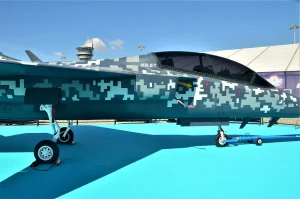
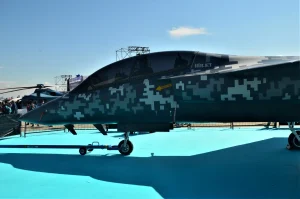
HÜRJET Rivals: M-346, T-50, T-7A and Hawk Compared by Class

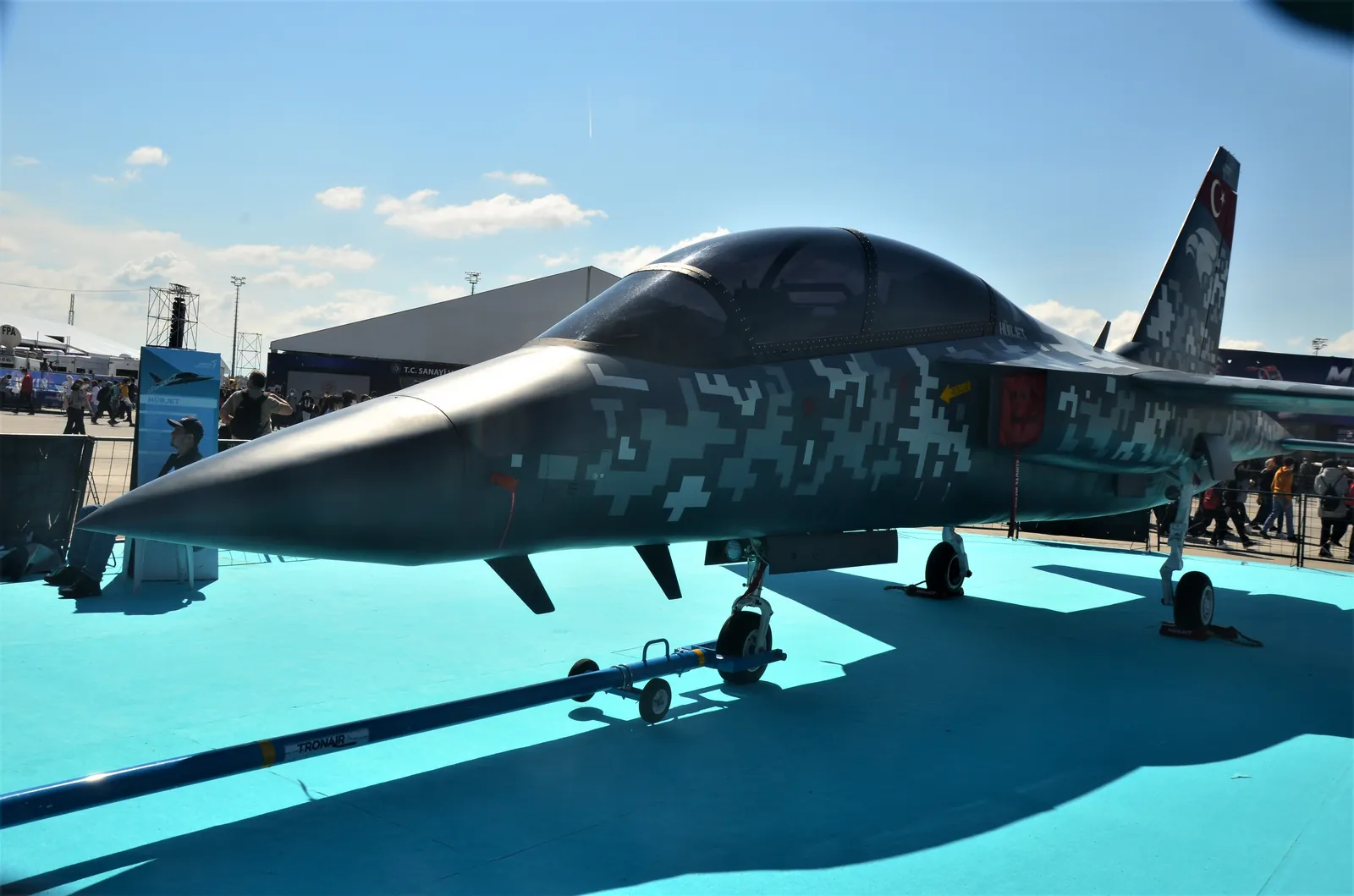
HÜRJET’s direct rivals in the advanced jet trainer and light attack (LIFT) class are the South Korean KAI T-50/FA-50, Italy’s Leonardo M-346, the US–Swedish Boeing–Saab T-7A Red Hawk and the British BAE Hawk. Only HÜRJET (Mach 1.4) and the T-50 (Mach 1.5) are supersonic. HÜRJET, the T-50 and the T-7A share the GE F404 engine family, and Spain signed a contract for 30 HÜRJET aircraft in December 2025.
| HÜRJET and Its Rivals — Quick Facts | |
|---|---|
| Class | Advanced jet trainer and light attack aircraft (LIFT) |
| Direct rivals | KAI T-50/FA-50, Leonardo M-346, Boeing–Saab T-7A Red Hawk, BAE Hawk |
| Supersonic members | HÜRJET (Mach 1.4) and T-50 (Mach 1.5) |
| Subsonic members | M-346 (Mach 0.95), T-7A (Mach 0.975), Hawk (Mach 0.88 in level flight) |
| Shared engine family | GE F404 on HÜRJET (F404-104), T-50 (F404-102) and T-7A (F404-GE-103) |
| Twin-engine rival | M-346, with 2× Honeywell/ITEC F124-GA-200, no afterburner |
| HÜRJET first flight | 25 April 2023 (prototype P1); P2 flew on 12 November 2024 |
| HÜRJET export | Spain: contract for 30 aircraft signed in December 2025 (ITS-C programme, Airbus prime contractor) |
| HÜRJET payload | 7,500 lb on 7 stations |
| Unit prices | Not officially disclosed for HÜRJET or its rivals |
Who are the HÜRJET rivals?
HÜRJET competes in the advanced jet trainer and light attack segment, often called lead-in fighter training (LIFT). In the Western and NATO-compatible market, four aircraft sit in the same class: the KAI T-50 Golden Eagle and its TA-50 and FA-50 variants, developed in South Korea with Lockheed Martin; the Leonardo M-346 Master, built in Italy by the former Alenia Aermacchi; the Boeing–Saab T-7A Red Hawk, selected by the US Air Force in September 2018; and the BAE Systems Hawk, which first flew on 21 August 1974. Russia’s Yak-130 and China’s Hongdu L-15, both twin-engined, also belong to the wider category but address a different market.
HÜRJET itself is a single-engine, tandem two-seat supersonic trainer and light attack aircraft developed by Turkish Aerospace (TUSAŞ/TAI) in Kahramankazan, Ankara, with avionics largely supplied by ASELSAN. It is powered by one GE F404-104 rated at 17,700 lb with afterburner and is intended to replace the Turkish Air Force T-38 training fleet while also covering a light attack role. The first prototype flew on 25 April 2023 and the second on 12 November 2024. Prototypes are not series aircraft, and the detailed Turkish Air Force delivery schedule has not been officially disclosed.
How does HÜRJET compare with its rivals?
The comparison below matches aircraft by class rather than ranking them. The most visible dividing line is the flight envelope: within this group only HÜRJET and the T-50 are supersonic, while the M-346, T-7A and Hawk are subsonic designs.
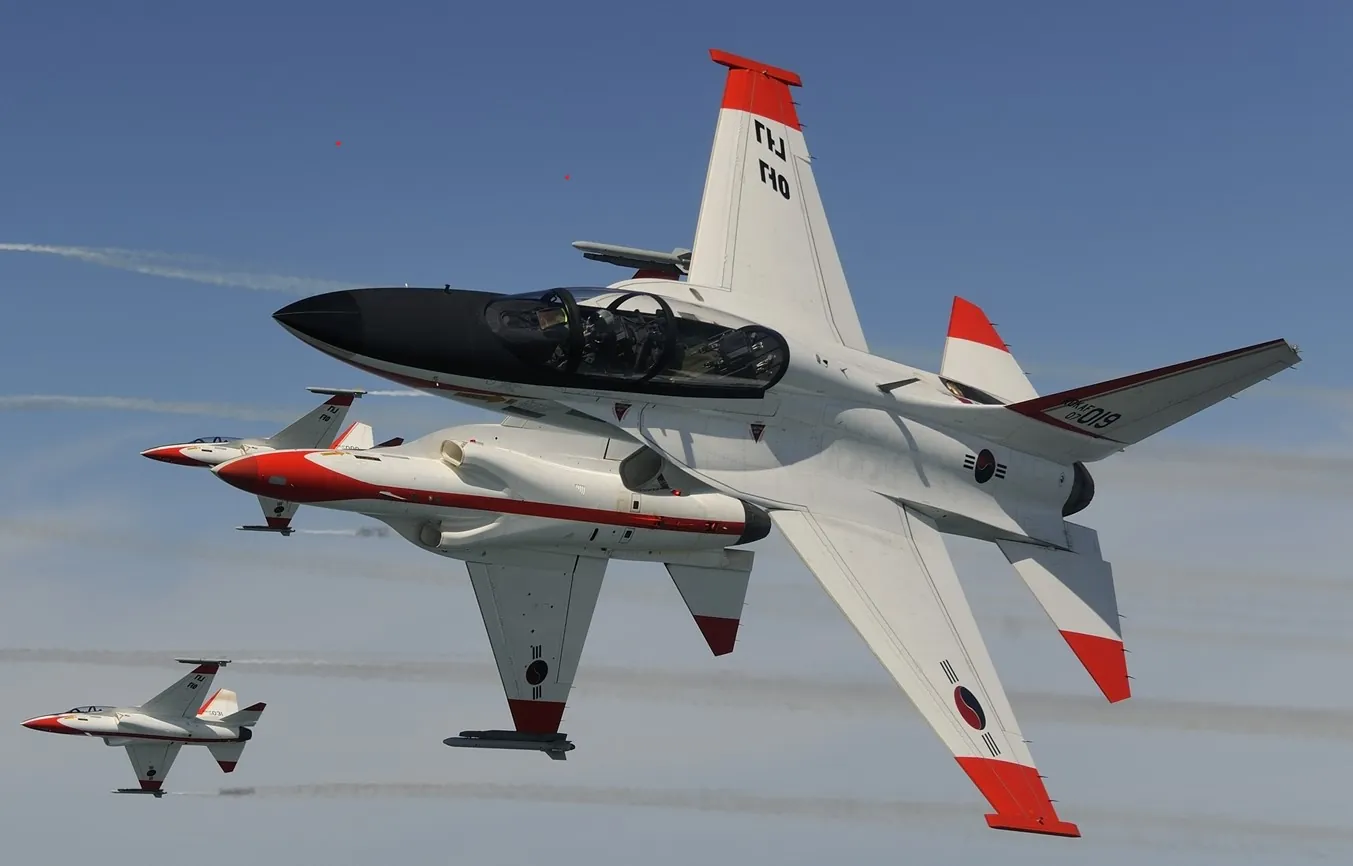
- KAI T-50 / FA-50: the closest match to HÜRJET. Single engine, the same F404 family (F404-102, 17,700 lbf), supersonic at Mach 1.5. In service with the Republic of Korea Air Force since 2005 and exported widely.
- Leonardo M-346: twin-engined with two Honeywell/ITEC F124-GA-200 engines of 6,280 lbf each, no afterburner, top speed Mach 0.95. Its M-346FA light combat variant carries up to 3,000 kg on 7 stations.
- Boeing–Saab T-7A: single F404-GE-103 of 17,200 lbf, top speed Mach 0.975. Built around the US Air Force requirement for 351 aircraft and 46 simulators.
- BAE Hawk: single Rolls-Royce Turbomeca Adour without afterburner, Mach 0.88 in level flight. A mature design with more than 1,000 built, now being replaced by several operators.
Set against this field, HÜRJET combines a supersonic envelope of Mach 1.4, a 45,000 ft ceiling, a climb rate of 48,500 ft/min, +8/−3 g limits and a 7,500 lb payload on 7 stations. Its supersonic performance is presented by Turkish Aerospace as an advantage for transitioning pilots to fifth-generation fighters such as KAAN and the F-35.
The table sets HÜRJET alongside its four Western-market rivals on basic, publicly documented parameters. It is a class comparison, not a ranking: training syllabus, avionics and through-life cost all influence procurement decisions, and unit prices for these aircraft have not been officially disclosed, so no price comparison is made here.
Programme maturity differs widely across the class. The T-50 family and the M-346 have been in service for years with hundreds of aircraft, the Hawk is a long-established type, and the T-7A has just entered low-rate production. HÜRJET is moving from prototype testing towards series production and has already secured its first export contract, with Spain, a NATO and EU member.
Why the F404 engine matters in this comparison
HÜRJET, the T-50 and the T-7A all use variants of the GE F404: the F404-104 on HÜRJET, the F404-102 on the T-50 and the F404-GE-103 on the T-7A. The M-346 takes a different route with two Honeywell/ITEC F124 engines and no afterburner, and the Hawk uses a single Rolls-Royce Turbomeca Adour, also without afterburner.
For HÜRJET operators, the shared F404 family is a practical advantage. According to GE, 16 nations operate or have ordered F404-powered aircraft, which gives a global logistics and sustainment network for spares, overhaul and technical data. In Turkey, TEI is set to take on assembly, test and maintenance, repair and overhaul (MRO) work on the F404, adding domestic sustainment capability. The engine choice therefore places HÜRJET on comparable propulsion terms with its two closest single-engine rivals while keeping the afterburning thrust needed for supersonic flight.
Spain’s HÜRJET order and the export market
Spain is HÜRJET’s first export customer, and the deal is a signed contract, not a negotiation. Spain’s Council of Ministers approved a programme of up to 45 aircraft in September 2025, and a contract for 30 aircraft was signed in December 2025. Janes reported that Spain’s DGAM awarded a sole-source contract to Airbus Defence and Space on 23 December 2025, while The Aviationist dated the signature to 28 December 2025. The value has been reported at €1.56–2.4 billion depending on scope: Janes cited €1.56 billion for the aircraft contract, and The Aviationist about €2.4 billion for the full package including the integrated training system, simulators and support.
The programme is known as ITS-C (Integrated Training System – Combat). Airbus acts as prime contractor and integrator, adapting the aircraft to Spanish requirements and running the Talavera la Real training centre, while Turkish Aerospace manufactures the 30 airframes. Delivery in the initial configuration and Spanish certification are planned for 2028–2029, with deliveries to the customer after national content conversion from the second half of 2031 to 2035. The aircraft will replace the Northrop SF-5M trainers of Ala 23 at Badajoz/Talavera la Real, after Spain evaluated a HÜRJET prototype in July–August 2024.
The contract stands out as the first major export of a Turkish jet trainer to Europe. More broadly, ageing trainer fleets across the market, including Hawk and F-5 derived types, are opening opportunities for newer designs such as HÜRJET.
This page matches aircraft by class; it does not rank them. Within the group, only HÜRJET (Mach 1.4) and the T-50 (Mach 1.5) are supersonic; the M-346, T-7A and Hawk are subsonic. HÜRJET is single-engined, with one GE F404-104; the M-346 is the only twin-engine aircraft among the four Western rivals. Spain’s order is a signed contract for 30 aircraft (December 2025), with a value reported at €1.56–2.4 billion depending on scope. HÜRJET’s maximum take-off weight, empty weight, unit price and the detailed Turkish Air Force delivery schedule have not been officially disclosed, and rival unit prices are not compared. HÜRJET prototypes are not series-production aircraft, and an export evaluation of the T-7A is not an order.
Frequently Asked Questions
Who are HÜRJET’s main rivals?
HÜRJET’s main rivals in the advanced jet trainer and light attack class are the KAI T-50/FA-50 Golden Eagle from South Korea, the Leonardo M-346 Master from Italy, the Boeing–Saab T-7A Red Hawk from the United States and Sweden, and the BAE Systems Hawk from the United Kingdom. Russia’s Yak-130 and China’s Hongdu L-15 belong to the wider category but serve a different market from the Western and NATO-compatible one HÜRJET targets.
Which aircraft is closest to HÜRJET?
The KAI T-50 is the closest match by class. Like HÜRJET, it is a single-engine, tandem two-seat aircraft powered by the GE F404 family, in its case the F404-102 rated at 17,700 lbf, and it is supersonic with a top speed of Mach 1.5. HÜRJET reaches Mach 1.4. Both aircraft also cover light attack missions, the T-50 through its TA-50 and FA-50 variants.
Is HÜRJET faster than the M-346 and T-7A?
Yes, on published maximum speeds. HÜRJET is rated at Mach 1.4 and is supersonic, while the Leonardo M-346 reaches Mach 0.95 and the Boeing–Saab T-7A Mach 0.975, both subsonic. The BAE Hawk reaches Mach 0.88 in level flight. Within the group, only HÜRJET and the KAI T-50 cross the speed of sound, which matters for training pilots bound for fifth-generation fighters.
Do HÜRJET and the T-7A use the same engine?
They use the same engine family but different variants. HÜRJET is powered by one GE F404-104 rated at 17,700 lb with afterburner, while the T-7A Red Hawk uses one F404-GE-103 rated at 17,200 lbf. The KAI T-50 uses the F404-102. Sharing the F404 family gives these aircraft access to a global support network; according to GE, 16 nations operate or have ordered F404-powered aircraft.
How is the M-346 different from HÜRJET?
The M-346 is twin-engined, with two Honeywell/ITEC F124-GA-200 engines of 6,280 lbf each and no afterburner, and it is subsonic at Mach 0.95. HÜRJET has a single GE F404-104 with afterburner and reaches Mach 1.4. The M-346 has a long service record, with 165 ordered and 103 delivered by September 2025, while HÜRJET is entering series production with its first export contract signed.
Has any country ordered HÜRJET?
Yes. Spain signed a contract for 30 HÜRJET aircraft in December 2025 under its ITS-C programme, after approving a programme of up to 45 aircraft in September 2025. Airbus Defence and Space is prime contractor and integrator, and Turkish Aerospace builds the 30 airframes. The value was reported at €1.56–2.4 billion depending on scope. The aircraft will replace Spain’s SF-5M trainers at Ala 23.
Which HÜRJET rival costs the least?
No reliable answer is possible from official data. Unit prices for HÜRJET, the T-50/FA-50, the M-346, the T-7A and the Hawk have not been officially disclosed in a comparable form, and published contract values usually bundle aircraft with simulators, training systems and support. For that reason, this comparison matches the aircraft on class, engine, speed and programme status rather than on price.
Sources
- Turkish Aerospace (TUSAŞ/TAI) — official HÜRJET product page, tusas.com (dimensions, engine and performance data)
- Janes — Spain awards HÜRJET-based ITS-C contract to Airbus Defence and Space, 23 December 2025
- The Aviationist — Spain signs contract for 30 HÜRJET trainers, 30 December 2025
- US Air Force (af.mil) and Boeing — T-7A Red Hawk first delivery and Milestone C / LRIP announcements, December 2025 to May 2026
- Leonardo — M-346 Master product information; Wikipedia — Alenia Aermacchi M-346 Master
- KAI and BAE Systems product information; Wikipedia — KAI T-50 Golden Eagle and BAE Systems Hawk