Sungur vs Stinger: How Turkey’s MANPADS Compares to the FIM-92

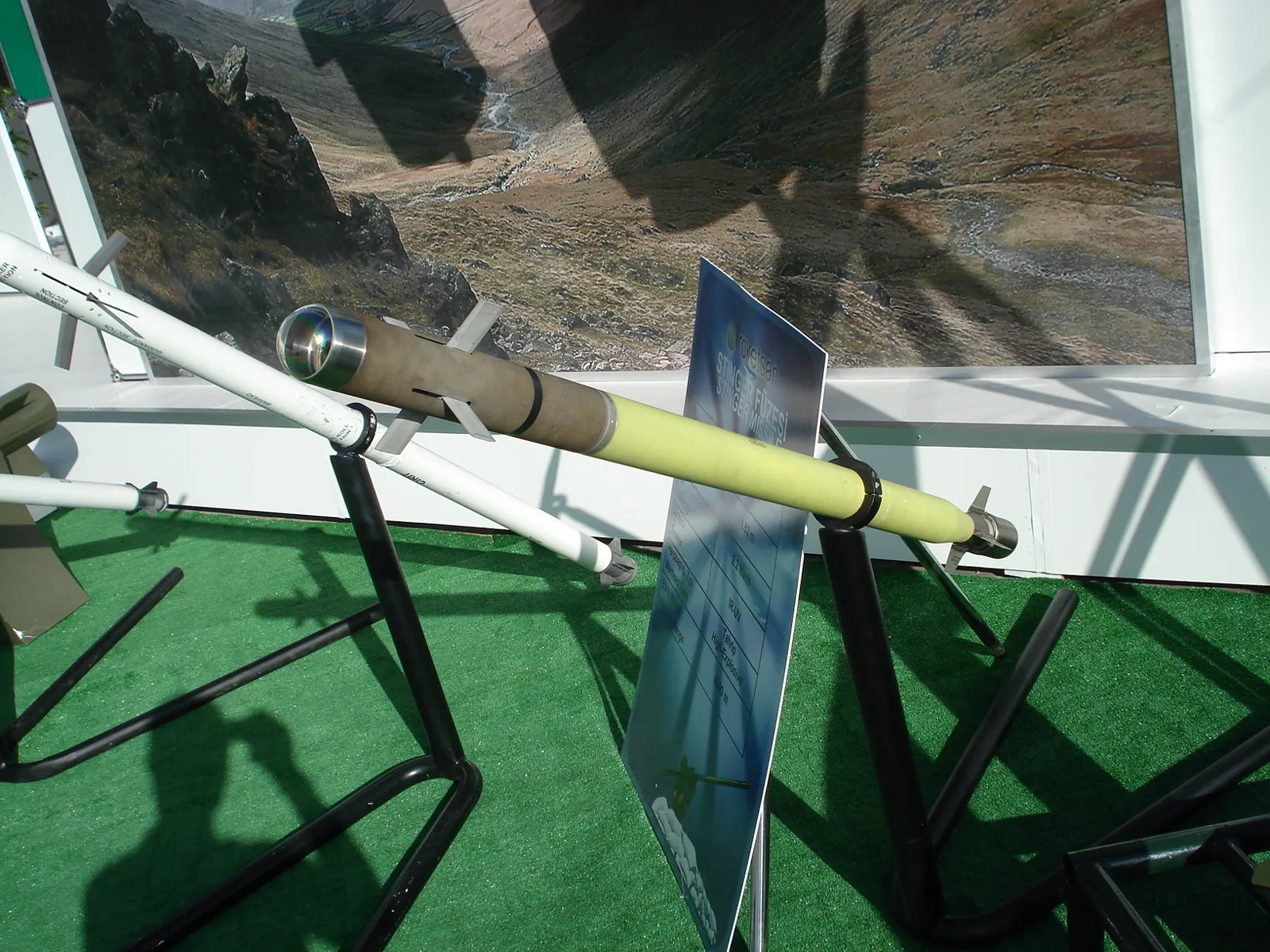
The Sungur is Turkey’s first indigenous man-portable air-defence system (MANPADS), developed by ROKETSAN, while the FIM-92 Stinger is the most widely fielded Western MANPADS, in service since 1981. Both fill the same battlefield role, but the Sungur represents a newer technology generation: roughly 8 km of range and an imaging-infrared (IIR) seeker versus the Stinger’s ~4.8 km reach and IR/UV two-colour guidance. In the Turkish Armed Forces, the Sungur entered the inventory specifically to take over the Stinger’s role.
| Sungur vs FIM-92 Stinger — At a Glance | |
|---|---|
| Class | Man-portable air-defence system (MANPADS) |
| Sungur developer | ROKETSAN (Turkey) |
| Stinger developer | General Dynamics / Raytheon (USA) |
| Sungur service entry | Initial capability 2020; Turkish inventory July 2022 |
| Stinger service entry | 1981 (US Army) |
| Sungur range / ceiling | ~0.5-8 km / ~4 km |
| Stinger range / ceiling | ~4.8 km / ~3.8 km (varies by variant) |
| Sungur guidance | Imaging infrared (IIR), fire-and-forget (LOBL) |
| Stinger guidance | Passive IR/UV two-colour seeker, fire-and-forget |
| Sungur weight | 14.5 kg (system) |
| Stinger weight | ~15.2 kg (missile + launcher) |
| Status in Turkey | Sungur replacing Stinger in the Turkish Armed Forces |
Why compare these two missiles?
The Sungur-versus-Stinger comparison rests on a direct historical link: for decades, the Turkish Armed Forces met their shoulder-launched air-defence requirement with US-origin Stinger missiles, used both in the man-portable role and on vehicle-mounted pedestal systems such as the ATILGAN and ZIPKIN. The Sungur was developed by ROKETSAN precisely to replace that capability with a national solution — it is a designed successor to the Stinger in Turkish service, not merely a competitor.
That makes this less a contest between rival export products and more the story of a generational handover. The Stinger entered service in 1981, has been upgraded repeatedly and exported to more than 30 countries, with a combat record stretching from Afghanistan in the 1980s to Ukraine today. The Sungur achieved initial capability in 2020 and joined the Turkish inventory in July 2022. The roughly four-decade gap between the two designs shows most clearly in seeker technology and countermeasure resistance.
Supply security is the other axis of comparison. Stinger availability depends on US export approvals and production priorities; the massive transfers to Ukraine after 2022 strained Western stockpiles and exposed the fragility of a production line that had been largely dormant. With the Sungur, Turkey holds a capability in this critical munitions class that is independent of foreign export licences.
Technical comparison: range, seeker, weight
The clearest difference is range. The Sungur engages targets across roughly 0.5-8 km and up to about 4 km in altitude. For baseline Stinger variants, the commonly cited figures are about 4.8 km of range and a ceiling near 3.8 km; newer production blocks include improvements, but exact open-source figures vary by variant. On paper, the Sungur operates well beyond the classic Stinger envelope.
The seeker gap is generational. The Stinger uses a passive infrared/ultraviolet two-colour seeker with rosette scanning — effective for its era and reasonably resistant to flares. The Sungur carries an imaging-infrared (IIR) seeker that perceives the target as a thermal image rather than a point source, sharply improving target discrimination and immunity to flare-type countermeasures. Both missiles are fire-and-forget; the Sungur locks on before launch (LOBL).
- Weight: the Sungur system weighs 14.5 kg; a Stinger round with its launcher weighs about 15.2 kg. Both are genuinely one-soldier weapons, and the practical difference is small.
- Warhead: the Sungur uses an HE-SAP warhead with a programmable fuze; the Stinger carries an approximately 3 kg high-explosive fragmentation warhead.
- Propulsion: the Sungur uses a two-stage solid-fuel arrangement; the Stinger pairs an ejection motor with a flight motor.
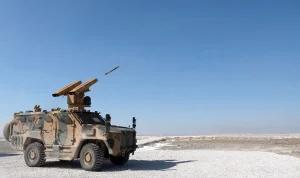
- Platforms: both integrate onto vehicles, ships and aircraft beyond the shoulder role; the Sungur is also the core effector of Turkey’s LEVENT naval point-defence system and BURÇ mobile air-defence system.
The table below places the two systems side by side using open-source data. Sungur figures come from ROKETSAN statements and Turkish inventory announcements; Stinger figures come from US military sources and widely used open references. Because the Stinger exists in many variants, some values differ between production blocks.
From Stinger to Sungur in Turkish service
Turkey did not simply buy Stingers off the shelf. From the late 1980s, ROKETSAN took part in the European co-production programme for the Stinger, building components and gaining hands-on experience in rocket motors and missile assembly. That co-production work became a foundation stone of the industrial base that would later design the Sungur — the replacement literally grew out of the programme it now supersedes.
Since the Sungur entered the inventory in July 2022, the Turkish Armed Forces have been running a gradual transition in the shoulder-launched air-defence role. The change is unlikely to stop there: the mission band covered by Stinger-based ATILGAN and ZIPKIN vehicle systems is increasingly addressed by Sungur-based solutions. The missile’s selection as the core effector of the LEVENT naval close-in system and the BURÇ mobile low-altitude system signals that the Sungur is intended as the common building block of Turkey’s future low-tier air-defence architecture. The precise transition timeline and the fate of remaining Stinger stocks have not been officially disclosed.
On the Stinger side, the picture is different: the missile remains widespread across NATO, and after the heavy expenditure in Ukraine the United States restarted and expanded production while pursuing a separate next-generation successor programme. Even in its home country, the Stinger is at the threshold of a generational replacement.
Assessment: which comes out ahead?
Placed side by side, the Sungur shows the stronger paper profile in range, ceiling and seeker technology. An engagement envelope reaching roughly 8 km sits well above the classic MANPADS band and matters increasingly in an environment saturated with drones. The IIR seeker’s countermeasure immunity is arguably the decisive technical advantage against modern threats.
The Stinger’s strengths lie on a different axis: a combat record spanning four decades, proven effectiveness from Afghanistan to Ukraine, an enormous user community and a mature logistics chain. No new system can replicate that overnight, and open-source data on the Sungur’s large-scale combat performance remains limited. If the reported deliveries to Ukraine are accurate, evidence from real operational use will accumulate over time.
For Turkey, the core gain reaches beyond the specification sheet: the Sungur removes export-licence risk from a critical munitions class, allows development to follow national requirements, and opens an export path of its own. The stockpile and production crunch the Stinger experienced after 2022 illustrated concretely why that independence matters. In short: two systems from two different generations — the Sungur technically newer and more ambitious, the Stinger combat-proven and ubiquitous.
Sungur figures (range ~0.5-8 km, ceiling ~4 km, weight 14.5 kg, IIR guidance) are based on ROKETSAN statements and open sources; the warhead mass has not been officially disclosed. FIM-92 Stinger figures (~4.8 km range, ~3.8 km ceiling, ~15.2 kg, IR/UV guidance) are compiled from US military sources and standard open references and vary by variant. This page is an independent editorial comparison with no commercial ties to either manufacturer. Reported Sungur deliveries to Ukraine rest on open-source reporting and are not officially confirmed.
Frequently Asked Questions
Which has the longer range, Sungur or Stinger?
The Sungur engages targets at roughly 0.5-8 km, while the commonly cited range for the FIM-92 Stinger is about 4.8 km. On paper the Sungur reaches roughly twice as far, though newer Stinger blocks include improvements.
What is the difference between their seekers?
The Sungur uses an imaging-infrared (IIR) seeker that sees the target as a thermal image, giving high resistance to flares. The Stinger uses a passive IR/UV two-colour seeker with rosette scanning — effective for its era, but a generation older than IIR technology.
Is the Sungur replacing the Stinger in Turkey?
Yes. The Sungur was developed specifically to replace the Stinger in Turkish Armed Forces service and entered the inventory in July 2022. The exact transition timeline has not been officially disclosed.
Which system is lighter?
They are effectively in the same weight class: the Sungur system weighs 14.5 kg, while a Stinger round with launcher weighs about 15.2 kg. Both can be carried and fired by a single soldier.
Did Turkey ever produce the Stinger?
Yes. From the late 1980s ROKETSAN participated in the European Stinger co-production programme. That experience helped build the industrial base that later produced the Sungur.
Is the Stinger still in production?
After heavy transfers to Ukraine, the United States restarted and expanded Stinger production and accelerated upgrades, while also pursuing a next-generation successor programme. The Stinger remains in service with the US and more than 30 other countries.
Sources
- ROKETSAN official — roketsan.com.tr
- US Army and Raytheon open-source data — FIM-92 Stinger
- Wikipedia (EN) — SUNGUR (missile); FIM-92 Stinger
- Turkish Defence Industry Agency (SSB) and Turkish Armed Forces inventory announcements (2022)
- Open-source defence publications; verified as of 23 July 2026