HİSAR Air Defence System: A+, O+ and the SİPER Link

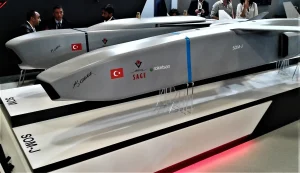
HİSAR is Turkey’s indigenous air-defence missile family, led by ROKETSAN with ASELSAN and TÜBİTAK-SAGE. It covers HİSAR-A+ for low altitude (range ~15 km) and HİSAR-O+ for medium range (about 25 km with an imaging-infrared seeker, 40+ km with the active-radar RF version). The long-range HİSAR-U was never fielded as a separate product; that work evolved into the SİPER system.
| HİSAR Family — At a Glance | |
|---|---|
| Category | Land-based air-defence missile family (low-to-medium altitude) |
| Developer | ROKETSAN (missile/motor), ASELSAN (radar/fire control), TÜBİTAK-SAGE |
| Variants | HİSAR-A+ (low), HİSAR-O+ (medium), HİSAR-U → SİPER |
| Service entry | A+: May 2021 · O+: full serial production Jan 2025 |
| Range | A+ ~15 km · O+ IIR ~25 km / RF 40+ km |
| Engagement altitude | A+ ~8-10 km · O+ ~15 km |
| Guidance | INS + IIR; active-radar seeker on the RF version |
| Propulsion | Dual-pulse solid-propellant rocket motor |
| Platform | 6×6 tactical truck + phased-array radar |
| Operator | Turkish Armed Forces |
What is HİSAR?
HİSAR is a family of missiles developed to meet Turkey’s low- and medium-altitude air-defence needs with domestic technology. The system brings together ROKETSAN’s missile and rocket-motor work, ASELSAN’s radar and fire-control expertise and TÜBİTAK-SAGE’s system engineering. The goal was to replace short- and medium-range air-defence systems long bought from abroad with a solution designed and built in-country.
The family is named by altitude layer. HİSAR-A+ provides point defence against low-flying aircraft, helicopters, cruise missiles and unmanned aerial vehicles. HİSAR-O+ protects a wider area at medium range and altitude. The HİSAR-U long-range layer never entered serial production as a stand-alone product; that effort evolved into SİPER, Turkey’s long-range air- and missile-defence system. In practice, then, the HİSAR name today refers to the A+ and O+ variants.
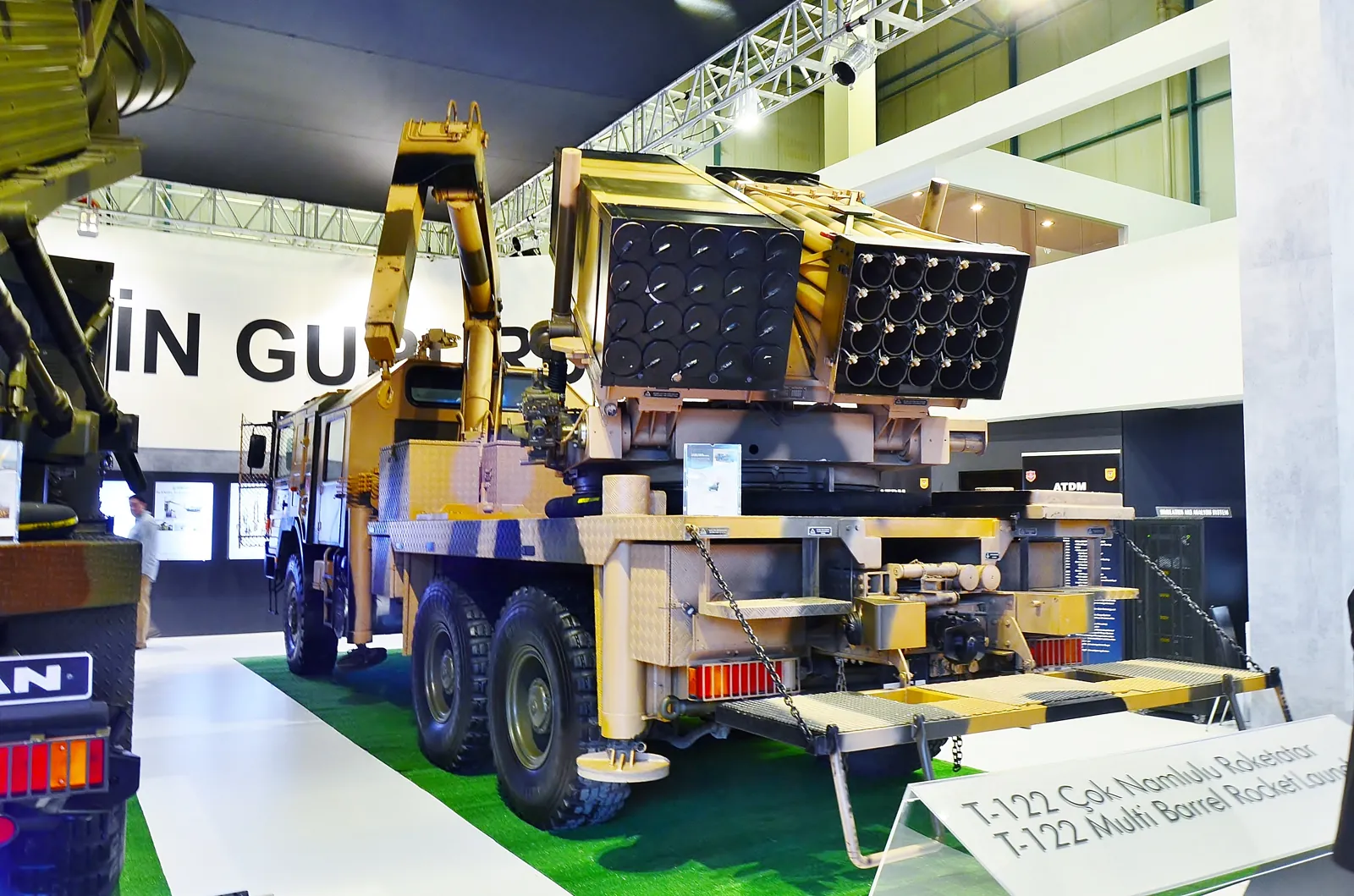
The whole system is mobile. Missiles are launched from vertical canisters on 6×6 tactical trucks, while target detection and tracking are handled by ASELSAN’s phased-array (AESA) radars. This architecture lets a battery reposition quickly and engage several targets at once.
Technical specifications and how it works
The HİSAR-A+ missile is about 3.95 m long and 185 mm in diameter, with a range of ~15 km and an engagement altitude of roughly 8-10 km. Guidance begins with inertial navigation (INS) and switches to an imaging-infrared (IIR) seeker in the terminal phase. Its dual-pulse solid-propellant motor gives the missile both a fast initial boost and extra energy in the terminal phase, improving manoeuvrability. The exact missile weight has not been officially disclosed.
The HİSAR-O+ missile is larger: about 4.6 m long, again 185 mm in diameter, with a canister weight of around 595 kg. Range depends on the seeker. With the imaging-infrared (IIR) seeker the range is about 25 km; with the active-radar (RF) seeker it reaches 40 km and beyond, at an engagement altitude of about 15 km. The RF version, whose seeker locks the target independently with its own radar, allows engagements at longer ranges and in all weather.
In both variants the radar provides target data; after leaving the launcher the missile is guided toward the target and establishes its final lock with its own seeker in the terminal phase. The warhead type and weight have not been officially disclosed; systems in this class typically use fragmentation warheads with programmable fuzes.
The HİSAR family is measured against Western and Israeli systems in its range class. HİSAR-A+ is usually grouped with short-range systems such as SPYDER-SR and VL MICA, while HİSAR-O+ is compared with medium-range systems like NASAMS and SPYDER-MR. The table below summarises the leading equivalents.
Platforms, operators and exports
The primary operator of HİSAR systems is the Turkish Armed Forces. HİSAR-A+ entered the inventory in May 2021, while HİSAR-O+ became operational in 2021-2022 and reached full serial production in January 2025. Both variants deploy as fully mobile batteries in which the launcher vehicles, the radar vehicle and the command-and-control element move together.
Open sources indicate that export talks are under way, but as of writing no confirmed customer country has been officially announced. Alongside ROKETSAN’s SUNGUR man-portable air-defence missile and the long-range SİPER system, the HİSAR family forms the middle tier of Turkey’s multi-layered ‘Steel Dome’ (Çelik Kubbe) air-defence concept.
Place in Turkey’s defence industry and limits
HİSAR is one of the key programmes reducing Turkey’s dependence on imported air defence. With SUNGUR at the low tier, HİSAR in the middle and SİPER at the top, the country fields a fully domestic defensive chain. The active-radar seeker technology in the HİSAR-O+ RF version also laid the groundwork for the SİPER Block-1 missile, showing the technological continuity across the family.
Some limits should be read with open-source caution. Values such as missile weight, warhead type and full radar performance have not been officially disclosed. Range figures also vary by variant and seeker type, so generalising from a single number is misleading. Because HİSAR-A+ and HİSAR-O+ have different mission profiles, any fair comparison should always specify the relevant variant and seeker.
HİSAR ranges vary by variant and seeker: A+ ~15 km, O+ IIR ~25 km, O+ RF 40+ km. Missile weight, warhead type and full radar performance are not officially disclosed. HİSAR-U was not produced as a separate product; it evolved into SİPER. These figures rest on open sources and official statements.
Frequently Asked Questions
What is HİSAR’s range?
It depends on the variant. The low-altitude HİSAR-A+ reaches about 15 km; the medium-range HİSAR-O+ reaches about 25 km with an imaging-infrared seeker and 40 km or more with the active-radar (RF) seeker.
What is the difference between HİSAR-A+ and HİSAR-O+?
HİSAR-A+ provides low-altitude point defence (range ~15 km, altitude ~8-10 km). HİSAR-O+ uses a larger missile to protect a wider area at medium range and ~15 km altitude. Its RF version reaches farther with an active-radar seeker.
What happened to HİSAR-U?
The long-range HİSAR-U layer never entered serial production as a separate product. That work evolved into SİPER, Turkey’s long-range air- and missile-defence system.
Who developed HİSAR and who operates it?
It was developed by ROKETSAN (missile/motor), ASELSAN (radar/fire control) and TÜBİTAK-SAGE. The primary operator is the Turkish Armed Forces.
How is HİSAR launched?
Missiles are fired from vertical launch canisters mounted on 6×6 tactical trucks. Target detection and tracking come from ASELSAN phased-array radars, and the battery is fully mobile.
What are HİSAR’s equivalents?
HİSAR-A+ is usually compared with SPYDER-SR and VL MICA, while HİSAR-O+ is compared with medium-range systems such as NASAMS, SPYDER-MR and IRIS-T SLM.
Sources
- ROKETSAN official — roketsan.com.tr
- ASELSAN official — aselsan.com
- Presidency of Defence Industries (SSB) statements
- Wikipedia (English) — HİSAR (missile family)
- Anadolu Agency and Daily Sabah reporting (2025-2026)