The World’s Largest Body Armour Manufacturers

The world’s largest body armour manufacturers make the cheapest item in defence and the one that saves the most lives. A tank costs millions; a ballistic vest costs a few thousand. But an army counts its tanks in hundreds and its vests in hundreds of thousands. And competition here runs on two separate layers: the integrators who cut and shape the vests and helmets, and the materials companies who make the fibre that makes protection possible at all. The second layer is far narrower than the first, and far more decisive. Following our file on sonar manufacturers, Envanter Medya compared ballistic vest, helmet and plate producers on production capacity, exports, contract scale and raw-material independence.
Editorial note: This ranking is editorial research prepared by Envanter Medya using publicly available data. It is not an official international ranking. Sources and methodology are set out in the “How this research was done” section below.
The research at a glance
“Largest” by which measure?
The answer changes entirely depending on which layer you look at. The integrator layer consists of companies that design and build vests, helmets and plates and sell them to armies and police forces; it is crowded and competitive. The materials layer consists of chemical companies producing para-aramid (Kevlar, Twaron) and ultra-high-molecular-weight polyethylene (Dyneema, Spectra) fibre; worldwide, the players here do not run past one hand. What makes the sector unusual is that market research lists both together — Point Blank Enterprises, Cadre Holdings/Safariland and BAE Systems as integrators, Honeywell and DuPont as materials firms — and those five held 36.7 per cent of the market in 2025. A vest maker, in other words, competes in the same ranking as its own supplier.
Why can a fibre maker outrank a vest maker? Ballistic protection is less about stopping a bullet than about spreading its energy. What does that work is not the weave but the fibre itself: para-aramid and UHMWPE fibres absorb far more energy per unit of weight than steel while weighing a fraction of it. The number of plants worldwide able to produce those fibres is very small, and all of them sit under export controls. An integrator can change its design; it cannot easily change its fibre.
In the integrator layer: Point Blank and Avon Protection
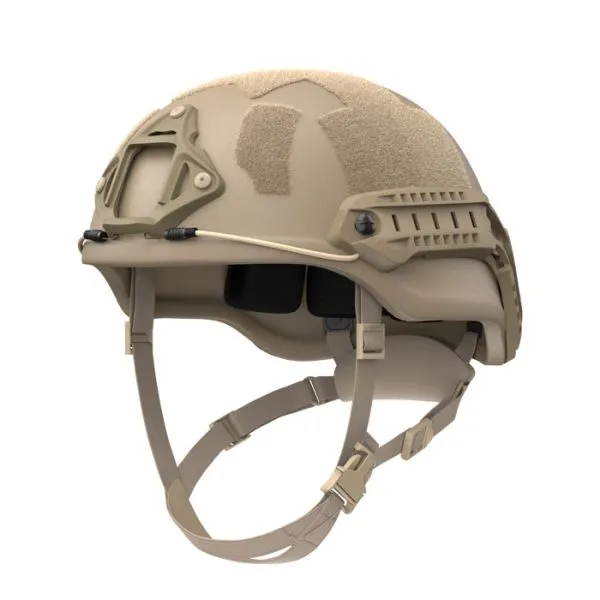
Two names stand out. Point Blank Enterprises delivered more than 150,000 units of its modular armour kit — with enhanced MOLLE integration and rapid-release capability — to NATO forces by March 2024. Rapid release matters more than it sounds: if a vest can be shed in one motion by a soldier who has fallen into water or been wounded, protection does not become a liability.
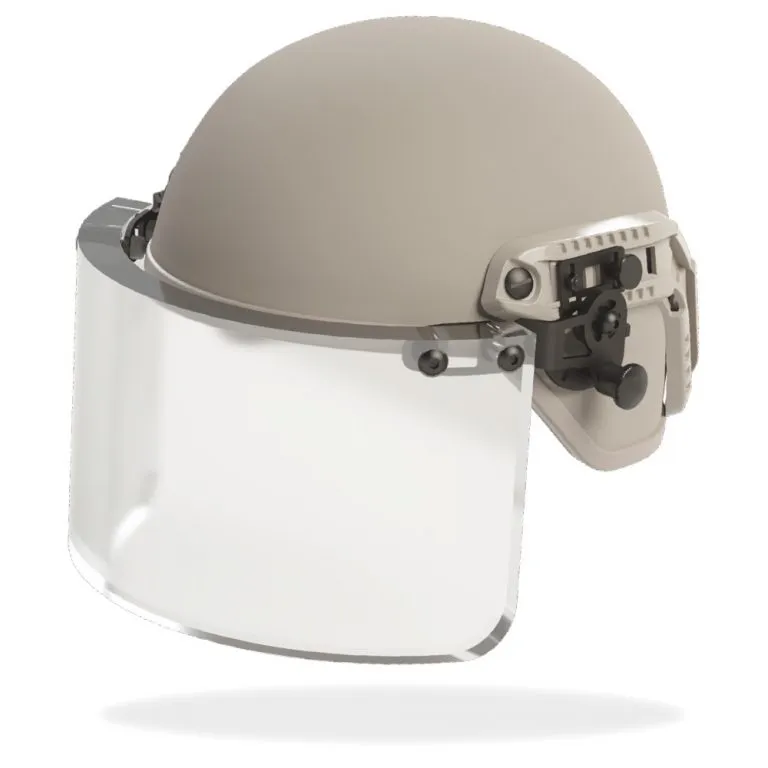
Avon Protection carries the largest programmes on the helmet side. The company received a contract worth up to $87.6 million over two years to develop and supply the US Army’s next-generation Integrated Head Protection System (IHPS). Separately, the US Defense Logistics Agency awarded it a helmet contract with a maximum value of $204 million over five years, with a one-year base period valued at a maximum of $46 million. Together the two programmes show why helmet work runs through so few players: hard to enter, hard to leave, and sustained by long framework contracts.
These are contract ceilings; actual orders may fall below them. The contracts belong to different years and this is not a cumulative total. Data type: S (contract record).
In the materials layer: who makes the fibre?
Here competition runs by generation rather than by product. Dyneema, part of Avient, unveiled its HB330 and HB332 hard armour materials in January 2025, engineered with third-generation fibre technology for inserts, helmets and vehicle armour. That followed SB301 in 2023, the first soft ballistic material made with third-generation Dyneema fibre. The company reports that the new materials enable weight reductions of up to 45 per cent in protective armour systems. Teijin Aramid‘s Twaron and Endumax fibres form the other main artery of the global ballistic supply chain, alongside DuPont‘s Kevlar and Honeywell‘s Spectra — and the list largely ends there.
Why weight reduction matters is obvious in the field: an infantry soldier carries tens of kilograms in vest, plates, helmet, ammunition and water. Every kilogram saved without giving up protection translates directly into mobility and fatigue. Each new generation in the materials layer therefore triggers a new product wave in the integrator layer.
Verified manufacturer table
| Manufacturer | Country | Layer | Verified headline data | Grade |
|---|---|---|---|---|
| DuPont | USA | Materials (Kevlar) | One of the market’s top five; the five together held 36.7% in 2025 | A |
| Point Blank Enterprises | USA | Integrator | 150,000+ modular armour kits to NATO forces by March 2024; one of the top five | A |
| Honeywell | USA | Materials (Spectra) | One of the market’s top five | A |
| Avon Protection | UK | Integrator (helmets) | Up to $87.6m for the US Army’s next-generation IHPS; DLA helmet contract max $204m over five years, base year max $46m | A |
| Cadre Holdings / Safariland | USA | Integrator | One of the market’s top five | A |
| Avient (Dyneema) | USA / Netherlands | Materials (UHMWPE) | HB330 and HB332 hard armour materials with third-generation fibre, January 2025; SB301 soft ballistic material, 2023 | A |
| Teijin Aramid | Netherlands / Japan | Materials (Twaron, Endumax) | Among the principal fibre suppliers to the global ballistic supply chain | B |
| BAE Systems | UK | Integrator | One of the market’s top five | A |
| Garanti Giyim Kompozit 🇹🇷 | Türkiye (Yozgat) | Integrator | Exports to more than 50 countries; has supplied close to 80% of Türkiye’s ballistic helmets since 2013 | A |
| CES İleri Kompozit ve Savunma Teknolojileri 🇹🇷 | Türkiye | Integrator | Helmet capacity from 30-40,000 to 190,000 by end-2023, with a 240,000 target for end-2024; serial customers in 22+ countries; exports from 50% to 60-65% of revenue | A |
| Central Lake Armor Express | USA | Integrator | Among the major companies operating in the market | B |
Data reliability notes. A: disclosed by the manufacturer, a government source, or market research giving a named figure. B: consistent across multiple open sources but not fixed by a single official figure. Data types: R reported, T company disclosure, S contract record, D unverifiable. UHMWPE: ultra-high-molecular-weight polyethylene.
EM-GDPI: how the composite index was built
The index was adapted again. The revenue criterion (15 points) was removed, because most companies do not report body armour revenue separately; in groups such as DuPont, Honeywell and BAE Systems the line disappears inside far broader portfolios. In its place came “raw material and fibre independence” (15 points): whether a company makes its own ballistic fibre, and to what degree it buys in. That is the single criterion that shows the sector’s real map of power — and it sits at the centre of this file’s assessment of Türkiye. The remaining criteria: production/delivery volume 25, exports 15, user countries 10, product breadth 10, serial production capacity 10, order backlog 5, technology maturity 5, growth 5.
The index is editorial and its weightings were set by Envanter Medya. Materials and integrator companies appear in the same index because market research ranks them in the same list; but the two layers do not do the same work, and each row states its layer. Data type: T (assessed).
Where does Türkiye stand?
Body armour is one of the areas where Türkiye’s defence industry became an exporter earliest and most quietly. Here too there is no single champion but two separate production centres.
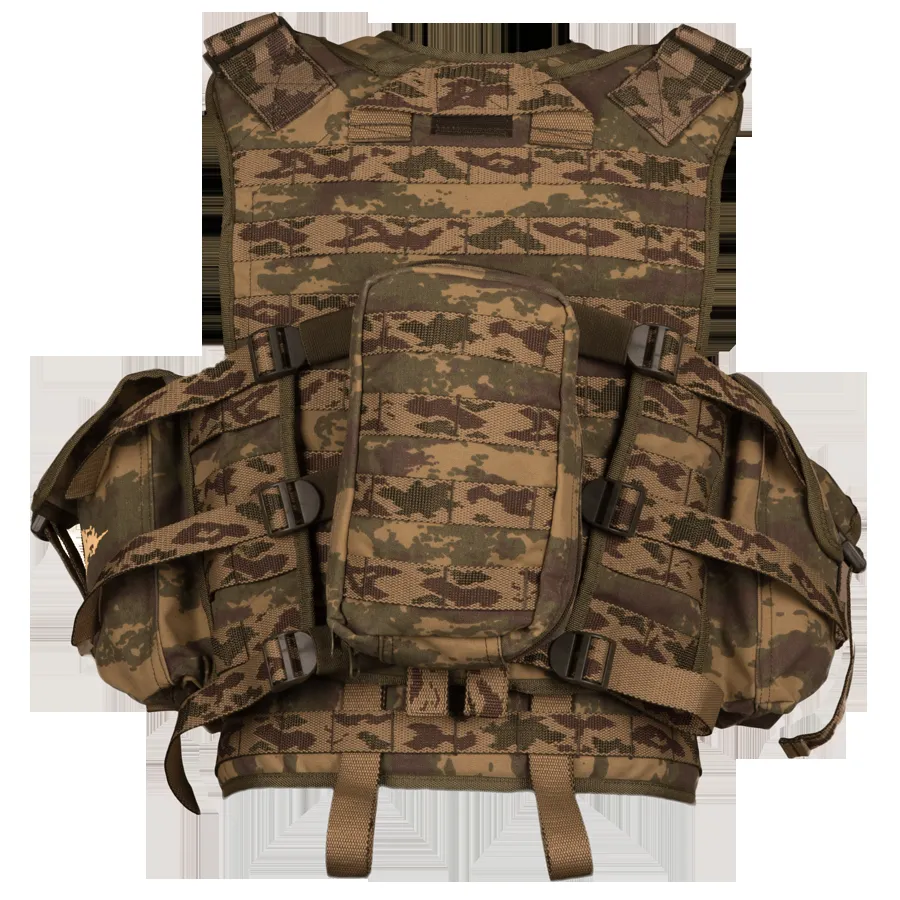
Garanti Giyim Kompozit Teknolojileri, in Yozgat, exports to more than 50 countries and has supplied close to 80 per cent of Türkiye’s ballistic helmets since 2013. The historical weight of that figure is considerable: until 2013 these helmets were generally procured from foreign firms with US and Israeli partners. The company’s products also gained public visibility as the ballistic helmet and vest used by Ukrainian president Volodymyr Zelenskyy.
CES İleri Kompozit ve Savunma Teknolojileri made a striking leap in capacity. Its annual helmet production capacity, previously 30-40,000, reached 190,000 by the end of 2023, with a plan to reach 240,000 helmets by the end of 2024. The company has serial customers in more than 22 countries, exporting across different parts of Europe, to the United Kingdom, to Asia-Pacific countries, South America and the Middle East. Exports rose from 50 per cent of revenue to a band of 60-65 per cent within a year, and the company said it would deliver more than 80,000 helmets to a single customer in 2023.
Read together, the two pictures give one conclusion: in body armour integration Türkiye has a production base that does not merely cover its own needs but earns the majority of its revenue abroad. That is a threshold most sub-segments of the defence industry have yet to cross.
Figures rest on a September 2023 public statement by CES İleri Kompozit ve Savunma Teknolojileri management; whether the 2024 target was met has not been independently verified. Data type: T (company disclosure).
Where does Türkiye fall short?
The integrator picture is strong. But this file’s two-layer structure also shows exactly where Türkiye’s limit sits.
First and most important: the fibre layer. The para-aramid and UHMWPE fibres that determine ballistic performance are produced by very few chemical companies worldwide — DuPont, Honeywell, Teijin and Avient are close to the whole list. Turkish manufacturers are competent at processing those fibres into composite panels, plates and helmets; but the fibre itself is imported. This is more than a cost question: fibre suppliers sit under export controls, and in a crisis allocation priority belongs to their own countries’ armed forces. An integrator can change its design; it cannot easily change its fibre.
Second, programme scale. Long-term contracts reaching hundreds of millions of dollars in a single line — Avon Protection’s five-year $204 million ceiling framework with the US Defense Logistics Agency, or the US Army’s next-generation helmet programme — have no publicly disclosed equivalent in Turkish manufacturers’ export portfolios. Türkiye’s strength lies in a customer base spread across many mid-sized countries; that is an advantage in resilience, but it does not deliver the economies of scale of a single vast programme.
Third, standards and testing authority. In body armour, purchasing decisions turn on which standard a product is certified against and in which laboratory. The American NIJ standard and the German-based VPAM standard remain the global reference points; Turkish manufacturers certify to them, which is itself a mark of competence — but the institutions that write the standard and run the test sit in other countries.
Reading it in balance: These three limits do not place Türkiye behind in this field. The opposite: a picture in which exports approach two-thirds of revenue, sales run to more than 50 countries and 80 per cent of the domestic market has moved to a domestic producer is a rare mark of maturity in defence. Competitors carry their own constraints: nearly every integrator, Americans included, depends on the same four fibre suppliers; Avon Protection is strong in helmet programmes but carries nothing like the same weight in soft armour; Point Blank’s strength rests largely on the US and NATO markets. No single company in this sector leads both layers.
Where is the market heading?
The global body armour market is expected to be worth about $2.38 billion in 2026 and to reach $3.54 billion by 2035. Three forces drive the growth: elevated European and NATO defence budgets with long-term programmes extending into the late 2020s; weight savings from third-generation fibres creating pressure to renew existing inventories early; and rising demand from law enforcement in the civil sphere. Part of that growth, though, comes not from volume but from unit price: lighter and more modular products cost more.
These are market research projections and carry no guarantee of realisation. Data type: R (reported).
Unlike concentrated sub-segments such as sonar, the top five in body armour hold a little over a third. The market remains open to many mid-sized manufacturers — which is the structural reason Turkish producers hold the position they do. Data type: R (reported).
How this research was done
This file was built from manufacturers’ own press releases and product pages, official institutional announcements and independent market research reports. Every figure was traced back to the source that first disclosed it. Data concerning Türkiye was drawn only from official institutional sources and manufacturers’ own statements; figures resting on a company statement are marked explicitly as such with the date of the statement, because they are not independently audited. Market share and market size figures are estimates belonging to independent research firms. The two Turkish companies are treated separately in this file, and each figure is given together with the company it belongs to, because they are easily confused in public discussion.
Frequently asked questions
Who is the world’s largest body armour manufacturer?
There is no single answer, because the sector has two layers. Market research puts the top five as Point Blank Enterprises, Cadre Holdings/Safariland, BAE Systems, Honeywell and DuPont, together holding 36.7 per cent of the market in 2025. The first three make vests and helmets; the last two make fibre.
How does a ballistic vest stop a bullet?
It is less about stopping than about spreading energy. Para-aramid (Kevlar, Twaron) and UHMWPE (Dyneema, Spectra) fibres absorb far more energy per unit of weight than steel while weighing a fraction of it; a multi-layer package distributes the round’s energy across a wide area.
What is the difference between soft armour and a hard plate?
The soft ballistic package is made of flexible fibre layers and protects against handgun rounds. The hard plate is ceramic or composite and is what stops rifle rounds. Modern plate carriers are designed to hold both together.
Why does a fibre maker rank so high?
Because ballistic performance is determined by the fibre itself, and very few plants worldwide can produce it. An integrator can change its design but not easily its fibre, which gives materials companies structural bargaining power.
Does Türkiye make ballistic vests and helmets?
Yes, and exports a great many. Garanti Giyim Kompozit Teknolojileri in Yozgat exports to more than 50 countries and has supplied close to 80 per cent of Türkiye’s ballistic helmets since 2013. CES İleri Kompozit ve Savunma Teknolojileri has serial customers in more than 22 countries.
What is Türkiye’s helmet production capacity?
CES İleri Kompozit’s capacity, previously 30-40,000, reached 190,000 by the end of 2023, with a plan to build 240,000 helmets by the end of 2024. The company said it would deliver more than 80,000 helmets to a single customer in 2023.
Does Türkiye produce ballistic fibre?
Turkish manufacturers are competent at processing fibre into composite panels, plates and helmets, but the para-aramid and UHMWPE fibre itself is imported. Very few companies worldwide produce these fibres and all of them sit under export controls.
What are the NIJ and VPAM standards?
The certification frameworks that drive purchasing decisions in body armour. NIJ is American, VPAM German-based. Which standard a product is tested against, and in which laboratory, directly determines which markets it can enter.
How much weight do new-generation fibres save?
Avient reports that its HB330 and HB332 hard armour materials, introduced in January 2025 with third-generation fibre technology, enable weight reductions of up to 45 per cent in protective armour systems. Since weight translates directly into mobility and fatigue in the field, that is a critical gain.
How large is the body armour market?
The global body armour market is expected to be worth about $2.38 billion in 2026 and to reach $3.54 billion by 2035.
Why is this market less concentrated than sonar?
The top five hold 36.7 per cent in body armour against 58-62 per cent in sonar. The difference comes from the barrier to entry: building a production facility in the integrator layer is relatively accessible, leaving room for many mid-sized manufacturers. The concentration sits in the materials layer instead.
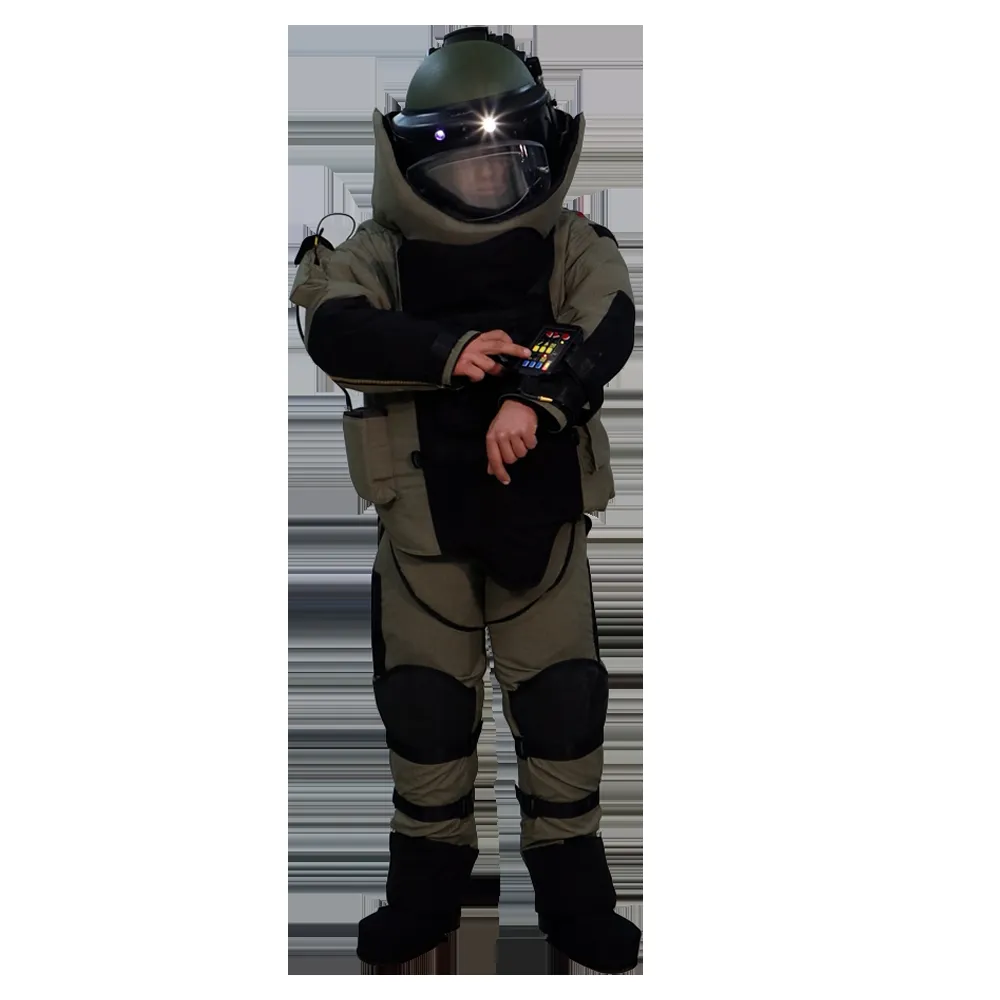
Why is a bomb disposal suit a separate category?
Because the threat is different: not a bullet but blast pressure and fragmentation. That demands full-body protection, and the real design difficulty is providing it while preserving the operator’s dexterity and vision.
Sources and methodology
- Avon Protection — US Army next-generation ballistic helmet contract award
- Avon Protection — US Defense Logistics Agency helmet contract
- Avient / Dyneema (January 2025) — HB330 and HB332 hard armour materials and weight reduction
- Avient / Dyneema — SB301 soft ballistic material
- Teijin Aramid — Twaron and Endumax ballistic fibre portfolio
- Anadolu Agency (20 April 2022) — Garanti Giyim Kompozit: exports to 50+ countries, close to 80% domestic share
- Anadolu Agency (17 September 2023) — CES İleri Kompozit: capacity, export share and customer countries
- SSB Turkish Defence Industry Product Catalogue — ballistic protective systems
- Global Market Insights — body armour market size and top-five share
- Mordor Intelligence — major companies operating in the market
Last updated: 20 September 2026. This page is living research and will be updated as new contracts and capacity announcements are made. For the full series, see the 2026 Global Defence Industry Report.