Australia Lays the Keel for Its First Hunter-Class Frigate After Years of Turbulence

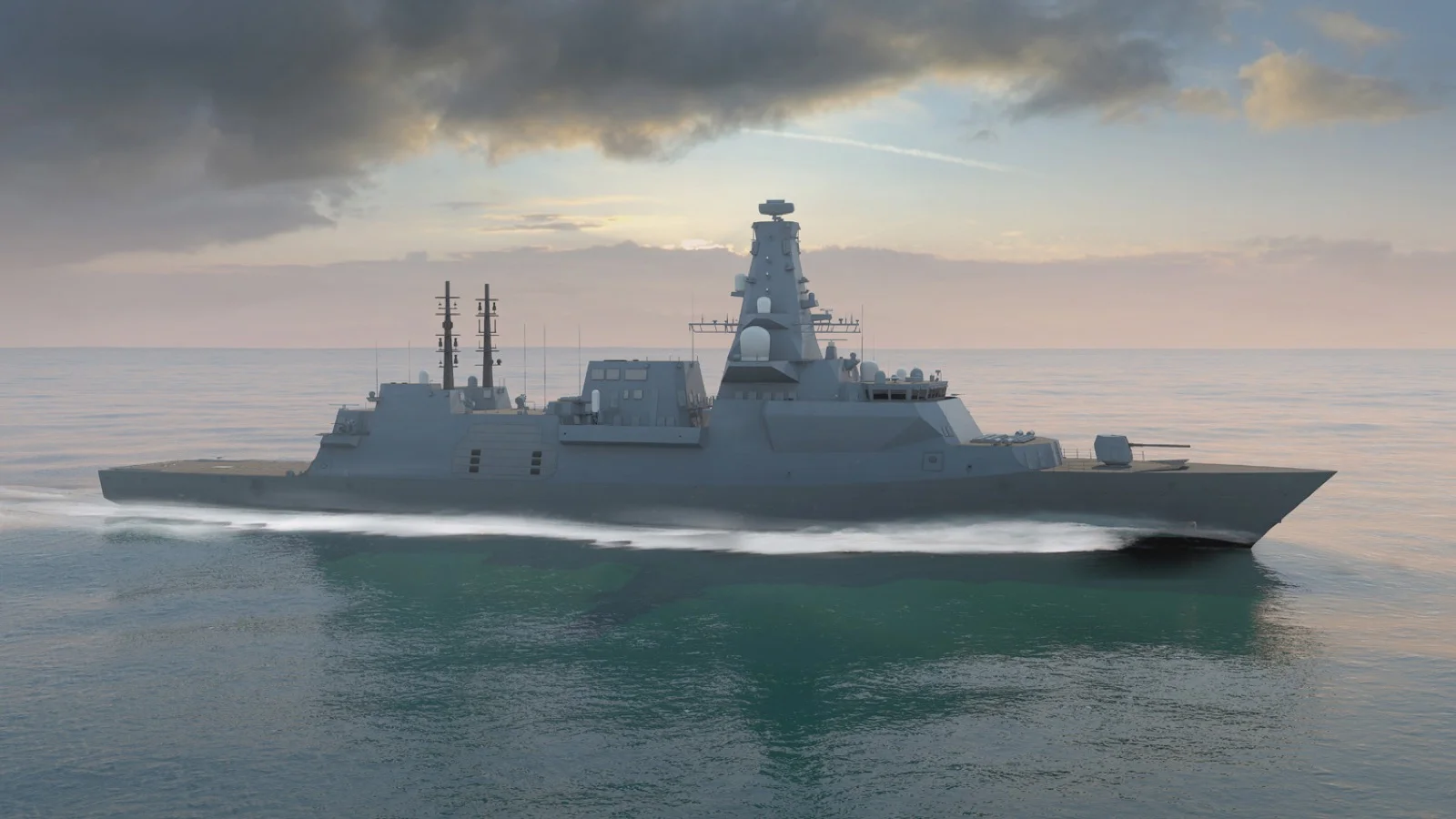
Australia has laid the keel of NUSHIP Hunter, the first of the Royal Australian Navy’s Hunter-class anti-submarine frigates, at Osborne Naval Shipyard in South Australia. BAE Systems Maritime Australia says 20 of the ship’s 22 blocks are under construction, with delivery planned for the early 2030s.
Why a keel-laying still matters
Ships are no longer built on a single keel; they are assembled from large prefabricated blocks. The ceremony survives because it marks a real transition — from making pieces to integrating a ship.
In this programme that transition carries extra weight. Hunter has been one of the most heavily criticised defence projects in recent Australian memory, dogged by design growth, schedule slippage and rising cost estimates. A 2024 surface fleet review cut the class from nine ships to six, redirecting the savings toward smaller general-purpose frigates that could be delivered sooner. With the majority of blocks in build, the design argument is effectively closed.
A hull optimised for hunting submarines
Hunter derives from Britain’s Type 26 City-class design, which was shaped around anti-submarine warfare from the outset. The hull form and machinery arrangement are configured to minimise radiated noise — and quietness translates directly into detection range for a towed sonar array. The same parent design underpins Canada’s River class.
The Australian configuration pairs domestically developed CEAFAR-series phased array radar with Aegis combat system architecture — a deliberate split that keeps Australia inside the US data-sharing ecosystem while retaining sovereign control of the sensor layer. A flexible mission bay allows container-sized modules for unmanned systems, mine warfare or humanitarian tasking.
Jobs and the continuous shipbuilding argument
The programme directly supports more than 2,500 jobs, with a further 5,000 across the national supply chain and nearly 600 BAE Systems tradespeople assigned to the project. Most of that employment sits in South Australia.
Deputy Prime Minister Richard Marles said the class “will provide a world-class anti-submarine warfare capability, designed to operate in complex maritime environments.” BAE Systems managing director David Shepherd said Hunter “will form the backbone of the Royal Australian Navy’s fleet for decades to come.” Minister Pat Conroy stressed the thousands of high-skilled jobs already supported.
Behind the employment figures sits Australia’s continuous naval shipbuilding policy, designed to stop the production line from going cold between programmes. Australia has repeatedly paid the price of the alternative: skilled workforces disperse during gaps, and the first ships of the next class absorb the cost of rebuilding them.
The Indo-Pacific calculation
Hunter belongs alongside the AUKUS submarine effort in Australia’s broader fleet recapitalisation. The growth of China’s navy — and particularly its submarine fleet — has pushed underwater detection to the top of Canberra’s priority list. The Hunter ships will replace the Anzac-class frigates as the navy’s mid-weight surface combatant.
One yard, one bottleneck
Osborne will also host Australia’s AUKUS nuclear submarine work. Concentrating both efforts at a single site delivers obvious efficiencies in workforce and infrastructure, but it also concentrates risk: a disruption at Osborne now touches the two largest capability programmes in the country simultaneously.
There is a contrast worth noting for readers following Turkey’s naval programmes. Canberra imported a mature foreign design and captured its industrial share in construction and sensors. Ankara, through MILGEM and the İSTİF class, kept the design work at home as well. Both models trade risk against speed in opposite directions — and Hunter’s turbulent decade is a fair illustration of what the import-and-adapt route can cost when the adaptation runs deeper than expected.
Sources
- Australian Department of Defence official announcement
- BAE Systems Maritime Australia statement
- Naval News and Defence Industry Europe, 24 August 2026