Europe’s 10 Largest Standing Armies (2026)

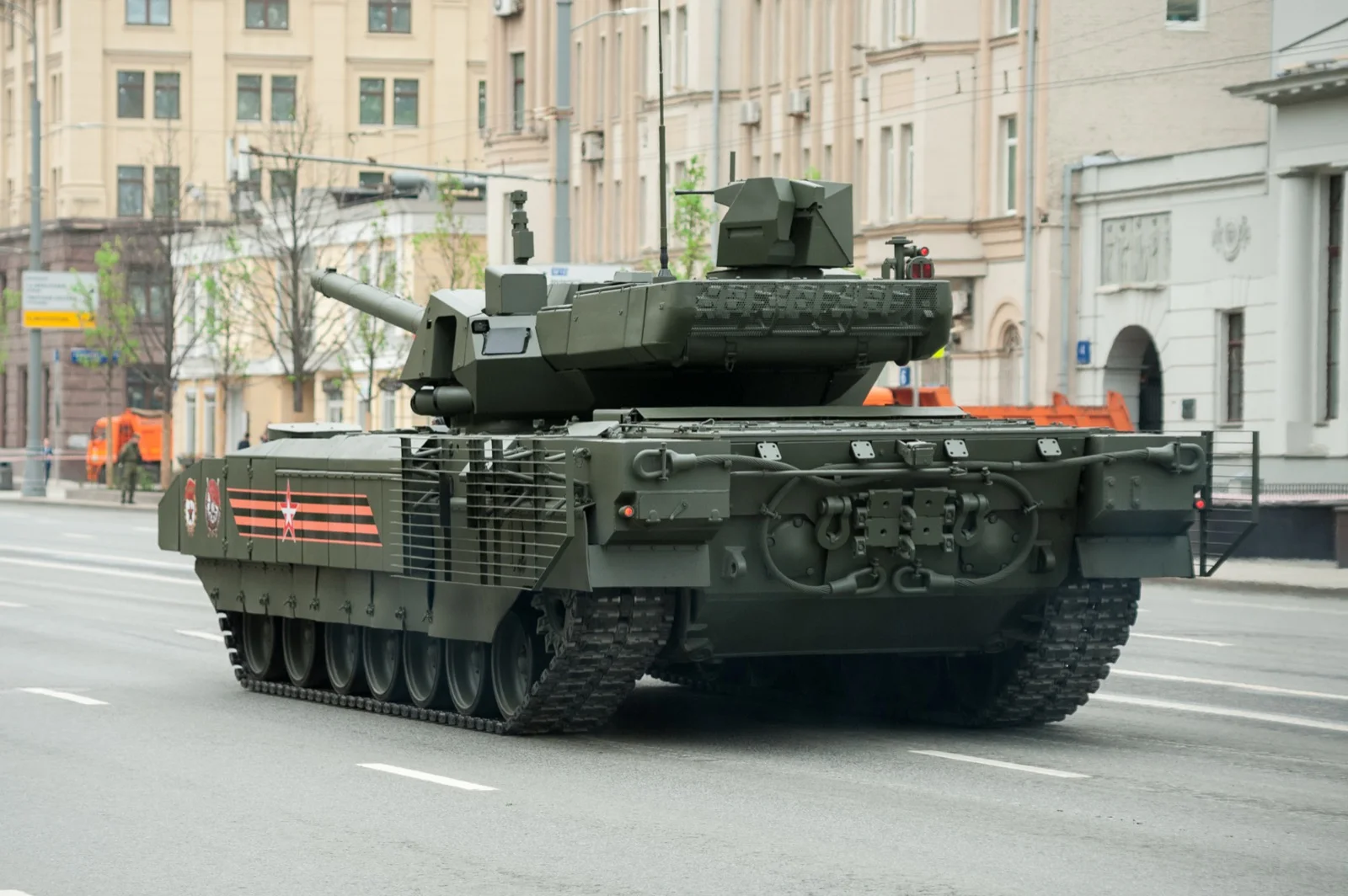
No region cut its armies faster after the Cold War than Europe. In 1990 millions were under arms across the continent, conscription was near-universal and tank fleets ran into the tens of thousands. Within three decades that picture had been dismantled.
The war in Ukraine reopened the question. A prolonged, high-intensity land war demands manpower capable of holding ground, and small professional forces struggle to carry that burden. Several European states have since revisited conscription; others have moved to selective service models.
So which European countries field the largest standing armies in 2026? Who holds the biggest ground force outside Russia and Ukraine, where does Türkiye rank, and why do Western Europe’s wealthiest militaries sit near the bottom of the table? The countdown starts at number ten.
The ranking uses GlobalFirepower’s 2026 active military personnel data for European states; Russia and Türkiye are included given their military weight on the continent. Figures cover active-duty strength only, excluding reserves and paramilitary formations.
#10United Kingdom
Active personnel · Island power
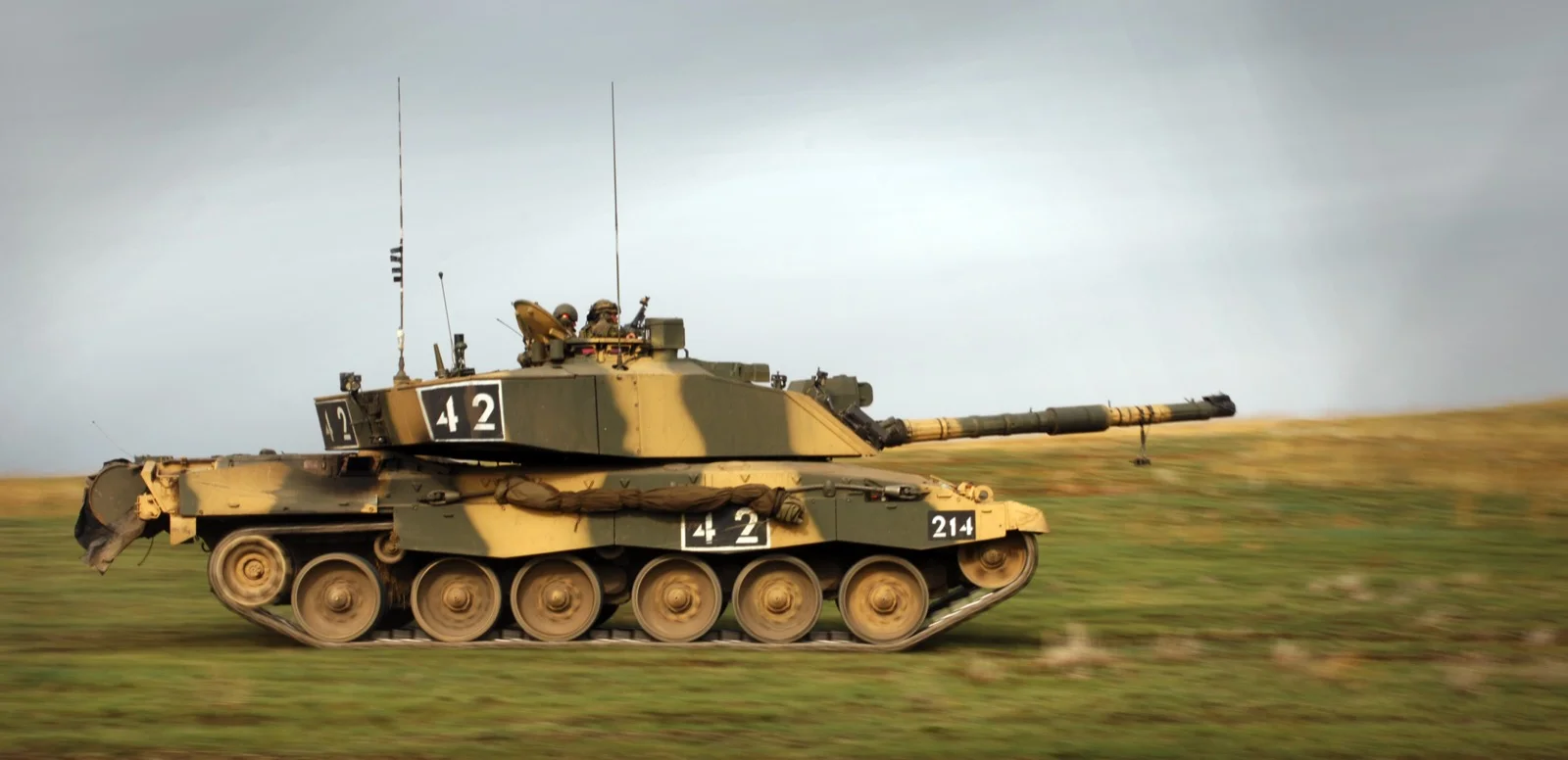
The United Kingdom is Europe’s second-largest defence spender at $88.53 billion, yet fields 141,330 active personnel for tenth place. That is the logical endpoint of a long-standing policy: fewer platforms, each extremely capable and extremely expensive.
The Royal Navy operates two aircraft carriers, and nuclear deterrence rests on Vanguard-class submarines. Ten submarines place Britain among Europe’s strongest undersea forces. The British Army, however, is at one of its smallest points in modern history, with 288 tanks and a shrinking infantry establishment after years of recruitment shortfalls.
London’s force structure reflects a luxury that island geography allows: with no direct land threat, resources flow to the maritime and nuclear domains. The Challenger 3 upgrade will modernise the tank fleet without enlarging it. The limit of that choice is clear enough — without allied support, Britain lacks the manpower to sustain a prolonged ground campaign on the continent.
The United Kingdom holds Europe’s second-largest defence budget but ranks only tenth in active personnel.
| Capability | Total |
|---|---|
| Active personnel | 141,330 |
| Tanks | 288 |
| Total aircraft | 625 |
| Helicopters | 262 |
| Naval vessels | 116 |
| Submarines | 10 |
| Defence budget | $88.53bn |
The next country sustains a larger army on a tenth of that budget.
#9Greece
Active personnel · Eastern Mediterranean
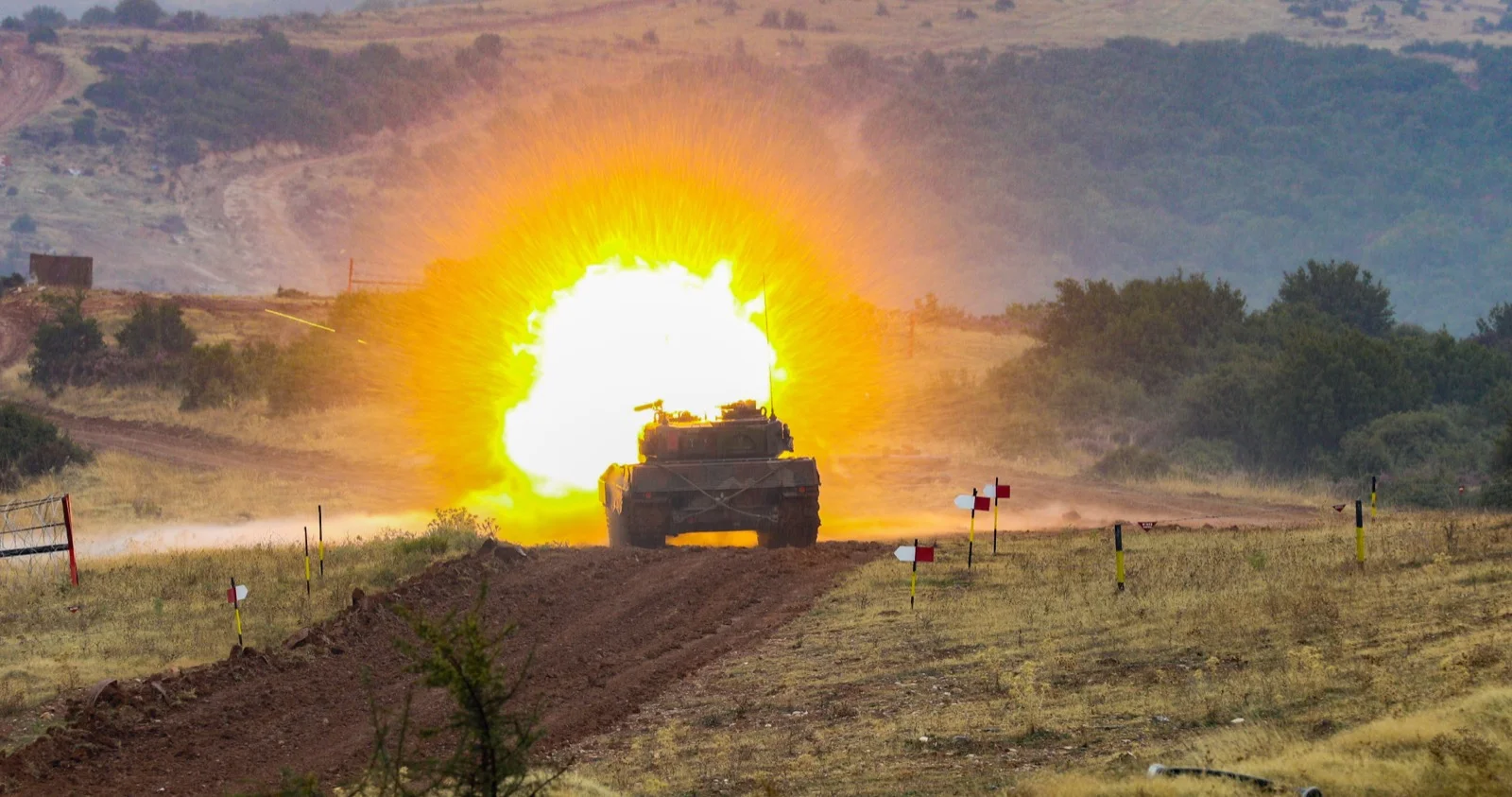
Greece sustains 142,700 active personnel from a population of ten million — one of the highest ratios in Europe, and a direct consequence of maintaining conscription.
The standout figure is 1,344 tanks, more than Germany, France, the United Kingdom and Italy hold combined. Leopard 2A6, Leopard 1 and M1 Abrams serve side by side, a legacy of acquisitions made from different suppliers across different eras that imposes a considerable maintenance burden.
The defence budget stands at $8.24 billion — among NATO’s heaviest relative to national output, but limited in absolute terms for modernising an inventory this size. Athens has shifted priority towards air and naval capability in recent years: Rafale acquisition, the F-16 Viper upgrade and the Belharra frigate programme. With nine submarines and 186 naval vessels, Greece maintains continuous presence in the Aegean and Eastern Mediterranean.
Greece fields 1,370 more troops and 1,056 more tanks than the United Kingdom on a tenth of its budget.
| Capability | Total |
|---|---|
| Active personnel | 142,700 |
| Tanks | 1,344 |
| Total aircraft | 560 |
| Helicopters | 285 |
| Naval vessels | 186 |
| Submarines | 9 |
| Defence budget | $8.24bn |
The next country maintains a force this size without belonging to any alliance at all.
#8Switzerland
Active personnel · Neutral power
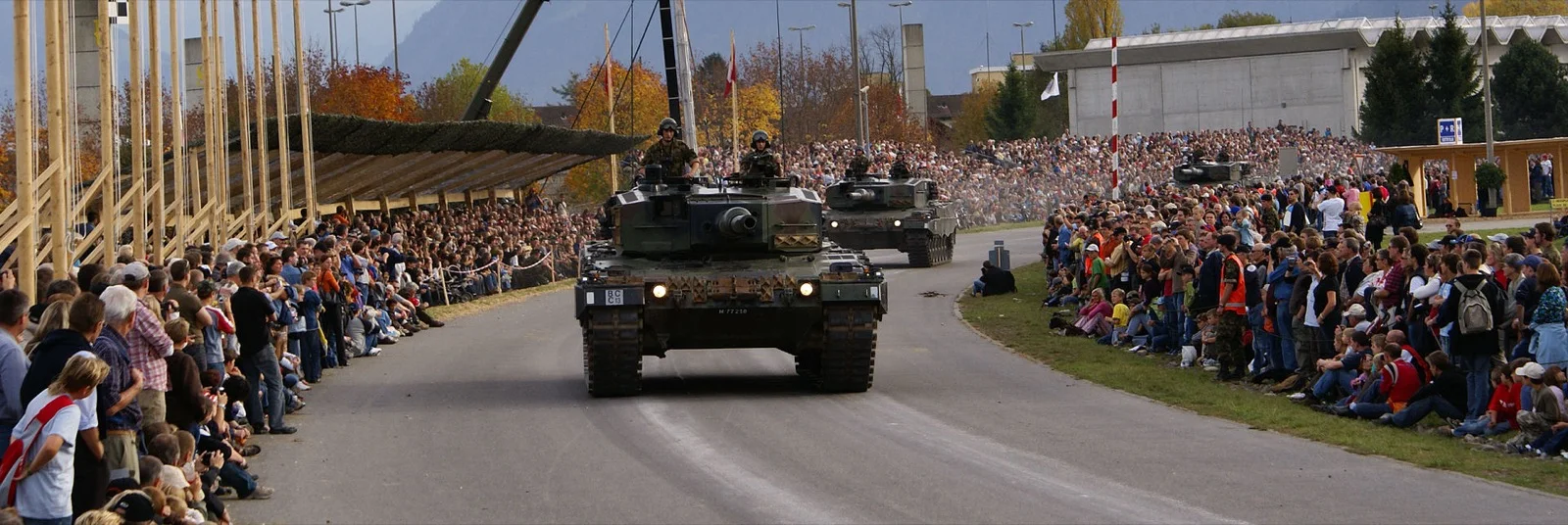
Switzerland is the least expected name on this list. With 147,178 active personnel it fields Europe’s eighth-largest force — without membership of any military alliance, and under a policy of neutrality now more than two centuries old.
What makes that scale possible is the Swiss militia system. Conscription remains in force, and those who complete service are recalled for refresher training over many years. The model rests on a broad pool that can be mobilised quickly rather than a large permanently embodied cadre. Few countries on the continent still operate this way.
The inventory comprises 134 tanks, 141 aircraft and 39 helicopters, with no naval component since the country is landlocked. Pz 87 Leopard 2 tanks form the backbone of the ground forces, while the air force flies F/A-18 Hornets with F-35A procurement under way. A defence budget of $8.37 billion is considered sufficient in a country where mountainous terrain does much of the defensive work. Switzerland is the clearest case that in Europe, manpower scale tracks the service model rather than the budget.
A landlocked country outside every alliance fields Europe’s eighth-largest standing force.
| Capability | Total |
|---|---|
| Active personnel | 147,178 |
| Tanks | 134 |
| Total aircraft | 141 |
| Helicopters | 39 |
| Naval vessels | 0 |
| Defence budget | $8.37bn |
The next country holds Europe’s most numerous fleet.
#7Italy
Active personnel · Mediterranean
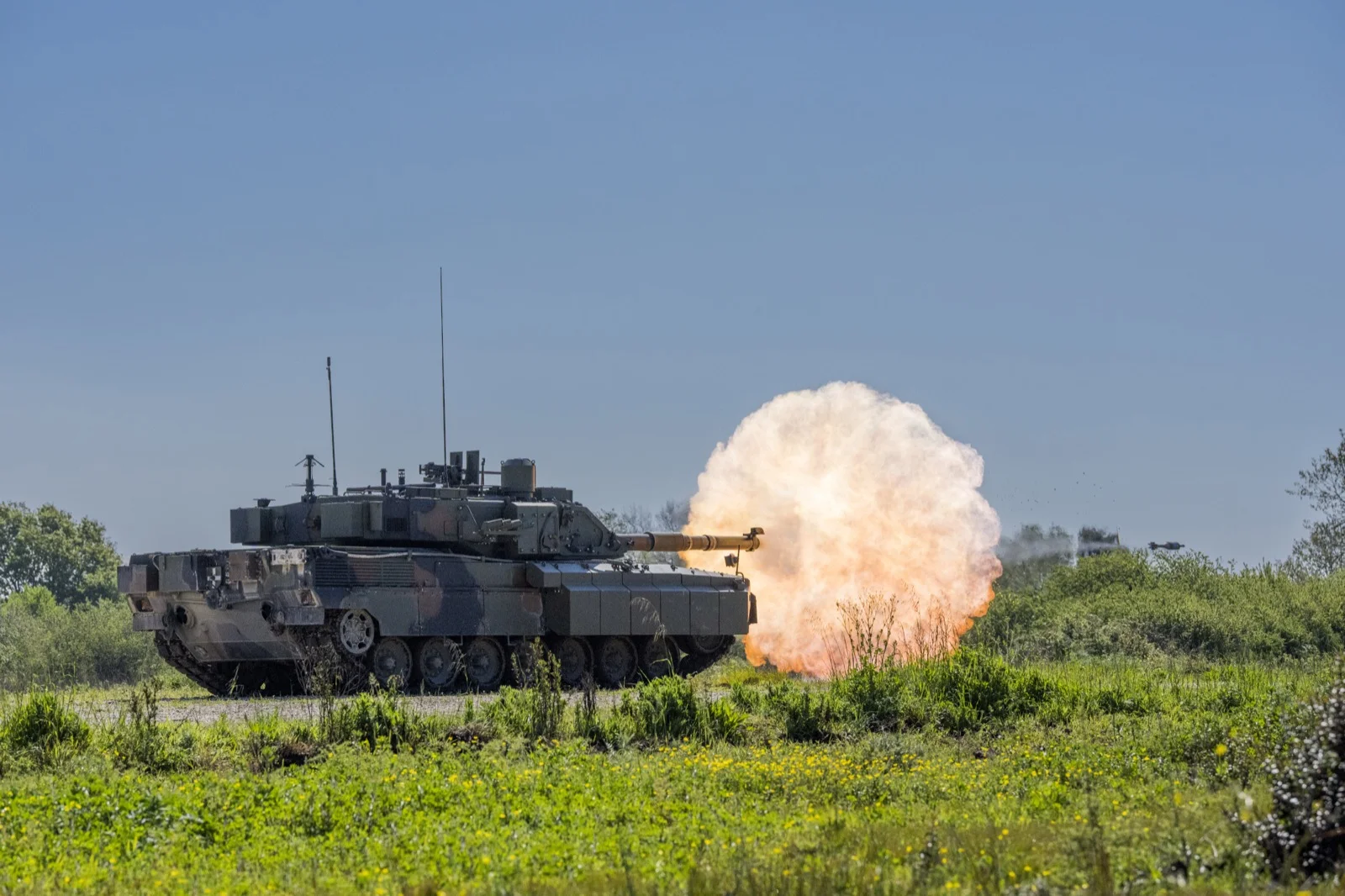
Italy ranks seventh with 165,500 active personnel. Conscription ended in 2005, and the resulting professional force is weighted decisively towards the sea.
With 285 naval vessels, Italy fields the most numerous fleet in Europe outside Russia. The carrier Cavour operates F-35Bs and the multipurpose amphibious ship Trieste is entering service. FREMM frigates form the navy’s backbone and serve as a global reference design — the US Navy’s Constellation-class programme is based on the same hull.
Land power is thin: 203 tanks is less than a seventh of the Greek inventory. Italian industry, by contrast, is among the continent’s broadest, with Leonardo across helicopters, radar and electronics and Fincantieri across shipbuilding and submarines. Italy is also a partner, with the United Kingdom and Japan, in the GCAP sixth-generation fighter programme. Its $37.33 billion budget ranks fourth in Europe.
Italy holds Europe’s largest fleet outside Russia at 285 vessels, yet fields a seventh of Greece’s tank strength.
| Capability | Total |
|---|---|
| Active personnel | 165,500 |
| Tanks | 203 |
| Total aircraft | 714 |
| Helicopters | 352 |
| Naval vessels | 285 |
| Submarines | 8 |
| Defence budget | $37.33bn |
The next country manages Europe’s largest defence budget.
#6Germany
Active personnel · Central Europe
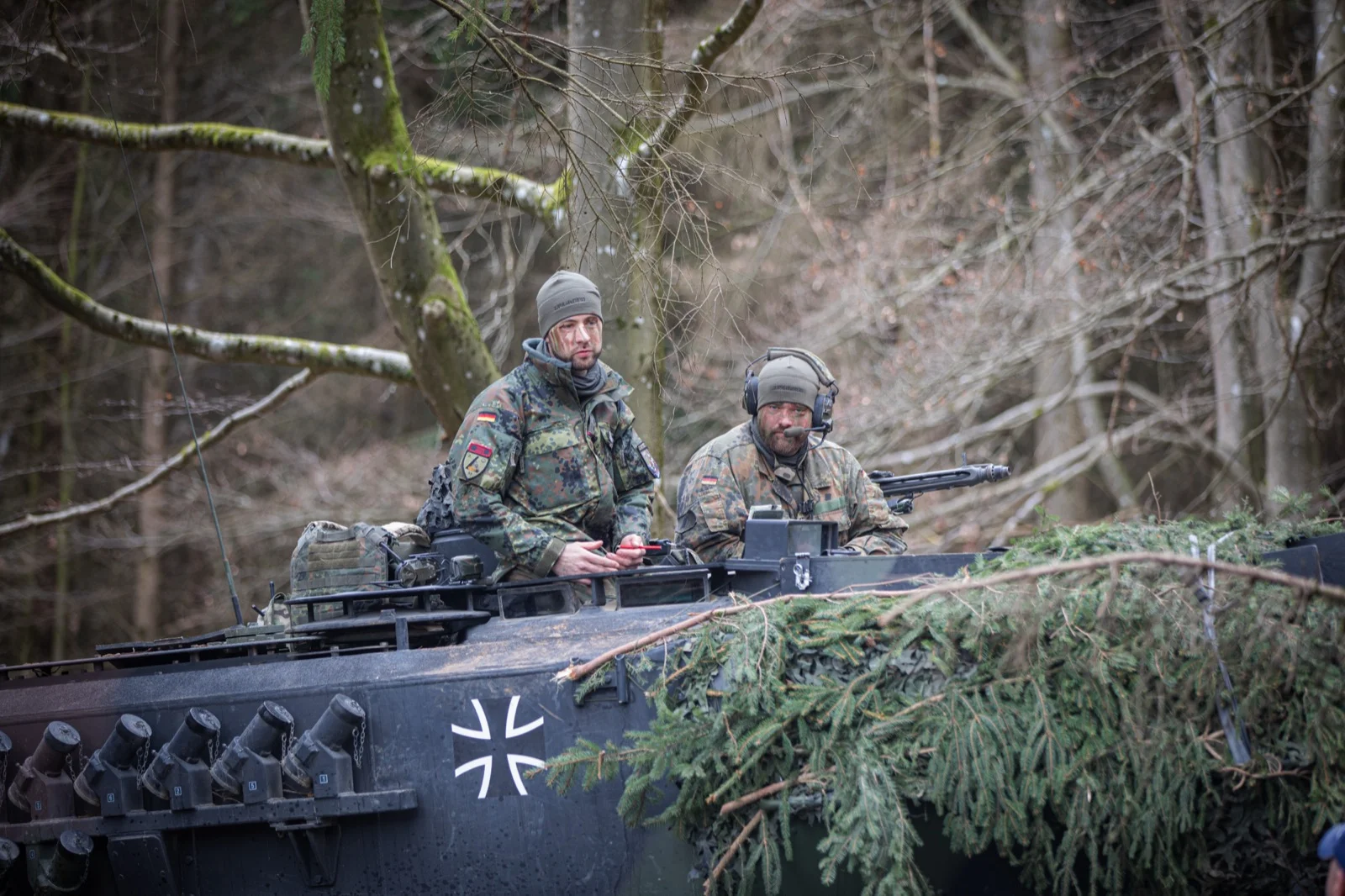
Germany carries Europe’s largest defence budget at $127.4 billion, yet fields 184,324 active personnel for sixth place — the continent’s most striking illustration of the post-Cold War contraction.
The Bundeswehr exceeded half a million in 1990. Conscription was suspended in 2011, the tank fleet fell from thousands to hundreds and munitions stockpiles dropped to critical levels. The special defence fund announced after the invasion of Ukraine is meant to reverse that, but recruitment is the hardest constraint: volunteer numbers trail targets and selective service is back in political debate.
The inventory holds 296 tanks, 569 aircraft and six submarines. German industry remains among the continent’s strongest production bases — Rheinmetall in armour and munitions, KNDS in armoured vehicles, ThyssenKrupp Marine Systems in submarines. The Type 214 design behind Türkiye’s Reis-class boats is German engineering. Berlin’s test is how fast money becomes fielded capability.
Germany outspends Greece fifteen-fold yet fields a fifth of its tank strength.
| Capability | Total |
|---|---|
| Active personnel | 184,324 |
| Tanks | 296 |
| Total aircraft | 569 |
| Helicopters | 292 |
| Naval vessels | 96 |
| Submarines | 6 |
| Defence budget | $127.40bn |
Into the top five — and the next country has Europe’s fastest-growing army.
#5Poland
Active personnel · Eastern Europe
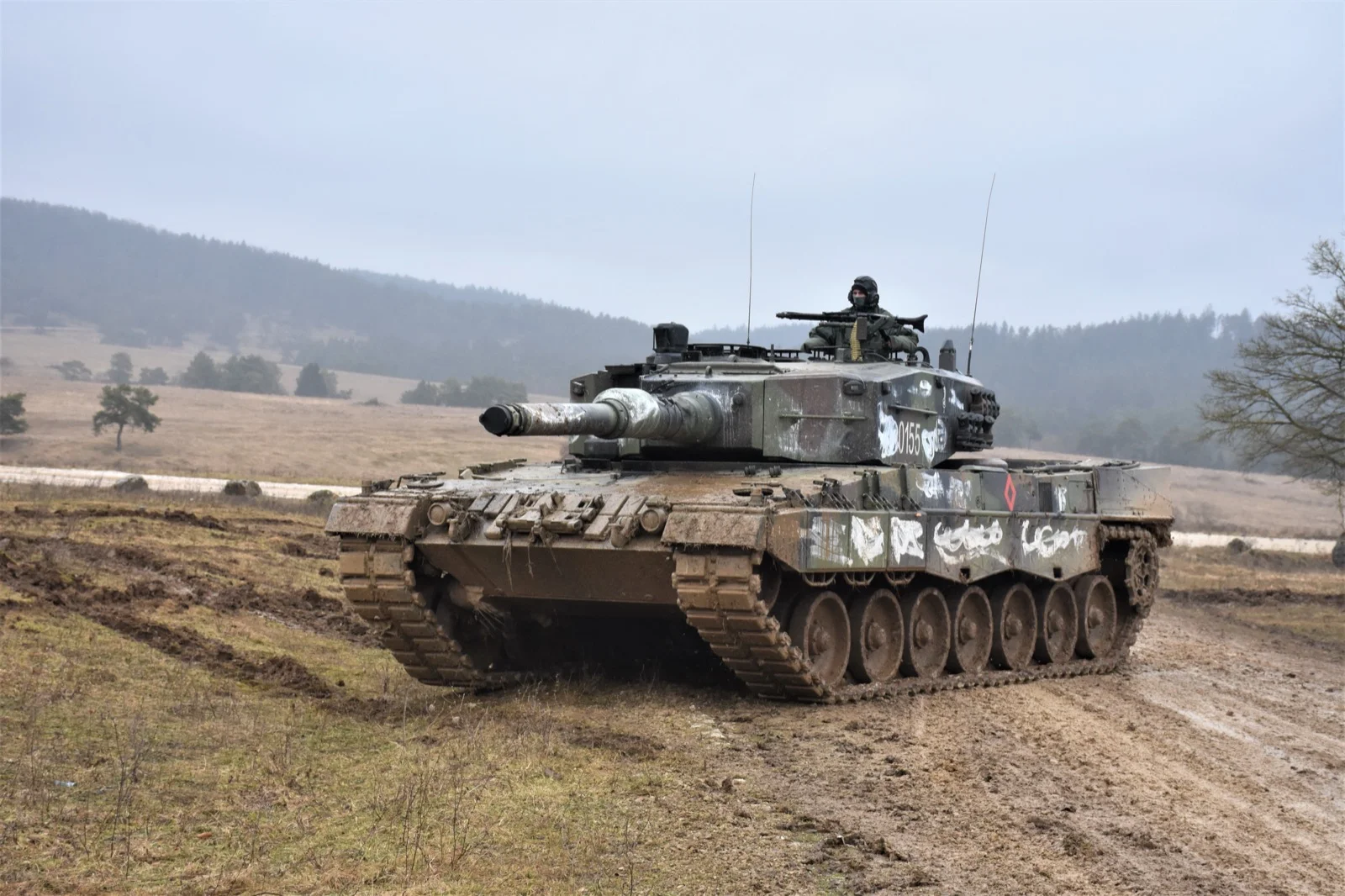
Poland ranks fifth with 250,000 active personnel and runs the fastest-growing force structure in Europe. Warsaw has stated openly that it intends to go further. Its defence budget has climbed to $55.87 billion — more than Türkiye spends.
The scale of procurement far exceeds European norms. Poland ordered hundreds of K2 Black Panther tanks and K9 howitzers from South Korea, is acquiring M1A2 Abrams, HIMARS and Apache helicopters from the United States, and has brought FA-50 light combat aircraft into service. Its 798 tanks are expected to pass a thousand in the coming years.
The reasoning is entirely geographic. Poland borders both Russia and Belarus, and the war in Ukraine transformed its threat assessment. It also serves as NATO’s logistics hub for the eastern flank. The weak point is maritime: 63 vessels and one submarine make thin capacity for the Baltic, a gap Warsaw is addressing through new frigate programmes.
Poland fields 65,676 more personnel and 502 more tanks than Germany on less than half the budget.
| Capability | Total |
|---|---|
| Active personnel | 250,000 |
| Tanks | 798 |
| Total aircraft | 457 |
| Helicopters | 224 |
| Naval vessels | 63 |
| Submarines | 1 |
| Defence budget | $55.87bn |
Into the top four — and the next country holds Europe’s only independent nuclear force.
#4France
Active personnel · Western Europe
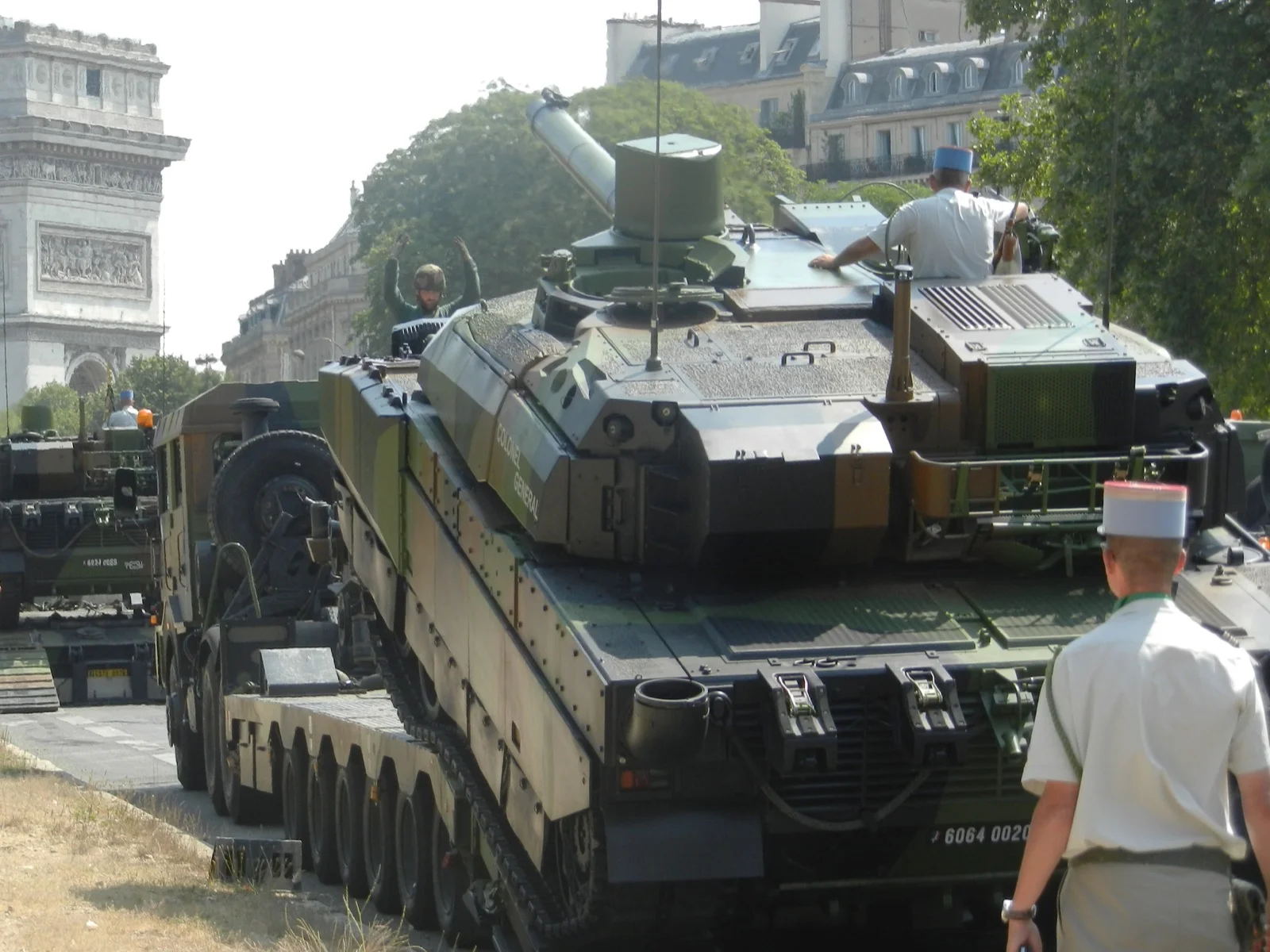
France ranks fourth with 264,000 active personnel, built around a doctrine of strategic autonomy — remaining within the alliance while retaining the capacity to act alone.
Nuclear deterrence is that doctrine’s clearest expression. France operates Europe’s only fully independent nuclear force, resting on Triomphant-class submarines and ASMP-A missiles carried by Rafale aircraft. Charles de Gaulle is the continent’s only nuclear-powered carrier.
French industry is the most complete in Europe: Dassault in combat aircraft, Naval Group in ships and submarines, MBDA in missiles, Safran in engines and avionics. The inventory includes 427 tanks, 974 aircraft and nine submarines. French ground forces contracted like other Western European armies, but years of operations in the Sahel preserved the country’s ability to sustain forces at distance.
France fields 14,000 more personnel than Poland but barely half as many tanks (427 against 798).
| Capability | Total |
|---|---|
| Active personnel | 264,000 |
| Tanks | 427 |
| Total aircraft | 974 |
| Helicopters | 452 |
| Naval vessels | 166 |
| Submarines | 9 |
| Defence budget | $67.23bn |
Into the top three — and the next country outnumbers every Western European army on its own.
#3Türkiye
Active personnel · South-eastern Europe
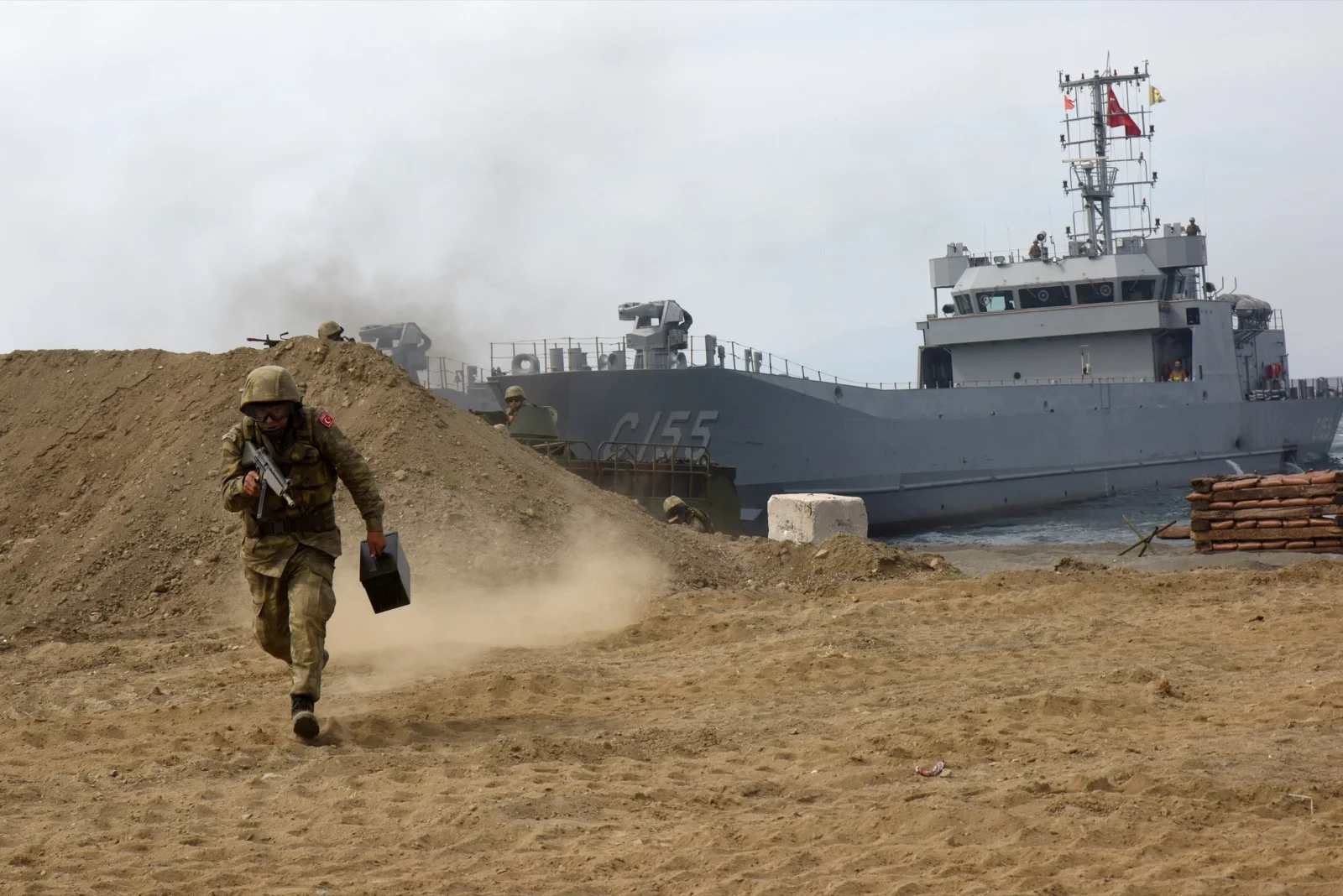
Türkiye fields Europe’s third-largest standing army at 481,000 active personnel — and, among countries not at war, the second largest after Russia. That exceeds the combined active strength of France and Germany, and also that of the United Kingdom, Italy and Spain together.
Scale is only part of what distinguishes the Turkish Armed Forces on the continent. With 2,284 tanks they hold Europe’s second-largest armoured force after Russia, and 1,101 aircraft likewise rank second. Fourteen submarines and 192 naval vessels sustain continuous presence across the Black Sea and Mediterranean.
Geography explains the scale. Türkiye borders three seas, shares land frontiers with eight countries and controls the straits linking the Black Sea to the Mediterranean, administering their transit regime under the Montreux Convention. It also carries a continuous security burden on its southern border. Unlike Western European states, Türkiye never dismantled its ground forces; conscription remains in place, albeit with flexibility through paid-service options.
Türkiye fields a larger army than France and Germany combined (481,000 against 448,324).
| Capability | Total |
|---|---|
| Active personnel | 481,000 |
| Tanks | 2,284 |
| Total aircraft | 1,101 |
| Helicopters | 509 |
| Naval vessels | 192 |
| Submarines | 14 |
| Defence budget | $51.40bn |
Into the top two — and the next army reached this size under wartime mobilisation.
#2Ukraine
Active personnel · Eastern Europe
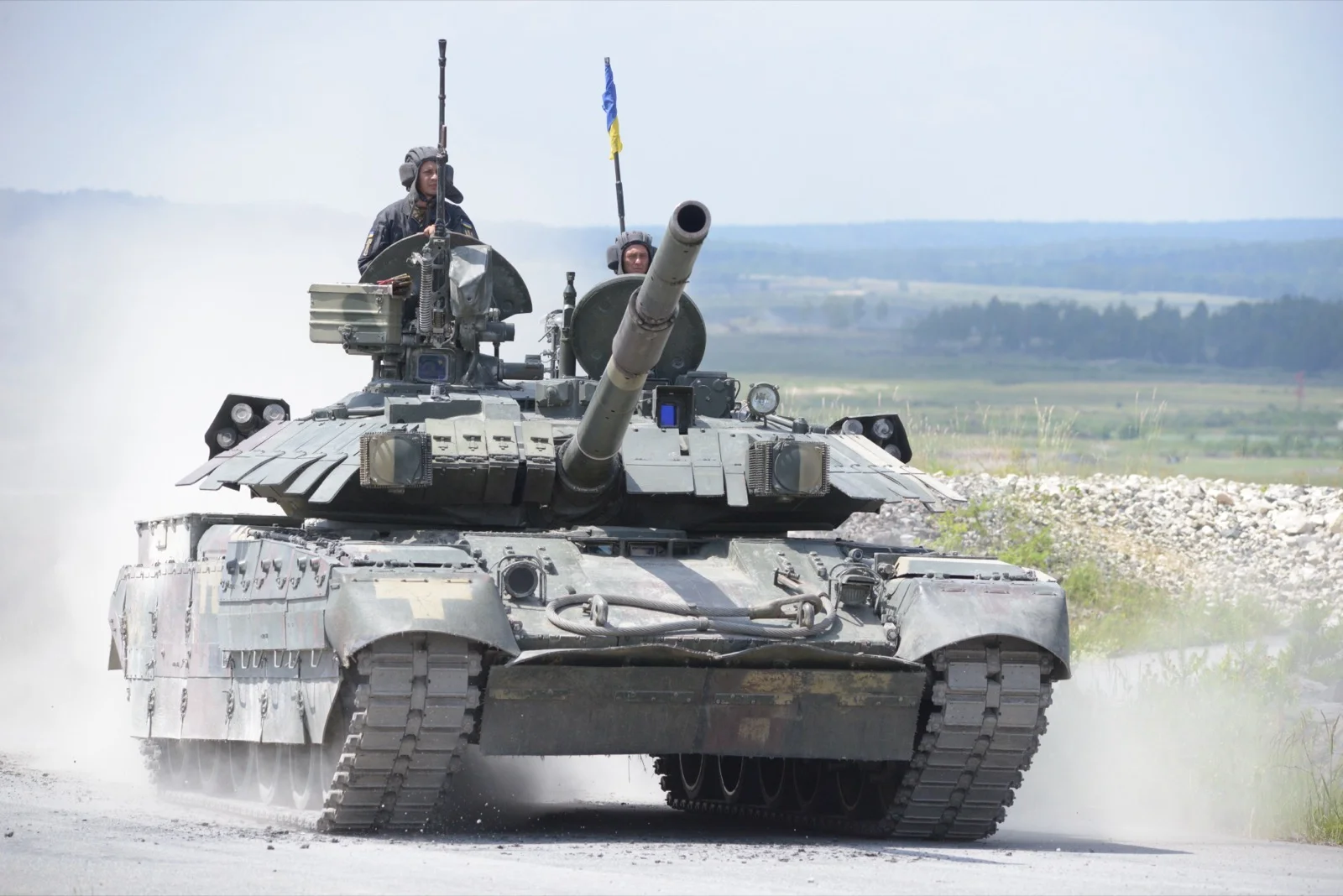
Ukraine fields Europe’s second-largest army at 900,000 active personnel — a figure that bears no comparison to the pre-war period, when active strength stood at roughly 250,000. Mobilisation transformed the Ukrainian military into one of the continent’s largest ground forces.
The inventory holds 1,121 tanks, 347 aircraft and 140 helicopters, reflecting both wartime losses and allied deliveries. The air force now operates F-16s and Mirage 2000s alongside Soviet-era MiG-29s and Su-27s — two technology generations inside a single fleet.
Ukraine became the case that reminded Europe how much manpower modern land war consumes. The conflict also demonstrated the decisive weight of unmanned systems and artillery ammunition; Kyiv built domestic production capacity rapidly and now ranks among Europe’s largest producers of unmanned aircraft. Türkiye features here as well: the Bayraktar TB2 served in the Ukrainian inventory during the early phase of the war, and the two countries continue a corvette programme based on the MİLGEM design.
Ukraine’s active strength exceeds that of Germany, France, the United Kingdom and Italy combined (900,000 against 755,154).
| Capability | Total |
|---|---|
| Active personnel | 900,000 |
| Tanks | 1,121 |
| Total aircraft | 347 |
| Helicopters | 140 |
| Naval vessels | 169 |
| Defence budget | $45.00bn |
And at the top, the country that outweighs the rest of the continent on its own.
#1Russia
Active personnel · Eurasia
Russia fields Europe’s largest army at 1,320,000 active personnel — approaching the combined total of the other nine countries on this list. Its $212.64 billion defence budget has no comparison on the continent.
The inventory matches that scale: 5,630 tanks, 4,237 aircraft, 747 naval vessels and 66 submarines. Stored tank reserves give Russia a depth no European state can match. The war in Ukraine, however, exposed both the size and the limits of those stocks: consumption in high-intensity combat ran far ahead of production capacity, and much of the inventory proved to be Soviet-era.
Russian industry expanded output as the economy shifted onto a war footing, particularly in artillery ammunition and unmanned systems. In higher-technology areas — serial fifth-generation fighter production, large-tonnage shipbuilding, microelectronics — sanctions have bitten visibly. Its 66 submarines, including nuclear-powered strategic boats, give Russia global undersea reach and remain among the most durable elements of the continental balance.
Russia alone fields active personnel approaching the combined total of the other nine countries here.
| Capability | Total |
|---|---|
| Active personnel | 1,320,000 |
| Tanks | 5,630 |
| Total aircraft | 4,237 |
| Helicopters | 1,643 |
| Naval vessels | 747 |
| Submarines | 66 |
| Defence budget | $212.64bn |
What Europe’s manpower balance reveals
The table exposes the continent’s fundamental split. European military manpower now clusters in two groups: large armies in the east, small and expensive forces in the west. Russia, Ukraine, Türkiye and Poland together field more than 2.95 million active personnel; Germany, France, the United Kingdom, Italy and Spain combined field roughly 877,000.
The second finding is the disconnect between budget and headcount. Germany spends $127.4 billion for 184,000 personnel; Greece reaches 142,700 on $8.24 billion, and Switzerland 147,178 on $8.37 billion. The gap reflects the personnel costs of Western Europe’s professional model and the end of conscription. Countries that retained conscription or a militia system — Türkiye, Greece, Switzerland and several northern states returning to selective service — generate far larger forces from the same money.
Third, the centre of gravity is shifting east. Poland and Romania have grown fastest in both budget and manpower over the past five years. Warsaw reaching 250,000 active personnel, with plans to push its tank fleet past a thousand, marks the migration of Europe’s ground weight into Central Europe — and Poland’s large South Korean contracts show procurement moving beyond traditional European suppliers.
Türkiye occupies a distinct position. Outside Russia, whose scale extends beyond the continent, and Ukraine, mobilised for war, Ankara fields Europe’s largest army. It is also one of very few countries combining manpower scale with domestic production capacity: the number of European states able to build land, air and naval platforms in their own yards and facilities does not exceed three.
Finally, headcount settles nothing on its own. Combat value depends on training, readiness rates, munitions stockpiles, logistics depth and command architecture. Ukraine showed that in prolonged high-intensity war, munitions production capacity matters at least as much as troop numbers. Rebuilding depth in those areas — rather than simply adding personnel — is the real test facing European militaries.
Europe’s ten largest standing armies (2026)
| # | Country | Active personnel | Tanks | Aircraft | Helicopters | Naval vessels | Defence budget |
|---|---|---|---|---|---|---|---|
| 1 | Russia | 1,320,000 | 5,630 | 4,237 | 1,643 | 747 | $212.64bn |
| 2 | Ukraine | 900,000 | 1,121 | 347 | 140 | 169 | $45.00bn |
| 3 | Türkiye | 481,000 | 2,284 | 1,101 | 509 | 192 | $51.40bn |
| 4 | France | 264,000 | 427 | 974 | 452 | 166 | $67.23bn |
| 5 | Poland | 250,000 | 798 | 457 | 224 | 63 | $55.87bn |
| 6 | Germany | 184,324 | 296 | 569 | 292 | 96 | $127.40bn |
| 7 | Italy | 165,500 | 203 | 714 | 352 | 285 | $37.33bn |
| 8 | Switzerland | 147,178 | 134 | 141 | 39 | 0 | $8.37bn |
| 9 | Greece | 142,700 | 1,344 | 560 | 285 | 186 | $8.24bn |
| 10 | United Kingdom | 141,330 | 288 | 625 | 262 | 116 | $88.53bn |
A new ranking tomorrow
Coming up: the strongest militaries in the Gulf and the ten countries closing on Türkiye.
Frequently Asked Questions
Which European country has the largest army?
Russia, with 1,320,000 active personnel — a total approaching the combined strength of the other nine countries on this list.
Where does Türkiye rank in Europe?
Third, with 481,000 active personnel, behind Russia and a wartime-mobilised Ukraine. That is more than France and Germany combined.
Why is Switzerland on this list?
Switzerland retains a conscription-based militia system. With 147,178 active personnel it fields Europe’s eighth-largest force, without membership of any military alliance.
Why does Germany rank sixth despite its budget?
The Bundeswehr was systematically reduced after the Cold War and conscription was suspended in 2011. Today’s 184,324 active personnel reflect that process; the announced defence fund aims to reverse it, but recruitment remains the hardest constraint.
Does this ranking include reserve forces?
No. GlobalFirepower’s active military personnel data covers active-duty strength only; reserves, gendarmerie and paramilitary formations are counted separately.
Sources
- GlobalFirepower 2026 active military manpower data and Europe regional ranking
- NATO defence expenditure and force structure reports
- IISS The Military Balance
- SIPRI Military Expenditure Database
- Defence ministry statements from the countries listed
- Turkish Presidency of Defence Industries programme data
- Source: https://www.globalfirepower.com/