Brunei’s Military Power: Which Armoured Vehicles, Helicopters and Warships Are in the Inventory? (2026)

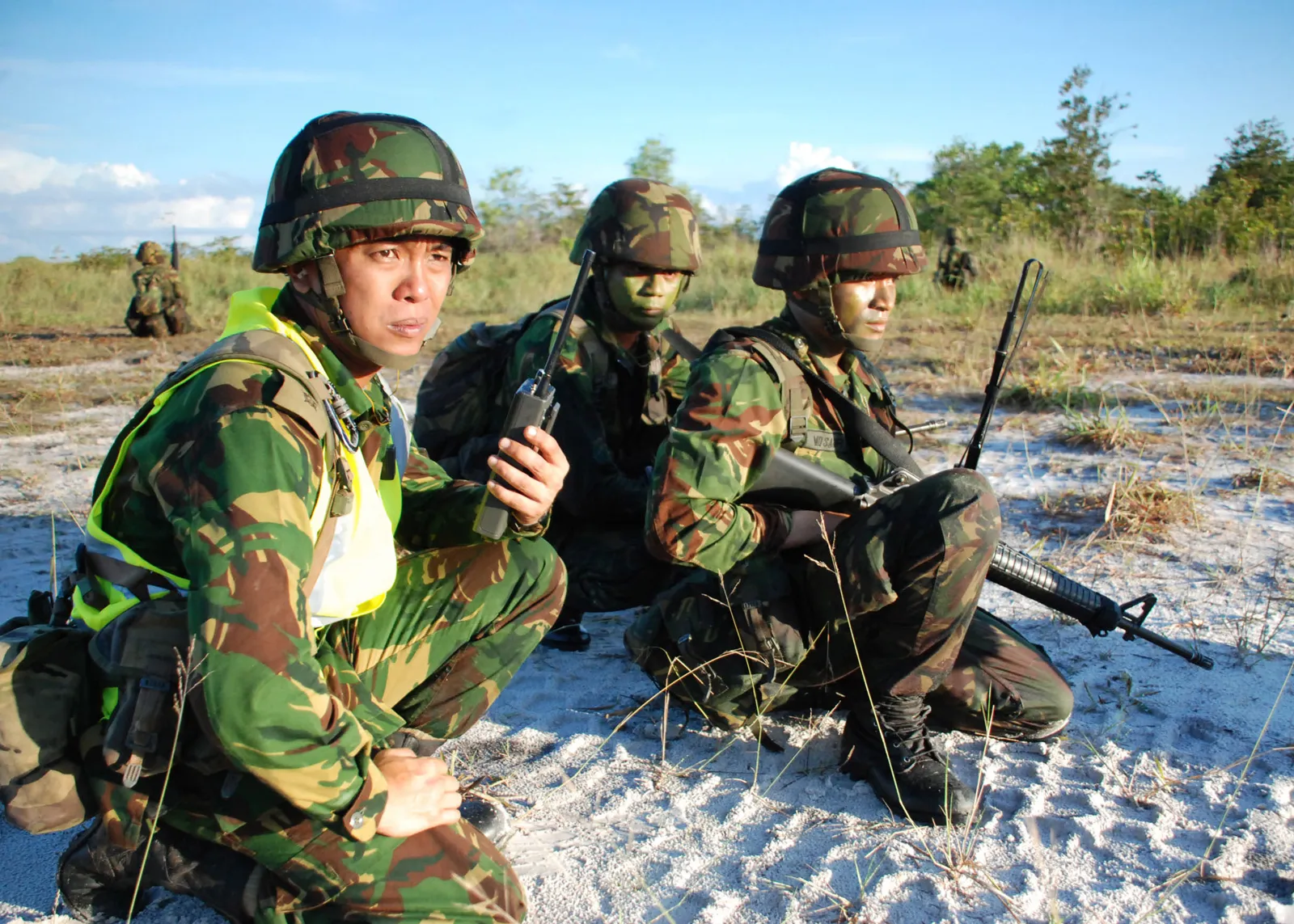
Brunei’s military inventory is shaped by the needs of a small oil-and-gas state that became independent in 1984. The country on the north coast of Borneo organises the Royal Brunei Armed Forces into land, naval and air branches under one command, with Sultan Hassanal Bolkiah serving as both supreme commander and defence minister. The force carries a small but modern core, from Scorpion tanks and Black Hawk helicopters to Lürssen-built patrol vessels.
At a Glance
- Active personnel: About 7,200 active personnel (approximate) across land, naval and air branches under one command, plus the UK’s Gurkha battalion garrison in the country
- Tanks: No main battle tanks; about 20 FV101 Scorpion light tanks (76 mm gun)
- Armoured vehicles: About 45 French VAB armoured personnel carriers, Cendana Auto light armoured vehicles and command and recovery variants (approximate)
- Military aircraft: No combat aircraft; about 16 S-70i Black Hawks, four C295 and one CN-235 transports, four PC-7 Mk II trainers and five RQ-21 Blackjack UAVs (approximate)
- Navy: Four 80-metre Darussalam-class offshore patrol vessels armed with Exocet MM40 Block 3 anti-ship missiles, four Ijtihad-class patrol boats and two Fearless-class patrol vessels received from Singapore
- Defence budget: About 594 million dollars in fiscal 2024/25 (roughly 796 million Brunei dollars), around 3.5 per cent of GDP
Note: The inventory figures below are approximate values drawn from open sources such as Global Firepower, the IISS Military Balance and SIPRI.
About the Brunei Armed Forces
The Royal Brunei Armed Forces (RBAF) are the successor to the Brunei Malay Regiment, founded on 31 May 1961 with British support. The Land Force, Navy and Air Force are managed under a single Ministry of Defence, with headquarters at Bolkiah Garrison. Active personnel are reported at about 7,200 and reserves at about 10,000. Service is voluntary, and 31 May is marked each year as Armed Forces Day.
The defence budget for fiscal 2024/25 is about 794-796 million Brunei dollars, roughly 594 million US dollars, equal to around 3.5 per cent of GDP. For a country of about 450,000 people that means high per-capita spending. The distinctive feature of Brunei’s security architecture is the British presence that became permanent after the 1962 Brunei revolt: a battalion of the Royal Gurkha Rifles and a flight of Army Air Corps helicopters are stationed in the country to protect the Seria oil installations.
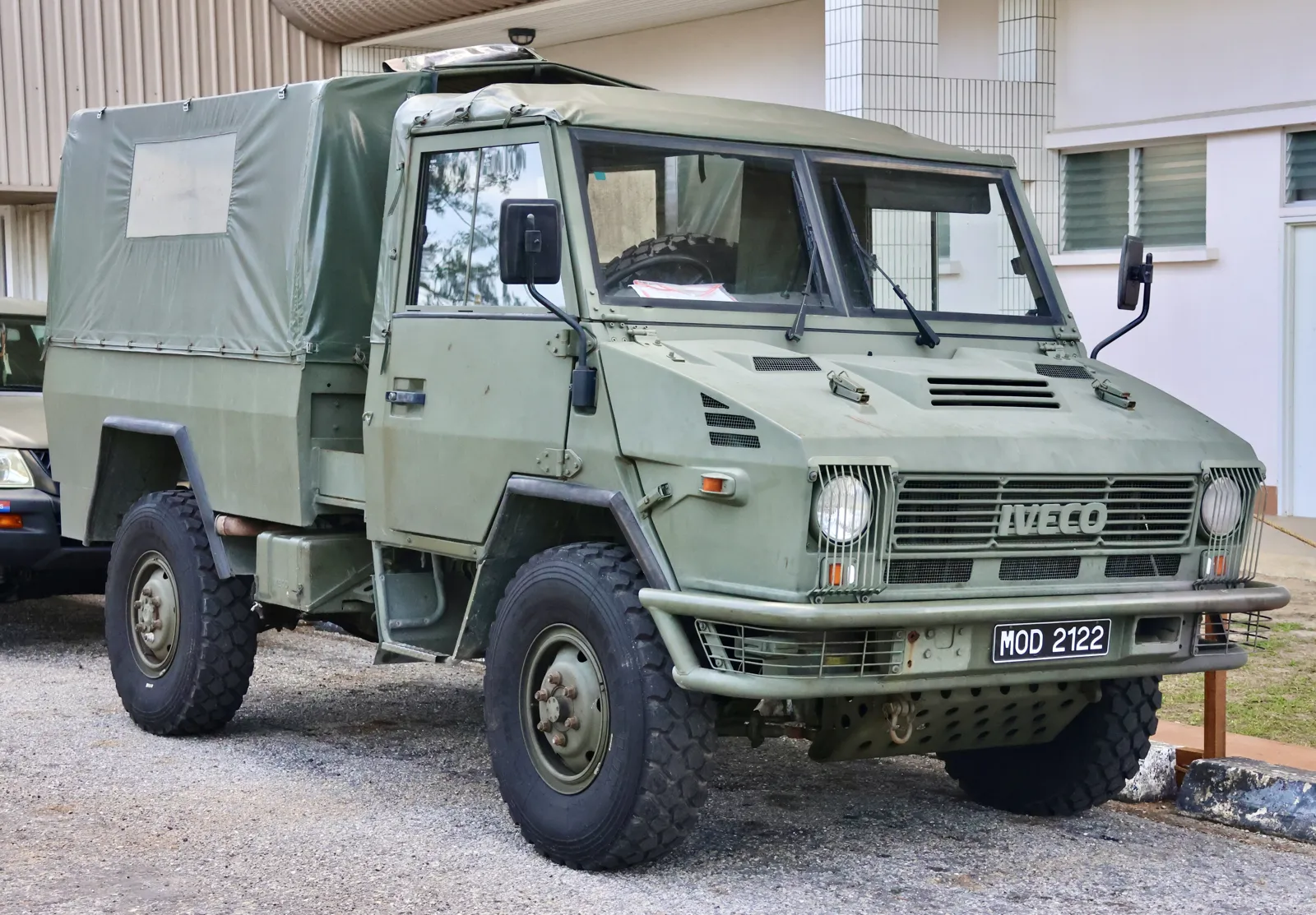
The land inventory is light and mobility-oriented. About 20 FV101 Scorpion light tanks were bought in 1976 and had their 76 mm guns fitted with laser rangefinders; about 45 French VAB VTT armoured personnel carriers are amphibious and NBC-protected. They are joined by Cendana Auto 4×4 light armoured vehicles, locally assembled DefTech Handalan II vehicles, and FV105 Sultan command and FV106 Samson recovery vehicles. Artillery is limited to about six L118 105 mm towed howitzers.
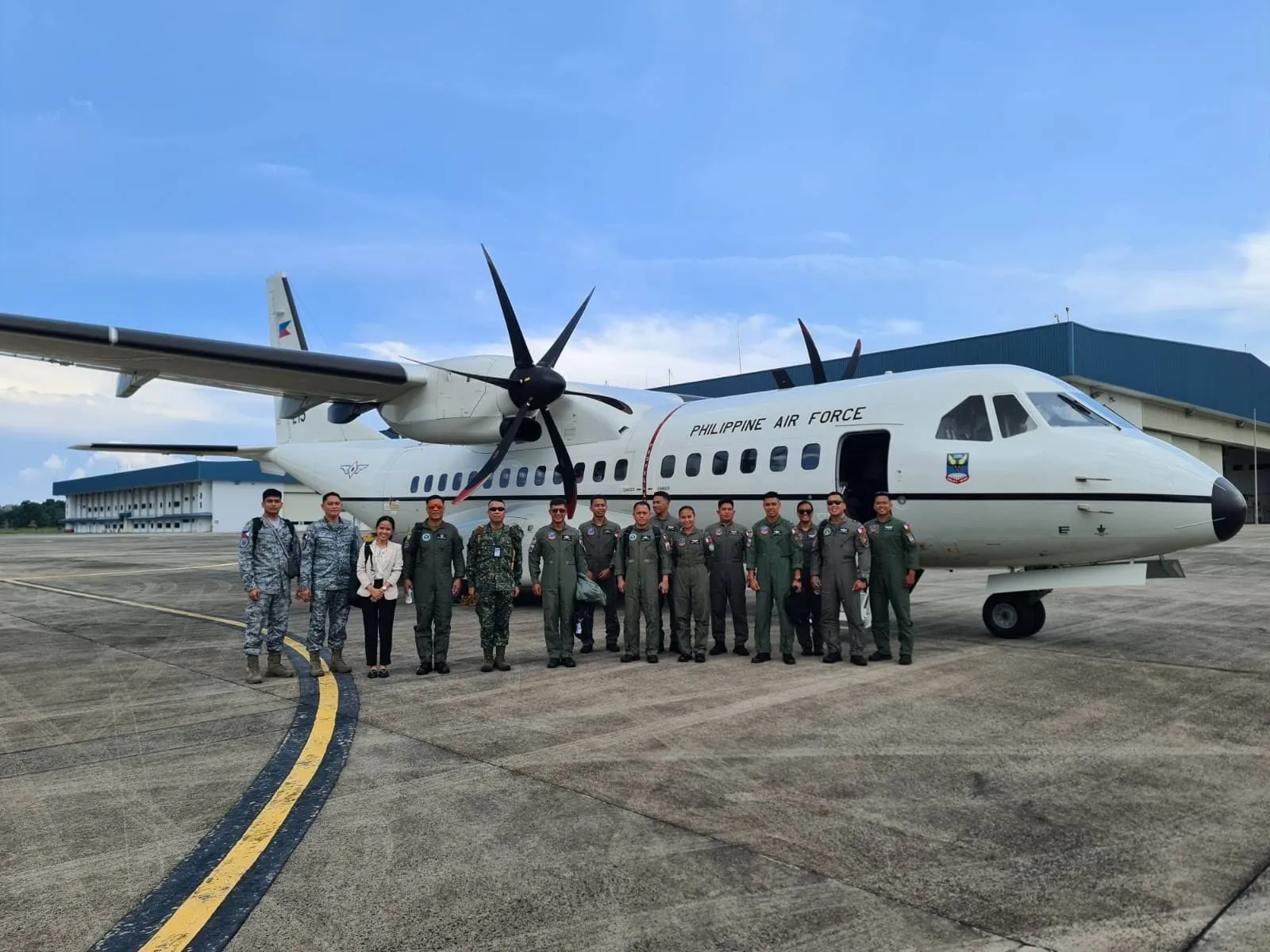
Helicopters form the backbone of the air force. About 16 S-70i Black Hawks built in Poland, one Bell 214ST and Bell 206 trainers are in service; four older S-70As were transferred to Malaysia in 2015. On the transport side there are four Airbus C295MW and one CN-235. There are no combat aircraft, and plans to buy BAE Hawks have been delayed repeatedly. Under a programme unveiled in June 2021, five RQ-21 Blackjack UAVs are used for maritime surveillance.
The missile and air-defence layer is concentrated at sea. Each of the four Darussalam-class ships carries four Exocet MM40 Block 3 anti-ship missiles, and Mistral missiles and EuroTorp A244/S torpedoes are reported on the Fearless-class ships. No ground-based surface-to-air missile battery is confirmed in open sources; airspace is monitored by the P-STAR radar operated by No. 2 Wing at Rimba.
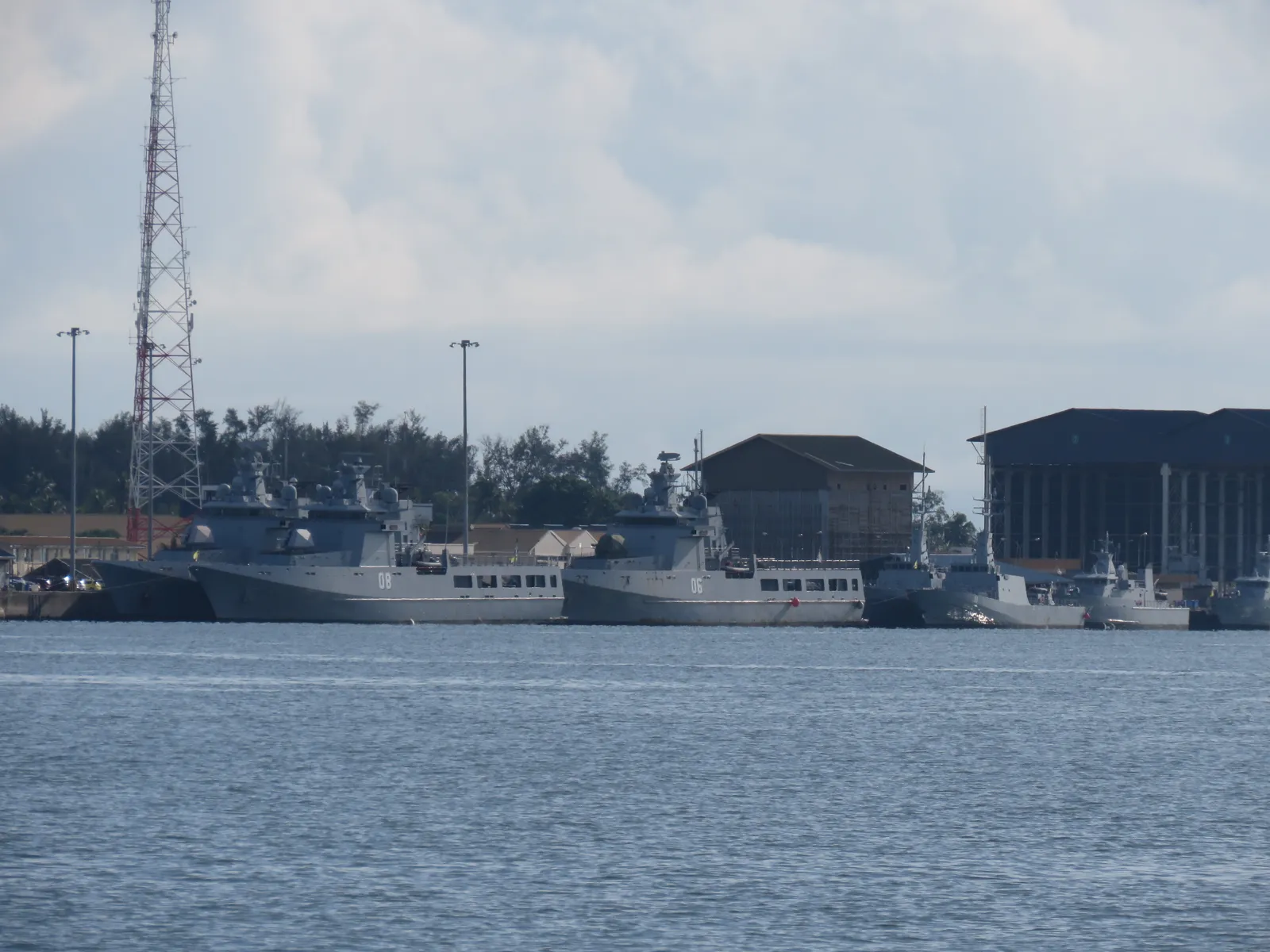
The navy focuses on protecting the country’s maritime zone and its oil and gas platforms. Four 80-metre Lürssen-built Darussalam-class offshore patrol vessels (2011-2014) and four 41-metre Ijtihad-class patrol boats form the main force. Two Fearless-class vessels gifted by Singapore in March 2023, As-Siddiq and Al-Faruq, added a further layer of weapons with their 76 mm guns and torpedoes. Combat boats and landing craft are based at Muara Naval Base.
Land Forces Inventory
| System type | Est. quantity |
|---|---|
| Light tanks | FV101 Scorpion (about 20): reconnaissance tanks bought in 1976 with their 76 mm guns fitted with laser rangefinders; there are no main battle tanks |
| Armoured personnel carriers | VAB VTT (about 45): amphibious, NBC-protected French 4×4 vehicles, plus two FV105 Sultan command vehicles and one FV106 Samson recovery vehicle (approximate) |
| Light armoured and tactical vehicles | Cendana Auto 4×4 (about 16, ARTAC weapons-carrier variant), the Al-Thalab light armoured vehicle and the locally assembled DefTech Handalan II transport vehicle (about 115) |
| Artillery | L118 105 mm towed howitzers (about 6); no rocket launchers or self-propelled guns are documented in the inventory |
| River and littoral craft | Land Force craft include KH-27 patrol boats (about 5), inflatable boats and airboats, with a Combat Boat Squadron of the Support Battalion based at Muara Naval Base |
Air Force Inventory
| Platform | Est. quantity |
|---|---|
| Combat aircraft | None; plans to buy BAE Hawk aircraft have been delayed repeatedly, and air power is built around transport aircraft and helicopters |
| Helicopters | S-70i Black Hawks (about 16, built in Poland), one Bell 214ST and two Bell 206 trainers; an order for six Airbus H145M has been reported |
| Transport and trainer aircraft | Four Airbus C295MW and one CASA/IPTN CN-235 transports; four Pilatus PC-7 Mk II trainers (approximate) |
| UAVs and radar | Five RQ-21 Blackjacks for maritime surveillance (programme unveiled in 2021) and the P-STAR ground radar operated by No. 2 Wing at Rimba |
Missile and Air-Defence Systems
| System | Type / Note |
|---|---|
| Anti-ship missiles | Four Exocet MM40 Block 3 on each Darussalam-class vessel; the country’s main striking power sits on its naval platforms |
| Air defence | No ground-based surface-to-air missile battery is confirmed in open sources; Mistral missiles are reported on the Fearless-class vessels |
| Torpedoes and air-to-surface weapons | EuroTorp A244/S torpedoes on the Fearless class; M134 miniguns, FZ and SURA unguided rockets on helicopters |
Naval Power
| Class / Type | Est. quantity |
|---|---|
| Offshore patrol vessels | Four Darussalam-class vessels (KDB Darussalam, Darulehsan, Darulaman, Daruttaqwa): 80-metre Lürssen-built ships armed with a 57 mm Bofors gun and four Exocet MM40 Block 3, commissioned 2011-2014 |
| Patrol boats and vessels | Four 41-metre Ijtihad-class patrol boats (2010) and two Fearless-class patrol vessels, As-Siddiq and Al-Faruq, gifted by Singapore in March 2023 (76 mm Oto Melara gun) |
| Fast attack and landing craft | One Mustaed-class fast attack craft (2011), two Serasa-class landing craft (LCM) and one Damuan-class LCU; the old Waspada class was retired in April 2011 |
| Bases | Muara Naval Base (navy and Land Force craft), Rimba Air Force Base (air force) and Bolkiah Garrison (armed forces headquarters and Ministry of Defence) |
The Turkey Angle: Turkish Defence Industry
Relations between Türkiye and Brunei rest on friendly ground within the Organisation of Islamic Cooperation. Türkiye opened an embassy in Bandar Seri Begawan on 15 October 2013 and Brunei opened one in Ankara on 8 January 2014. Sultan Hassanal Bolkiah visited Ankara in April 2012 and then-Prime Minister Recep Tayyip Erdoğan visited Brunei in November 2012; Bolkiah attended the Islamic Summit in Istanbul in April 2016. Bilateral trade stood at about 4.9 million dollars in 2018.
Open sources do not currently document any major Turkish-made platform in Brunei’s inventory; land and naval purchases have come from France, the United Kingdom, Germany, Italy and Southeast Asian sources, and air purchases from the United States, Spain and Poland. The regional picture does offer precedent for the Turkish defence industry: neighbouring Indonesia signed a contract for Turkish ANKA unmanned aircraft, and Brunei’s regional partners such as Singapore, Malaysia and the Philippines are also prioritising domestic production and diversified procurement.
Brunei’s needs list technically overlaps with proven Turkish products: tactical and maritime UAVs for Exclusive Economic Zone surveillance, coastal and river patrol boats, light armoured vehicles to replace the Scorpion, and a genuine ground-based air-defence layer. A rich budget and a procurement policy open to new platforms make Brunei one of the potential markets for Turkish defence exports in Southeast Asia, although for now that rests on potential rather than on a signed contract.
Frequently Asked Questions
How many tanks does Brunei have? Brunei has no main battle tanks. The inventory includes about 20 FV101 Scorpion light tanks, bought in 1976, whose 76 mm guns have been fitted with laser rangefinders.
Does Brunei have fighter jets? No. The Royal Brunei Air Force has no combat aircraft, and plans to buy BAE Hawks have been delayed repeatedly. Air power consists of about 16 S-70i Black Hawk helicopters, four C295 and one CN-235 transports, PC-7 Mk II trainers and RQ-21 Blackjack UAVs.
How many soldiers does Brunei have? The Royal Brunei Armed Forces have approximately 7,200 active personnel and about 10,000 reservists. A British Gurkha battalion is also stationed in the country.
What ships does the Brunei navy have? The main force is four Darussalam-class offshore patrol vessels, each carrying four Exocet MM40 Block 3 anti-ship missiles, four Ijtihad-class patrol boats and two Fearless-class patrol vessels gifted by Singapore in 2023. There are no frigates, corvettes or submarines.
Is there defence cooperation between Türkiye and Brunei? Reciprocal embassies opened in 2013-2014 and high-level visits have taken place, but open sources document no Turkish platform in Brunei’s inventory and no signed defence contract.
Bottom Line
The Brunei inventory shows a balanced but limited-capability military belonging to a small-population, high-budget state. Scorpion tanks, VAB armoured vehicles, Black Hawk helicopters and Exocet-armed Darussalam-class ships are adequate for internal security, maritime jurisdiction and humanitarian missions; there are, however, no combat aircraft, main battle tanks or layered air defence. Deterrence is completed by the British Gurkha garrison and partnerships with Singapore and Malaysia. What will matter next is whether fleet renewal programmes gather pace and where the budget is directed; that process opens a potential field for the Turkish defence industry in maritime surveillance, coastal patrol and light armoured vehicles.