Bosnia and Herzegovina’s Military Power: How Many Tanks, Helicopters and Drones Are in the Inventory? (2026)

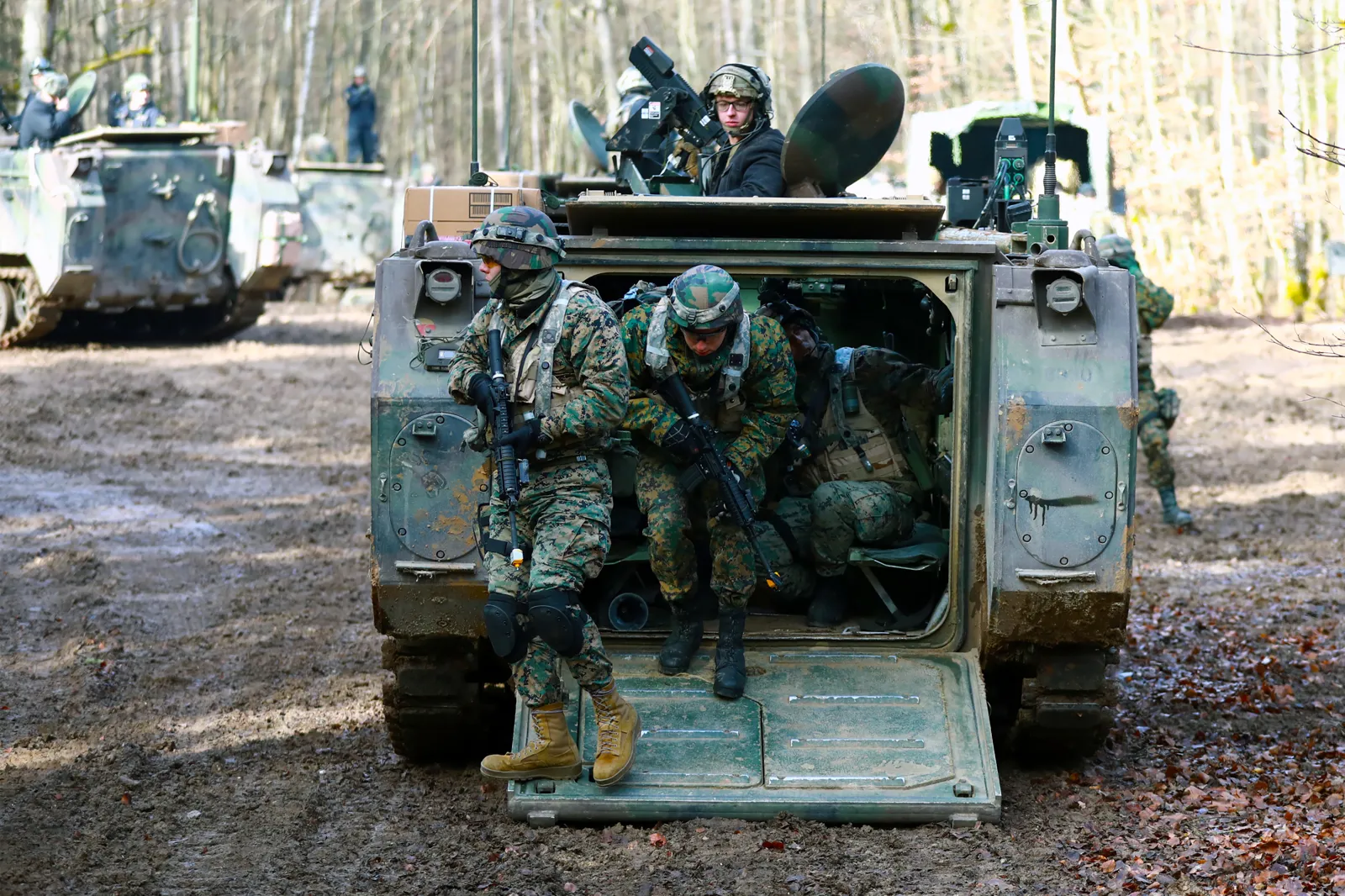
Bosnia and Herzegovina’s military inventory is a snapshot of an army merged after the wartime 1990s and still running mainly on US, former Yugoslav and Soviet-origin equipment. The Armed Forces have been under a single command since 2006, with the Joint Staff in Sarajevo and three infantry brigades plus an Air Force and Air Defence Brigade under the Operational Command. The budget is small and the platforms are old; against that, defence cooperation with Türkiye has begun to shape the inventory directly over the past two years.
At a Glance
- Active personnel: Global Firepower counts 18,000 active and 8,000 reserve personnel; conscription was abolished on 1 January 2006 and the force is all-volunteer
- Main battle tanks: Global Firepower counts 45 tanks, all M60A3s received from the United States in the 1990s
- Armoured vehicles: Global Firepower counts 892 armoured vehicles; alongside M113A2s, HMMWVs and legacy Yugoslav carriers, 4 Kirpi II arrived from Türkiye in 2025
- Artillery and rocket launchers: GFP counts 300 towed guns and 24 rocket launchers with no self-propelled artillery; the backbone is the 122 mm D-30 howitzer
- Military aircraft: Global Firepower counts 15 aircraft, all of them helicopters, with no fighters; a purchase of Turkish Bayraktar TB2s is under way
- Defence budget: Global Firepower shows roughly $290 million; the 2023 figure on Wikipedia is $220 million, about 0.2 percent of GDP
Note: The inventory figures below are approximate values drawn from open sources such as Global Firepower, the IISS Military Balance and SIPRI.
About the Bosnia and Herzegovina Armed Forces
The Armed Forces of Bosnia and Herzegovina merged two wartime armies into one structure in 2006. The Joint Staff sits in Sarajevo; the Operational Command groups the 4th, 5th and 6th infantry brigades, a tactical support brigade and the Air Force and Air Defence Brigade, while the Support Command runs personnel, training and logistics. Conscription was abolished on 1 January 2006.
In the Global Firepower 2026 count the country ranks 133rd of 145 with a Power Index of 3.1291. Active personnel number 18,000 and reserves 8,000. Global Firepower puts the defence budget at about $290 million, while Wikipedia gives $220 million for 2023, about 0.2 percent of GDP. At this level, any large-scale renewal depends on donations and partnership programmes.
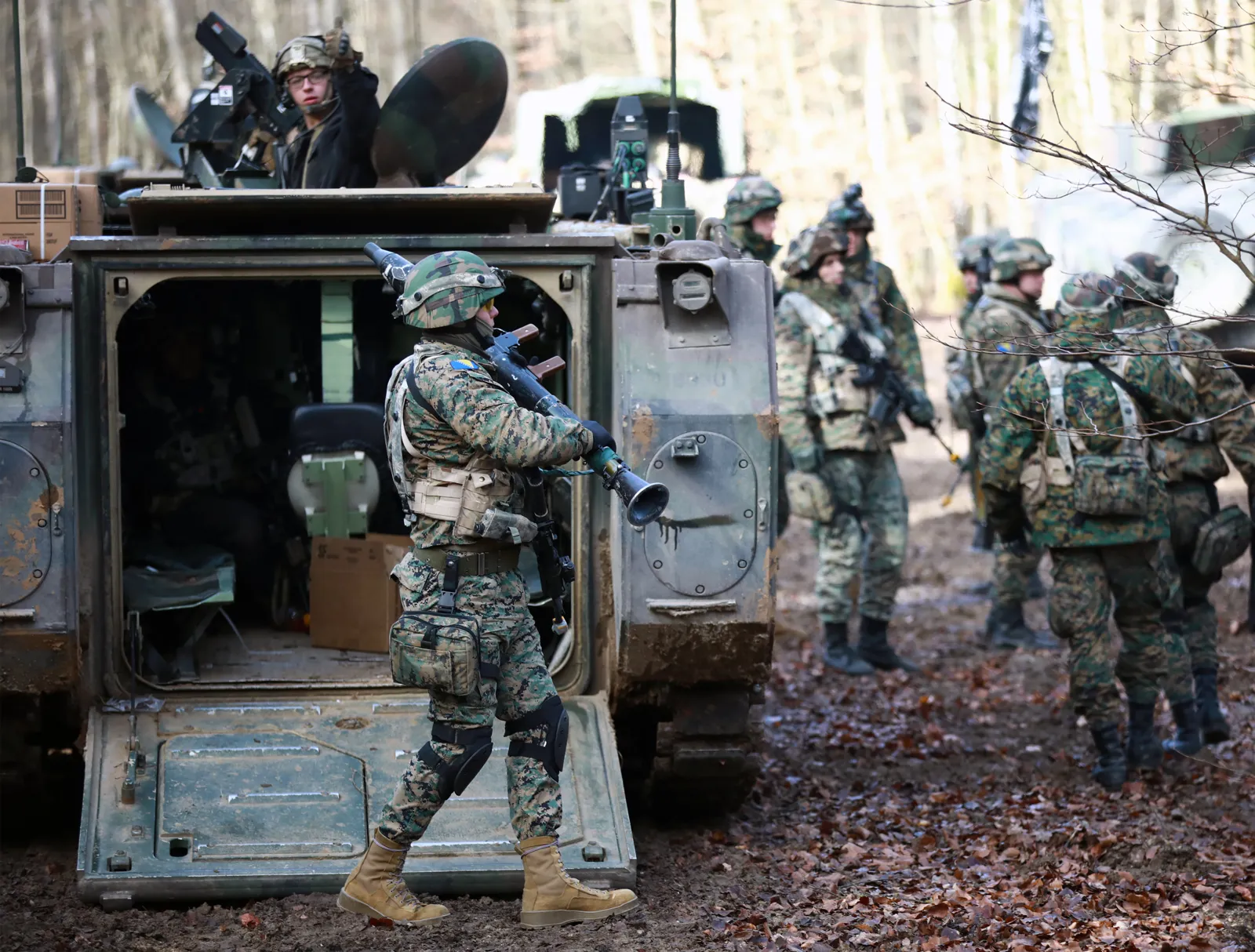
The land inventory rests on equipment left over from the 1990s Train and Equip programme. 45 M60A3 tanks, 80 M113A2s (only about 20 in service), 79 HMMWVs and 840 AT4s came from the United States, with legacy Yugoslav, Soviet and Chinese vehicles such as the BRDM-2, BOV-1 and WZ-550 added on top. The artillery backbone is 132 active and 168 reserve 122 mm D-30 howitzers; there is no self-propelled artillery.
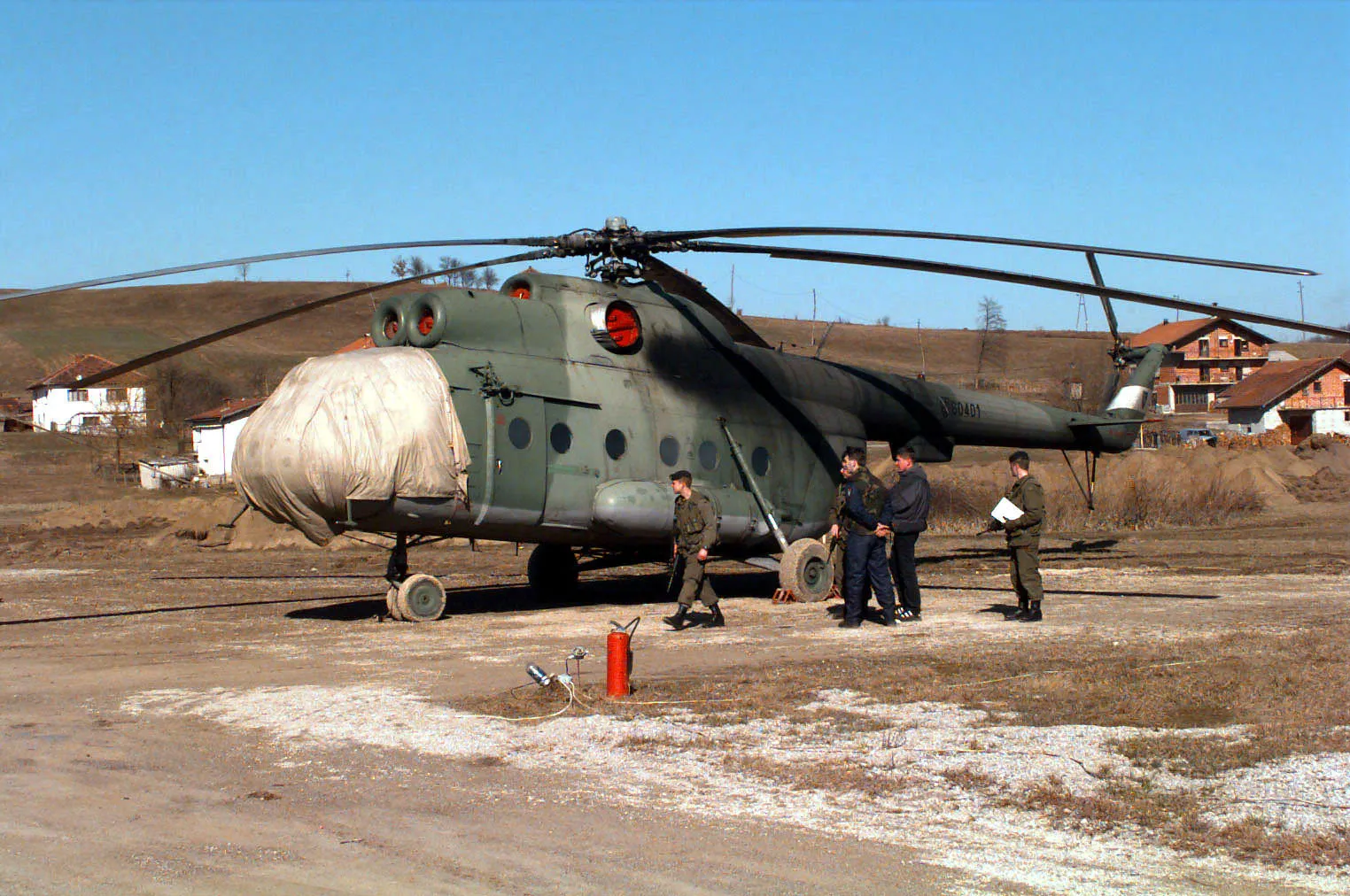
The Air Force operates no fighters. The fleet is about 13 Mi-8/Mi-17 transport helicopters, 9 UH-1H/Huey IIs and 4 Gazelles. In May 2025 the US State Department approved the possible sale of AW119Kx helicopters; delivery has not been confirmed. Air defence is dominated by Cold War systems such as 20 Kubs, 34 Strela-1s, 96 Pragas and 47 Bofors 40 mm guns.
The country has only about 20 km of Adriatic coast around Neum and no navy. Abroad the Armed Forces keep a modest presence, with Wikipedia recording 64 deployed personnel. In the security picture the EU’s EUFOR Althea force is decisive: it has been in place since December 2004, and Türkiye is among the countries present in Bosnia since 1994.
The modernisation programme runs to 2032 and plans 46 new vehicles to replace the M113A2 fleet. Cooperation with NATO continues under Partnership for Peace; the country received a Membership Action Plan invitation in 2010, but the process has not fully advanced. EUFOR and the Armed Forces signed the 2026 cooperation plan, the Combined Response 26 exercise was completed in April 2026 and Quick Response 2026 is scheduled for 22 August to 3 September.
Land Forces Inventory
| System type | Est. quantity |
|---|---|
| Main battle tanks | 45 M60A3s (US deliveries of 1997); GFP puts roughly 29 at readiness. In the 1990s Train and Equip programme Türkiye also supplied about $2 million of equipment, including 10 T-55 tanks |
| APCs and light vehicles | 80 M113A2s (20 in service, the rest in reserve) and 79 HMMWVs, plus 17 BRDM-2s, 32 BOV-1s and 11 WZ-550-type legacy vehicles. A programme running to 2032 plans 46 new vehicles to replace the M113s |
| Turkish-built armour | BMC Kirpi II: 4 vehicles were handed over as a donation at Rajlovac Barracks in Sarajevo on 25 June 2025; the press reports the package may reach 32 vehicles, but no delivery schedule has been officially announced |
| Artillery and mortars | 132 active and 168 reserve 122 mm D-30 howitzers, 24 105 mm M101s; 37 APR-40s (24 active) and 5 BM-21 rocket launchers; 460 120 mm M-75 mortars (100 active) |
| Anti-tank weapons | 840 AT4s delivered by the United States in 1997, plus RPG-7s, MILAN, HJ-8, Metis, Fagot and Malyutka missiles and rockets whose numbers are not clear in open sources |
Air Force Inventory
| Platform | Est. quantity |
|---|---|
| Total military aircraft | 15 (Global Firepower), all helicopters; there are no fixed-wing fighters or attack aircraft. The Air Force and Air Defence Brigade operates from Sarajevo and Banja Luka |
| Transport and utility helicopters | About 13 Mi-8/Mi-17s (4 Mi-8MTV, 8 Mi-8, 1 Mi-17) and 9 UH-1H/Huey IIs (two on medevac duty); the backbone of the fleet is ageing Soviet and US helicopters |
| Light helicopters | 4 SA 341 Gazelles; on 21 May 2025 the US State Department approved the possible sale of AW119Kx helicopters at up to $100 million, with delivery not confirmed |
| Armed UAVs | Bayraktar TB2: on 23 March 2026 Defence Minister Zukan Helez said the process was complete for 2 TB2s and several small UAVs, with the contract to be signed in late May. Wikipedia lists 2 TB2s in service; the delivery date is not independently confirmed |
| Runway and training | Helez said the TB2 needs a runway of about 1,200 m and that the Rajlovac runway must be extended; personnel are being trained in Türkiye |
Missile and Air-Defence Systems
| System | Type / Note |
|---|---|
| Medium-range surface-to-air defence | 20 2K12 Kub launchers (according to open-source records); a Soviet-era system that does not amount to a modern air-defence network |
| Short-range and shoulder-fired missiles | 34 Strela-1s, plus Strela-10, Strela-3, Igla and Stinger systems whose numbers are only partly recorded |
| Anti-aircraft guns | 96 M53/59 Praga self-propelled twin guns, 47 Bofors 40 mm guns (31 L/60, 16 L/70) and 30 ZU-23-2s |
| Counter-drone | ASELSAN’s KANGAL FPV counter-drone system was received from Türkiye; Helez confirmed this in 2025 |
| Ballistic and cruise missiles | None. The longest-range land strike comes from the 122 mm APR-40 and BM-21 rocket launchers; GFP counts 24 |
Naval Power
| Class / Type | Est. quantity |
|---|---|
| Naval forces | None; Global Firepower shows 0 naval assets. The Armed Forces consist only of land and air elements |
| Coastline | A narrow stretch of about 20 km of Adriatic coast around Neum; there is no military port or ship |
| River capability | No organic combat flotilla is recorded for rivers such as the Sava, Drina, Una and Neretva; river crossing depends on engineering capability |
| Maritime security | Coastal and maritime security remains largely in the hands of civilian agencies; the Armed Forces do not hold a role in this area |
| Meaning for Turkish naval industry | With no navy there is no ship market; Turkish industry’s contact is concentrated in land, air and UAV items |

The Turkey Angle: Turkish Defence Industry
The Türkiye link is one of the liveliest in this series and shows up in the numbers. During a visit to the EUFOR Turkish delegation in Sarajevo, Defence Minister Yaşar Güler stressed that the Turkish Armed Forces have served in Bosnia and Herzegovina since 1994. Further back, in the 1990s Train and Equip programme Türkiye is recorded as supplying about $2 million of equipment, including 10 T-55 tanks.
The most concrete step came on 25 June 2025: at a ceremony at Rajlovac Barracks in Sarajevo, 4 BMC Kirpi II armoured vehicles were handed over as a donation to the Armed Forces of Bosnia and Herzegovina. Defence Minister Zukan Helez and Türkiye’s ambassador to Sarajevo, Emin Akseki, attended; Helez called the Kirpi II one of the best armoured vehicles in the world, and Akseki said it is a 100 percent Turkish defence-industry product. The press reports the package could reach 32 vehicles, but the total and the schedule have not been announced officially.
Helez also recalled that ASELSAN’s KANGAL FPV counter-drone system had been received earlier. On drones, in December 2024 he told Anadolu Agency about a purchase of 6 Bayraktar TB2s. On 23 March 2026 at the NATO MSPC 26 conference in Sarajevo he said the process was complete, with the agreement for 2 TB2s and several small UAVs to be signed in late May. Wikipedia lists 2 TB2s in service; with no independent delivery confirmation, delivery is not written here as complete.
For Turkish industry the package says two things. First, contact that began with a donation is widening quickly into commercial purchases and then UAVs; Bosnia’s oldest and heaviest gaps are exactly armoured vehicles, counter-drone and armed UAVs. Second, because the budget is small the market volume stays limited; the value lies in being a Balkan reference for Turkish platforms. Objections to these deliveries have also been voiced in regional politics; what matters for an inventory analysis is that the platforms are registered under the joint command of the Armed Forces of Bosnia and Herzegovina.
Frequently Asked Questions
How many tanks does Bosnia and Herzegovina have? The Global Firepower 2026 count is 45 tanks, all M60A3s received from the United States in the 1990s. GFP estimates about 29 of them are ready for use.
Does Bosnia and Herzegovina have fighter jets? No. Global Firepower counts 0 fighters and 15 aircraft in total, all helicopters. The inventory includes the Mi-8/Mi-17, UH-1H and Gazelle.
What weapons has Bosnia and Herzegovina received from Türkiye? 4 BMC Kirpi II armoured vehicles were handed over as a donation on 25 June 2025, and ASELSAN’s KANGAL FPV counter-drone system was received. A Bayraktar TB2 purchase is in progress; in March 2026 the minister said the contract would be signed in late May.
Does Bosnia and Herzegovina have a navy? No. The country has only about 20 km of Adriatic coast around Neum and Global Firepower counts 0 naval assets.
Does Türkiye keep troops in Bosnia and Herzegovina? Yes. According to Defence Minister Güler, the Turkish Armed Forces have served in Bosnia and Herzegovina since 1994, and a Turkish delegation operates in Sarajevo within EUFOR Althea.
Bottom Line
Bosnia and Herzegovina’s inventory is that of a numerically small and largely ageing force: 45 tanks, no fighters and no navy make that plain. The real change since 2025 is that, with Turkish-built Kirpi II, KANGAL and the planned Bayraktar TB2, the inventory is being fed with new-generation platforms for the first time. In this picture Türkiye appears as a credible partner through both its long military presence in EUFOR and concrete supply steps; the market is small, but its reference value in the Balkans is high.
Related Reading
Sources
- Global Firepower — Bosnia and Herzegovina
- IISS — The Military Balance
- SIPRI — Arms Transfers Database
- Wikipedia — Armed Forces of Bosnia and Herzegovina
- Wikipedia — Equipment of the Armed Forces of Bosnia and Herzegovina
- Wikipedia — Air Force and Anti-Aircraft Defence of Bosnia and Herzegovina
- İstiklal — Türkiye delivers Kirpi II armoured vehicles to Bosnia and Herzegovina
- Bengütürk — Bosnia and Herzegovina’s Bayraktar TB2 move
- Timeturk — The Turkish stamp on Bosnia and Herzegovina’s defence