Naval Group Signs Sea-Firing Trials Deal With Poland’s MESKO and TELESYSTEM for Rampart

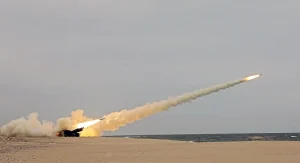
French naval defense major Naval Group signed an agreement on 19 June 2026 with Polish munitions maker MESKO and missile-electronics firm TELESYSTEM. The deal envisions testing the integration of the Polish-made Piorun air defense missile into Naval Group’s Rampart close-in weapon system during future sea trials.
According to a joint statement from the three firms, the understanding is described as the “first step in a mutually beneficial strategic cooperation” aimed at integrating the missile into the weapon system. The parties intend to mount the Piorun on Rampart to offer a single European answer to both conventional and asymmetric threats. The solution is planned to cover the needs of naval, air and land forces alike.
Who does what in the deal?
The division of labor is shaped by each firm’s area of expertise. Naval Group brings its experience integrating weapons, firing systems and equipment onto warships. On the Polish side, MESKO and TELESYSTEM contribute their know-how in producing and supplying the high-tech missile.
MESKO is a munitions manufacturer under PGZ (Polska Grupa Zbrojeniowa), Poland’s state-owned defense industry umbrella. The firm handles the final assembly and energetic components of the Piorun missile. TELESYSTEM, meanwhile, develops one of the missile’s most critical parts — the seeker head, particularly the cooled infrared seeker (an optoelectronic system that finds its target by its heat signature).
What kind of missile is Piorun?
Piorun is a modern short-range air defense missile derived from Poland’s shoulder-launched Grom family. It is designed against low-altitude threats — aircraft, helicopters, unmanned aerial vehicles (UAVs) and cruise-missile-like targets. As the drone threat in particular has come to the fore in recent conflicts, demand for the missile has risen; MESKO announced it had produced its 3,000th Piorun system.
According to data in open sources, the missile has a range of roughly 6.5 kilometers and an effective ceiling of around four kilometers. With a speed exceeding Mach 2 (twice the speed of sound), it can react quickly to suddenly appearing targets. Piorun also uses proximity and impact fuzes together, which lets it raise its hit probability against small, agile targets by detonating even as it passes right alongside them.
Rampart: a new close-in defense platform
Rampart, the other leg of the deal, is a multipurpose close-in weapon system (CIWS) developed by Naval Group. The system was first unveiled in late 2023 as a project financed with the company’s own funds, and until recently it carried the name MPLS (a multipurpose, modular firing system). The name change was announced in June 2026.
Rampart’s standout feature is its modular design. A single turret holds four firing modules, and different munition types can be fitted into them. The system can carry up to 1,000 kilograms of munitions; guided rockets or shoulder-launched short-range missiles, for example, can be loaded in various combinations. That flexibility is intended to let ships change their weapon load according to the type of threat.
The platform is advancing through its trials phase. The first firing took place in January 2026; in May 2026, more complex trials were conducted against laser-designated targets and using multiple rocket salvos. The Piorun integration aims to add a short-range air defense capability to this maturing process.
A search for joint solutions in European defense
The agreement can be read as part of the cooperation trend that has accelerated lately in Europe’s defense industry. A French integrator joining forces with a Polish missile maker reflects the effort to knit the continent’s supply chains together. Given that Naval Group recently also signed a firing-trials agreement for Rampart with the UAE-based EDGE, the firm appears to be positioning Rampart as an open platform that can be tested with different munitions.
The parties’ shared emphasis is on offering ships a cost-effective and flexible close-in defense layer in an environment of growing drone and low-altitude threats. Bringing a missile with established serial production like the Piorun onto a naval platform aims both to exploit production scale and to enable munitions commonality across different forces. The results of the trials will determine how far the integration progresses.
Open-source verification notes
- The agreement date (19 June 2026) and the roles of the parties (Naval Group, MESKO, TELESYSTEM) were confirmed via Naval News, European Security & Defence and the firms’ joint statement.
- Piorun’s range (~6.5 km), ceiling (~4 km), speed (Mach 2+) and fuze data rest on open-source references; since they could not be verified one-to-one against a single official technical sheet, they are given as “approximate.”
- That Rampart’s former name was MPLS, that it was unveiled in 2023, and the January/May 2026 firing trials are sourced from Naval News.
- That MESKO falls under PGZ and TELESYSTEM’s role as seeker/guidance maker were confirmed via open sources.
Sources
- Naval News — “Naval Group, MESKO and TELESYSTEM sign a sea firing trials agreement for demonstration” (June 2026)
- Naval News — “Naval Group’s MPLS Close-In Weapon System Becomes ‘Rampart'” (June 2026)
- European Security & Defence — report on the sea-firing trials agreement (June 2026)
- TELESYSTEM corporate product pages (GROM/PIORUN)