ANALYSIS – Russia turned shopping malls into drone factories. What happens after the war?

Asaf Türk writes defense and security analysis for Envanter Medya.
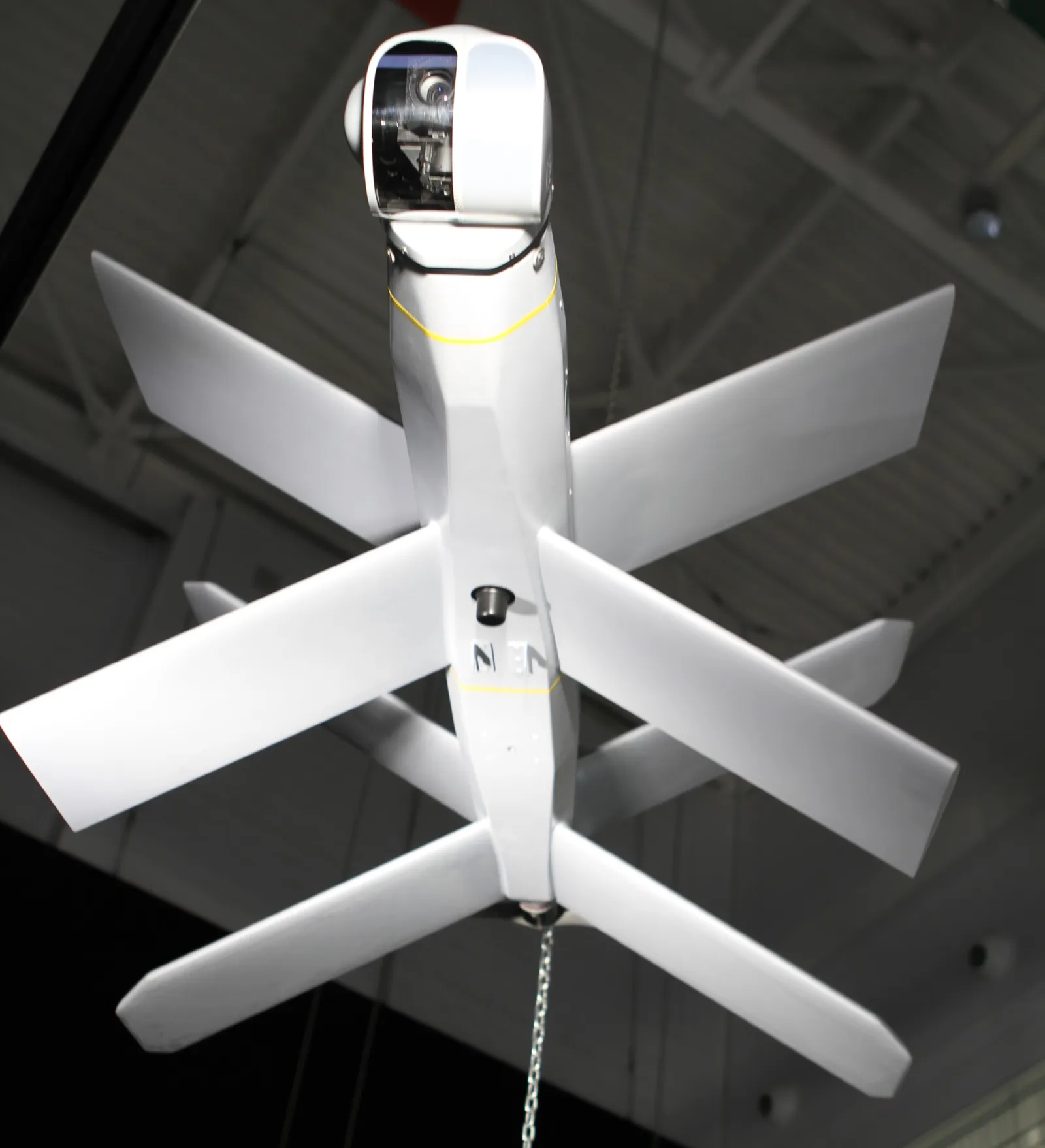
In September 2023, activists in the Russian city of Izhevsk reported that a third shopping mall in a year was being handed over to drone production. The drone maker Aeroscan had bought the Stolitsa mall and told its tenants to be out by October 15. A local petition warned that the move set a precedent for putting hazardous production inside a dense residential area. Three years later, the mall-to-factory conversion is no longer a local oddity: it is documented in the Centre for European Policy Analysis (CEPA) report on Russia’s arms industry, and it raises a practical question that our look at Russia’s arms factories after the war only touched on. What happens to a drone plant that lives inside a mall when the orders stop?
Why a shopping mall?
The logic is easy to see. When Western brands left Russian malls after the 2022 invasion, cities were left with large, half-empty commercial buildings. According to the Moscow Times, Aeroscan’s owner, Nikita Zakharov, the son of a co-owner of the company that makes the Lancet loitering munition, had floated the idea of turning malls into drone workshops as early as 2020 and returned to it after the corporate exodus. A mall is a fast way to get floor space: no new construction, and tenants who can be told to leave within weeks, as the Stolitsa case shows.
Who is inside the buildings
CEPA names the main cases. In the spring of 2023 the Zala Aero Group, part of the Kalashnikov concern, converted the Italmas mall in Izhevsk. Later that year the Izhevsk Unmanned Systems conglomerate (NPO IZHBS) acquired the New House shopping center to build the Granat-4 reconnaissance drone, with serial production starting in June 2024. A company within that group, Finco, pledged a tenfold rise in annual output during a visit by then-Defense Minister Sergei Shoigu in February 2024. Aeroscan took Stolitsa in September 2023. Reporting differs on which company holds which building, and the lines blur because several of these firms are linked through the same families and holdings.
The pattern is not limited to Izhevsk. CEPA says the manufacturer of the SuperCam, the Unmanned Systems Group, which is partly owned by Rostec, bought a 17,000-square-meter shopping center in Ryazan in early 2025, and that the group’s overall production in 2025 was up 20 percent on the year before, according to a company representative. CEPA’s estimate is that fixed-wing reconnaissance drones from these producers alone likely exceed 10,000 to 12,000 units a year, though authorities now withhold output and trade data, so every figure is an estimate.
A fragile kind of capacity
Speed has a price. Capacity built in a rented or repurposed building is quick to start and quick to lose, and CEPA is clear that the ceiling is set less by floor space than by components, workforce and demand. Leaked documents from 2023 showed that NPO IZHBS failed to fulfill a Defense Ministry contract because of the effect of European sanctions, which is a reminder that a factory can exist and still not deliver. A drone plant in the middle of a city is also a target in the middle of a city: Ukraine says it hit at least 30 military and strategic targets inside Russia in October, including defense plants, which is the risk the Izhevsk petition pointed to.
What happens when the orders stop
Drones are probably the easiest part of Russia’s arsenal to convert, and there is early evidence of it. CEPA reports that Zala Aero secured contracts in January 2026 for aerial surveys of oil and gas infrastructure in Western Siberia and the Volga region, alongside a deal with the Kursk Region emergency directorate, and that the Unmanned Systems Group signed SuperCam supply deals with Kazakhstan, Uzbekistan and Belarus in August 2024. Survey, mapping and inspection are real civilian markets that these plants already know how to serve.
The scale is the problem. CEPA, citing analyst Rob Lee, says the Russian General Staff’s requirement for 2026 is at least 87,000 one-way attack drones. That is a different order of magnitude from a few thousand survey aircraft, and it is the part of demand that disappears first if the war stops. Our assessment is that a ceasefire would leave three kinds of plant: those with a civilian or export line that can shrink and survive, those that depend almost entirely on strike-drone orders and would have to be repurposed or closed, and the buildings themselves, which will probably stay in light industrial use rather than become shops again. None of this is a forecast; it is the range the evidence allows.
For Türkiye the point is competitive rather than dramatic. A Russian drone sector with more than 800 enterprises, many of them small and local, is a different rival from a handful of state champions, and one that is harder to read from the outside. Four things will show which way it goes: whether civilian contracts at Zala Aero and the Unmanned Systems Group grow, whether strike-drone orders survive in the 2027 budget, whether component sanctions tighten, and whether more malls change hands.
Sources
CEPA – Managing Russia’s Military-Industrial Degradation · The Moscow Times – Shopping Malls in Central Russia Converted Into Drone Plants · UNITED24 Media – Russia’s war economy starts to crack