


ANALYSIS – What happens to Russia’s arms factories after the war?

Asaf Türk writes defense and security analysis for Envanter Medya.
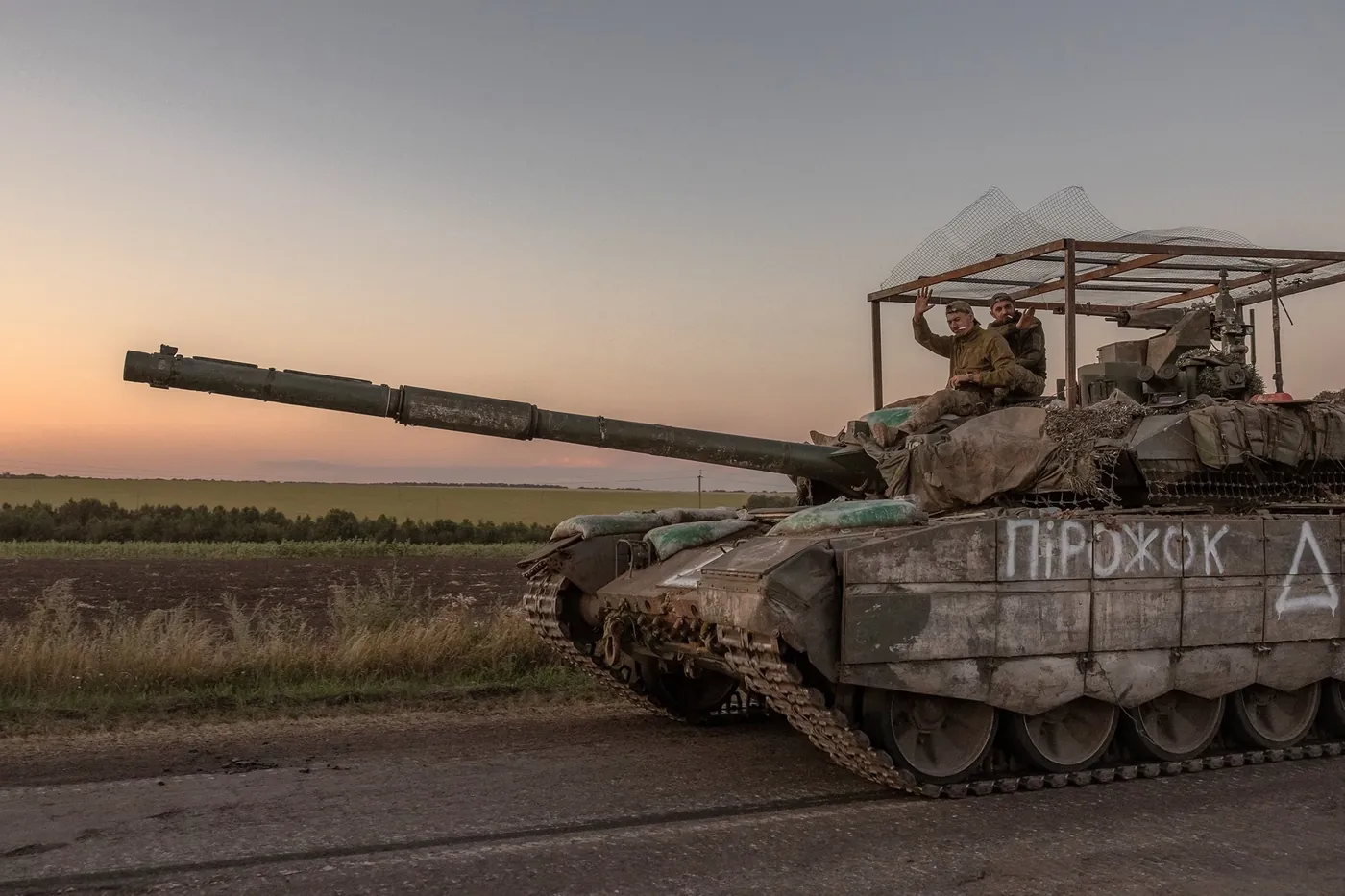
At Uralvagonzavod, the Nizhny Tagil plant that builds Russia’s T-90M tanks, the civilian division has reportedly moved to a four-day week and shed about a tenth of its staff, while the military lines keep running. It is a small detail, but it shows how the machine behaves under pressure: the factory has not stopped making what the war needs, and it is already cutting what a peacetime economy would need.
That is the question hanging over Russian industry as ceasefire talks drag on. Defense and domestic security account for roughly 38 percent of the 2026 federal budget, or 16.8 trillion rubles. SIPRI researcher Julian Cooper estimates that actual military spending this year could reach about 180 billion euros, well above the original plan. A system fed this heavily does not simply switch off when the orders stop. Our broader analysis of the Russian economy asked whether Russia is finished; this piece asks a narrower, more practical question: what happens to the factories?
A sector built for a war with no off switch
The Centre for European Policy Analysis (CEPA) describes the current state of Russian arms production as “managed degradation.” Four years in, the stocks of old Soviet-era tanks and armored vehicles that fed the early offensives are running down, and Russia is being pushed toward building newer armor from scratch. Ukrainian intelligence says Russia is producing about 3,000 Geran-4/5 jet drones a month, up to 4,000 in a later report, inside an overall drone output it puts near 10,000 a month. These are Ukrainian estimates and should be read with that in mind, but the direction of travel is not in dispute: Russia has turned a Soviet inheritance into a continuous production line.
The money tells a more mixed story. Rostec, the state corporation that owns much of the industry, reportedly grew revenue by 25 percent in 2025 while net profit fell by 42 percent, because growth came from Kremlin orders rather than from healthy demand. Ukraine’s Foreign Intelligence Service expects Russian industrial output to shrink by 0.2 percent in 2026, and the central bank, which held its key rate at 14 percent on October 23, has said the economy re-entered “overheating” territory in the third quarter. A sector can look strong on the order book and weak on the balance sheet at the same time. Russia’s arms plants are in that position now.
The shortage that makes peace harder, not easier
Counting the people is harder than counting the weapons. Estimates of the arms industry’s workforce run as high as two million, though that figure is contested; Rostec alone was reported at around 660,000 employees in 2022. What is better documented is the shortage. In June 2022 Yuri Borisov put the workforce deficit at 400,000, including 120,000 engineers, and in the Urals, home to Uralvagonzavod and many other plants, the personnel gap reportedly grew by 60 percent in 2023 compared with the year before.
At first glance a labor shortage looks like protection against mass unemployment after a ceasefire. It is not that simple. Wages in defense plants have been bid up precisely because workers are scarce, and those wages are paid from war orders. When procurement slows, the first thing to go is not the job but the premium, and cities whose economy is tied to a single plant feel that quickly. At the same time, soldiers coming home will look for work in a labor market that has been distorted for four years. The risk after peace is less a sudden wave of layoffs than a slow loss of income in the regions that depend most on the war.
Conversion: Russia has tried this before
Moscow has been here once already. When Soviet-era orders collapsed in the early 1990s, many plants survived by selling abroad, above all to India and China, rather than by successfully turning into civilian manufacturers. The current plan repeats the ambition: defense enterprises are supposed to raise the civilian share of their revenue to 50 percent by 2030, with state bodies required to buy the resulting goods. Nothing in the available reporting shows that target is being met, and the example at Uralvagonzavod points the other way, since the civilian side is the one being cut.
Exports are the other traditional valve, and it has narrowed. SIPRI found Russia was the only one of the world’s ten largest arms suppliers whose exports fell between 2016–20 and 2021–25, by 64 percent, mostly because of lower sales to Algeria, China and Egypt. Rosoboronexport says it signed more than 13 billion dollars of export contracts in the first half of 2026, but that figure is self-reported and unverified. Algeria remains the only likely foreign Su-57E operator, and India has reportedly distanced itself from the aircraft. We looked at one of the few visible deals in our report on Ethiopia’s Su-35 and S-400 delivery.
Three ways this could go
The diplomatic picture is moving in both directions. U.S., Ukrainian and Russian delegations met in Abu Dhabi on November 10–11, but on November 19 Putin said Russia would not negotiate a limited ceasefire after the strike on the Kerch Bridge, which we covered in why the bridge held and how the attack unfolded. Ukraine says it hit at least 30 military and strategic targets inside Russia in October, including defense plants, so the factories are not insulated from the war even now.
The first scenario is a frozen conflict without a settlement. Factories keep running at wartime tempo, because an army that has burned through its stocks has to rebuild them, and the strain shows up as inflation and a high key rate rather than as closures. The second is a negotiated settlement with some sanctions relief: orders fall, but exports and civilian conversion get a chance to absorb part of the shock. The third is a slow squeeze, in which budgets tighten, wages in defense towns stall and the workforce drifts away without any single dramatic moment. None of these is a forecast; they are the shapes the evidence allows.
For Türkiye the stakes are practical. Black Sea security depends on how large and how aggressive Russian industry remains, and Turkish exporters of drones and armored vehicles have been visible in markets where Russian suppliers once had the advantage, although Western and Chinese competitors are chasing the same buyers. Ankara also has to keep its balance: it buys from the West, trades with Russia and sells to Ukraine. Four indicators will show which scenario is arriving: Rostec’s results, the central bank’s rate decisions, the defense line in the 2027 budget, and whether Rosoboronexport’s claimed contracts turn into confirmed deliveries.
Sources
CEPA – Managing Russia’s Military-Industrial Degradation · The National Interest – Russia’s Arms Industry Is in Deep Trouble · Jamestown Foundation – Workforce Shortages Plague Russian Arms Manufacturing · UNITED24 Media – Russia’s war economy starts to crack · Militarnyi – Geran-4/5 production · The Moscow Times – Russian arms exports fall 64% · Jamestown – Rosoboronexport’s sales status uncertain · Indian Defence News – Su-57E export push · CBS News – Putin and the bridge strike · Euronews – Abu Dhabi talks