From Hawk and Rapier to HİSAR: Türkiye’s Layered Air-Defence Transition

From Imported to Indigenous series · File 11 · Sarp Güçlü
Class: B — Gradual Replacement. Developed to take over the foreign system’s role; the new system is in service while the old ones remain partly in inventory.
Status today: Being gradually replaced — HİSAR-A(+) has been in Turkish Army inventory since 2021, HİSAR-O(+) since 2022, but there is no official date for full Hawk or Rapier retirement. The third legacy system, Stinger, is not actually succeeded by HİSAR at all — its real replacement is a separate programme, SUNGUR/PORSAV.
For decades, Türkiye’s air defence rested on three different foreign systems: the US-made medium-range MIM-23 Hawk, the British-licensed short-range Rapier Mk.2B, and the US-made man-portable Stinger. Today, most of that mission is being taken over by the HİSAR family, developed jointly by ASELSAN and ROKETSAN. But our research did not fully confirm the three-way pairing the editorial calendar originally hypothesised — and that correction is the real finding of this file.
The three legacy systems served distinct engagement layers: Hawk was a large, radar-guided medium-altitude battery; Rapier a fast-reacting short-range vehicle/turret system; Stinger a single soldier’s shoulder-fired weapon. Türkiye’s indigenisation effort, launched by the Presidency of Defence Industries (SSB) in the 2010s, tackled each layer separately — and the result is not one “HİSAR” product but a related family with distinct roles.
What were the old systems?
The MIM-23 Hawk is a semi-active radar-guided, towed medium-range system developed by Raytheon and transferred to Türkiye under US security assistance. The exact transfer year is not stated clearly in open sources — not disclosed — but a 2020 StrategyPage assessment put Türkiye’s Hawk force at 16 batteries at the time. Modernised as “Hawk XXI,” it served for decades and was deployed to Libya’s Al Watiya airbase in 2020, where three Hawk batteries were reportedly hit in an airstrike that same year.
Rapier Mk.2B is a British short-range system developed by British Aerospace. Türkiye signed a co-production deal with Britain in 1999, borrowed 41 older Mk.2 missiles as an interim measure, then bought parts for over 800 missiles once the Rapier-2 line reopened in England, assembling them domestically through three Turkish firms. The system was later upgraded to “B1X” standard to extend its service life — a textbook case of licensed production plus modernisation, not indigenous design.
Stinger is a US-made man-portable air-defence system (MANPADS); a variant was also produced in Türkiye under a Roketsan licence and became the standard-issue portable air-defence weapon for Turkish forces.
Why was an indigenous system needed?
The documented technical rationale is narrow but clear: Hawk’s semi-active guidance requires continuous radar illumination of the target throughout engagement, limiting how many threats it can handle at once; its towed configuration also slows redeployment — both constraints HİSAR-O’s 6×6 vehicle-mounted, vertical-launch design directly addresses. Rapier, meanwhile, was already licensed production: Türkiye assembled the missile domestically, but design ownership stayed in Britain, which fell short of full technological independence.
More broadly, SSB’s indigenous procurement strategy aimed to bring short- (HİSAR-A), medium- (HİSAR-O) and long-range (SİPER) air-defence layers under one domestic industrial architecture in the same period. SİPER was developed under a 15 January 2018 contract with ASELSAN, ROKETSAN and TÜBİTAK-SAGE, intended to replace retired NIKE HERCULES batteries. No documented embargo narrative was found in this research, and none is used here.
How was the indigenous product developed?
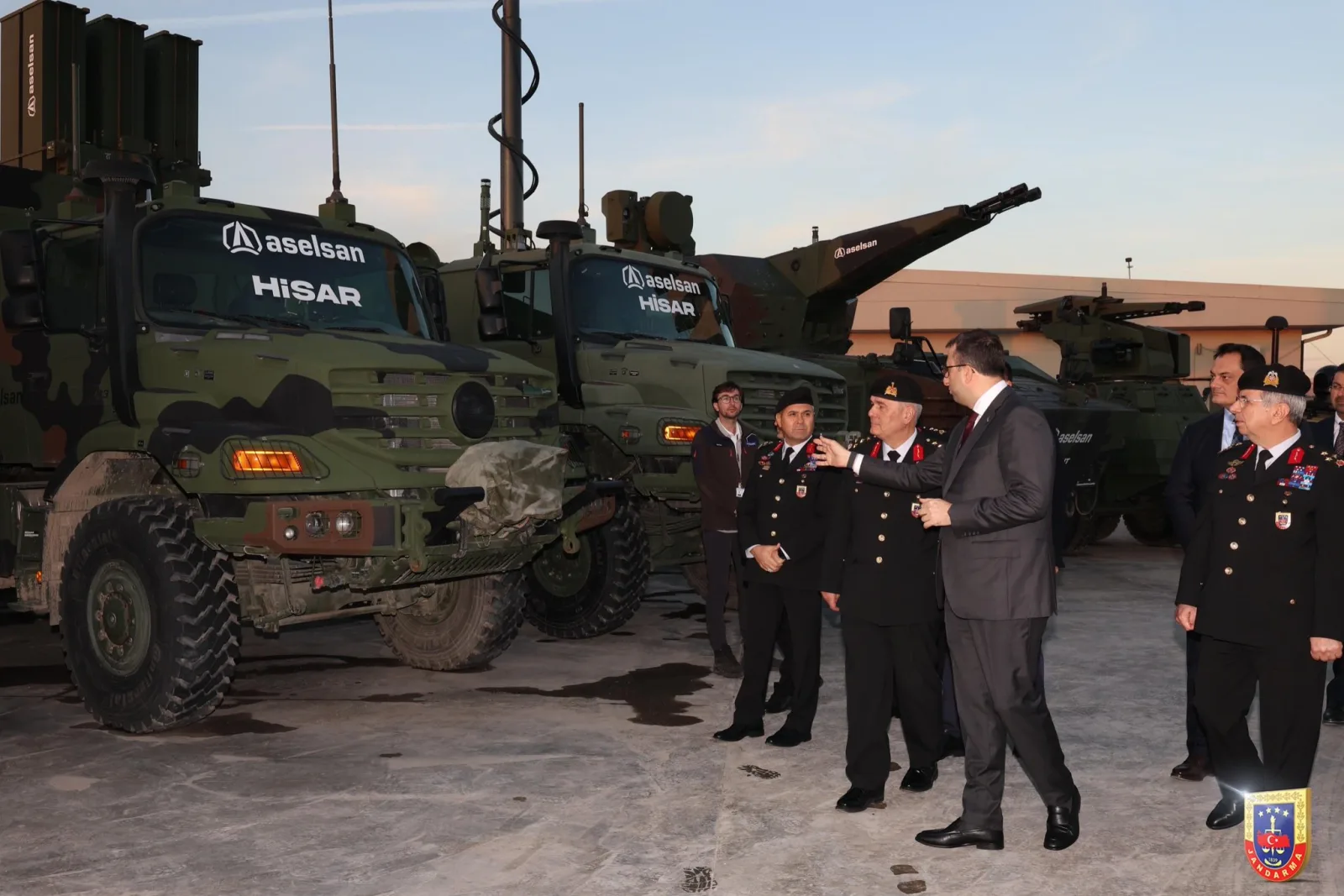
The HİSAR programme ran under SSB coordination, with ASELSAN (platform, command-control, radar) and ROKETSAN (missile) as partners. R&D on HİSAR-A dates back to 2011; the project later evolved into HİSAR-A+. Serial production began in December 2020, and the system entered Turkish Army inventory in May 2021. HİSAR-O(+) entered service on 25 January 2022. On 15 December 2023, new serial-production contracts for HİSAR and SİPER Product-1 were signed at SSB; according to an IRIS France analysis, these contracts targeted project completion in 2025. Turkish media reported additional ASELSAN/ROKETSAN serial-production contracts in July 2026; no official delivery count was disclosed. The family has since expanded with variants such as HİSAR-O100, HİSAR-RF (active-radar-guided ammunition) and HİSAR-A Autonomous.
| Feature | MIM-23 Hawk | Rapier Mk.2B | HİSAR-O(+) | HİSAR-A(+) |
|---|---|---|---|---|
| Origin | USA | UK (licensed/co-production, TR) | Türkiye | Türkiye |
| Developer | Raytheon | British Aerospace (licence) | ASELSAN / ROKETSAN | ASELSAN / ROKETSAN |
| Deployment | Towed | Towed | 6×6 vehicle, vertical launch | Vehicle-mounted/autonomous |
| Guidance | Semi-active radar | Not disclosed | IIR / active RF options | Not disclosed |
| Range | Not disclosed | Not disclosed | Per SSB head Haluk Görgün, a hit above 40 km was reported with RF-guided ammunition | Per IRIS France, acquisition/engagement range above 15 km |
| Entry into TAF service | Not disclosed (decades ago) | Post-1999 co-production | January 2022 | May 2021 |
How much is actually domestic?
Missile production is based at ROKETSAN (Elmadağ), while the vehicle platform, radar and command-control run through ASELSAN (Ankara), under SSB coordination. HİSAR-O’s RF-guided and IIR ammunition options are presented as products of this partnership. However, no independent breakdown of the missile’s internal components (seeker electronics, some sub-systems) was found in open sources — not disclosed. As with other files in this series, no verified public figure exists for what share of critical sub-components is imported. For that reason, this file avoids the term “fully indigenous,” preferring “a domestic architecture developed by ASELSAN and ROKETSAN under SSB coordination.”
Has it actually replaced the old systems?
Being gradually replaced. HİSAR-A+ has been in inventory since May 2021, HİSAR-O(+) since January 2022. An August 2024 OSINT report, citing satellite imagery from the Libya Update account, said HİSAR-O100 systems had replaced Hawk batteries at Al Watiya airbase — a single-source finding with no independent official confirmation. No official 2026 count of remaining active Hawk batteries nationwide was found. The picture for Rapier is similar: sources say HİSAR-A is “gradually” taking over its role, but no current figure for remaining Rapier units exists.
An important correction: the original calendar hypothesis linked Hawk, Rapier and Stinger to a single HİSAR family. Research did not confirm this. Stinger — a man-portable MANPADS — falls outside HİSAR’s vehicle/turret-based scope. Multiple independent sources show Stinger’s real successor is ROKETSAN’s SUNGUR/PORSAV family: SUNGUR entered Turkish Army inventory in July 2022, the Ministry of National Defence confirmed completed deliveries to Land Forces Command in March 2024, and the same month saw the first international export inquiries. Rather than forcing a false pairing, this file clarifies the real relationship — SUNGUR/PORSAV is a strong candidate for its own future file in this series.
International parallels
Simultaneously indigenising a layered air-defence architecture is not unique, but the scope here is broad: Poland moved from Soviet-licensed Strzała-2 to its own PIORUN design (file 2 in this series). India’s Akash and South Korea’s KM-SAM/Cheongung family followed similar logic for different legacy medium-range systems, with both processes taking over a decade and old systems remaining in parallel use for years. Türkiye’s distinguishing feature is running short- (HİSAR-A), medium- (HİSAR-O) and long-range (SİPER) indigenisation at once, within the same industrial ecosystem (ASELSAN–ROKETSAN–SSB), targeting three different foreign suppliers (the US, the UK, the US again) simultaneously.
Strategic and industrial outcome
Design-production-integration capacity for an active RF/IIR-guided, vertically-launched missile family was built at ASELSAN and ROKETSAN — a capability Türkiye lacked in the Hawk/Rapier era. SSB’s successive serial-production contracts (December 2023, July 2026) show that orders are recurring rather than one-off. No verified HİSAR export contract was found in this research — not disclosed — but SUNGUR receiving its first international inquiries in March 2024 is an indirect signal that this domestic architecture is exportable. The same ASELSAN-ROKETSAN division of labour recurs in ATMACA (the naval missile covered in file 3) and SİPER — suggesting a scalable model rather than a one-off platform.
Frequently Asked Questions
Has HİSAR fully replaced the Hawk?
Not fully. HİSAR-O has been in inventory since January 2022 and has reportedly replaced Hawk operationally at least at one Libyan base, but there is no official, dated statement that all Hawk batteries nationwide have retired.
Is Rapier still in use?
No current official figure exists for remaining Rapier units. Sources say HİSAR-A is taking over the role gradually.
What is replacing the Stinger?
Not HİSAR. Stinger’s real successor is ROKETSAN’s SUNGUR/PORSAV man-portable system, which entered inventory in 2022.
Is HİSAR fully indigenous?
The platform, command-control and missile production run through ASELSAN-ROKETSAN, but a full origin breakdown of some sub-components could not be verified in open sources, so this file avoids calling it “fully indigenous.”
What is HİSAR-O’s range?
SSB head Haluk Görgün has publicly stated a hit above 40 km with RF-guided ammunition; this is a single official claim this file could not independently verify.
Is HİSAR being exported?
No verified export contract for the HİSAR family itself was found. The related SUNGUR MANPADS received its first international inquiries in March 2024.
Sources
Primary: IRIS France — HİSAR/SİPER serial-production contracts analysis (3 Jan 2024); SSB head Haluk Görgün’s HİSAR-O statement (via CNN Türk); Army Technology — HİSAR-A project page; Army Recognition — SUNGUR/PORSAV as Stinger’s replacement.
Independent: Overt Defense — HİSAR-A+ induction / HİSAR-O mass production; Turdef — HİSAR-O replacing Hawk in Libya (OSINT); StrategyPage — Türkiye’s air defence transition; Defense Mirror — SUNGUR’s induction.
Other files in the From Imported to Indigenous series
From Cobra to ATAK: Türkiye’s Attack Helicopter Transition
From BTR-70/80 to ARLAN: Kazakhstan’s Licensed Production
From G3 to MPT-76: Türkiye’s Rifle Transition
From Licensed M109 to K9 Thunder: South Korea’s Howitzer Transition
From T-38 Talon to HÜRJET: Türkiye’s Jet Trainer Transition
From Agosta/Galerna to S-80 Plus: Spain’s Submarine Transition