From T-38 Talon to HÜRJET: Türkiye’s Domestic Jet Trainer Programme

From Imported to Indigenous series · File 9 · Sarp Güçlü
Class: A — Direct Replacement (intended relationship)
Status today: Still in development/first-delivery phase — the first production-configuration HÜRJET for the Air Force flew in August 2026, but no official delivery has occurred as of November 2026.
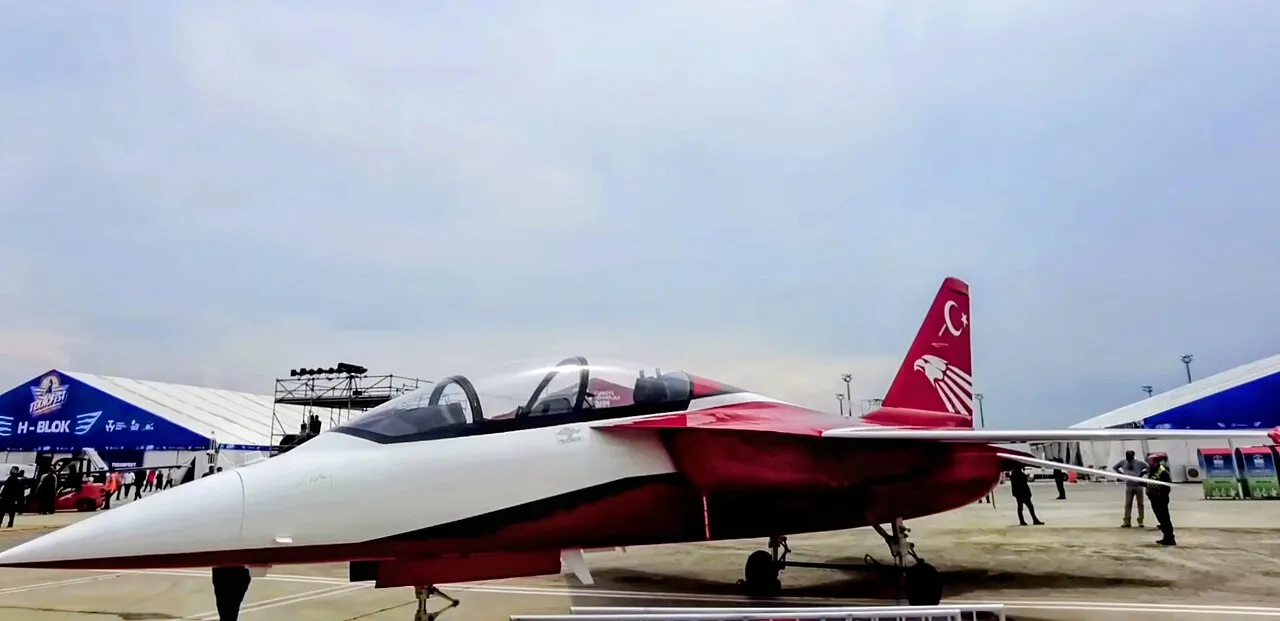
The Turkish Air Force has relied on the American-built Northrop T-38 Talon for advanced jet training for nearly half a century. Turkish Aerospace’s (TUSAŞ) single-engine HÜRJET was designed to take over that role, along with the aerobatic duties flown by the Turkish Stars’ NF-5 Freedom Fighters. As of November 2026, that handover has not actually begun in the inventory: the first production-standard HÜRJET for the Air Force only flew in August 2026.
What was the old system?
The T-38 Talon, built by Northrop (now Northrop Grumman), is a twin-engine, two-seat supersonic jet trainer. It entered Turkish Air Force service in 1979 and has formed the backbone of advanced jet training ever since. The War Zone reports roughly 68 T-38s remain in the fleet. Turkish Aerospace modernised the type’s avionics under a programme launched in 2007 — an upgrade that extended the airframe’s service life without changing its underlying 1960s-era design. The Turkish Stars display team has continued flying Canadair-built NF-5 Freedom Fighters from the same generation. Turkish Aerospace’s own product page states plainly that HÜRJET was conceived to replace both types with a single platform.
Why was a domestic replacement needed?
Turkish Aerospace says it developed HÜRJET after assessing both the global market for advanced jet trainers and its own experience designing and building training aircraft. The T-38 fleet’s uninterrupted service since 1979, combined with a 2007 upgrade that touched only avionics, left the underlying airframe and engine technology dated. Industry coverage also frames the programme around Türkiye’s shift toward more complex combat aircraft such as the KAAN, which arguably calls for a more advanced intermediate trainer — a framing that comes from trade press rather than an official document. Commercially, Turkish Aerospace designed HÜRJET to compete in a trainer market where, per The War Zone, South Korea’s KAI T-50/FA-50 family is currently the only serious rival.
How was the domestic product developed?
HÜRJET began as a privately funded Turkish Aerospace initiative in 2017; a formal development agreement with the Turkish government followed roughly a year later. In December 2022, the Presidency and Turkish Aerospace signed a contract covering 4 Block-0 aircraft. The first prototype (P1) flew on 25 April 2023, breaking the sound barrier and exceeding 45,000 feet on that flight. In April 2024, then-SSB president Haluk Görgün announced that 12 Block-1 aircraft had been added as a firm order on top of the Block-0 contract, with delivery dates to be moved up. The second prototype (P2) flew on 12 November 2024. At IDEF 2025 in July, Turkish Aerospace and Airbus Spain signed a cooperation agreement that gave the programme an international dimension; by December 2025, Spain’s Air and Space Force had selected HÜRJET for a 30-aircraft package. The first production-configuration aircraft built for the Turkish Air Force flew for 18 minutes on 30 August 2026.
Old vs. new: a comparison
| Spec | T-38M Talon | HÜRJET |
|---|---|---|
| Maker / origin | Northrop (USA) | Turkish Aerospace (Türkiye) |
| Engine | 2× GE J85 turbojet | 1× GE F404-104 turbofan (US-built, 17,700 lbf) |
| Turkish AF service entry | 1979 | Not confirmed (targeted 2026-2027, sources conflict) |
| First flight | 1959 (US programme) | 25 April 2023 (P1 prototype) |
| Max speed | Mach ~1.3 | Mach 1.4 (Turkish Aerospace) |
| Ceiling | ~55,000 ft | 45,000 ft (Turkish Aerospace) |
| Range | Not disclosed | 1,060 nm (Turkish Aerospace) |
| Cockpit | Tandem, 2-seat, analogue | Tandem, 2-seat, wide-area display avionics |
Sources: Turkish Aerospace official product page (HÜRJET figures), The War Zone / Calibre Defence (T-38 figures). Türkiye-specific T-38 range data was not disclosed.
How much of it is domestic?
- Engine: Imported — the US-built General Electric F404-104 turbofan. No domestic engine option has been announced for current production blocks.
- Avionics: Developed under Turkish Aerospace leadership; the breakdown of domestic vs. imported sub-components has not been disclosed.
- Software: Not disclosed.
- Weapons systems: A weapons-integration path has been announced for the HÜRJET-Y light-attack derivative; suppliers and ratios have not been disclosed.
- Production: Carried out on Turkish Aerospace’s serial production line in Ankara.
- Design: The airframe and overall design are Turkish Aerospace’s own; the propulsion system remains an imported dependency.
The same GE F404 engine family also powers South Korea’s KAI T-50 Golden Eagle, so this dependency is a feature of this aircraft class globally, not unique to HÜRJET.
Has it actually replaced the old system?
Still in development. The first production-configuration HÜRJET built for the Air Force completed an 18-minute first flight on 30 August 2026 — a delivery-configuration aircraft, not a prototype. But no confirmed delivery date has materialised as of November 2026: Turkish Aerospace’s own product page still lists 2026, CEO Mehmet Demiroğlu told press the first delivery is now expected in early 2027, and the SSB’s 2024-2028 strategy document projects 2027 for the 4 Block-0 aircraft and 2028-2029 for the 12 Block-1 aircraft. These three sources do not line up. What is confirmed is that the roughly 68 T-38s remain in active advanced-training service, with no verified record of any being replaced by a HÜRJET in the inventory.
Global parallels
Türkiye is not alone: the US Air Force is itself replacing its T-38 Talon fleet with the Boeing T-7A Red Hawk, a programme that has faced its own delays. South Korea’s KAI T-50 Golden Eagle family, sharing HÜRJET’s GE F404 engine class, entered service earlier — see Envanter Medya’s own HÜRJET rivals breakdown. Earlier files in this series, including the Cobra-to-ATAK transition and South Korea’s own licensed-to-indigenous K9 Thunder shift, show how phased replacements can take years.
Strategic and industrial outcome
HÜRJET’s clearest achievement to date came in December 2025, when Spain’s Air and Space Force selected the platform for a 30-aircraft package — the first export of a Turkish jet trainer to a NATO and EU member state. The Turkish Aerospace-Airbus partnership envisions part of production taking place in Spain, with reported figures putting the package’s value at roughly €2.6 billion. The US-built F404-104 engine at the platform’s core still ties third-country exports to Washington’s approval process, meaning HÜRJET is not yet a fully independent export product. Turkish Aerospace has also entered the UK’s new jet trainer competition as a candidate, signalling ambitions beyond Türkiye and Spain.
FAQ
Which aircraft is HÜRJET meant to replace?
According to Turkish Aerospace’s own product page, HÜRJET was developed to take over the advanced jet-training role flown by the T-38 Talon and the aerobatic display role flown by the Turkish Stars’ NF-5 Freedom Fighters.
When will HÜRJET actually be delivered to the Turkish Air Force?
Sources disagree. Turkish Aerospace’s product page still lists 2026. CEO Mehmet Demiroğlu told press the first delivery is now expected in early 2027. The Presidency of Defence Industries’ (SSB) 2024-2028 sector strategy document projects the 4 Block-0 aircraft for 2027 and the 12 Block-1 aircraft for 2028-2029.
Is HÜRJET’s engine Turkish-made?
No. It flies on a single US-built General Electric F404-104 turbofan, which means any third-country export still needs Washington’s approval.
Who has ordered HÜRJET?
The Turkish Air Force has 16 aircraft under contract (4 Block-0, 12 Block-1). Spain’s Air and Space Force separately selected HÜRJET for a 30-aircraft package via a TUSAŞ-Airbus partnership, with deliveries planned from 2028.
When will Türkiye’s T-38s be retired?
No official retirement schedule has been published. The roughly 68 T-38s in service continue flying advanced training sorties until HÜRJET deliveries actually begin.
Is there an armed version of HÜRJET?
Yes, a light-attack derivative called HÜRJET-Y has also been announced as part of the development programme, though its own delivery timeline is a separate, unconfirmed question.
Sources
- Turkish Aerospace, HÜRJET official product page
- Presidency of Defence Industries (SSB), 2024-2028 Sector Strategy Document (figures via yeniakit.com.tr)
- Defense Mirror, “Turkish Military Orders 12 Hurjet Block-1 Aircraft”
- The War Zone, “Turkey’s First Homegrown Manned Tactical Jet Has Flown”
- The Aviationist, “First Production-Representative Hürjet Jet Trainer Makes Maiden Flight”
- Caliber.az, “TUSAŞ to Deliver First HÜRJET Aircraft to Turkish Air Force in 2027”
- Janes, “Turkish Air Force places first orders for HÜRJET Block 1 jet trainer and Gökbey helicopter” (22 April 2024)
Other files in the From Imported to Indigenous series
- ATMACA — replacing the RGM-84 Harpoon (phased)
- HAL Tejas — replacing the MiG-21 (India)
- T129 ATAK — replacing the AH-1P/AH-1W Cobra (phased)
- ARLAN — alongside the BTR-70/80 (Kazakhstan, licensed production)
- MPT-76/MPT-55 — replacing the G3 (phased)
- K9 Thunder — replacing the M109A2 (South Korea, licensed-to-indigenous)