Malaysia–Türkiye Defence Industry Relations: Three Services, Two Shipyards, One Local Line (2011–2026)


The Malaysia–Türkiye defence industry line does two things alone in this series: most of its prices are officially open, and its naval line runs through two separate Turkish shipyards. A line that began in 2011 with an 8×8 vehicle built in Malaysia launched three corvettes within eleven weeks in 2026 and took the letter of acceptance for a second coast guard ship. In between came three ANKAs, an Aselsan company and two capital visits. This file reads fifteen years in one table.
This is the series’ sixth bilateral file. Malaysia’s corvette and ANKA decisions were examined in the ninth file as two programmes; that data is not repeated. What is added is the rest: the AV8 Gempita, Desan’s two mission ships, Aselsan Malaysia and the LIMA 2025 agreements, the framework meetings and the KAAN interest. The pattern set in the Pakistan, Poland, Saudi Arabia, Qatar and Indonesia files applies: contract, letter of acceptance, MoU, report and interest are written apart. The Turkish original is here.
Short answer: transparent prices, two shipyards, one local line
In twenty-two files the price was mostly a press figure or absent. In Malaysia four of five items were disclosed officially: corvettes €536.5 million, ANKA $91.6 million, MPMS-1 $68.8 million and MPMS-2 $83.75 million; for the AV8, FNSS’s $559 million letter of acceptance was public too. The second difference is on the naval line: buyers in the series worked with one shipyard; in Malaysia the Navy’s corvettes are built at Istanbul Shipyard with STM as prime, and the coast guard’s mission ships by Desan. The third difference is the oldest item: the AV8 Gempita has been built in Pahang since 2014 — the Turkish line’s only local-assembly case in Malaysia. The component this file adds to the Turkish package is transparent pricing; the second is a two-shipyard naval line.
| Area | Item | Turkish company | Malaysian party | Date · value | Status |
|---|---|---|---|---|---|
| Land | 257 AV8 Gempita 8×8, 12 configurations | FNSS (design, PARS) | DEFTECH (Pahang production) | Feb 2011 contract; Jun 2011 · $559m | Production and delivery; total undisclosed |
| Air | 3 ANKA-S + ground control station + 2-year support | Turkish Aerospace | Air Force; G7 Aerospace | 25 May 2023 (LIMA) · $91.6m | Delivering; first aircraft Jun 2025, first flight 3 Apr 2026 |
| Naval | 3 LMS Batch 2 corvettes (Ada-derived) | STM; Istanbul Shipyard | Navy (G2G) | Jun 2024 · €536.5m | All three launched (May–Aug 2026); delivery end-2027 |
| Naval | Havelsan CMS, CENK 3D, AKREP, ATMACA | Havelsan, Aselsan, Roketsan | — | Within corvette package | Integration |
| Coast guard | MPMS-1 multi-purpose mission ship (99 m) | Desan Shipyard | Home Ministry / MMEA | Feb 2025 · $68.8m | Under construction; steel cut Jul 2025 |
| Coast guard | MPMS-2 + unmanned surface vessel | Desan Shipyard | Home Ministry / MMEA | 7 Jan 2026 · $83.75m | Letter of acceptance; completion Dec 2027 |
| Electronics | Aselsan Malaysia Sdn Bhd (100%) | Aselsan | — | 2017 | Active; business development and support |
| Electronics | Comms-crypto with Sapura; Tarantula systems with MILDEF | Aselsan | Sapura Secured Technologies; MILDEF | May 2025 (LIMA) | Cooperation agreement and MoU; no quantity |
| Naval | Desan shipyard plan in Malaysia | Desan | — | Jan 2026 | Report |
| Fighter | KAAN | Turkish Aerospace | G7 Aerospace (statement) | 2024–2025 statements | Interest |
| Framework | 11 agreements (including defence) | — | — | 10–11 Feb 2025 | Signed |
| Framework | First High-Level Strategic Cooperation Council | — | — | 7 Jan 2026, Ankara | Held; joint statement |
Three things the table says. Six of twelve items carry an official price; no other relationship in the series has that ratio. Six Turkish companies — FNSS, Turkish Aerospace, STM, Desan, Aselsan and the Havelsan-Roketsan subsystems — and four local partners on the Malaysian side. And unlike Indonesia this is not every layer, unlike Qatar not capital: what Malaysia takes is openly priced, scheduled product and one local assembly line.
What did Malaysia need?
Malaysia holds one of Asia’s mid-sized defence budgets and a wide maritime zone facing the South China Sea; its inventory is a mix of Russian Su-30MKM, US F/A-18D, Korean FA-50 and French, German and Spanish ships and submarines. The ninth file told the need through the sea: a corvette for presence and a MALE for wide-area surveillance. This file adds two more layers: a coast guard (MMEA) mission ship able to stay at sea for weeks and the Army’s 8×8 mechanisation that began in 2011. All four came with the same constraint — open budget, open calendar — and the Turkish line gave an open price on all four.
Land: the AV8 Gempita, the line’s oldest item
In February 2011 the Malaysian government contracted DEFTECH to design, develop and produce 257 armoured vehicles in 12 configurations; FNSS signed the $559 million letter of acceptance in June 2011. The vehicle derives from the PARS 8×8 and is built at DEFTECH’s Pahang plant; the first 12 were delivered in December 2014. The total delivered has not been officially disclosed; the press reported 118 vehicles as of May 2023 and the file keeps that as a press figure. Turkish armour appeared in the series as finished product in Estonia and Africa, a joint venture in Romania and joint design in Indonesia; in Malaysia it is licensed local production and the line’s fifteen-year root.
Air: ANKA and G7 Aerospace
The $91.6 million contract signed at LIMA on 25 May 2023 covers three ANKA-S, a ground control station and two years of support. The first aircraft was delivered in June 2025, made its first flight in Malaysia on 3 April 2026 and flew validation sorties before the Royal Malaysian Air Force’s operational declaration; the delivery date for all three has not been announced. Local partner G7 Aerospace described the ANKA work as the basis of a “long-term partnership” for Turkish Aerospace products up to KAAN — a company statement, written as such. The AKINCI–MQ-9B comparison shows where the heavier class sits above ANKA.

Naval: three corvettes in eleven weeks
The LMS Batch 2 programme, begun with a government-to-government letter of acceptance in June 2024, is worth €536.5 million; steel cut December 2024, keel April 2025. Three corvettes of about 2,500 tonnes and 99.56 metres, derived from the Ada class, were launched at Istanbul Shipyard on 24 May, 7 June and 9 August 2026 — three ships in eleven weeks. The systems are Turkish: a Havelsan combat management system, Aselsan CENK 3D and AKREP radars, Roketsan ATMACA. Delivery target is end-2027. Türkiye’s naval export projects show the Ada line reaching Malaysia while Malaysia runs its own LCS programme at a local yard; two lines in one navy.
Coast guard: Desan and two MPMS
The naval line’s second shipyard is Desan. During Erdoğan’s visit to Kuala Lumpur on 10–11 February 2025, Malaysia’s Home Ministry and Desan signed the letter of acceptance for MPMS-1, a 99-metre multi-purpose mission ship for the coast guard (MMEA): $68.8 million, a helicopter deck, two aerial drones, four fast interceptor boats; steel cut July 2025. On 7 January 2026, at the first High-Level Strategic Cooperation Council in Ankara, the MPMS-2 letter of acceptance was exchanged before Anwar Ibrahim and Erdoğan: $83.75 million, completion December 2027, an unmanned surface vessel in the package. Desan’s intention to open its first overseas shipyard in Malaysia was reported in January 2026; there is no contract, and the file writes it as a report.
Electronics: Aselsan Malaysia and LIMA 2025
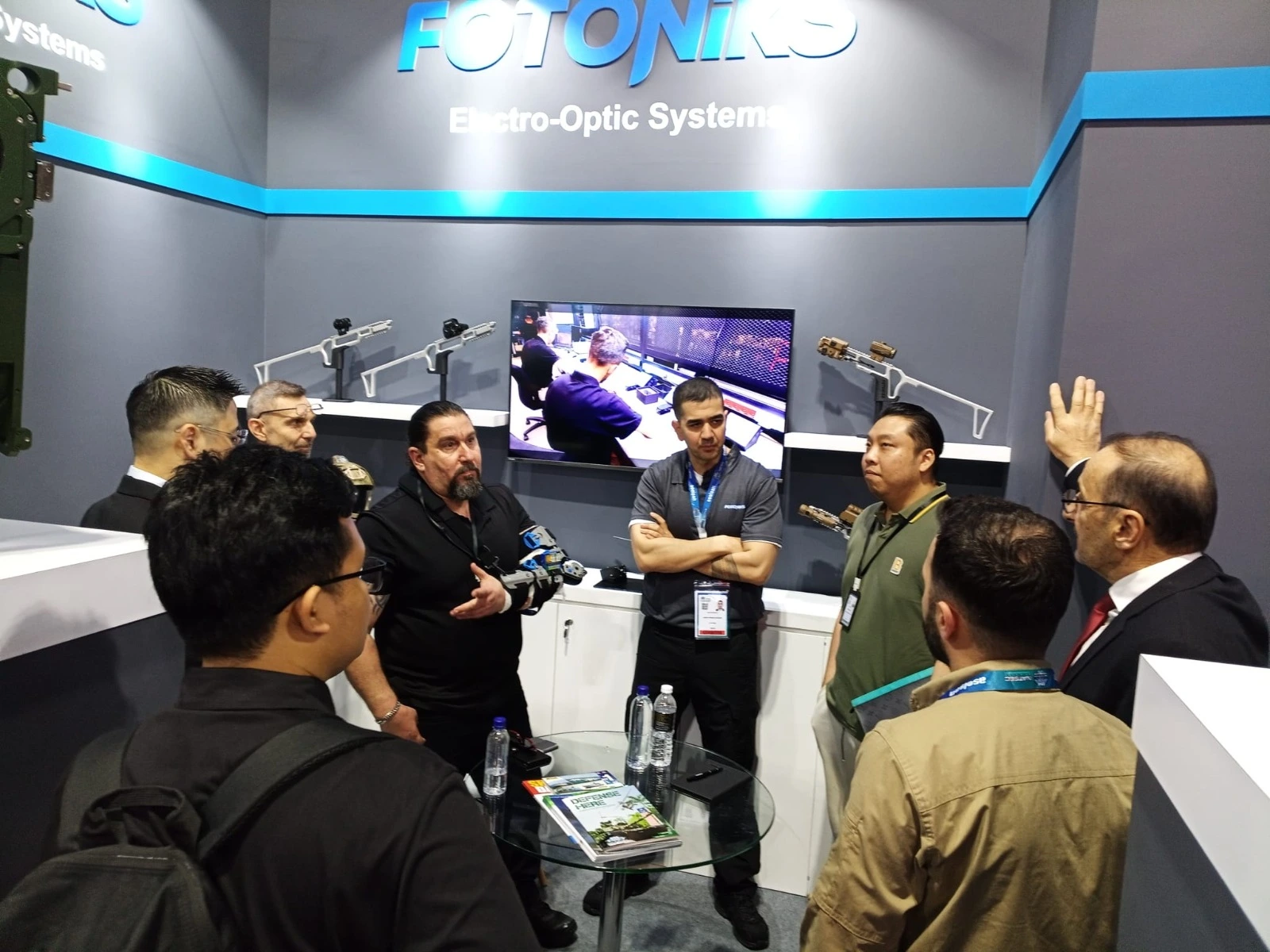
Aselsan Malaysia Sdn Bhd is the wholly owned company Aselsan founded in Kuala Lumpur in 2017, a business development and customer support point focused on remote weapon stations. In May 2025 at LIMA two cooperation agreements and an MoU were signed: with Sapura Secured Technologies on joint development and production in military communications and cryptography, with MILDEF on remote weapon, communications, electro-optical and command-and-control systems for the Army’s Tarantula armoured vehicles. Quantities and values were not disclosed. Turkish electro-optics makers at DSA 2026 show the subsystem line spilling beyond the corvette and armoured-vehicle packages.
Why prices are written here
For the first time in the series four official prices sit side by side in one relationship: corvettes €536.5 million, ANKA $91.6 million, MPMS-1 $68.8 million, MPMS-2 $83.75 million; the AV8’s $559 million letter of acceptance is also public. Malaysia’s tender and MMEA statements disclose value. This is the exact opposite of the “value undisclosed” rows in the Gulf and Saudi Arabia, and the reason the cost score is high here. ANKA is the best unit example: three aircraft, one station and two years of support for $91.6 million.
Training and munitions
Training runs through two channels: ANKA crews at Turkish Aerospace, corvette crews in Istanbul through the acceptance trials; for the AV8 the DEFTECH line has worked with local technical staff for over a decade. Munitions are the Turkish package’s “munitions in the same package” component: the corvettes come with ATMACA, making Malaysia the second export user after Indonesia. The third-country licence problem does not exist on the Turkish line; the BrahMos-A evaluation for Malaysia’s Su-30MKM fleet depends on the Russian-Indian line’s own calendar.
Alternatives and complements
| Item | Turkish offer | Other line | Outcome |
|---|---|---|---|
| 8×8 armoured vehicle | AV8 Gempita (PARS-based, DEFTECH-built) | European and South African 8x8s | AV8; local production since 2014 |
| MALE UAV | ANKA-S | Chinese and US lines | ANKA, 2023 |
| Corvette / LMS | LMS Batch 2 (Ada-derived) | Local LCS (Maharaja Lela); Chinese LMS Batch 1 | LMS Batch 2 Turkish; LCS local continues |
| Coast guard ship | Desan MPMS | Local yards | MPMS-1 and MPMS-2 Desan |
| Light combat aircraft | HÜRJET (offer) | FA-50 (Korea), 18 aircraft, 2023 | FA-50; Turkish offer not selected |
| Fighter | KAAN (interest) | Su-30MKM, F/A-18D in inventory | No decision |
| Subsystems | Aselsan (Sapura, MILDEF) | Western subsystem makers | Agreements; no quantity |
The row to read is the fifth: Malaysia met its light combat aircraft need with 18 FA-50s from Korea in 2023; Malaysia is not among HÜRJET’s export customers. The file writes it plainly: the Turkish line was not selected in one tender and was selected for ANKA the same year. After Azerbaijan, it is the series’ clearest case of a buyer placing different suppliers side by side item by item. There is no Turkish offer in the fighter layer and KAAN is at interest stage; the file makes no superiority claim.
KAAN: interest, not a contract
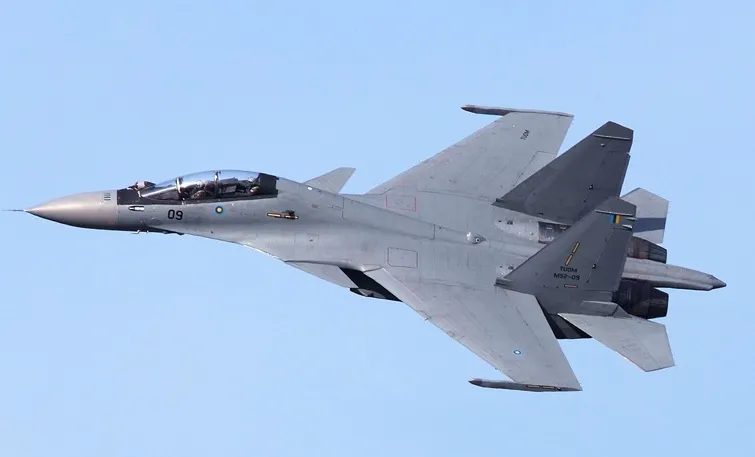
SSB president Haluk Görgün said in 2024 that Türkiye was open to cooperating with Malaysia on KAAN; Turkish Aerospace said at LIMA 2025 that KAAN exports depend on Türkiye’s own acquisition; G7 Aerospace described the ANKA partnership as a basis for Turkish Aerospace products including KAAN. All three are statements; there is no contract, talks calendar or quantity. Indonesia had a signature, Saudi Arabia a “final stage” statement; Malaysia has interest. The file keeps the item at interest status and makes no forecast.
The Malaysian version of the Turkish package
In the Gulf we counted four components: record, munitions, permission and production share. The Balkans added donation and in-alliance reference, Central Asia the full catalogue, Pakistan the buyer’s shipyard and reverse flow, Poland subsystem integration and alliance logistics, Saudi Arabia the localisation ladder, Qatar buyer capital and a base, Indonesia full-layer partnership. Malaysia adds two components: transparent pricing and a two-shipyard naval line.
Transparent pricing
Price openness comes from the buyer’s institutions: Malaysia’s tender and coast guard statements publish contract values. The result is that for the first time in the series four items of a Turkish package can be read at unit-price level. Poland’s $270 million TB2 package and Qatar’s ARES values were open one by one; in Malaysia land, air, naval and coast guard are open at once. The component is neither for nor against the Turkish line; it makes the file usable.
Two-shipyard naval line
The naval line ran through one shipyard elsewhere in the series: STM and the buyer’s yard in Pakistan, TAIS in Indonesia. In Malaysia two buying agencies work with two Turkish shipyards: the Navy with STM under the G2G model, the Home Ministry with Desan under a letter-of-acceptance model. If Desan’s intention to open a shipyard in Malaysia materialises, the naval line moves to construction in the buyer’s country for the first time; today it is a report. The “permission from a single capital” component seen in Central Asia applies here too; the difference is two shipyards working in one country under two contract models.
What changed in fifteen years?
The timeline shows three phases: 2011–2017 the AV8 and the Aselsan company, 2023–2024 ANKA and the corvettes, 2025–2026 Desan, the Aselsan agreements and the framework meetings. The turning point is 2026: MPMS-2 in January, ANKA’s first flight in April, three corvette launches from May to August.
What is official and what is at report stage
| Item | Source | Status | Note |
|---|---|---|---|
| AV8 Gempita 257 | Malaysian government, FNSS, DEFTECH | Official contract | Delivered total undisclosed; 118 per press (May 2023) |
| ANKA 3 | Turkish Aerospace, RMAF | Official contract | First delivery Jun 2025; no completion date |
| LMS Batch 2 | STM, Malaysian MoD | Official (G2G) | Three launched; delivery end-2027 |
| MPMS-1 | Desan, MMEA | Official letter of acceptance | $68.8m; steel cut Jul 2025 |
| MPMS-2 | Desan, MMEA, 7 Jan 2026 | Official letter of acceptance | $83.75m; Dec 2027 |
| Aselsan–Sapura, Aselsan–MILDEF | Aselsan, LIMA 2025 | Cooperation agreement / MoU | No quantity or value |
| Desan Malaysia shipyard | Press, Jan 2026 | Report | No contract |
| KAAN | SSB, Turkish Aerospace, G7 Aerospace statements | Interest | No talks calendar |
| 11 agreements; first HLSCC | Malaysian MFA, Turkish Presidency | Official | 10–11 Feb 2025; 7 Jan 2026 |
The table shows where the next rung lies: if Aselsan–Sapura co-development becomes a contract and the Desan shipyard plan becomes construction, the Malaysian line enters the local-production layer a second time after the AV8. Today one is an MoU and the other a report.
EM-PFI assessment
The score assesses the whole relationship, not two programmes. The corvette and ANKA decisions were scored 77 in the ninth file; the whole relationship sits four points higher with AV8 local production, the two-shipyard naval line, the Aselsan agreements and transparent prices.
| Criterion | Weight | Score | Rationale |
|---|---|---|---|
| Operational need | 20 | 18 | Sea control, EEZ surveillance, coast guard, 8×8 mechanisation |
| Technical fit | 15 | 13 | Ada-derived corvette, MALE, 99 m mission ship, PARS-based 8×8 |
| Geography and climate | 10 | 9 | Tropical sea; ANKA flew in Malaysia in April 2026 |
| Inventory compatibility | 10 | 7 | Russian, US, Korean and European mix; Turkish line a separate layer |
| Logistics | 10 | 7 | Long distance; Aselsan Malaysia, DEFTECH and G7 Aerospace support points |
| Cost-effectiveness | 10 | 9 | Four official prices; the most transparent relationship in the series |
| Delivery and production | 10 | 8 | ANKA in two years; three corvettes launched in eleven weeks; AV8 continuing |
| Technology transfer | 5 | 3 | AV8 licensed local production; Sapura co-development at MoU stage |
| Local production | 5 | 3 | DEFTECH Pahang line; corvettes and ANKA in Türkiye; Desan shipyard a report |
| Modernisation path | 5 | 4 | MPMS-2, Aselsan line; KAAN interest |
| Total | 100 | 81 | Strong preference |
The breakdown sits in the middle of the series’ backbone: fast delivery, medium industrial share. It differs from Estonia by the AV8 local line, from Indonesia by corvettes and ANKA being built in Türkiye. Similar speed to Qatar, but local production and open prices instead of capital.
Risks and limits
This section exists not to weaken the Turkish product but to make the file usable.
| Item | Status | What it means |
|---|---|---|
| AV8 delivered total | No official total; 118 per press | Contract quantity and inventory quantity differ |
| ANKA completion | First aircraft delivered; no date for the third | Delivery score medium-high |
| Corvette acceptance trials | Outfitting and sea trials in 2027 | Launch is not delivery; the file draws the line |
| MPMS-1 delivery date | Sources differ | The file writes no date |
| Aselsan agreements | No quantity or value | Subsystem line cannot be measured |
| Desan shipyard and KAAN | Report and interest | May not become contracts |
| Light combat aircraft | FA-50 selected (2023) | Turkish offer not selected in one tender; written plainly |
| Reverse flow | None in product | Local partner network flows back |
Where is this line going?
Back to the opening definition: transparent prices, two shipyards, one local line. Malaysia took from Turkish industry openly priced, scheduled product — an 8×8 armoured vehicle, a MALE, corvettes, mission ships — and opened its local partner network in return: DEFTECH as producer, G7 Aerospace as partner, Sapura and MILDEF as Aselsan’s counterparts. No other relationship in the series is priced this openly; Indonesia is deeper in co-production and Pakistan wider in reverse flow, but neither is as legible as Malaysia. Twelve items in fifteen years, six Turkish companies, two shipyards and four official prices: that is the line’s measure.
The next rung depends on two items: Aselsan–Sapura co-development becoming a contract and Desan’s shipyard plan becoming construction. If both do, the Malaysian line moves to local production a second time after the AV8; if not, it stays as it is — openly priced product, two shipyards, one local line — and that is a middle-upper rung in the series. The 2027 corvette deliveries, MPMS-2 and LIMA 2027 are the places to watch. This file wrote only what was signed or delivered.
Reading the line beside Moscow, Washington and Seoul
For a reader who follows the Russian, US and Korean lines into Malaysia, the Turkish line is neither a replacement nor a rival. Russia holds the Su-30MKM, the US the F/A-18D, Korea the FA-50 that won the light combat aircraft tender in 2023; France, Germany and Spain hold ships and submarines. The Turkish line entered the layers those lines left open — a locally built 8×8, a MALE, an Ada-derived corvette, a coast guard mission ship — and did so with published prices. Five lines coexist in one inventory, each in its own segment, and this file makes no claim about which is superior. The one sentence to take away: the Malaysian line is the only case in the series where Turkish industry gave a country openly priced product across three services and the coast guard, worked through two shipyards and carried a fifteen-year local assembly line.
Frequently asked questions
What has Malaysia bought from Türkiye?
Verified items: 257 AV8 Gempita 8×8 (DEFTECH–FNSS; government–DEFTECH contract February 2011, FNSS’s $559 million letter of acceptance June 2011; built in Pahang, first delivery December 2014), three ANKA-S with a ground control station (LIMA, 25 May 2023, $91.6 million; first delivered June 2025), three LMS Batch 2 corvettes (letter of acceptance June 2024, €536.5 million; launched May–August 2026) and two multi-purpose mission ships from Desan (MPMS-1 February 2025, $68.8 million; MPMS-2 7 January 2026, $83.75 million). Corvette and ANKA details are in the ninth file (Turkish).
What is the AV8 Gempita?
A multi-role 8×8 armoured vehicle derived from FNSS’s PARS design and built at Malaysia’s DEFTECH plant in Pahang; 257 vehicles in 12 configurations. The Malaysian government contracted DEFTECH in February 2011 and FNSS signed a $559 million letter of acceptance in June 2011; the first 12 vehicles were delivered in December 2014. The total delivered has not been officially disclosed; the press reported 118 vehicles as of May 2023. It is the line’s oldest item and the only local-assembly case of the Turkish line in Malaysia.
Where is LMS Batch 2?
The three-corvette programme that began with a government-to-government letter of acceptance in June 2024 is worth €536.5 million; steel cut December 2024, keel April 2025, launches on 24 May (Tunku Laksamana Abdul Jalil), 7 June (Raja Laut) and 9 August 2026 (Tunku Osman Jewa). The roughly 2,500-tonne ships derived from the Ada class carry a Havelsan combat management system, Aselsan CENK 3D and AKREP radars and Roketsan ATMACA. Delivery target is end-2027. Prime contractor STM, built at Istanbul Shipyard.
What is the MPMS and who builds it?
A 99-metre multi-purpose mission ship built by Desan Shipyard for the Malaysian Maritime Enforcement Agency (MMEA, the coast guard): helicopter deck, two aerial drones, four fast interceptor boats. The MPMS-1 letter of acceptance was signed during Erdoğan’s visit in February 2025 ($68.8 million; steel cut July 2025). The MPMS-2 letter of acceptance was exchanged in Ankara on 7 January 2026 before Anwar Ibrahim and Erdoğan: $83.75 million, completion December 2027; the package includes an unmanned surface vessel. Desan’s intention to open a shipyard in Malaysia was reported in January 2026; there is no contract.
What does Aselsan do in Malaysia?
Aselsan Malaysia Sdn Bhd is the wholly owned company Aselsan founded in Kuala Lumpur in 2017, a business development and customer support point focused on remote weapon stations. At LIMA 2025 two cooperation agreements and an MoU were signed: with Sapura Secured Technologies on joint development and production in military communications and cryptography, and with MILDEF on remote weapon, communications, electro-optical and command-and-control systems for the Army’s Tarantula armoured vehicles. Quantities and values were not disclosed.
Will KAAN be sold to Malaysia?
No decision. SSB president Haluk Görgün said in 2024 that Türkiye was ‘open’ to cooperating with Malaysia on KAAN; Turkish Aerospace said at LIMA 2025 that exports depend on Türkiye’s own acquisition; G7 Aerospace described the ANKA partnership as the basis of a ‘long-term partnership’ for future Turkish Aerospace products including KAAN. The file keeps this at interest status; Malaysia met its light combat aircraft need with 18 FA-50s from Korea in 2023.
Why are the prices so open?
Malaysia’s public procurement system and MMEA statements disclose values: corvettes €536.5 million, ANKA $91.6 million, MPMS-1 $68.8 million, MPMS-2 $83.75 million, AV8 $559 million. It is the only file in the series where four official prices sit in one relationship, which is why the cost score is high. The Aselsan agreements’ values were not disclosed.
What were Malaysia’s alternatives?
In fighters, Russia (Su-30MKM, with a BrahMos-A evaluation), the US (F/A-18D) and Korea (18 FA-50, 2023); in major ships, the local LCS/Maharaja Lela programme; in MALE UAVs ANKA was selected in 2023; in 8x8s the PARS-based AV8 in 2011. The Turkish line did not enter the fighter layer; it grew in the corvette, MALE, coast guard vessel and 8×8 layers. The file makes no superiority claim.
What has Türkiye received from Malaysia?
No verified reverse flow of product. What flows back is a local partner network: DEFTECH as producer, G7 Aerospace as ANKA partner, Sapura and MILDEF as Aselsan’s counterparts.
Where does this relationship sit in the series?
The sixth bilateral file. The ninth file’s two-programme score was 77; the whole relationship scores 81 with AV8 local production, the two-shipyard naval line, the Aselsan agreements and transparent prices. Indonesia is co-production on every layer, Qatar capital; Malaysia’s distinctive components are transparent pricing and a two-shipyard naval line.
What does the EM-PFI score mean?
Malaysia × Turkish defence industry: 81/100, ‘Strong preference’ band. Among the series’ highest on cost-effectiveness — prices are official; medium on technology transfer and local production — AV8 local assembly and Sapura co-development, but corvettes and ANKA built in Türkiye. It is Envanter Medya’s editorial assessment.
Are the ANKA deliveries complete?
The first ANKA-S was delivered to Malaysia in June 2025 and made its first flight in Malaysia on 3 April 2026; the Royal Malaysian Air Force flew validation sorties before declaring operational status. The delivery date for all three aircraft has not been officially announced; the file writes ‘delivery ongoing’.
Why do two shipyards matter?
In the series the naval line mostly ran through one shipyard. In Malaysia the corvettes are built at Istanbul Shipyard with STM as prime and the coast guard ships by Desan; two buying agencies (the Navy and MMEA), two contract models (G2G and a Home Ministry letter of acceptance). If Desan’s intention to open a shipyard in Malaysia materialises, the naval line moves to local construction for the first time; today it is a report.
What did the 2025–2026 framework meetings bring?
During Erdoğan’s visit to Kuala Lumpur on 10–11 February 2025, 11 agreements including defence were signed and the MPMS-1 letter of acceptance issued. At the first High-Level Strategic Cooperation Council in Ankara on 7 January 2026 the MPMS-2 letter of acceptance was exchanged; the joint statement commits to deepening high-technology projects in the defence industry ecosystem. These are frameworks; items that became contracts are written separately in the table.
What comes next?
On the verified calendar: outfitting and acceptance trials of the three corvettes (end-2027), MPMS-1 construction, MPMS-2 (December 2027) and completion of ANKA deliveries. The Desan shipyard and KAAN are at report and interest stage; Aselsan–Sapura co-development has not become a contract. This file writes only what was signed or delivered.
Other files in the series
The “Why They Chose the Turkish Defence Industry” series goes beyond individual export headlines to examine the buyer’s need, the alternatives on the table and the contract structure.
- Why do Gulf states choose Turkish drones?
- Why is the Turkish defence industry growing in the Balkans?
- Why are Central Asian states turning to Turkish drones?
- Pakistan–Türkiye defence industry relations
- Poland–Türkiye defence industry relations
- Saudi Arabia–Türkiye defence industry relations
- Qatar–Türkiye defence industry relations
- Indonesia–Türkiye defence industry relations
The full series and regional breakdowns are on the Türkiye defence exports hub (Turkish). For the amphibious side of FNSS see the ZAHA file.
Sources and method
- Malaysian Ministry of Foreign Affairs — Erdoğan’s official visit (10–11 February 2025); joint statement of the first High-Level Strategic Cooperation Council (Ankara, 7 January 2026)
- Malaysian Maritime Enforcement Agency (MMEA) and Desan Shipyard — MPMS-1 letter of acceptance (February 2025), steel cut (July 2025); MPMS-2 letter of acceptance and $83.75m value (7 January 2026)
- STM and Istanbul Shipyard statements — LMS Batch 2 steel cut (December 2024), keel (April 2025), launch ceremonies (24 May, 7 June, 9 August 2026)
- Turkish Aerospace and the Royal Malaysian Air Force — ANKA contract (LIMA, 25 May 2023); first delivery (June 2025); first flight (3 April 2026)
- FNSS and DEFTECH statements — AV8 Gempita letter of acceptance (June 2011); first delivery (December 2014)
- Aselsan 2024 annual report and LIMA 2025 statement — Aselsan Malaysia Sdn Bhd; Sapura Secured Technologies and MILDEF agreements (May 2025)
- SSB and Turkish Aerospace statements — statements on KAAN cooperation (2024; LIMA 2025)
- International defence press — AV8 delivered total (press), Desan shipyard plan and items at report status marked in the tables
Method note. Every item is written with its status — contract, letter of acceptance, MoU, report, interest; MoUs and interest are not presented as contracts. The AV8 delivered total is undisclosed, so the press figure is marked as press; the MPMS-1 delivery date differs across sources and is not written. The FA-50 decision is written as Malaysia’s own tender outcome; the Russian, US and Korean lines are given as separate layers, not rivals; no superiority claim. EM-PFI is Envanter Medya’s editorial assessment, not an official index.