Raytheon wins $1.8 billion contract for U.S. Navy’s SPY-6 radars

Raytheon, a business of U.S. defense group RTX, has been awarded a roughly $1.8 billion hardware production and sustainment contract for the U.S. Navy’s next-generation AN/SPY-6 family of radars. In a statement dated 21 July 2026, the company said the award is a modification to a contract first signed in 2022, and that the cumulative value could exceed $3.3 billion if all options are exercised.
What the contract covers
According to the U.S. Department of Defense contract announcement, the deal covers hardware production, spares and sustainment support for the AN/SPY-6(V) radar family. Structured as a fixed-price-incentive and firm-fixed-price arrangement, the work is scheduled to run through 2031 should every option be taken up.
Production will be spread across several sites, with roughly one third of the work performed at Andover, Massachusetts, and the remainder at San Diego, Scottsdale and Syracuse. Raytheon said it has invested more than $800 million in modernizing its radar manufacturing base and plans to double SPY-6 output by 2028.
What is the AN/SPY-6?
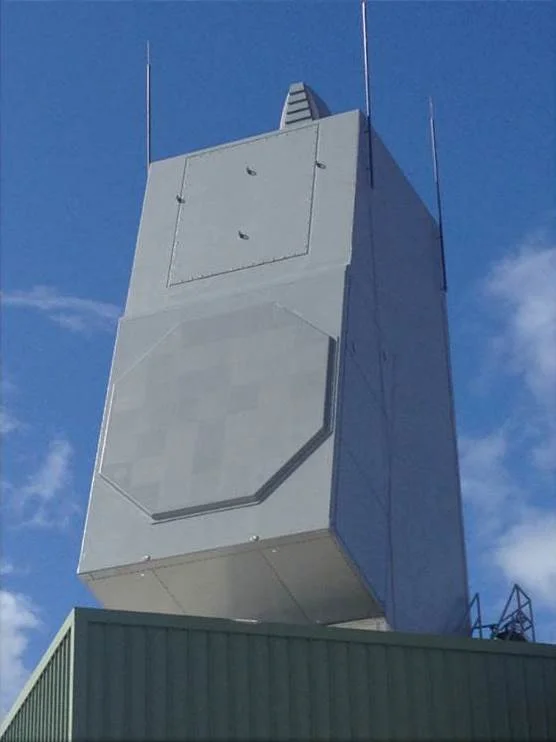
SPY-6 is a family of active electronically scanned array (AESA) radars built on gallium nitride (GaN) technology. Its defining feature is scalability: standard building blocks called Radar Modular Assemblies can be added or removed to tailor the radar to different ship classes, from destroyers to carriers and amphibious ships.
The most powerful member, the (V)1 variant, was developed for the Navy’s Arleigh Burke Flight III destroyers. By combining air defense, ballistic missile defense and surface warfare in a single aperture, the radar is designed to detect smaller targets at longer ranges than the systems it replaces.
How many ships will carry it?
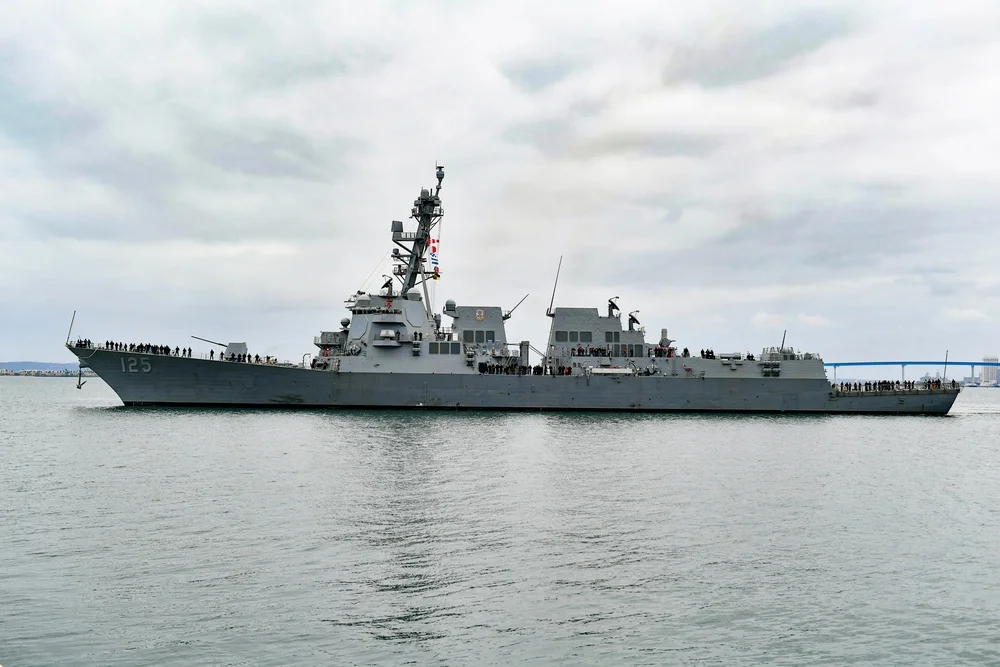
The company says SPY-6 is already operational on two commissioned warships and installed on eleven more that are undergoing various stages of testing. USS Jack H. Lucas (DDG-125), the first Flight III destroyer, is among the lead platforms. Over the next decade the Navy expects to field the radar on more than 50 ships.
Barbara Borgonovi, president of Naval Power at Raytheon, said the award “reflects the Navy’s confidence in our ability to deliver advanced, reliable and scalable radar solutions.”
Why it matters
The shift toward AESA radars at sea is not unique to the United States. Under its MILGEM, ISTIF and TF-2000 programs, Türkiye is moving in the same technological direction with ASELSAN’s CAFRAD and multifunction phased-array radar family. Large sustainment and serial-production deals for mature systems such as SPY-6 underline how competition in the naval radar market is intensifying for every supplier in the segment.
Sources
- RTX (Raytheon) official press release — “Raytheon awarded $1.8 billion contract for SPY-6 family of radars”, 21 July 2026. Used for contract value, production plan and executive quote. Link
- U.S. Department of Defense daily contract announcement — 20-21 July 2026. Used for contract number, work share and completion schedule.