The US Army’s first production landing craft can put an Abrams on a beach at 21 knots

The US Army has revealed USAV Craney Island, the first production hull in its Maneuver Support Vessel (Light) programme. The 35.6-metre craft carries up to 82 tons and can move a single M1A2 Abrams at 21 knots fully loaded. Its draft at full load is just 1.2 metres, meaning it can put cargo on a beach without a port. The first vessel is earmarked for US Army Pacific.
At a Glance
- What: MSV(L) — Maneuver Support Vessel (Light), the US Army’s new-generation landing craft.
- First hull: USAV Craney Island, first production vessel, delivery in autumn 2026.
- Payload: 82 tons — one M1A2 Abrams, or two Bradleys, or four JLTVs.
- Speed: 21 knots loaded, more than 30 knots empty; range over 360 nautical miles.
- Numbers: An original goal of 36 vessels now stands at 13.
- Contract: A $979.79 million ceiling running from 2017 to 2027.
- Destination: US Army Pacific, for distributed logistics across island chains.
Why the Army has its own boats
Start with the fact that surprises most readers: the US Army operates its own fleet. Where the Navy’s large amphibious ships put troops ashore, the Army’s vessels do a different job — moving materiel, vehicles and tanks from one point to another. The doctrine calls it shore-to-shore logistics; in plainer language, last-mile delivery of heavy cargo in shallow water and across coastlines with no port.
The reason that requirement is back on the agenda is the Pacific. Operational planning in the region has rested for some time on a single assumption: that large fixed ports are not survivable against today’s long-range missiles. Sustain an army through one big harbour and you have handed an adversary one target. The alternative is dispersing force along island chains — but resupplying dispersed force demands a lot of small, fast hulls in constant motion.
MSV(L) is designed to that picture. A 1.2-metre draft means the vessel beaches directly rather than berthing alongside. A folding bow ramp and a drive-through cargo arrangement let a vehicle enter at one end and leave at the other, which cuts unloading time. In a threat environment where every extra minute on a beach is exposure, that detail matters as much as the performance figures.
Speed follows the same logic. Twenty-one knots fully loaded sits well above older landing craft, and the hull exceeds 30 knots when empty; range is more than 360 nautical miles. Those three attributes together — shallow water, high speed, medium range — position MSV(L) not as an ocean-crossing transport but as an inter-island shuttle.
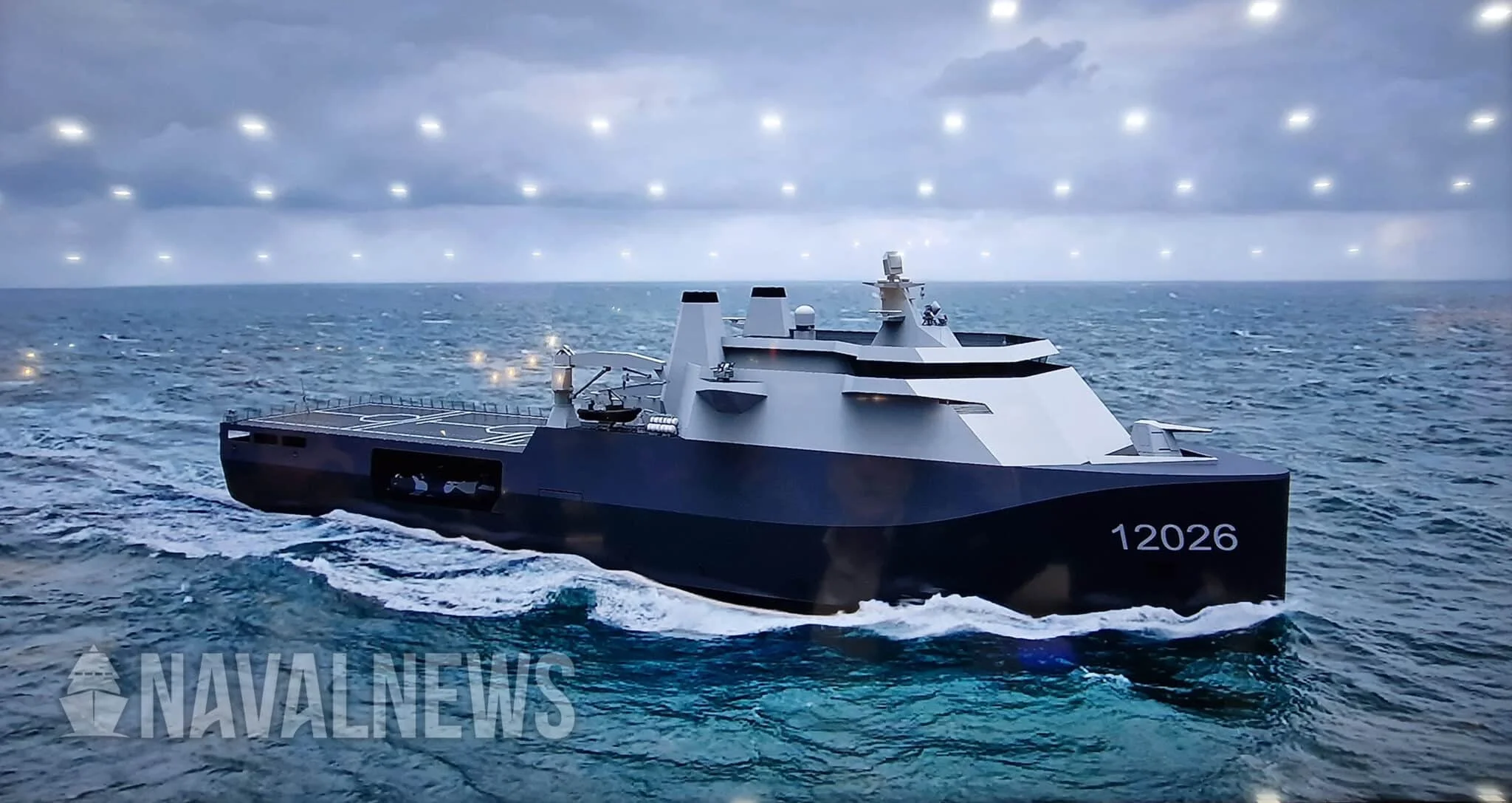
USAV Craney Island: 82 tons, three waterjets, one Abrams
The specification sheet makes the design choices plain. Length 35.6 metres, beam 8.6 metres, cargo deck around 158 square metres, maximum payload 82 tons. That last figure is not arbitrary: it is built around carrying one M1A2 Abrams main battle tank. The alternative loads follow from the same dimension — two Bradley fighting vehicles, two Strykers, or four JLTVs.
Propulsion comes from three 2,600-horsepower engines driving three waterjets. Choosing waterjets over propellers makes shallow-water operation easier, reducing the risk of damage close to the seabed and improving manoeuvrability. For a craft that beaches to unload, that is a requirement rather than a refinement.
The programme’s history is part of the story. The initial contract was signed on 28 September 2017; the indefinite-delivery, indefinite-quantity vehicle carries a $979.79 million ceiling and runs to 28 September 2027. The prototype hull, SSG Elroy F. Wells, launched in 2022. Nine years, then, from first contract to first production vessel. The target quantity moved along the way too: an original goal of up to 36 vessels now stands at 13.
That reduction is a familiar story in defence acquisition, where budget pressure, shifting priorities and unit costs above forecast pull quantities below the original plan. It is worth noting that 13 is not a trivial number either; the distributed logistics concept does not require the whole fleet in one theatre at once, but constant shuttling along critical routes.
USAV Craney Island / MSV(L): Key Specifications
| Class | Maneuver Support Vessel (Light) — landing craft |
| Length / beam | 35.6 metres / 8.6 metres |
| Maximum payload | 82 tons |
| Cargo deck | About 158 square metres |
| Speed | 21 knots loaded, more than 30 knots empty |
| Range | More than 360 nautical miles |
| Draft (full load) | About 1.2 metres |
| Propulsion | 3 × 2,600 hp engines, three waterjets |
| Load options | 1 M1A2 Abrams / 2 Bradleys / 2 Strykers / 4 JLTVs |
| Design features | Folding bow ramp, drive-through cargo arrangement |
| Builder | Vigor Marine Fabrication — Vancouver, Washington |
| Design partner | BMT |
| Contract ceiling | $979.79 million (28 September 2017 – 28 September 2027) |
| Quantity | Originally up to 36 → currently 13 |
The production side: 300 workers, 40-plus suppliers
The hulls are built at Vigor Marine Fabrication in Vancouver, Washington, with Vigor Works as prime contractor and BMT as design partner. Production involves more than 300 Vigor employees and more than 40 suppliers across Washington State. That scale makes the programme a regional industrial file as well as a military one — local employment being among the factors that extend a defence programme’s political life.
The first production vessel is due for delivery in autumn 2026, and the Army has said the hull is planned for assignment to US Army Pacific. Sending it there is the clearest signal of the scenario the programme exists for. The Army’s need in that theatre is to keep small garrisons and temporary positions supplied across very large stretches of water.
One further point deserves noting: a prototype launched in 2022 and a first production hull delivered in 2026 is a reminder of how much distance separates prototype from series production in shipbuilding. Validating a design, standing up a line and settling a supply chain take years beyond the moment the first hull touches water.
The Turkish angle: an island geography asks the same question
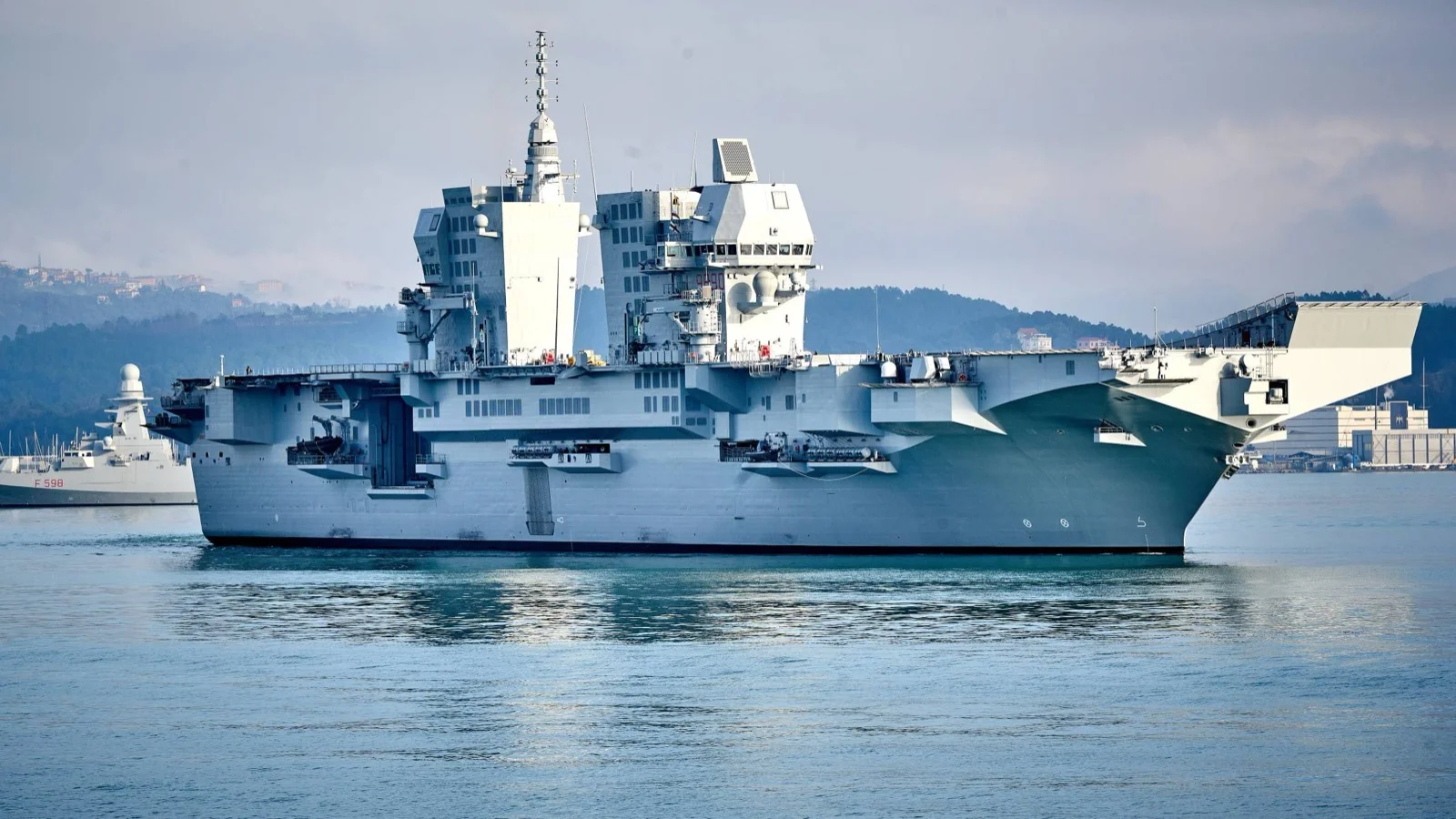
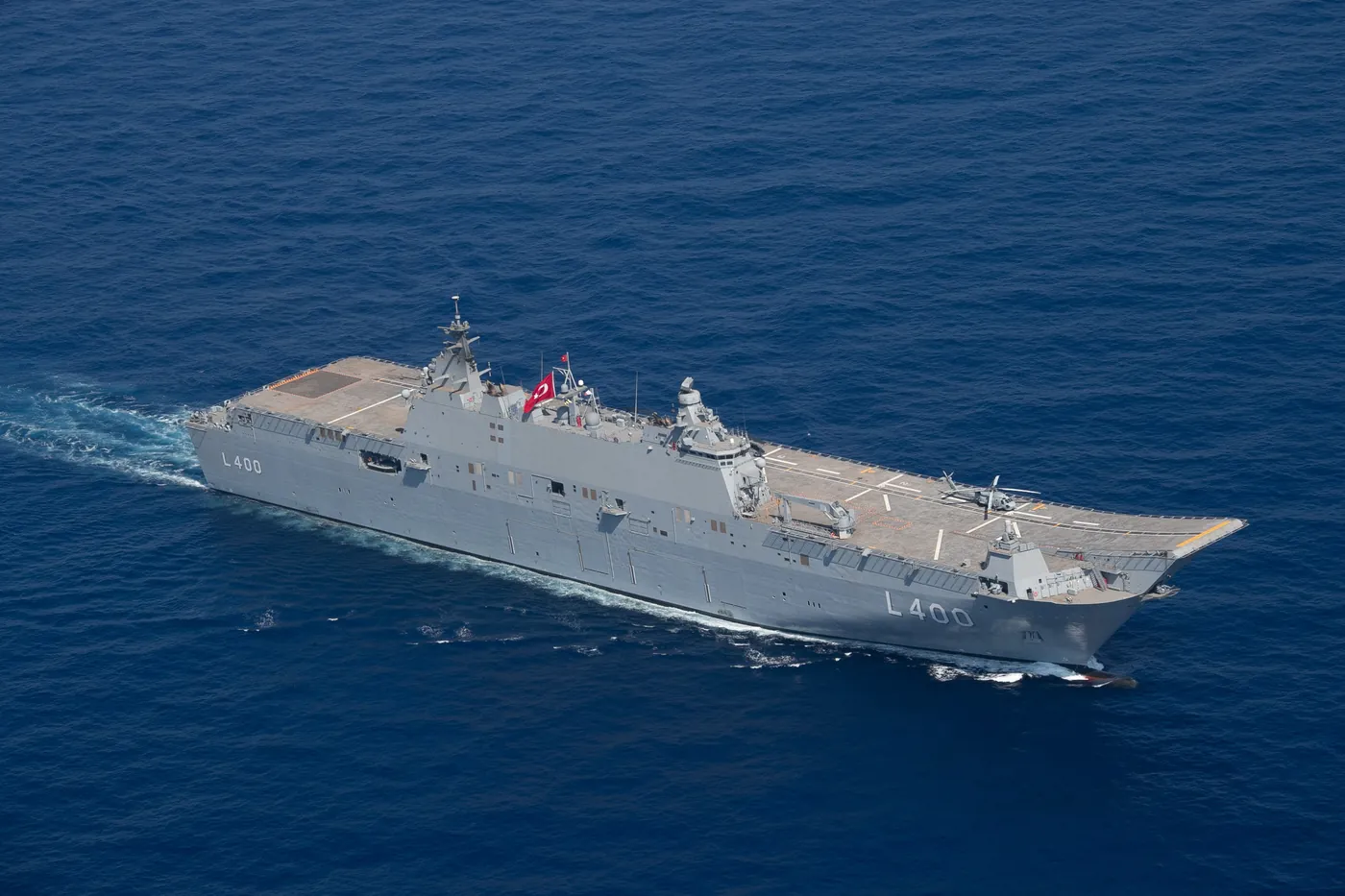
Distributed maritime logistics is a familiar subject in Türkiye. The Aegean and the Eastern Mediterranean are a geography of many islands, narrow passages and portless coastline, where moving heavy cargo over short distances in shallow water is a daily requirement rather than a theoretical debate. The Turkish Navy’s landing ship and tank-carrier inventory took shape around that need, and TCG Anadolu’s well deck raised the capability to connect a large platform with a beach to a higher rung.
What is instructive about the MSV(L) file from Ankara is the design choice. The American programme picked a modest hull that can enter shallow water, move fast and carry a single tank, rather than a large and expensive platform; it divided the capability across many vessels rather than concentrating it in one. Turkish yards have production experience in exactly this class — fast landing craft, tank carriers, coastal logistics vessels — for national requirements and for export. A segment that rewards quantity and delivery speed overlaps neatly with the strengths of Turkish shipbuilding.
Third, the slide from 36 vessels to 13 carries a lesson of its own. It shows that the decision about how many platforms will carry a capability can matter more than the specification of any one of them. A good hull on paper does not deliver the expected operational effect if too few are built — which is the real question facing any military planning its own procurement.
Sources
- Army Recognition — “U.S. Army Reveals First Production Maneuver Support Vessel Light for Abrams Tank Operations” (14 August 2026)
- US Army — public material on the MSV(L) programme
- Vigor Works and BMT — corporate statements
- Wikipedia — Maneuver Support Vessel (Light); US Army watercraft