Tayfun Explained: Türkiye’s Longest-Range Ballistic Missile


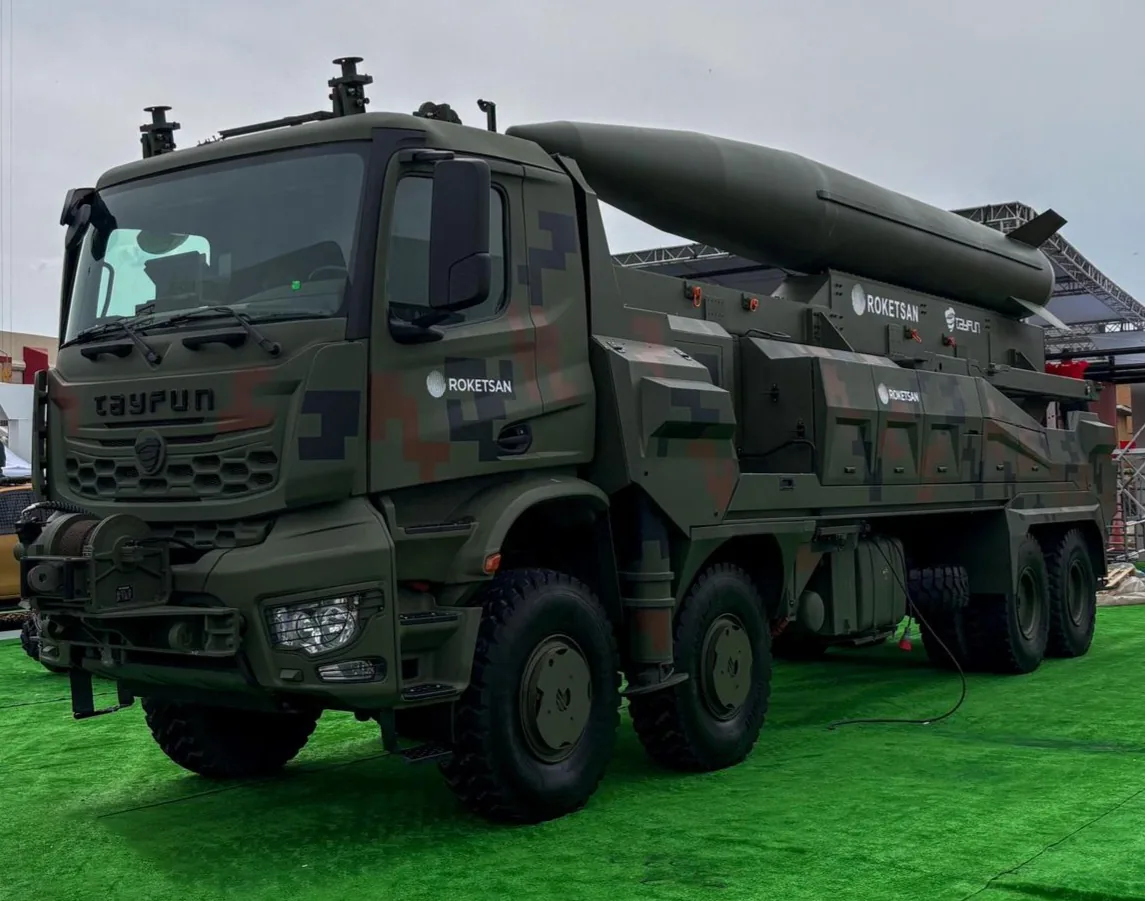
Tayfun is Türkiye’s longest-range ballistic missile, developed by Roketsan. First revealed publicly with a 2022 test launch from Rize-Artvin Airport, Tayfun reached a range of 561 km, marking a turning point in Türkiye’s indigenous ballistic-missile capability. Launched from land-based mobile launchers, Tayfun provides a deterrent strike capability against high-value fixed targets. The Tayfun Block-4 in development aims to push the range far higher. This dossier compiles Tayfun’s test process, block variants, inventory status and technical data from open sources.
Frequently Asked Questions
Sources
Related Reading
Tayfun represents a historic threshold in Türkiye’s long-range strike and deterrence capability. Long restricted from accessing this class of missile from foreign suppliers, Türkiye is now able, with Tayfun, to design and produce its own ballistic missile and develop its range and capabilities as it wishes — a fundamental autonomy in defense planning.
The mobile-launch architecture is the foundation of Tayfun’s deterrent value. Unlike fixed launch sites, Tayfun, launched from wheeled vehicles, can constantly reposition, preserving its survivability against enemy reconnaissance and first-strike attempts — making it a credible second-strike and retaliation tool.
The large leap in Tayfun Block-4’s range turns the system from a tactical missile into a strategic capability. A range exceeding 1500 km transforms Tayfun into a system usable not only against cross-border tactical targets but also much deeper strategic ones, influencing regional security balances.
Roketsan’s 24/7 production tempo reflects the high demand for Tayfun and the system’s strategic importance. High output lets the Turkish military grow its inventory quickly and meets export customers’ needs, positioning Tayfun in the upper segment of defense exports.
Ballistic-missile technology requires mastering many critical sub-technologies together — propulsion, guidance, materials science and re-entry. The Tayfun program shows Türkiye gaining deep competence across all these areas, paving the way for future longer-range, more advanced systems to be developed indigenously.
Tayfun being indigenous removes dependence on third-country permits for its use and export. Because range limitations or usage restrictions common with foreign missiles do not apply, Türkiye can freely shape the system to its own security needs.
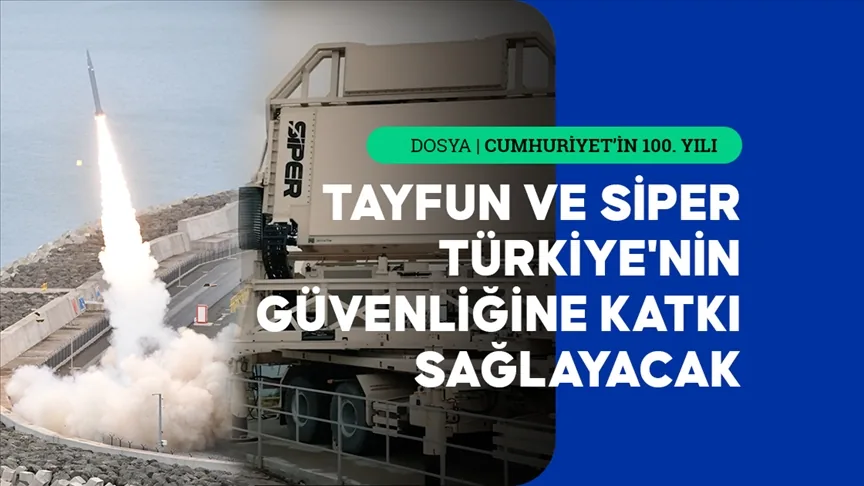
Together with the SİPER air-defense system and other Roketsan products, Tayfun is one of the complementary elements of Türkiye’s deterrence architecture. While air defense blocks enemy attacks, strike systems like Tayfun perform the retaliation and deterrence function — a balance at the heart of contemporary defense doctrine.
The program’s export dimension opens the door to new strategic partnerships for the Turkish defense industry. Because a long-range ballistic missile is a sensitive technology few countries can produce, exporting Tayfun gives Türkiye significant influence not only economically but diplomatically and strategically.
In short, Tayfun is one of the most striking signs of the technological maturity the Turkish defense industry has reached. With indigenous design, increasing range and serial-production capacity, Tayfun stands out as a system of growing strategic value that fundamentally changes Türkiye’s long-range deterrence equation.
Tayfun’s development shows that Türkiye’s indigenous missile know-how has matured by drawing on earlier programs such as SOM and Bora; each new system carries forward the engine, guidance and materials experience of the previous one, and this cumulative accumulation makes reaching the far more ambitious ranges of Tayfun Block-4 possible.
Land-based mobile deployment gives Tayfun far higher survivability than classic fixed missile sites; constantly repositioning wheeled launch vehicles complicate an enemy’s preemptive-strike planning, increasing the credibility and sustainability of deterrence and making Tayfun a more reliable retaliation tool.