The US Navy’s New Undersea Net: Listen for the Drone, Then Pin It Down


At the US Navy’s Lanternfish 2026 exercise, a sonar architecture that listens for unmanned underwater vehicles before pinning them down with an active ping went to sea for the first time. Ultra Maritime paired its Sea Spear passive array with the SSQ-125B active sonobuoy in a single integrated solution. Behind the demonstration lies a broader problem: anti-submarine warfare no longer knows exactly what it is hunting.
At a Glance
- What happened: Ultra Maritime demonstrated an integrated sonar solution at the US Navy’s Lanternfish 2026 exercise, combining the Sea Spear deployable passive array with the SSQ-125B active sonobuoy.
- The mission: passively detect and then actively localise unmanned underwater vehicles as part of autonomous counter-UUV and anti-submarine warfare operations.
- The claim: the company describes the SSQ-125B as the only active sonobuoy of its kind, designed and manufactured exclusively by Ultra Maritime.
- The architecture: part of what the firm calls its Ocean of Things vision — a distributed, intelligent network of autonomous undersea sensors.
- Where it fits: port and critical infrastructure protection, chokepoint security, expeditionary operations and long-duration surveillance of strategic waterways.
- Why now: repeated damage to seabed cables and pipelines has turned undersea awareness from a submarine-hunting problem into an infrastructure one.
A passive ear and an active hand, working the same target
Undersea warfare has long run on a division of labour. Passive sensors listen and nothing more: they gather an adversary’s noise without announcing themselves, but they struggle to say precisely where that adversary is. Active sensors transmit a pulse and read the echo, delivering a sharp fix at the cost of telling everyone within range exactly where the sensor sits. What Ultra Maritime demonstrated at Lanternfish 2026 is an attempt to run both halves of that trade-off inside one workflow.
According to the company, the demonstration paired the Sea Spear deployable passive sonar array with the newly developed SSQ-125B active sonobuoy. The stated task is unambiguous: detect unmanned underwater vehicles passively, then localise them actively. Simple as that reads, it demands that two different sensor families agree on the same contact, share a common time reference and validate one another’s data fast enough to matter.

The SSQ-125B carries a bold description from its maker — the only active sonobuoy of its kind, designed and built exclusively in-house. Sonobuoys are the expendable backbone of airborne submarine hunting: dropped in patterns from maritime patrol aircraft or helicopters, each lowers a hydrophone and relays what it hears by radio. Passive buoys wait in silence. Active buoys transmit. When a target is quiet enough to defeat passive listening — which is exactly the problem a small unmanned vehicle presents — the active buoy is what remains.
Notably, Ultra Maritime is not selling a single device. The company frames the demonstration as one step toward what it calls an Ocean of Things: a distributed, intelligent network of autonomous undersea sensors feeding a real-time picture of the underwater battlespace. The logic mirrors what has already happened in the air, where dispersed radar networks have begun displacing the single high-value sensor. Underwater, the economics may be even more favourable, because the ocean is vast and individual sensors are cheap.
The hunted have changed, so the hunt has to
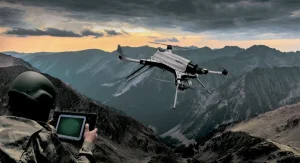
What gives the trial its weight is happening well outside the exercise area. The undersea domain is far more crowded than it was a decade ago. Large unmanned submarines are now putting to sea with real payloads, while small vehicles can be seeded at harbour mouths and strait entrances with minimal infrastructure. A system tuned to the acoustic signature of a manned submarine can miss something an order of magnitude smaller and considerably quieter.
The mission set Ultra Maritime lists reflects that shift. Port and critical infrastructure protection, maritime chokepoint security, expeditionary operations, long-duration surveillance of strategically important waterways — none of these describe a destroyer chasing a submarine across open ocean. They describe watching a fixed piece of water, continuously, for a very long time. The reference to critical infrastructure points squarely at the security story of the past two years.
After a run of damage to communications cables and pipelines in the Baltic, the seabed itself became a recognised operating environment. Cutting a cable requires neither a missile nor a submarine; a suitably equipped unmanned vehicle will do, as will an anchor dragged with intent. The hard part is attribution. Once an incident has occurred, proving who was responsible is close to impossible unless a sensor was present at the time. Persistent networks exist to close precisely that gap.
Seen that way, Lanternfish signals more than a product milestone. Navies are shifting undersea awareness away from individual platforms and toward permanent networks — and unmanned vehicles are arriving on both sides of the equation at once, as targets to be found and as the carriers of the sensors doing the finding.
| Exercise | Lanternfish 2026 (US Navy) |
| Announced | 14 August 2026 |
| Manufacturer | Ultra Maritime — Braintree, Massachusetts, USA |
| Passive sensor | Sea Spear — deployable passive sonar array |
| Active sensor | SSQ-125B — active sonobuoy |
| Combined task | Passive detection plus active localisation of UUVs; ASW |
| Architecture goal | Ocean of Things — distributed autonomous undersea sensor network |
| Mission set | Port and critical infrastructure protection, chokepoint security, expeditionary operations, long-duration waterway surveillance |
| Scalability | Configurable across multiple mission types |
Why the sonobuoy still matters
The sonobuoy is among the oldest and cheapest tools in submarine hunting, and it has survived every generation of sensor technology that was supposed to replace it. A patrol aircraft or helicopter seeds a pattern of buoys across a search area; each lowers a hydrophone and transmits what it hears. By comparing returns across several buoys, the crew works out roughly where the contact is. Because the buoys are expendable, large areas can be searched at modest cost.
The passive-versus-active choice is a tactical one. Passive buoys give away nothing but rarely produce a firing solution on their own. Active buoys deliver position at the price of disclosure. Operators therefore prefer to gain contact passively and reserve the active ping for the moment it is genuinely needed. Automating that sequence — network detects passively, then cues the active sensor — is the essence of what Ultra Maritime demonstrated.
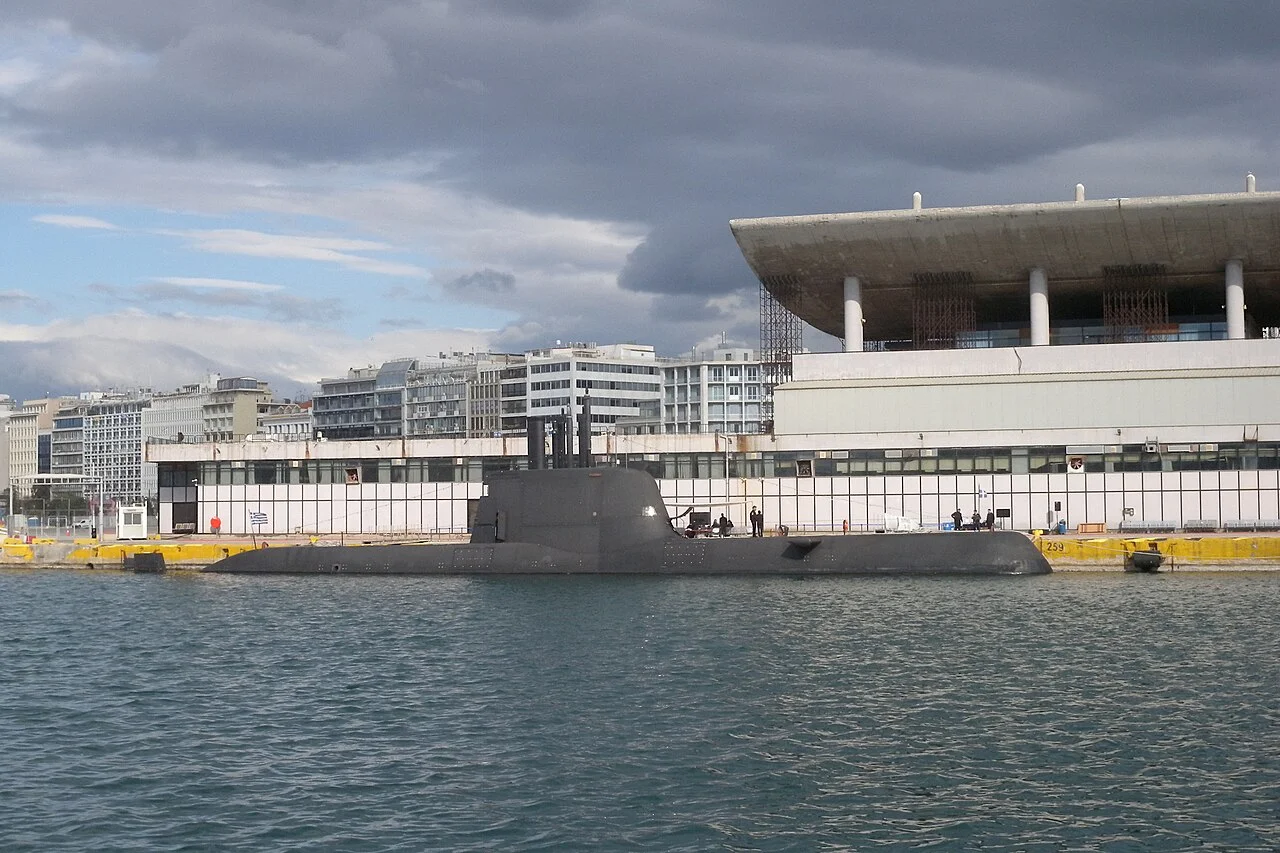
For navies operating in enclosed seas, the calculation shifts further toward persistent sensing. In waters where energy pipelines and communications cables run dense — the Black Sea and Eastern Mediterranean among them — undersea awareness becomes an infrastructure security requirement rather than a purely naval one. Türkiye’s MİLDEN submarine programme has driven domestic work in sonar and underwater acoustics, with ASELSAN supplying the sensor and torpedo countermeasure side. The international move toward fixed seabed networks suggests that effort will increasingly need to extend beyond the platform to the seabed itself.
Sources
- Naval News — “Ultra Maritime Tests Integrated ASW and Counter-UUV Sonar System During US Navy Exercise”, 14 August 2026
- Ultra Maritime corporate statements
- US Navy Lanternfish exercise releases