US Marines are now shooting drones with rifles — at 20 metres, against targets doing 90 mph

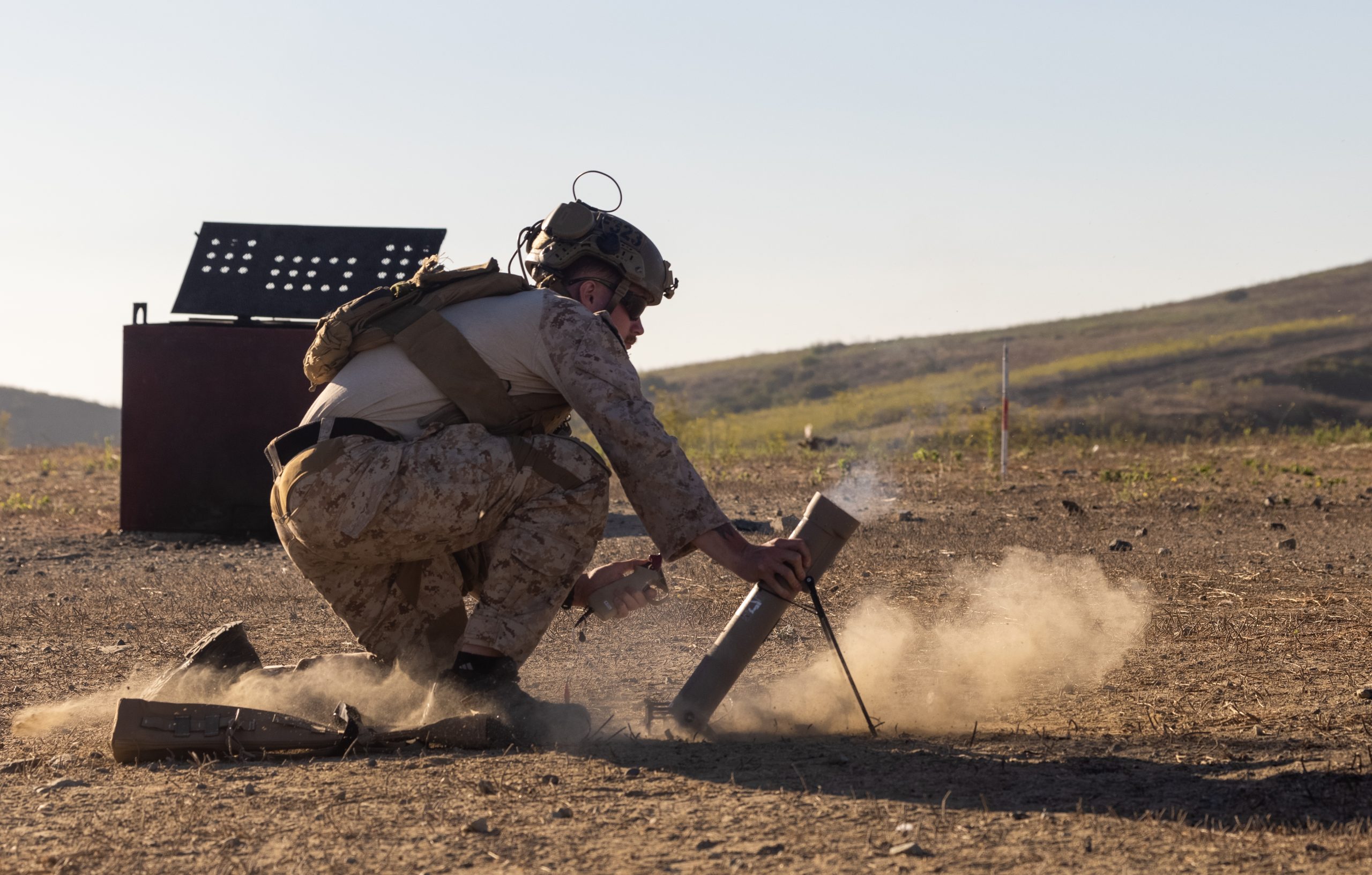
The Marine Corps has stopped treating counter-drone work as a specialist trade. At Twentynine Palms, counter-small unmanned aircraft system lanes were integrated into a service-level training exercise for the first time, with squads engaging targets that flew past as close as 20 metres at speeds above 90 mph using the weapons they already carry.
At a Glance
- What happened: The Marine Corps integrated counter-sUAS live-fire lanes into a service-level training exercise for the first time in its history.
- Where and when: Marine Corps Air Ground Combat Center, Twentynine Palms, California, during Service Level Training Exercise 4-26 on 15 July 2026.
- Who: Units from the 1st and 2nd Marine Divisions, with drone operators drawn from TTECG, 7th Marine Regiment and 3rd Light Armored Reconnaissance Battalion.
- Weapons: M27 automatic rifle in 5.56mm, M1014 combat shotgun in 12-gauge, M32A1 and M320 grenade launchers firing 40mm low-velocity rounds, plus electronic warfare systems.
- Difficulty: Targets flew at more than 90 mph and passed as close as 20 metres.
- Structure: A three-day classroom-to-live-fire progression plus a three-week operator course.
A specialist problem becomes an infantry skill
Three years of war from Ukraine to the Red Sea have written the same lesson repeatedly: the aircraft threatening an infantry squad is often inside rifle range rather than inside a surface-to-air battery’s engagement envelope. The Marine Corps has moved that lesson into its training pipeline, integrating counter-small unmanned aircraft system lanes across Service Level Training Exercise 4-26 at the Marine Corps Air Ground Combat Center in Twentynine Palms.
The parameters show how hard the problem is. Marines engaged targets flying at more than 90 mph, occasionally passing within 20 metres, using organic squad weapons: the 5.56mm M27 automatic rifle, the 12-gauge M1014 combat shotgun and the M32A1 and M320 grenade launchers firing 40mm low-velocity anti-personnel rounds. Training opened with a three-day sequence of classroom instruction, practical application and live fire, with a separate three-week course for drone operators.
Gunnery Sgt. Kevin Jares of the Tactical Training and Exercise Control Group summed up the intent: the force is working out how to fight the threat and survive on the modern battlefield. The emphasis falls on what every squad already carries rather than on scarce, expensive systems. Capt. Faith Richardson served as a TTECG platoon commander for the evolution.
Why a rifle? The cost equation
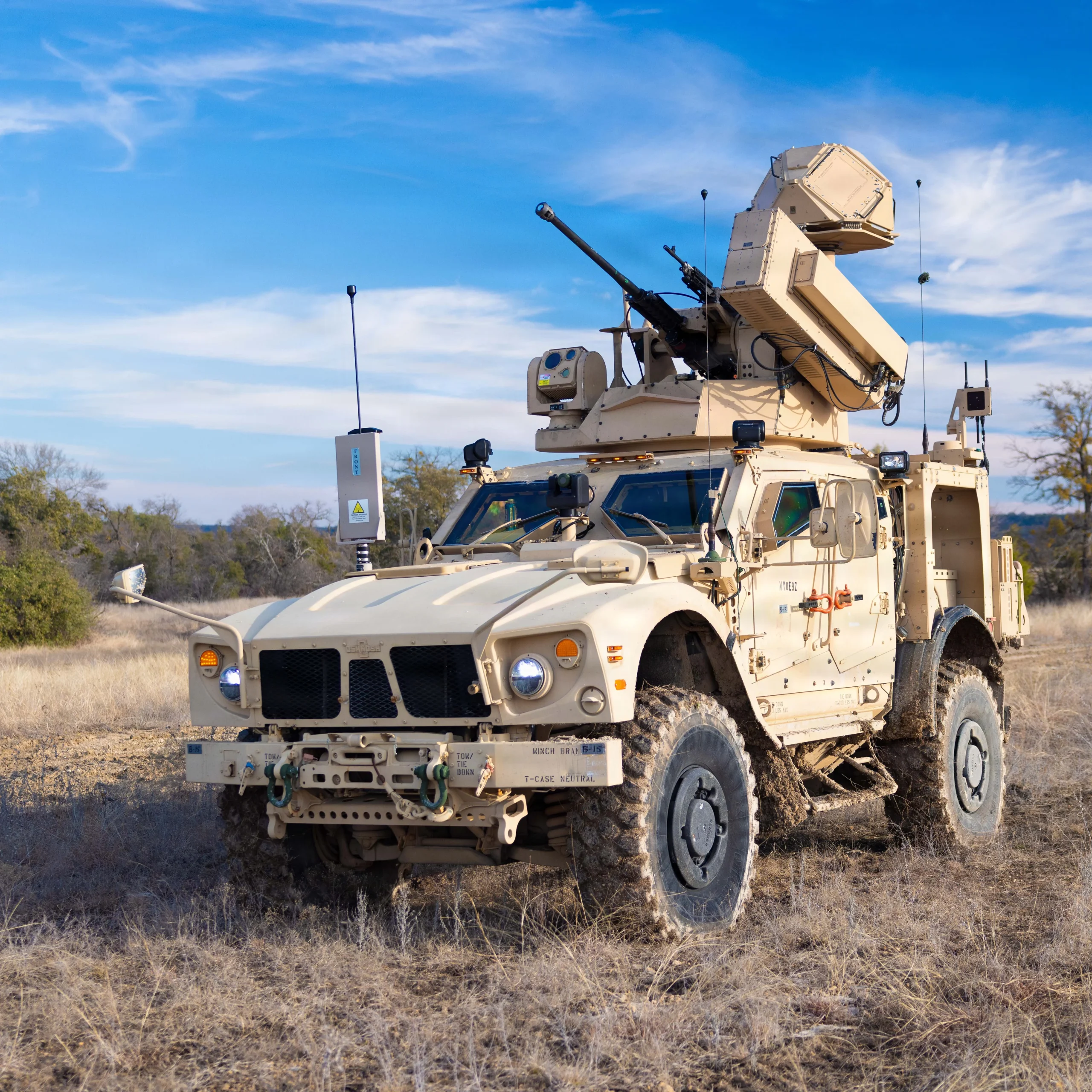
The answer sits in the least comfortable arithmetic in modern air defence. Spending a six-figure interceptor to kill a few-hundred-dollar quadcopter is a tactical success and a strategic loss. Counter-drone architecture is therefore layered: radars and guided interceptors at the top, electronic warfare and jamming in the middle, and the rifle in a Marine’s hands at the bottom.
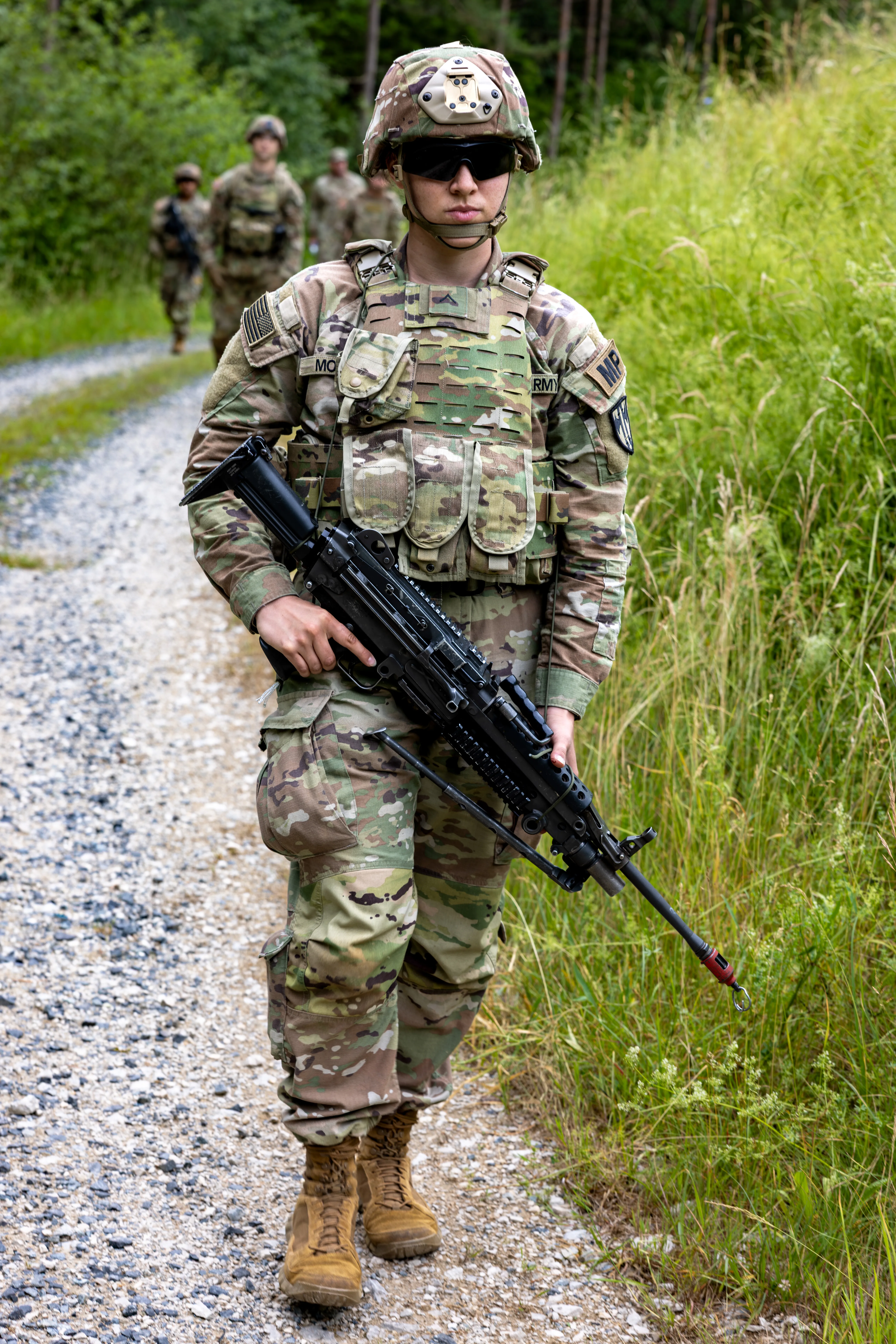
That bottom layer was neglected for years because hitting a small, fast, manoeuvring aerial target with a shoulder-fired weapon is genuinely difficult; it demands lead calculation most infantry marksmanship never taught. The Corps’ answer is repetition as much as technology — the right weapon, the right round and a great deal of live fire. The shotgun earns its place precisely here: a spread of pellets forgives aiming error at close range in a way a single 5.56mm projectile does not. In parallel, the service is fielding a dedicated anti-drone cartridge for the M4 and M27, and electronic warfare systems were folded into the same lanes, because a drone that has lost its link is a far easier target.
Weapons used and their role
| M27 automatic rifle | 5.56mm; the squad’s organic engagement tool, dependent on lead training |
| M1014 combat shotgun | 12-gauge; highest hit probability at close range thanks to shot spread |
| M32A1 grenade launcher | 40mm low-velocity, six-round revolving; area effect |
| M320 grenade launcher | 40mm low-velocity; rifle-mounted or standalone |
| Electronic warfare | Link and navigation disruption ahead of kinetic engagement |
| Target profile | Above 90 mph, passing as close as 20 metres |
Everyone is solving the same problem
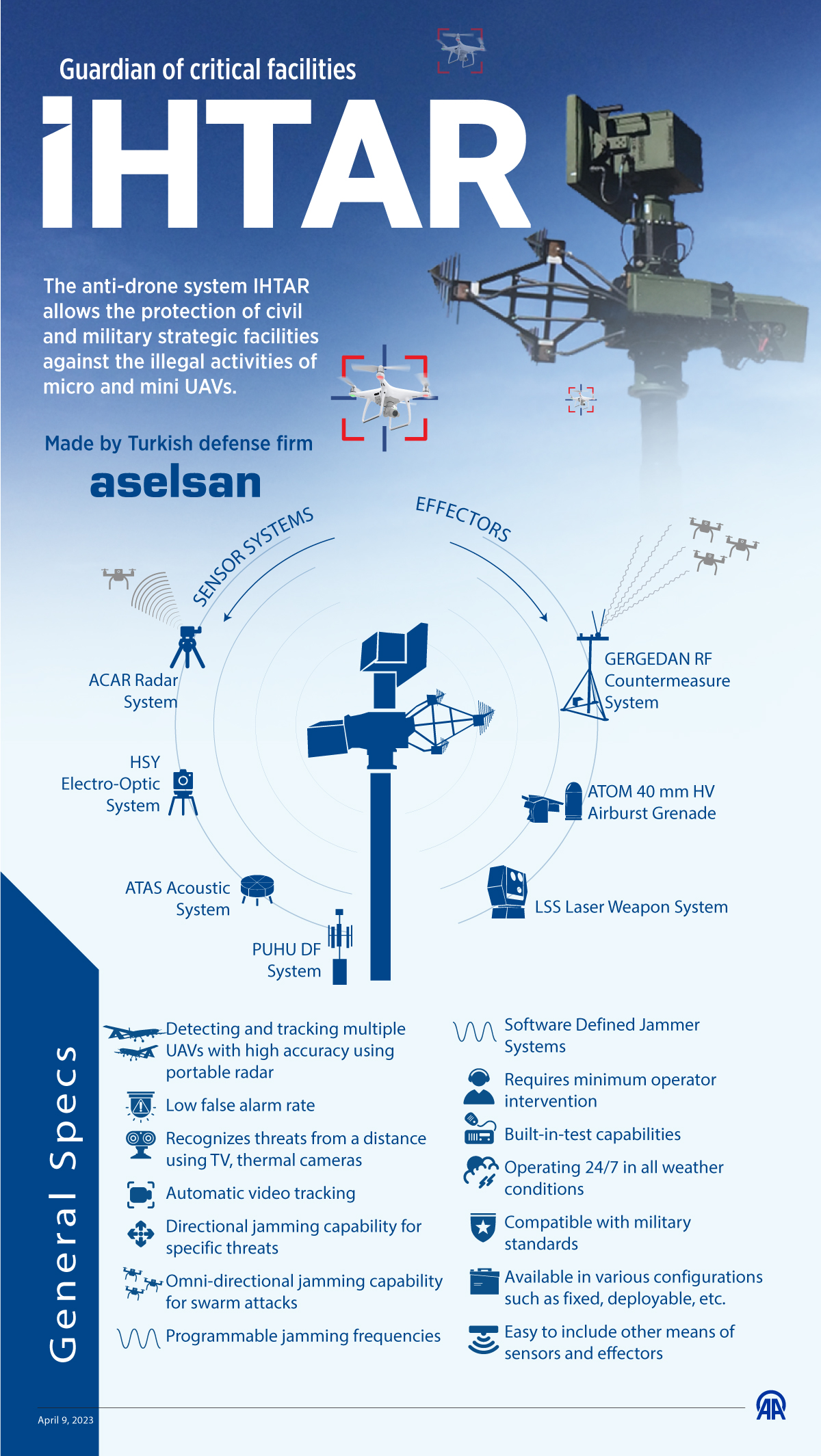
The search is hardly an American peculiarity. Ukrainian infantry have hunted drones with shotguns for years, Russian units have bought sporting guns in bulk, and NATO members are ordering handheld jammers, mobile radars and gun-based air defence at the same time. Turkey’s industry covers the same layers: ASELSAN’s İHTAR counter-drone system combines detection, identification and jamming, while the KORKUT gun system and the wider electronic warfare family sit above it.
The Marine Corps says future service-level exercises will keep both drone and counter-drone training in the programme. That reads less like a one-off trial than a curriculum change: alongside land navigation and combat first aid, shooting a small object out of the sky is becoming a basic infantry skill.
Sources
- U.S. Marine Corps — Marine Corps integrates C-sUAS lanes into service level training exercise, 11 August 2026
- DVIDS — Service Level Training Exercise 4-26 release and imagery
- Military Times — Marines train to shoot down combat drones with standard weapons, 13 August 2026
- Army Recognition — Marine counter-drone training lanes, 16 August 2026