Patria to Deliver MUSCL Passive Radar to a European NATO State

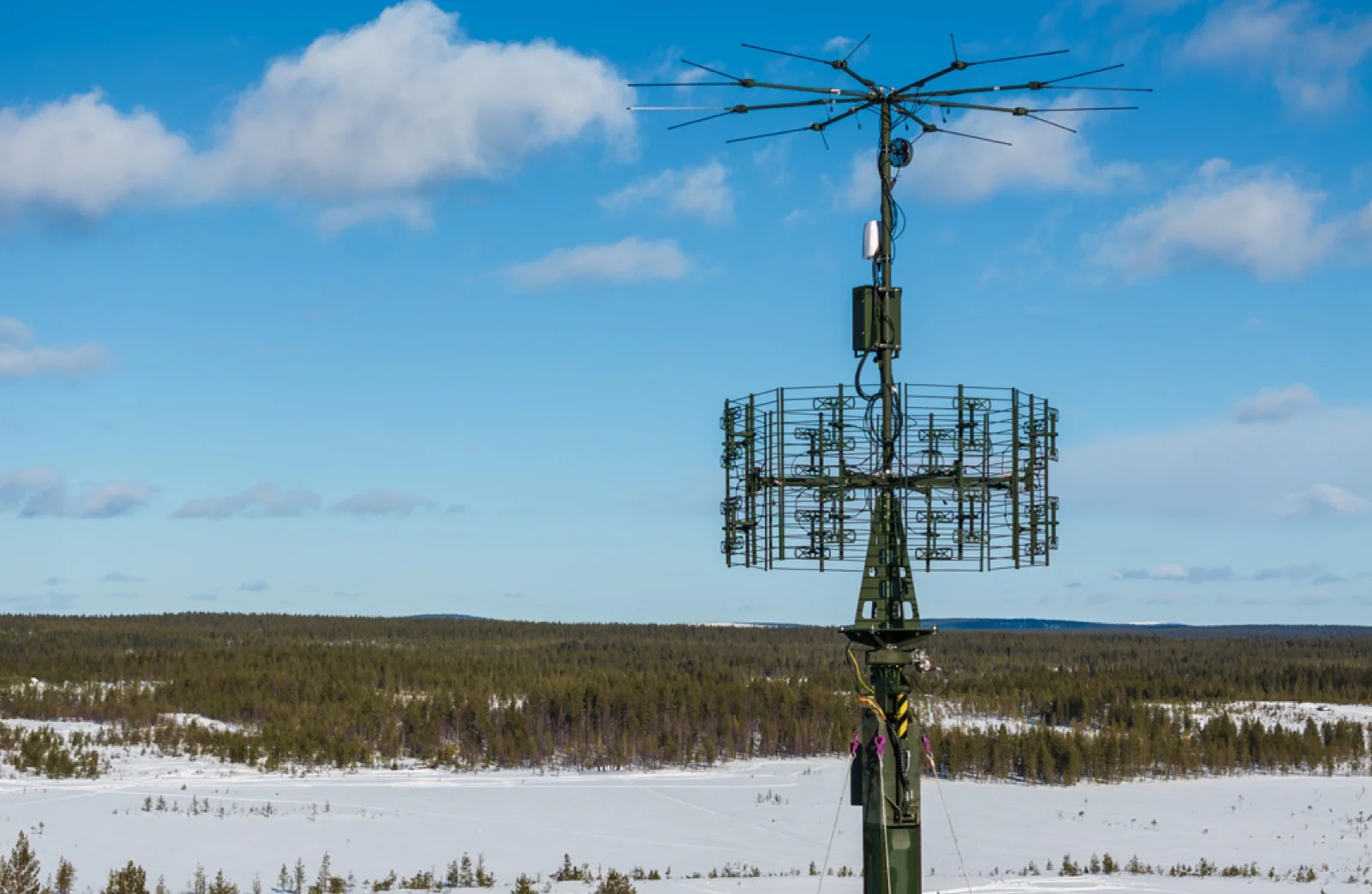
Finland’s Patria has signed an agreement to deliver its MUSCL passive radar system to an unnamed European NATO member state. The package covers multiple sensor stations along with spare parts, support services and training. Neither the contract value nor the delivery schedule was disclosed.
Mikko Leino, Patria’s executive vice president for defence and weapon systems, said the system “delivers a unique combination of covert surveillance, operational flexibility and cost-effective performance.”
What passive radar does differently
A conventional radar transmits electromagnetic energy from its own antenna and listens for the return off a target. The weakness is obvious: the moment it transmits, it announces where it is. In modern air warfare, radar sites sit at the top of the target list for anti-radiation missiles.
Passive radar inverts that. It transmits nothing. Instead it uses transmissions already present in the surrounding electromagnetic environment — FM radio stations, digital terrestrial television transmitters, mobile network base stations — as illuminators. The receiver listens both to the direct signal from the transmitter and to the delayed reflection off the target, and derives position and velocity from the time difference and the Doppler shift.
The result is a sensor that is electromagnetically invisible while it works. It cannot be targeted by an anti-radiation missile, it does not appear on electronic support measures, and it can operate beside a unit under emission control.
What MUSCL is for
Patria describes MUSCL as a transportable system that detects, tracks and reports aerial targets in real time. Three mission sets are cited:
- Air surveillance: building a persistent, covert air picture
- Early warning: a forward layer complementing the main radar network
- Counter-UAS: detecting low-altitude, low-radar-cross-section targets
The third is what explains the system’s current market value. Small drones are difficult targets for conventional surveillance radar: their radar cross-section is small, they fly low and slowly, and they can be confused with bird flocks. Because passive radar exploits VHF and UHF band transmissions, it offers some advantages against targets that appear larger at those wavelengths.
Patria’s background in passive sensing
Patria has more than thirty years in passive radio-frequency sensing, across intelligence, surveillance and electronic countermeasure applications. Alongside MUSCL, the portfolio includes the CATCHR electronic support measures system. The company planned to demonstrate both at EW Live 2026 in Estonia on 15-17 September 2026.
Why the customer is unnamed
Withholding the customer’s identity is normal in this segment. The operational value of a passive radar depends on its presence and position being unknown. If an adversary knows which country and which border sector a passive system covers, it can analyse the local broadcast infrastructure, work out which transmitters the system depends on, and calculate where its coverage is thin.
That the buyer is a European NATO member narrows the geography. Demand concentrates in states close to Russia that have seen an increase in airspace violations and drone incursions: the Baltic three, Poland, Romania and the Nordic countries. Drone incursions into Polish and Romanian airspace through September have made low-altitude air picture capability an urgent requirement in exactly those capitals.
The wider market
Passive radar has been one of the quietest growth segments in air defence over the past decade. The Czech VERA-NG family, China’s DWL002 and Ukraine’s Kolchuga are the established names. Turkey pursues its own work in the field, with Aselsan’s KORAL electronic warfare family and passive detection research at TÜBİTAK BİLGEM, driven both by a domestic requirement for a passive layer in the national air defence network and by the prospect of competing in the same export segment.
Patria winning a new customer inside European NATO points to a broader shift: invisibility on the battlefield is no longer a design requirement only for aircraft. It has become one for radars.
Sources
- Patria official press release, “Patria to deliver MUSCL passive radar system to European NATO member country”, 14 September 2026
- Patria corporate product page, Patria MUSCL — Intelligence and Surveillance solutions
- European Defence Review (EDR Magazine), 14 September 2026