

What is MarSim? SimBT’s maritime simulator family

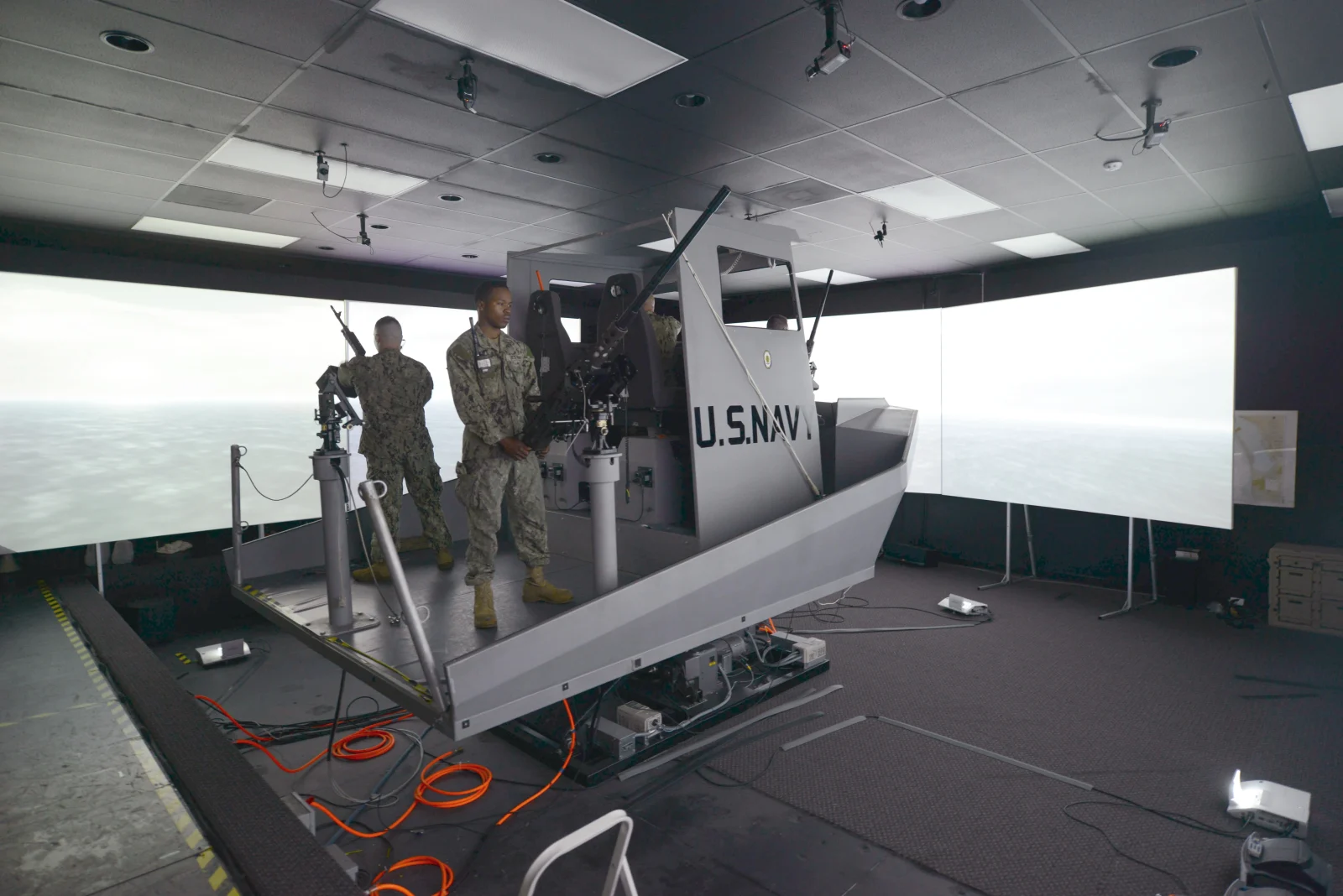
Quick answer: MarSim is the maritime simulator family of the Turkish simulation company SimBT. The family covers an STCW-compliant full mission bridge simulator, a tug simulator, a virtual reality based bridge simulator, and ARPA radar, ECDIS, GMDSS and marine pollution response simulators. The SGD virtual bridge simulator was delivered to the Turkish Naval Forces Command at the end of 2020; at IDEF 2023 an export agreement was announced for a portable maritime simulator.
Which simulators are in the MarSim family?
According to SimBT’s official product page the maritime family consists of seven main products. In the 2026 Product Catalogue of the Presidency of Defence Industries (SSB) these products are listed under MARSIM code names (FMBS for the full mission bridge, TUGIM for the tug, for example), while the official website uses Turkish product names.
| Simulator | Function | Headline feature |
|---|---|---|
| Full Mission Bridge | Seafarer and maritime pilot training | STCW compliant; 225-360 degree field of view; 40 own ships, more than 100 target ships |
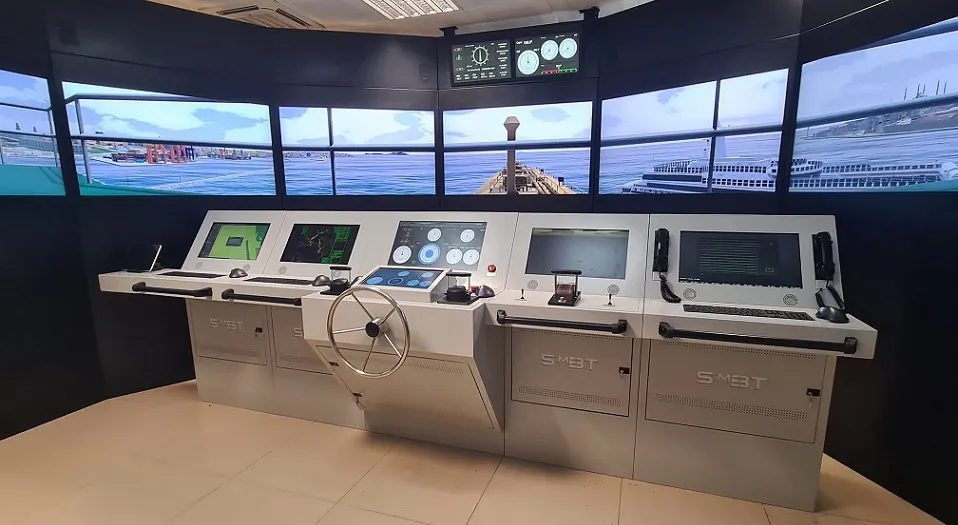
| Tug Simulator | Harbour and offshore towage training | Escort work, platform moves, multiple tug manoeuvres |
| Virtual Bridge | Watch personnel training with VR headsets | No physical console required; more than one ship in a single simulator |
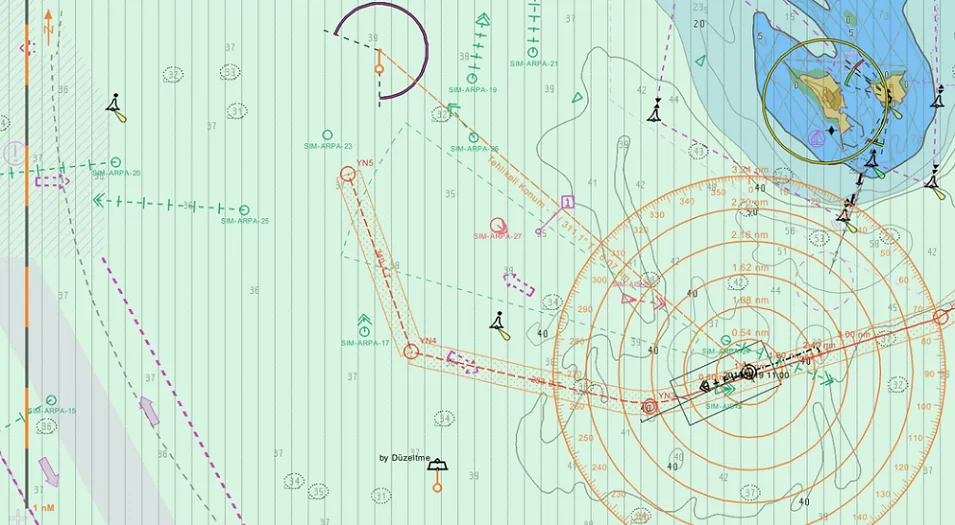
| ARPA Radar | Radar operation training | X and S band; at least 60 ARPA contacts; CPA/TCPA calculations |
| ECDIS | Electronic chart navigation | Up-to-date charts in line with IMO and SOLAS rules |
| GMDSS | Maritime communication and distress training | Class A conformity; EPIRB, SART, NAVTEX and Inmarsat C functions |
| Marine Pollution | Spill response training | Pollutants in 4 categories; around 1,600 materials in the oil category |
What does the full mission bridge simulator offer?
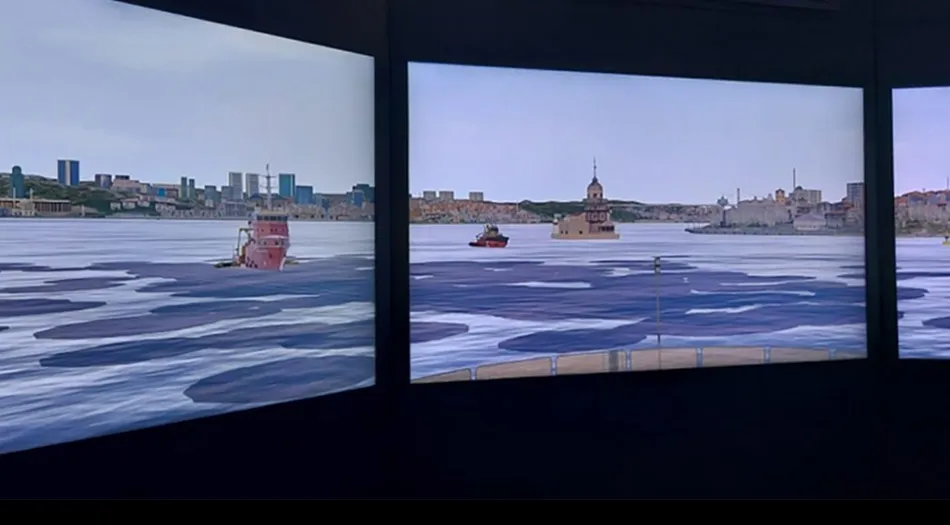
According to the company, the ship dynamic model, the image generator and the ECDIS, ARPA radar and VHF simulators in the system were developed nationally. The system can model different weather conditions and wave heights; shallow water and narrow water effects are included in the dynamic model. Line and anchor tensions are calculated. The out-of-the-window view can be built with LED screens or projectors covering 225 to 360 degrees. On the visual side the company uses its own SimRealize image generator.
Tug and virtual bridge simulators
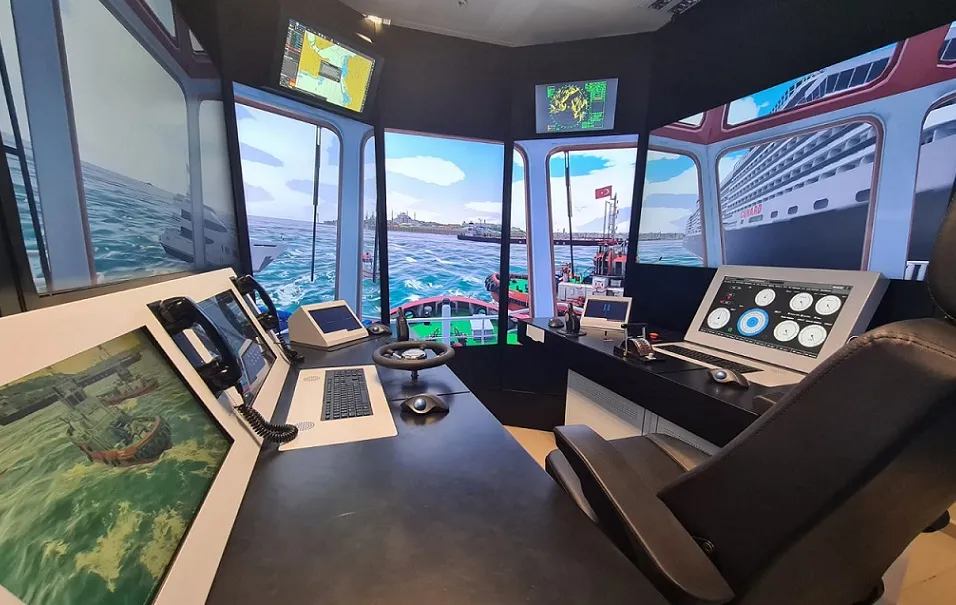
The tug simulator supports coastal and offshore towage, ship assistance, high speed escort, platform moves, search and rescue and multiple tug manoeuvre scenarios. The company states that it can deliver integrated tug master and maritime pilot training together.
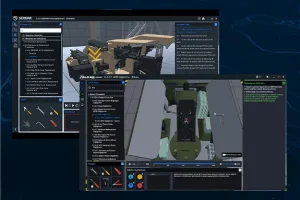
The virtual bridge simulator works with VR headsets. According to the company the main differences from conventional bridge simulators are that no physical console is required, that a mobile training environment can be set up at lower cost, and that a new ship can be integrated into the simulator in a short time. The SGD version of this product in service with the Turkish Naval Forces Command is covered in detail in the references file.
Marine pollution response simulator
One of the outliers within the family is the pollution spill response simulator. The system addresses the training of both the ship’s crew and the shore command centre. Pollutants are grouped into four categories: oil, fuel and lubricants; chemicals; bilge; and solid waste and plastics. At the end of a training run the quantities of material cleaned up, evaporated, settled and burned can be taken as a report.
Certification status
The official website states that the bridge simulator “holds the STCW training certificate” and that the GMDSS simulator’s “conformity with the Class A standard has been approved”. The certifying body is not named; there is no public record of the DNV-ST-0033 certification that is common on Kongsberg and Wärtsilä products. This heading is examined in detail in the comparison with competing products.
Frequently asked questions
Whose product is MarSim?
MarSim is the maritime simulator family of SimBT, based at the ODTÜ Technopolis in Ankara.
Is MarSim STCW compliant?
The company presents its bridge, tug and virtual bridge simulators as STCW compliant. The independent body issuing the certificate has not been officially disclosed.
Who uses MarSim?
The only publicly stated delivery is the SGD virtual bridge simulator at the Turkish Naval Forces Command. An export agreement was announced at IDEF 2023; the buyer was not disclosed.
How many ship models are there?
According to the company the full mission bridge simulator holds 40 commercial and military type own ships and more than 100 target ships.
Is there a firefighting simulator?
The SSB 2026 catalogue mentions firefighting training within the MARSIM family, while the official product page does not list a separate fire simulator. The current status of the product is not officially disclosed.
Sources and verification note
Product features are manufacturer statements; independent test data is not publicly available. Undisclosed data has been marked “Not officially disclosed.” Accessed: August 12, 2026.
- https://www.simbt.com.tr/urunler/denizcilik-simulasyon-ve-simulator-urun-ailesi/
- https://www.simbt.com.tr/dss-2021
- https://www.simbt.com.tr/idef-2023
- https://www.simbt.com.tr/en/urunler/denizcilik-simulasyon-ve-simulator-urun-ailesi/