From SERHAT to the M14: 3E’s night vision ecosystem

Quick answer: 3E Elektro-Optik’s night vision catalog consists of four product lines built on image intensifier tube technology: SERHAT goggles for pilots, NOX and B31 binocular goggles for ground troops, the M14 monocular in the PVS-14 form factor, and the weapon-mounted ENES sights. The common approach is compatibility with the form factors and accessory ecosystems established worldwide. Tube options vary by configuration; the manufacturer says alternative tube makes and models are offered on request.
Night vision versus thermal
An image intensifier tube amplifies weak ambient light, such as moonlight and starlight, thousands of times; the user sees a natural image in detail. A thermal sensor images heat signatures instead: it is superior in zero-light conditions and behind cover, but weak at detail tasks such as facial recognition. 3E offers the two technologies as separate lines; the PARS thermal family and the tube-based systems in this file complement each other. The PARTAN NZ fusion sight, which merges the two channels into a single image, is covered in the products guide.
SERHAT: dual tubes for the cockpit
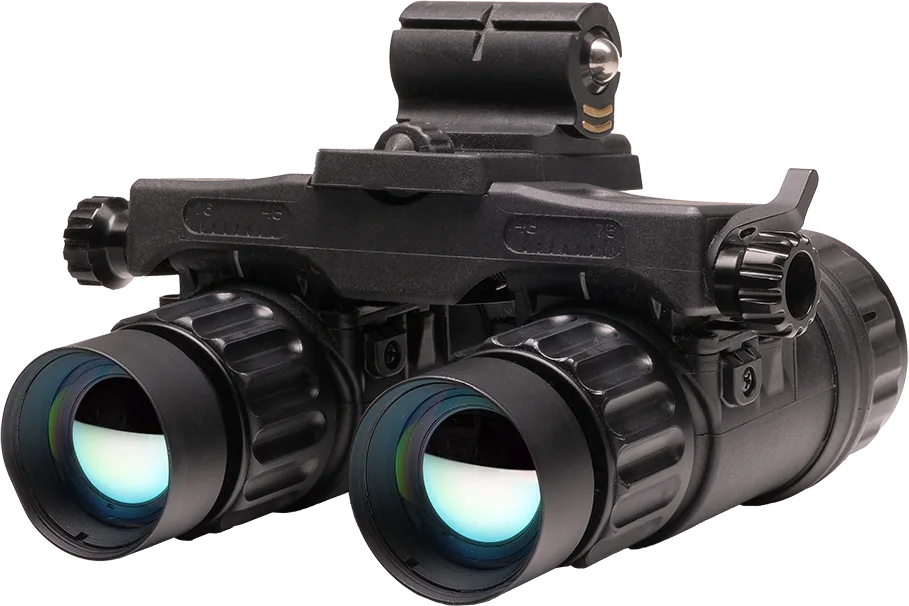
The SERHAT F950 and F1200 are pilot night vision goggles (PNVG) for helicopter crews. In both models, dual tubes provide true binocular depth perception; the difference is in the objective: the F950 targets use down to starlight with a fast F/0.95 lens, while the F1200 offers greater depth of field with an F/1.2 lens. The manufacturer reports four-axis adjustment (interpupillary, vertical, fore-aft, tilt), a Minus B filter for compatibility with cockpit lighting, and an external power design with no battery on the helmet. In Turkey, pilot night vision goggles have so far been an item covered largely by imports; SERHAT is the domestic option in this field. Which helicopter fleets use it has not been officially disclosed.
NOX, B31 and M14: the ground troops’ set
| Product | Type | Weight | Power | Distinguishing feature |
|---|---|---|---|---|
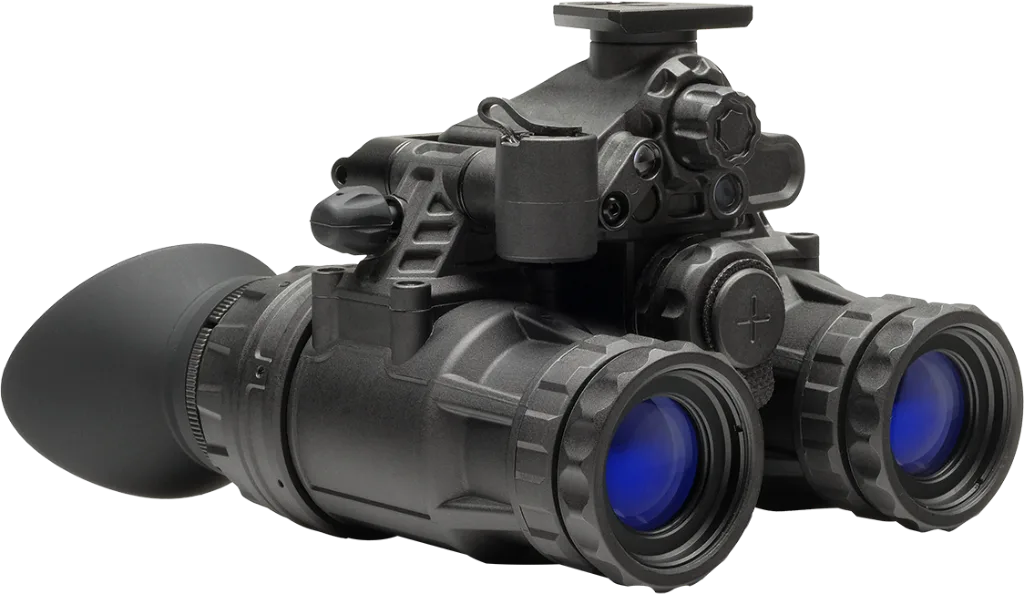
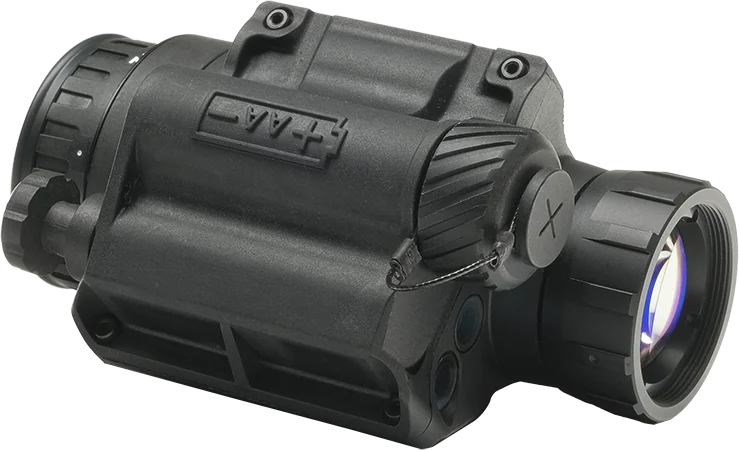
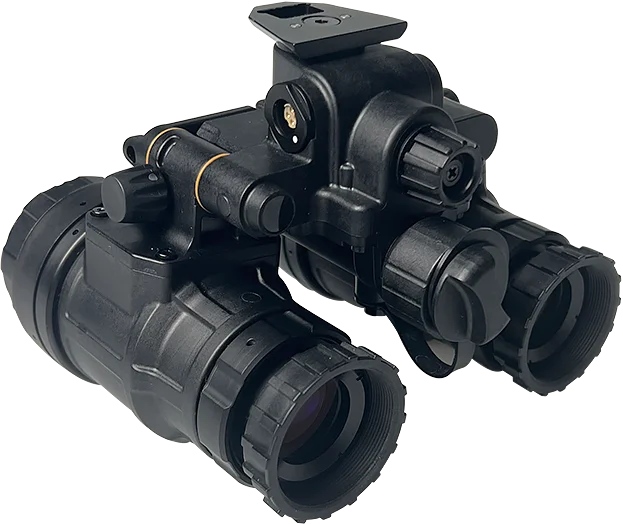
| NOX BNVD | Dual-tube binocular | 485 g | 1xAA, 15+ hours | Independently flippable monoculars, spot+flood IR illuminator, IP68 |
| B31 / B31U | Dual-tube binocular | Not disclosed | 1xAA, 15+ hours | 27 mm F/1.2 objective, 40-degree field of view, 50+ hours with external pack |
| M14 / M14U | Monocular (PVS-14 form) | 286 g / 235 g | 1xAA, 40+ hours | PVS-14 mount, accessory and tube compatibility, built-in IR, IP68 |
| E4 | Helmet mount | 171 g | – | Two-axis adjustment, breakaway safety |
The M14’s PVS-14 compatibility is a deliberate choice: units that use the world’s most widespread monocular form factor can switch to the M14 without changing their mount and accessory inventory. The manufacturer says tube options on both products are tailored to customer requirements; the origin of the tubes and their FOM values have not been disclosed.
ENES: weapon-mounted night sights
The ENES line is built in two architectures. The ENES XN4 and XN6 are standalone night sights with their own magnification (4.5x and 6x) and Mil-Dot reticle; the XN6 stands out with a 145 mm objective and 0.085 MIL adjustment increments. The ENES XC4 and XC6 are clip-on designs: they mount coaxially ahead of a pre-zeroed day scope and require no re-zeroing. According to the manufacturer, all four withstand recoil up to 12.7 mm (.50) caliber, run for more than 50 hours on a single CR123A, and are protected against sudden light changes by autogating. The thermal counterparts of the same clip-on logic are the PARS G2-50 and PARS SLR; the thermal comparison file covers that distinction.
Frequently asked questions
Does 3E make the tubes itself?
Not officially disclosed. The manufacturer says high-quality intensifier tubes are fitted as standard and alternative makes and models are offered on request; this wording suggests the tubes may be externally sourced.
Which helicopters use SERHAT?
Not officially disclosed. The manufacturer says the goggle was developed with feedback from experienced pilots and offers multiple helmet mounting options.
Is the M14 the same product as the PVS-14?
No. The M14 is a 3E product built to the PVS-14 form factor; it is compatible with PVS-14-type mounts, accessories and tubes. The Light Weight build is 286 grams and the Ultra Light Weight build 235 grams.
How do units choose between binocular and monocular?
Dual tubes provide depth perception, an advantage in terrain movement and indoor work. A monocular leaves one eye in natural dark adaptation, is lighter and can also be weapon-mounted. Units typically procure a mix based on mission profile.
Why do the ENES clip-on models need no re-zeroing?
A clip-on device sits coaxially ahead of the day scope and passes through a 1x image; the aiming line stays on the scope’s reticle. The manufacturer says stable optical alignment preserves the zero.
Sources and verification note
- https://3eeos.com/catalog/nox-bnvd — Accessed: August 13, 2026
- https://3eeos.com/catalog/serhat-pnvg — Accessed: August 13, 2026
- https://3eeos.com/catalog/serhat-f1200-pnvg — Accessed: August 13, 2026
- https://3eeos.com/catalog/m14 — Accessed: August 13, 2026
- https://3eeos.com/catalog/enes-xc6 — Accessed: August 13, 2026
Technical values are manufacturer statements. Tube origin, FOM values and user units have not been officially disclosed; no estimates have been made on these points.