What is ANKA? Turkey’s Indigenous MALE Drone by TUSAŞ (2026)

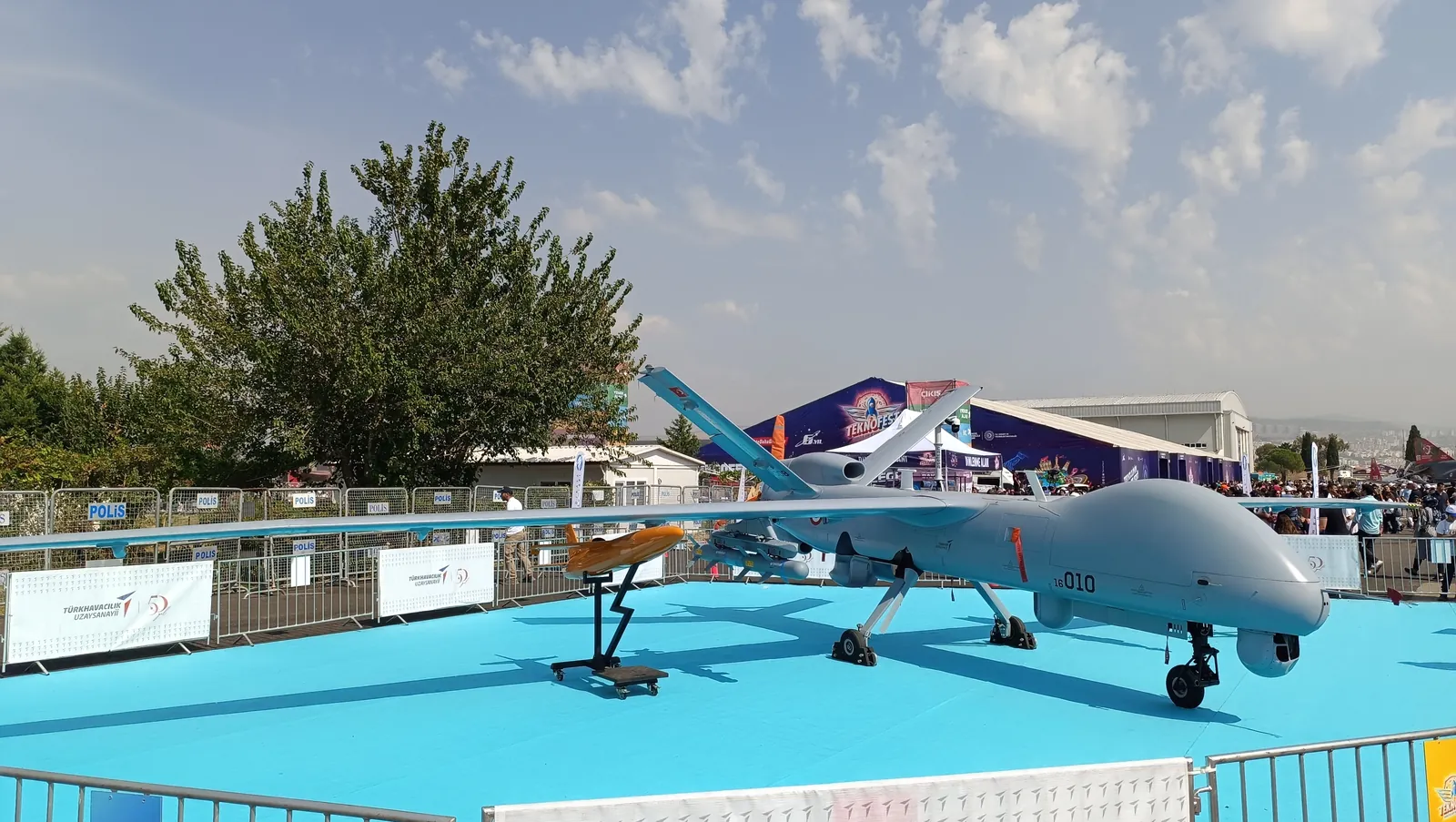
ANKA is a family of medium-altitude long-endurance (MALE) unmanned aerial vehicles developed by Turkish Aerospace (TUSAŞ/TAI) and Turkey’s first indigenously designed MALE drone. The twin-tail, pusher-propeller aircraft first flew on December 30, 2010, offers 30+ hours of endurance and a 30,000 ft ceiling, and serves with Turkish forces and several export customers according to open sources.
| ANKA — Quick Facts | |
|---|---|
| Type | Medium-altitude long-endurance (MALE) unmanned aerial vehicle; twin-tail, pusher propeller, retractable landing gear |
| Manufacturer | Turkish Aerospace (TUSAŞ/TAI), Kahramankazan, Ankara |
| First flight | December 30, 2010 (prototype) |
| Engine | 1× TEI-PD170 heavy-fuel (diesel-type) engine, roughly 170 hp (130 kW) class; JP-8 compatible |
| Dimensions (ANKA-S) | Wingspan 17.5 m, length 8.6 m, height 3.25 m |
| Weight and payload | MTOW 1,700 kg; payload 350+ kg (current TUSAŞ data) |
| Endurance and ceiling | 30+ hours; maximum altitude 30,000 ft (MSL); mission altitude 18,000-23,000 ft |
| Variants | ANKA-A, ANKA-B, ANKA-S (series production), ANKA-I (SIGINT); ANKA-3 is a separate jet-powered platform |
| Users | Turkish Air Force, Naval Forces, Gendarmerie and MİT; export customers reported by open sources |
What is ANKA?
ANKA is an unmanned aerial vehicle family developed by Turkish Aerospace (TUSAŞ/TAI) for the medium-altitude long-endurance class, and the first MALE drone Turkey designed itself. The name comes from the Anka, the mythical bird of Turkish and Persian tradition also known as the Simurg. The airframe is a single-engine platform with a twin-tail layout, a rear-mounted pusher propeller and retractable landing gear. TUSAŞ is the prime contractor; the engine comes from TEI, avionics, radar and electro-optical payloads are largely supplied by ASELSAN, and munitions that are integrated on the platform come from ROKETSAN and TÜBİTAK SAGE.
The prototype made its maiden flight on December 30, 2010. From 2013 TUSAŞ ran a production line at Kahramankazan, the first operational missions followed around February 2016 in Elazığ, and deliveries of the series-production ANKA-S to the Turkish Air Force began in early 2017. Current TUSAŞ data for the ANKA-S lists a wingspan of 17.5 m, a length of 8.6 m, a maximum take-off weight of 1,700 kg, a payload of 350+ kg, endurance of 30+ hours, a maximum altitude of 30,000 ft and a data link range of 250+ km line of sight. Older datasheets show lower figures, such as 24 hours and 200 kg, so figures differ by source and date.
What missions does ANKA perform?
ANKA is built around persistent surveillance, and the payload fit determines the mission:
- Reconnaissance and surveillance: electro-optical/infrared (EO/IR) cameras provide day and night observation over long loiter periods.
- Target detection and tracking: the platform supports target identification and tracking for ground and naval forces.
- Radar imaging: SAR/GMTI radar carried by the ANKA-B and ANKA-S allows all-weather imaging and moving-target detection.
- Signals intelligence: the ANKA-I variant is configured for electronic intelligence and SIGINT missions; details have not been officially disclosed.
- Beyond-line-of-sight control: satellite communications (SATCOM) allow the aircraft to be operated beyond the range of the line-of-sight data link, from a NATO-compatible (STANAG 4586) ground control station with automatic take-off and landing.
The ANKA name covers several configurations. ANKA-A, ANKA-B, ANKA-S and ANKA-I belong to the same twin-tail, propeller-driven line, whereas ANKA-3 is a separate flying-wing jet platform that is treated as its own topic.
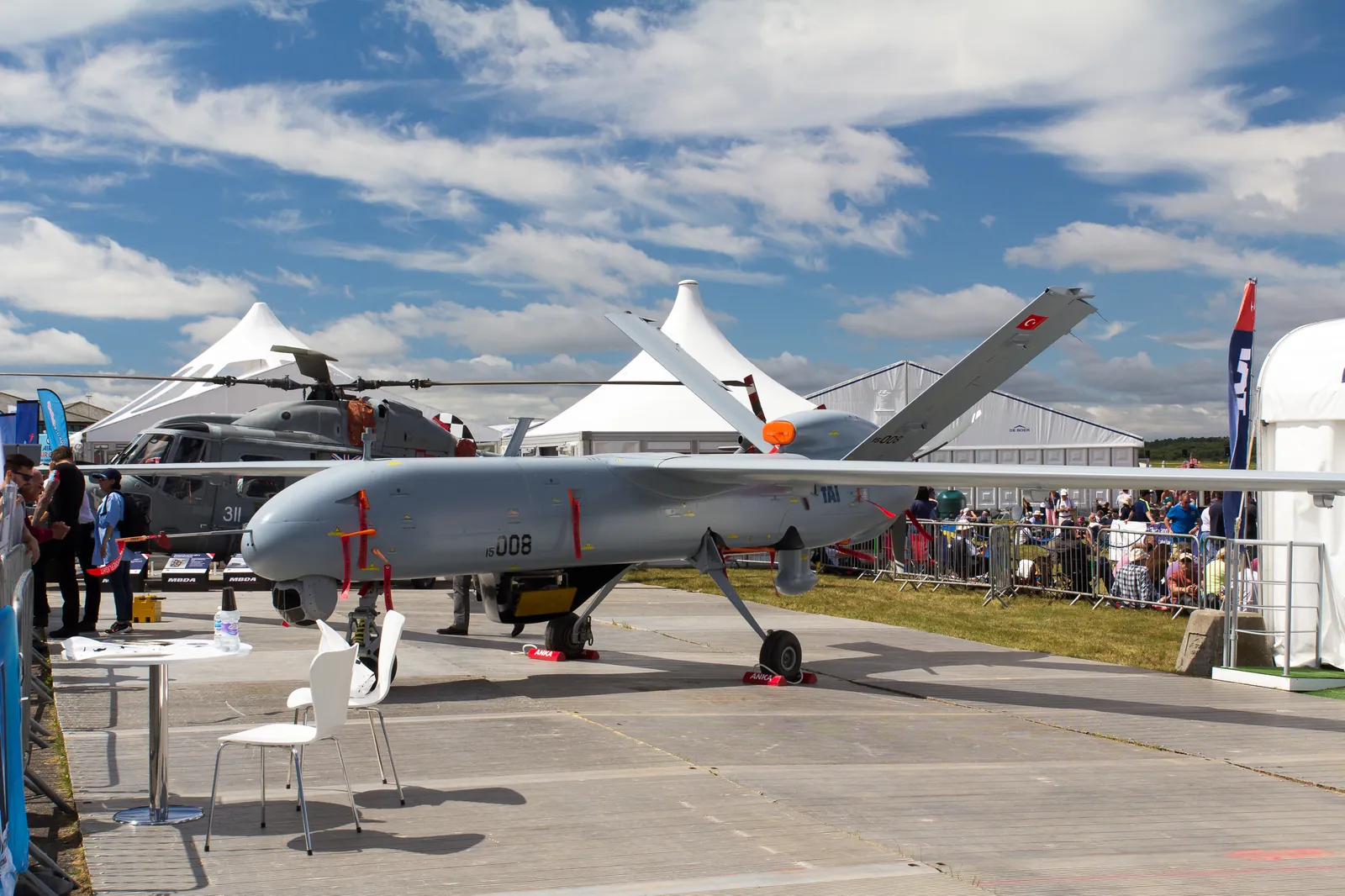
The table below lists ANKA users and orders as publicly reported. Apart from Turkish forces, quantities rest on open sources rather than official announcements, and unit prices have not been officially disclosed.
ANKA-S and series production in service
The ANKA-S is the series-production configuration and the version most often meant by the plain name ANKA. It adds a SATCOM antenna for beyond-line-of-sight operation, an indigenous flight control computer and retractable landing gear, and it pairs EO/IR and radar payloads with a NATO-compatible (STANAG 4586) ground control station. Deliveries to the Turkish Air Force began in early 2017, and the Air Force operates the active ANKA fleet, with the Naval Forces, the Gendarmerie and MİT also reported as users. Open sources put the total Turkish inventory at about 80 units.
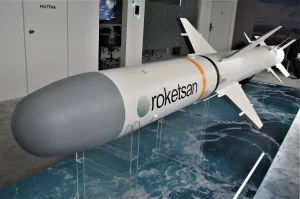
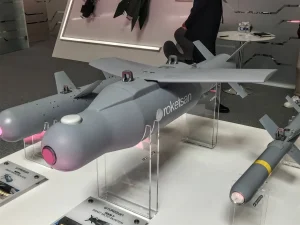
In the armed role, open sources report that mini smart munitions such as MAM-L and MAM-C have been integrated with ANKA, but the details of a series armed configuration have not been officially disclosed. A munition shown on an exhibition stand is not the same thing as an operational integration, and this page treats the two separately.
Exports, market position, ANKA-3 and AKSUNGUR
ANKA has the widest export footprint among Turkish MALE platforms in the TUSAŞ range. The largest reported contract is Indonesia’s 12 ANKA from 2023, of which the Indonesian Air Force received the first aircraft in September 2025. Tunisia and Kazakhstan are reported to have taken delivery of small batches, Malaysia is reported to be receiving 3 ANKA-S with first delivery in early 2026, Algeria has 10 on order according to open sources, and Uzbekistan was announced as a customer in January 2025. Unit prices have not been officially disclosed.
Two similar names should not be confused with the ANKA. ANKA-3 is a separate flying-wing jet UAV, first flown in December 2023, with a series delivery target of late 2026 to early 2027. AKSUNGUR is a larger twin-engine TUSAŞ MALE platform and its own subject. Both are also distinct from the Bayraktar family, which is produced by Baykar, a different company.
This page separates official data from reported figures. Operator quantities other than Turkish forces come from open sources and are labelled as such; the Indonesian contract for 12 aircraft is a reported contract, and the remaining deliveries have not been officially itemised. Specifications reflect current TUSAŞ product data and open sources, and older datasheets list lower values. ANKA, ANKA-3 and AKSUNGUR are three different platforms. Armed configurations integrated on exhibition displays are not the same as operational integration. Unit prices and values that have not been confirmed are not officially disclosed.
Frequently Asked Questions
What is ANKA?
ANKA is a family of medium-altitude long-endurance (MALE) unmanned aerial vehicles developed by Turkish Aerospace (TUSAŞ/TAI) and Turkey’s first indigenously designed MALE drone. It has a twin-tail layout, a pusher propeller, a single engine and retractable landing gear. The prototype first flew on December 30, 2010, and the series-production ANKA-S has been delivered to the Turkish Air Force since early 2017.
What is the difference between ANKA and ANKA-S?
ANKA is the name of the whole family, which includes the ANKA-A, ANKA-B, ANKA-S and ANKA-I. The ANKA-S is the series-production configuration, adding a SATCOM antenna for beyond-line-of-sight operation, an indigenous flight control computer and retractable landing gear, with EO/IR and radar payloads. Deliveries of the ANKA-S began in early 2017, while the ANKA-A prototype first flew in 2010.
What engine does ANKA use?
ANKA is powered by a single TEI-PD170 heavy-fuel engine, a diesel-type unit in the roughly 170 hp (130 kW) class that is compatible with JP-8 fuel. Sources quote the output between 155 and 170 hp. The engine is produced and integrated by TEI, while TUSAŞ is the platform prime contractor and ASELSAN supplies much of the avionics and payload.
Is ANKA armed?
ANKA is primarily an intelligence, surveillance and reconnaissance platform with EO/IR, SAR/GMTI and SIGINT payloads. Open sources report that mini smart munitions such as MAM-L and MAM-C have been integrated with the aircraft, but the details of a series armed configuration have not been officially disclosed. An armed display at an exhibition is not the same as an operational integration.
What is the difference between ANKA and ANKA-3?
ANKA-3 is a separate platform, not an upgrade of the ANKA-S. It is a flying-wing, jet-powered, low-observable UAV that first flew in December 2023, with a series delivery target of late 2026 to early 2027. The ANKA, by contrast, is a propeller-driven, twin-tail MALE aircraft with 30+ hours of endurance; a delivery target for ANKA-3 is not a delivery.
Which countries operate ANKA?
Besides Turkey, where the Air Force, Naval Forces, Gendarmerie and MİT use it, open sources report Tunisia (3-5 aircraft), Kazakhstan (3), Indonesia (12 ordered in 2023, first aircraft received in September 2025), Malaysia (3 ANKA-S, first delivery in early 2026) and Algeria (10 ordered). Uzbekistan was announced as a customer in January 2025; quantities there are not officially disclosed.
What is the difference between ANKA and AKSUNGUR?
Both are TUSAŞ MALE unmanned aircraft, but they are different platforms. ANKA is a single-engine aircraft with a 1,700 kg maximum take-off weight, while AKSUNGUR is a larger twin-engine MALE UAV with a heavier payload class and its own programme. The Bayraktar drones are a separate family produced by Baykar, not by TUSAŞ.
Sources
- Turkish Aerospace (TUSAŞ/TAI) — official ANKA product page, tusas.com (specifications, role and variant data)
- Wikipedia — TAI Anka (development history, variants and operator lists)
- Sanayi Gazetesi — ANKA programme reporting
- Anadolu Agency and Ensonhaber — Indonesia’s 12 ANKA contract and deliveries
- Haber7 — ANKA export and inventory reporting
- Open-source operator and inventory lists — Tunisia, Kazakhstan, Malaysia, Algeria and Uzbekistan quantities, treated as reported figures