What Is KAAN? Turkey’s 5th-Generation Fighter Explained

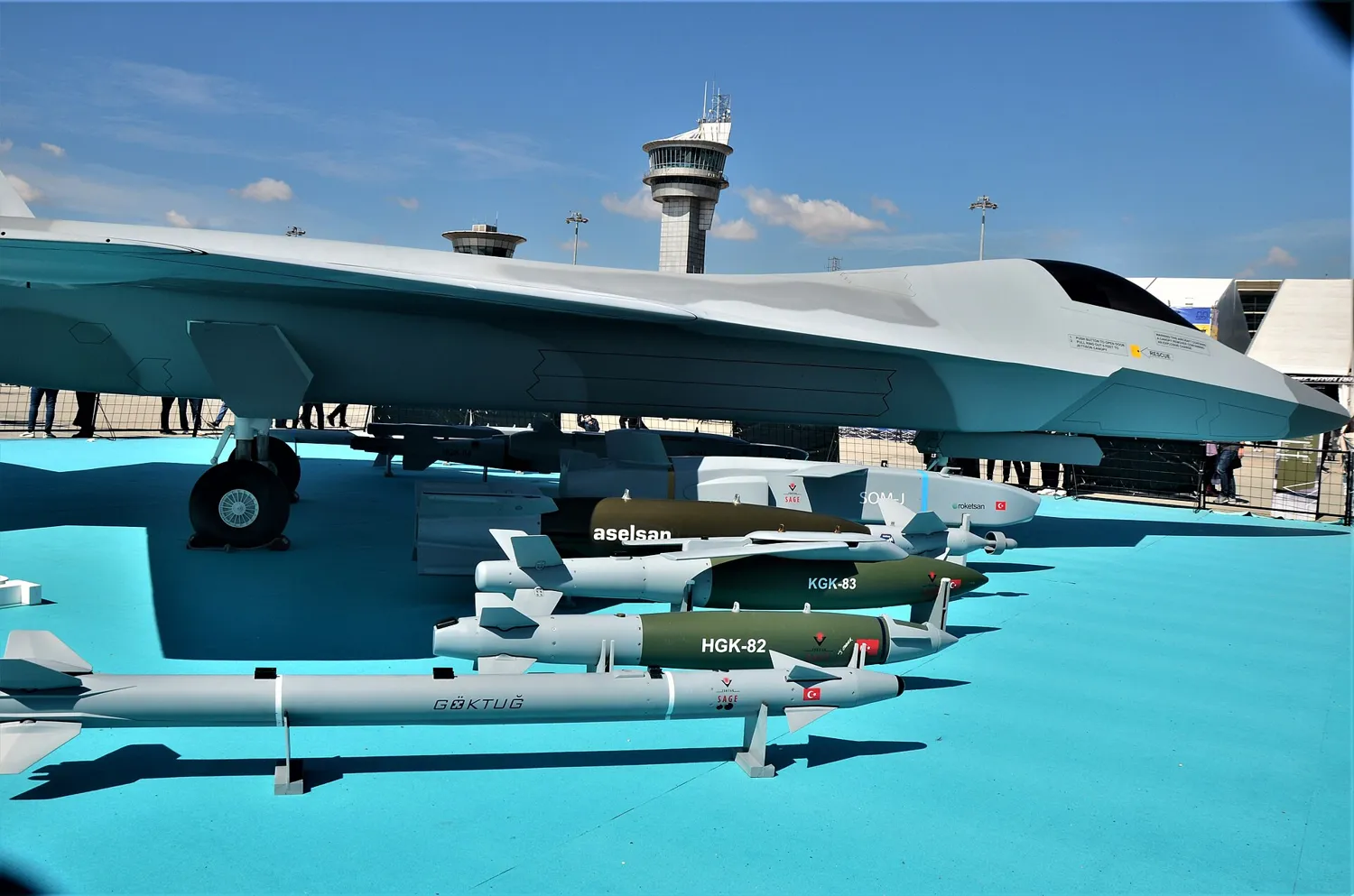
KAAN is Türkiye’s fifth-generation National Combat Aircraft (Millî Muharip Uçak, MMU), developed with Turkish Aerospace (TUSAŞ) as prime contractor. It is a twin-engine, stealth-oriented fighter whose prototype made its first flight in February 2024. The prototype flies on two General Electric F110 engines; a domestic engine is a goal, not yet ready. Many detailed specifications remain officially undisclosed.
| KAAN at a glance | |
|---|---|
| Aircraft | KAAN (Millî Muharip Uçak / National Combat Aircraft, MMU) |
| Prime contractor | Turkish Aerospace (TUSAŞ / TAI) |
| Class | Fifth-generation, twin-engine fighter |
| First flight | February 2024 (prototype) |
| Prototype engines | 2× General Electric F110 (GE) |
| Target engine | Domestic (TEI TF-35000) — goal, not ready |
| Radar / avionics | ASELSAN (AESA radar a stated goal) |
| Munitions | ROKETSAN / TÜBİTAK SAGE |
| Detailed specs | Largely not officially disclosed |
What is KAAN?
KAAN is Türkiye’s programme to field an indigenous fifth-generation fighter, known formally as the National Combat Aircraft (Millî Muharip Uçak, MMU). It is being developed with Turkish Aerospace (TUSAŞ) as the platform prime contractor, and it is intended to give the Turkish Air Force a modern, stealth-oriented, twin-engine combat aircraft and eventually to replace older fighters in the fleet. The prototype made its maiden flight in February 2024, a milestone that moved KAAN from ground development into flight testing.
As a fifth-generation design, KAAN is associated with features such as a low-observable (stealth-oriented) airframe shape, internal weapons carriage, sensor fusion and modern avionics. It is important to be precise here: KAAN is at the prototype and development stage, so many of these characteristics describe design intent and targets rather than fully demonstrated, serial-production capabilities. This article treats confirmed facts and stated goals separately, and marks unconfirmed technical values as not officially disclosed.
Engines, radar and weapons: who supplies what
KAAN is a platform integration effort in which Turkish Aerospace ties together subsystems from several national and foreign suppliers. The key elements:
- Engines: the prototype flies on two General Electric F110 engines (a foreign, proven powerplant). For serial production, Türkiye aims to use a domestic engine (the TEI TF-35000) — but this is a development goal and is not a ready, qualified engine.
- Radar and avionics: ASELSAN is the principal supplier, with an indigenous AESA radar among the stated goals for the programme.
- Munitions: weapons integration involves ROKETSAN and TÜBİTAK SAGE.
This division matters because KAAN is often described loosely as “a TUSAŞ aircraft”. TUSAŞ is the airframe and integration prime, but the engine, radar, avionics and weapons come from other organisations. Not every subsystem on KAAN is a Turkish Aerospace product.
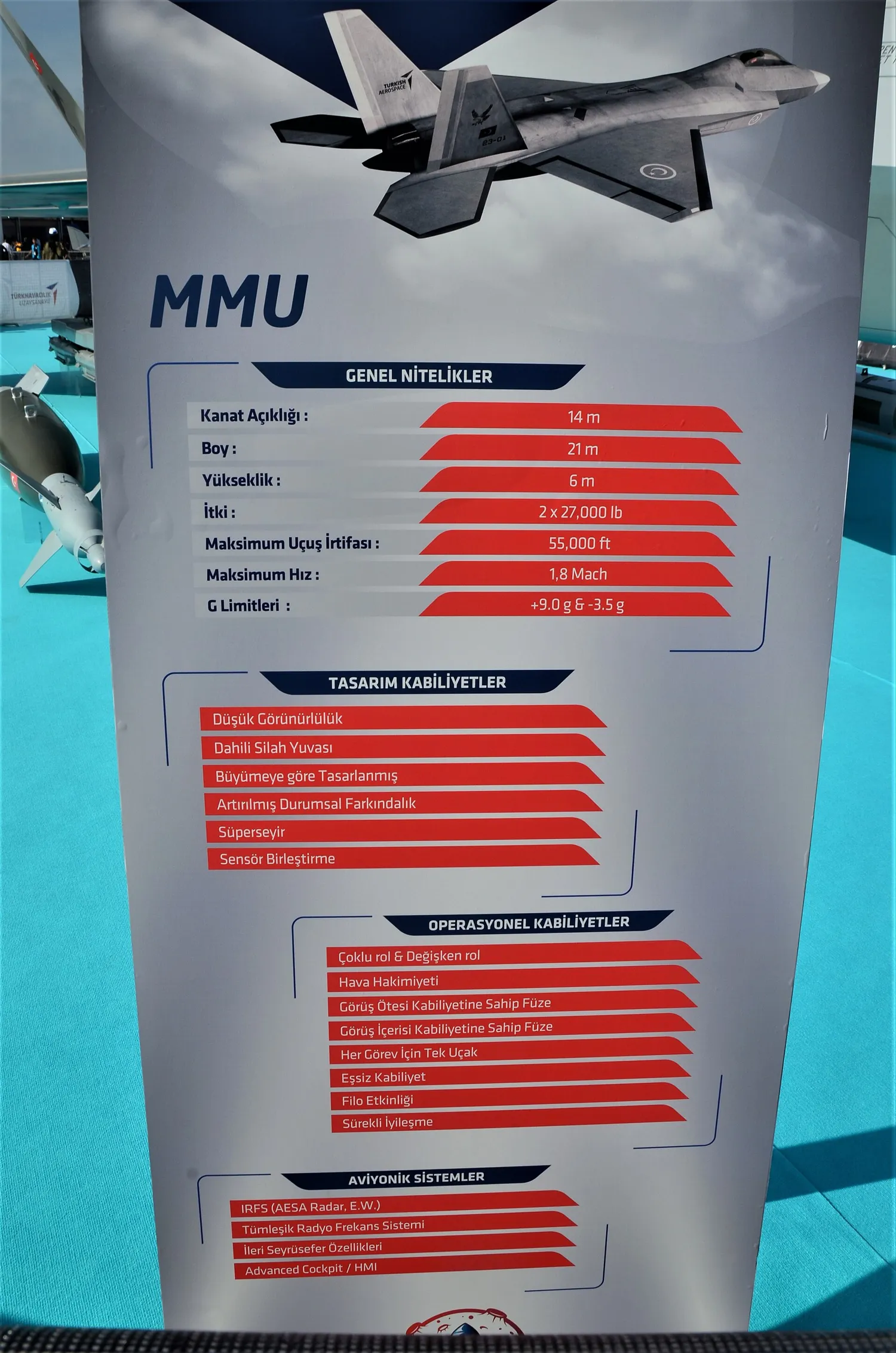
The table below is a factual data sheet for KAAN, separating confirmed facts from stated goals. Detailed performance values that have not been officially released are shown as not disclosed rather than estimated.
KAAN is the flagship of Turkish Aerospace’s portfolio. The company ranked 47th in the Defense News Top 100 (2025 list) with about $2.2 billion in defence revenue and roughly 43 percent growth, and employs around 17,000 people, with major programmes like KAAN driving hiring.
Prototype versus serial production: what is not yet confirmed
The single most important thing to understand about KAAN is the gap between a flying prototype and a serial-production aircraft. The February 2024 first flight was a genuine milestone, but it does not mean the aircraft is in service or that its final configuration is fixed. Several defining elements are still goals: the domestic engine (TF-35000) is under development and not ready, so prototypes use foreign F110 engines; the intended indigenous AESA radar and full sensor and weapons integration are objectives being worked toward. Detailed performance figures — top speed, range, payload and weights — are largely not officially disclosed, and figures that circulate publicly are often projections rather than verified values. A full-scale mock-up shown at events such as Teknofest is a display article, not an operational aircraft. This article deliberately avoids presenting prototype or target data as confirmed serial-production capability.
KAAN within the Turkish defence ecosystem
KAAN sits at the centre of a wider ecosystem of Turkish defence and aerospace programmes led by Turkish Aerospace as prime contractor. Alongside it, the company develops the HÜRJET jet trainer and light-attack aircraft, the HÜRKUŞ turboprop trainer, the ANKA UAV family and the flying-wing ANKA-3, and helicopters such as the T625 GÖKBEY and the T929 ATAK-2. Across these programmes the same suppliers recur: ASELSAN for radar and avionics, TEI and foreign firms for engines, HAVELSAN for software and simulation, and ROKETSAN and TÜBİTAK SAGE for munitions. KAAN is best seen as a platform hub; more detailed sub-topics — its engine, radar, weapons and how it compares with foreign fifth-generation fighters — are natural follow-on subjects that will be covered separately as officially confirmed information becomes available.
KAAN is Türkiye’s fifth-generation National Combat Aircraft, built with Turkish Aerospace as prime contractor; its prototype first flew in February 2024. The prototype uses 2× GE F110 engines, with a domestic engine only a goal. Radar/avionics come from ASELSAN. Most detailed performance figures are not officially disclosed — prototype and target are not the same as confirmed serial capability.
Frequently asked questions
What is KAAN?
KAAN is Türkiye’s fifth-generation National Combat Aircraft (Millî Muharip Uçak, MMU), developed with Turkish Aerospace (TUSAŞ) as prime contractor. It is a twin-engine, stealth-oriented fighter intended to modernise the Turkish Air Force. Its prototype made its first flight in February 2024, moving the programme into flight testing.
When did KAAN first fly?
The KAAN prototype made its maiden flight in February 2024. This was a development milestone marking the transition from ground testing to flight testing. It does not mean the aircraft is in service or that its final serial-production configuration is fixed; the programme remains at the prototype and development stage.
What engine does KAAN use?
The prototype flies on two General Electric F110 engines, a proven foreign powerplant. For serial production, Türkiye aims to use a domestic engine, the TEI TF-35000, but this is a development goal and not a ready, qualified engine. So the current aircraft uses foreign engines while the indigenous engine is worked toward.
Who makes KAAN’s radar and weapons?
Turkish Aerospace is the airframe and integration prime, but subsystems come from others. ASELSAN is the principal radar and avionics supplier, with an indigenous AESA radar among the stated goals, while munitions integration involves ROKETSAN and TÜBİTAK SAGE. Not every subsystem on KAAN is a Turkish Aerospace product.
What are KAAN’s speed and range?
Detailed performance figures such as top speed, range, payload and weights are largely not officially disclosed. Numbers that circulate publicly are often projections or targets rather than verified values. Because the aircraft is at the prototype stage, prototype and target data should not be treated as confirmed serial-production capability.
Is KAAN in service yet?
No. KAAN is at the prototype, flight-test and development stage following its February 2024 first flight. Serial production and entry into service are future steps, and several defining elements — including the domestic engine and full sensor and weapons integration — remain goals rather than completed, qualified capabilities.
Sources
- Turkish Aerospace official website — tusas.com (KAAN / MMU programme information)
- Presidency of Defence Industries (SSB) — National Combat Aircraft programme
- Anadolu Agency / Daily Sabah — KAAN first flight coverage, February 2024
- Defense News Top 100 (2025 list) — prime contractor context, ~$2.2B defence revenue
- Hürriyet Daily News — KAAN programme and engine coverage
- Wikipedia — TAI TF-X / KAAN entry