KAAN Munitions: ROKETSAN and SAGE Weapons Explained (2026)
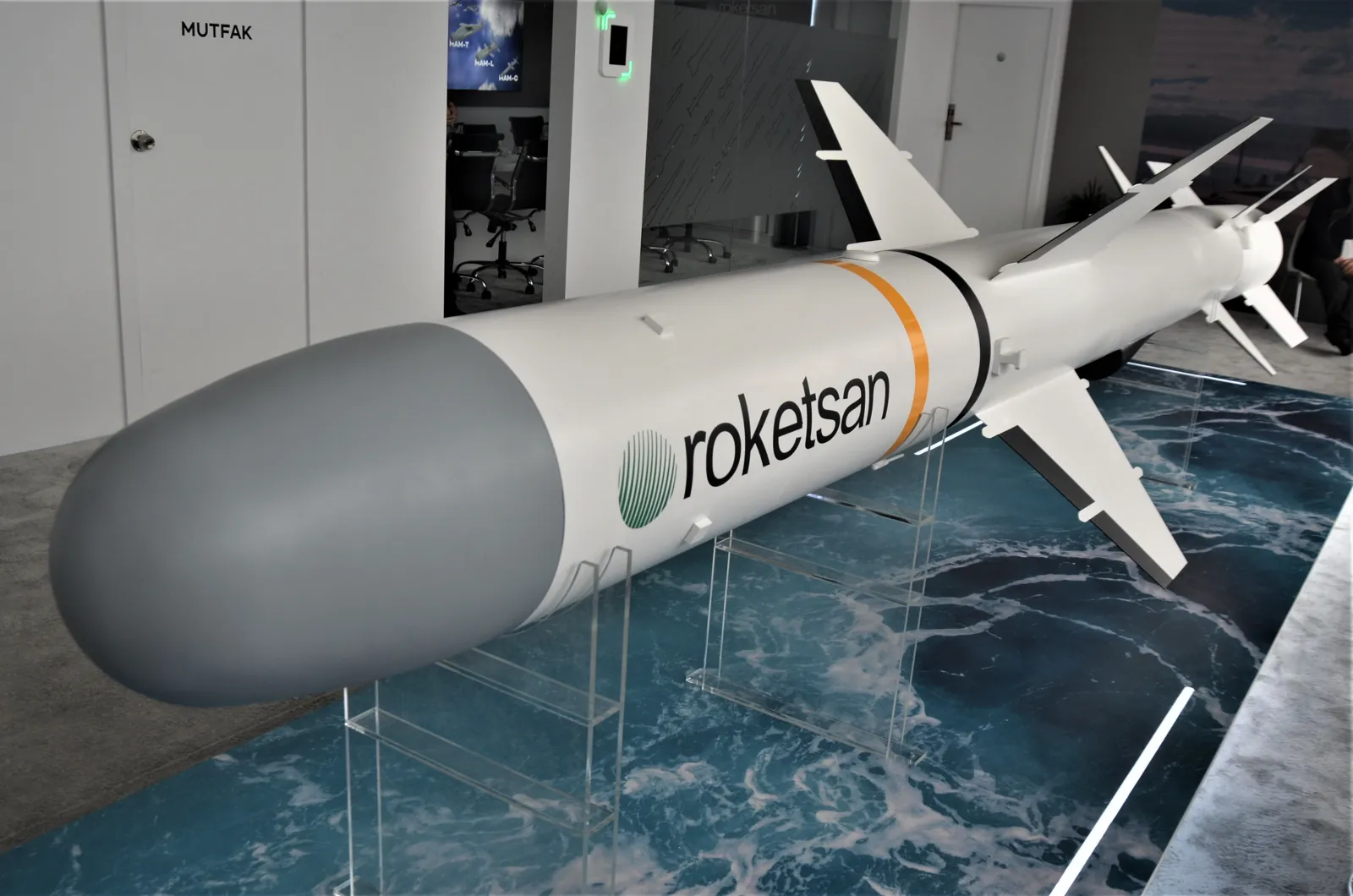
Most of the weapons KAAN is intended to carry are developed not by Turkish Aerospace (TUSAS) but by ROKETSAN and TUBITAK SAGE: the air-to-air missiles GOKDOGAN and BOZDOGAN, and on the air-to-ground side the SOM cruise missile family and precision guidance kits. The exact weapon load, internal bay capacity and integration status have not been officially disclosed. KAAN is a fifth-generation fighter for which TUSAS is the prime contractor; to keep its radar signature low, it is intended to carry weapons largely in an internal weapons bay. The intended weapons package should not be confused with today’s verified integration.
| KAAN Munitions – Fact Sheet (Verified / Undisclosed) | |
|---|---|
| Air-to-air (beyond visual range / BVR) | GOKDOGAN – TUBITAK SAGE (radar-guided) |
| Air-to-air (within visual range / WVR) | BOZDOGAN – TUBITAK SAGE (infrared-guided) |
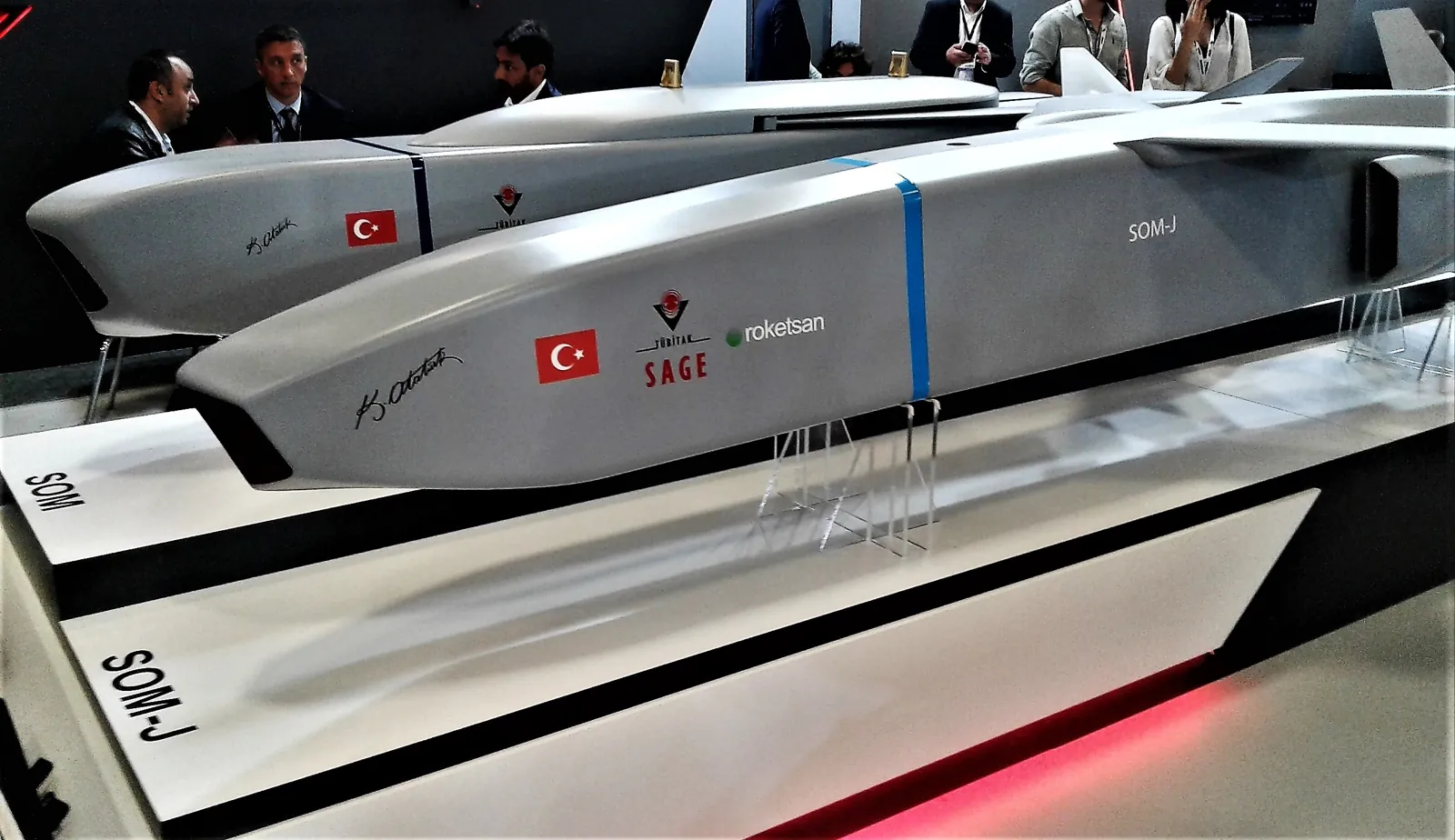
| Air-to-ground cruise missile | SOM family – ROKETSAN / SAGE; SOM-J for internal bay |
| Precision guidance kits | HGK, KGK – TUBITAK SAGE (for existing bombs) |
| Munitions developers | ROKETSAN, TUBITAK SAGE |
| Weapon carriage (goal) | Largely internal weapons bay (stealth) |
| Platform prime contractor | TUSAS / Turkish Aerospace (integration) |
| Exact weapon load / internal bay capacity | Not officially disclosed |
Who develops KAAN’s weapons?
KAAN is a fighter platform, but most of the weapons it carries are not TUSAS products. A significant share of the air-to-air and air-to-ground munitions is developed by ROKETSAN and TUBITAK SAGE, while TUSAS, as the platform prime contractor, integrates these weapons onto the aircraft. In other words, the aircraft is TUSAS’s responsibility and the bulk of the weapons belong to ROKETSAN and SAGE. This distinction is essential to understanding KAAN’s real capabilities: a weapon system need not be built by TUSAS to become part of the aircraft’s striking power once integrated. The headline indigenous munitions for KAAN are the air-to-air missiles GOKDOGAN (beyond visual range, radar-guided) and BOZDOGAN (within visual range, infrared-guided), and on the air-to-ground side the SOM cruise missile family. Their exact integration timeline, weapon load and internal bay configuration on KAAN have not been officially disclosed by TUSAS, ROKETSAN or the Presidency of Defence Industries (SSB); weapon lists circulating in open sources are expectations, not confirmed data.
Why does the internal weapons bay matter?
One of the features that makes KAAN a fifth-generation aircraft is low observability (stealth). Hanging weapons on external, under-wing stations substantially increases the radar signature, which is why fifth-generation fighters carry weapons in an internal weapons bay as much as possible. KAAN’s intended design likewise carries the bulk of its weapons internally. The main points of this approach are:
- Low radar signature: internally carried weapons preserve the aircraft’s stealth profile.
- SOM-J: a variant of the SOM cruise missile dimensioned to fit inside the internal weapons bay.
- Air-to-air missiles: integration of GOKDOGAN and BOZDOGAN into the internal bay is a stated goal.
- External stations: on missions where stealth is not the priority, under-wing carriage is also possible (higher weapon load, higher radar signature).
Some of these configurations remain goals; the internal bay capacity, the number of missiles that can be carried at once and the integration status have not been officially disclosed. A weapon shown at an exhibition does not mean an operationally integrated capability.
The table below separates the verified developer/role information for KAAN’s munitions from the values that have not been officially disclosed. Figures for weapon load, range and internal bay capacity that appear in open sources are estimates; unless confirmed by TUSAS, ROKETSAN or SSB, they do not count as official data. A weapon displayed on a prototype should not be taken as a serial-production standard.
KAAN’s munitions integration is best read alongside the capabilities of TUSAS and the weapon makers ROKETSAN and TUBITAK SAGE. The indicators below are verified corporate figures surrounding the programme; munition unit cost and the programme budget have not been officially disclosed.
GOKDOGAN and BOZDOGAN: KAAN’s air-to-air missiles
The two core indigenous air-to-air missiles KAAN is intended to carry on air-superiority missions are GOKDOGAN and BOZDOGAN, both developed by TUBITAK SAGE. GOKDOGAN is a beyond-visual-range (BVR), radar-guided missile intended to engage targets at long range; BOZDOGAN is a within-visual-range (WVR), infrared-guided missile designed for close-in air combat. Together they aim to cover with indigenous solutions a mission split similar to the Western AIM-120 and AIM-9 pairing. However, the exact integration status of these missiles on KAAN, the number carriable in the internal bay and their ranges in KAAN configuration have not been officially disclosed; these are intended capabilities, not completed performance. Displaying a missile on a prototype does not mean operational integration is complete.
Role split in munitions: TUSAS, ROKETSAN and SAGE
KAAN’s weapons are not the work of a single organisation, and these munitions are procurement and development items separate from the airframe itself. As the platform prime contractor, TUSAS designs the aircraft and integrates weapon systems onto it, but it does not manufacture the missiles and guided bombs. The bulk of the air-to-air missiles and guidance kits are the responsibility of TUBITAK SAGE, while the cruise missiles and many strike munitions belong to ROKETSAN. This distinction is critical: the aircraft (platform) is TUSAS’s, but the weapons that give it its striking power are largely indigenous systems developed by ROKETSAN and SAGE. Maturely integrating these weapons onto KAAN is one of the most critical steps that must be completed for the aircraft to reach full operational capability.
Most of the weapons KAAN is intended to carry are developed by ROKETSAN and TUBITAK SAGE; the air-to-air missiles are GOKDOGAN and BOZDOGAN, and integration work is ongoing. KAAN’s exact weapon load, internal weapons bay capacity and integration timeline have not been officially disclosed. Weapon lists and figures appearing in open sources are estimates. The intended weapons package should not be confused with today’s verified integration; a displayed weapon should not be presented as an operationally completed capability.
Frequently Asked Questions
What weapons will KAAN carry?
The weapons KAAN is intended to carry include the air-to-air missiles GOKDOGAN (beyond visual range) and BOZDOGAN (within visual range), and on the air-to-ground side the SOM cruise missile family and precision guidance kits (HGK, KGK). Most of these weapons are developed by ROKETSAN and TUBITAK SAGE. The exact weapon load and integration status have not been officially disclosed.
Who makes KAAN’s weapons?
Most of KAAN’s weapons are developed not by TUSAS but by ROKETSAN and TUBITAK SAGE. As the platform prime contractor, TUSAS integrates these weapons onto the aircraft, but it does not manufacture the missiles and guided munitions. The air-to-air missiles are largely SAGE’s responsibility, while the cruise missiles belong to ROKETSAN.
What are GOKDOGAN and BOZDOGAN?
GOKDOGAN and BOZDOGAN are indigenous air-to-air missiles developed by TUBITAK SAGE. GOKDOGAN is a beyond-visual-range (BVR), radar-guided missile; BOZDOGAN is a within-visual-range (WVR), infrared-guided, close-combat missile. KAAN is intended to carry these missiles, but the exact integration status has not been officially disclosed.
Will KAAN carry its weapons internally?
To preserve KAAN’s stealth (low-observable) profile, the aircraft is intended to carry most of its weapons in an internal weapons bay; the SOM-J cruise missile is also designed to fit inside the bay. On missions where stealth is not the priority, under-wing external stations can also be used. The internal bay capacity has not been officially disclosed.
Which missile will KAAN use on air-to-ground missions?
The main indigenous weapon KAAN is intended to carry on air-to-ground missions is the SOM cruise missile family from ROKETSAN/SAGE; the SOM-J variant, sized to fit the internal weapons bay, stands out. Precision guidance kits such as HGK and KGK also turn existing bombs into guided munitions. The exact integration and range values have not been officially disclosed.
How large is KAAN’s weapon load?
KAAN’s exact weapon load and internal weapons bay capacity have not been officially disclosed by TUSAS, ROKETSAN or the Presidency of Defence Industries (SSB). Figures appearing in open sources are estimates and do not count as official data. Weapon integration is still in the development phase; prototype capability should not be taken as a serial-production value.
What is TUSAS’s role in KAAN’s munitions?
TUSAS is the platform prime contractor for KAAN; it designs the aircraft and integrates weapon systems onto it. Most of the missiles and guided munitions are developed by ROKETSAN and TUBITAK SAGE. In short, the aircraft is TUSAS’s responsibility, while a significant share of the weapons belongs to ROKETSAN and SAGE.
Sources
- TUSAS / Turkish Aerospace official corporate site – tusas.com (KAAN / MMU programme information)
- ROKETSAN – cruise missiles and strike munitions (SOM family)
- TUBITAK SAGE – air-to-air missiles (GOKDOGAN, BOZDOGAN) and guidance kits (HGK, KGK)
- Presidency of Defence Industries (SSB) – MMU/KAAN weapon integration statements
- Anadolu Agency / Daily Sabah – KAAN and indigenous munitions coverage
- Wikipedia – TAI TF Kaan, Gokdogan, Bozdogan and SOM entries (open source; estimated values noted as such)