ROKETSAN Interview: Stages, Question Types and Preparation

The ROKETSAN interview process, in line with general defence-industry practice, runs along two main tracks: a technical interview (often a panel) and an HR interview. Candidates face questions on discipline fundamentals, the projects on their CV, motivation and English. No official question list is publicly disclosed; successful interviews are followed by a security clearance.
| ROKETSAN Interview — At a Glance | |
|---|---|
| Company | ROKETSAN Roket Sanayii ve Ticaret A.Ş. |
| Sector | Defence industry (rockets, missiles, air defence) |
| Main location | Ankara, Türkiye (Elmadağ; Lalahan, Kırıkkale) |
| Application channel | ROKETSAN careers portal |
| Interview format | Technical interview + HR interview (panel format is common) |
| Question content | Not officially disclosed; varies by position |
| Areas assessed | Discipline fundamentals, CV projects, motivation, English |
| After the interview | Security clearance and background vetting |
How does the ROKETSAN interview process work?
The road to ROKETSAN starts with an application through the company’s careers portal. Applications first go through a CV screen, where degree programme, grades, internships and project experience carry weight. Shortlisted candidates are then invited to interview. ROKETSAN does not officially publish the exact flow of its hiring process; however, the recurring themes in public candidate accounts and standard defence-industry practice point to a process built around two main tracks: technical and HR.
The technical interview is typically run as a panel, with engineers and managers from the unit the candidate would join. For some positions, a written technical test, a problem-solving exercise or an English assessment may be added before or during the interview. The HR conversation may take place the same day as a separate session, or as a second meeting for candidates who clear the technical stage. The number and order of steps vary by position, department and hiring period; there is no single standard sequence.
The most important difference from a typical private-sector process is that passing the interviews is not, by itself, enough to start work. Every candidate who will work on defence programmes goes through security clearance and archive vetting; the formal offer and start date depend on that process concluding positively. As a result, the total time from application to onboarding at ROKETSAN can be longer than at many commercial employers.
What types of questions are asked in the technical interview?
An important caveat first: there is no verifiable, official list of ROKETSAN interview questions. Word-for-word question lists circulating online cannot be confirmed and change over time. What public candidate accounts and defence-industry practice do consistently show is the types of questions candidates should expect:
- Discipline fundamentals: Technical questions draw heavily on the core undergraduate curriculum. Mechanical engineering candidates can expect thermodynamics, fluid mechanics, strength of materials and control systems; electrical-electronics candidates circuit analysis, signal processing, electromagnetics and embedded systems; software candidates data structures, algorithms and languages such as C/C++.
- Projects on the CV: The graduation project, internship work and every project listed on the CV can be examined in detail — the candidate’s personal contribution, the methods used and the problems encountered are typical lines of questioning.
- Problem solving: Some interviews include a calculation or design question worked through on a whiteboard or on paper, so the panel can observe how the candidate thinks.
- Role-specific concepts: For positions tied to specialisms such as guidance, aerodynamics, propulsion or electronic warfare, basic questions from that field may come up.
In short, the technical interview is not a memory test. Its purpose is to gauge the candidate’s command of engineering fundamentals and structured thinking — how a candidate approaches a solution usually matters more than the answer itself.
The table below is a general framework compiled from the recurring themes of public candidate accounts and standard defence-industry practice. ROKETSAN does not officially publish its exact process; the number and order of steps can vary by position.
The HR interview and overall assessment
The HR interview looks beyond technical skill to how well the candidate fits the organisation. The recurring question types are: motivation (why ROKETSAN, why the defence industry), career goals (where do you see yourself in five years), teamwork and communication experiences, examples of handling difficult situations, and salary expectations. Candidates applying from outside Ankara may also be asked about their willingness to relocate.
Because the defence industry runs long-horizon programmes, a candidate’s intent to stay long term is an important criterion. Applicants with frequent job changes should be ready to explain them convincingly. Attitude towards working in a confidentiality-driven environment — following rules, procedures and information-security discipline — is also a natural topic. English is assessed in a way that fits the role: a few oral questions for some positions, a separate written assessment for others. It carries more weight in units with heavy technical documentation and international supplier contact.
Preparation tips and the security clearance
The soundest way to prepare for a ROKETSAN interview is to go back to fundamentals rather than chase tricks:
- Revise the core courses: Refresh your discipline’s foundation subjects at concept level — thermodynamics and control for mechanical, circuits and signals for electronics — rather than memorising formulas.
- Own your CV: Be able to defend every project you list: your personal contribution, the method you used and what you learned.
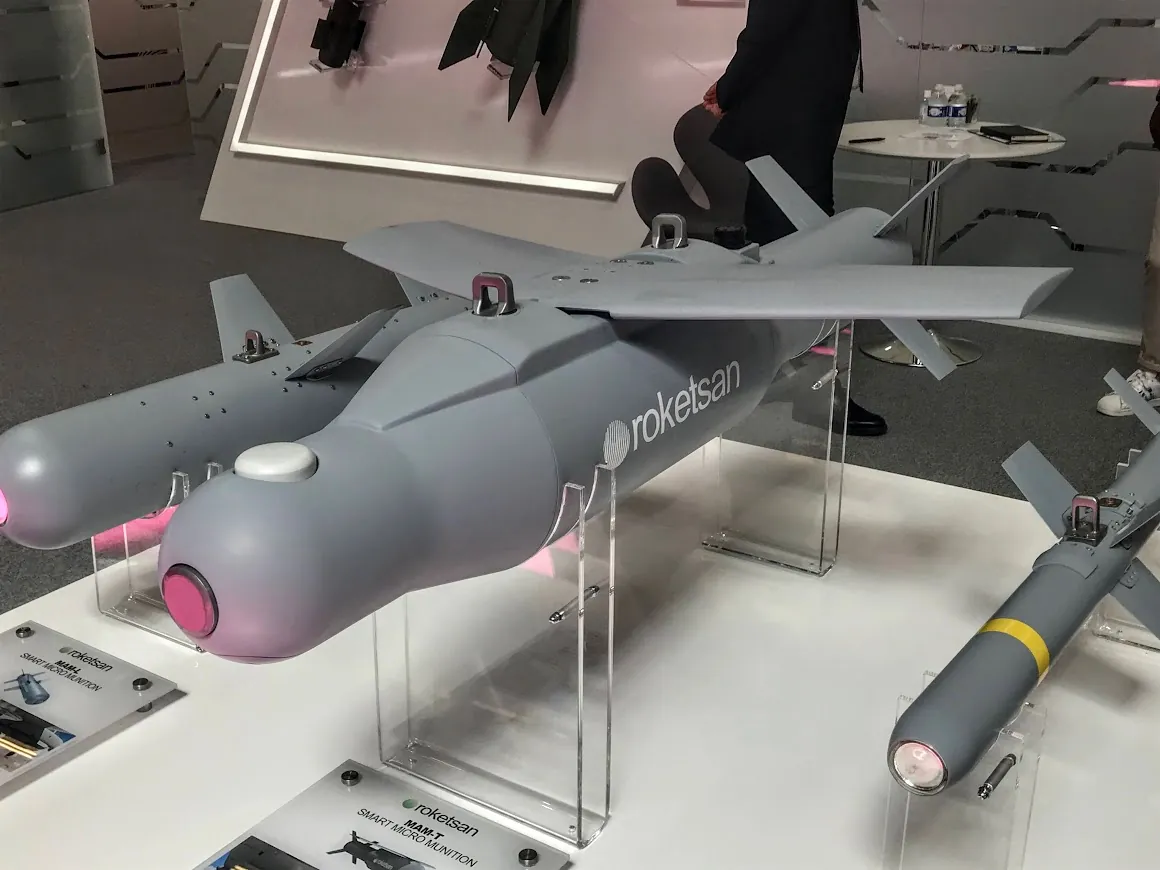
- Know the company: Learn ROKETSAN’s product families in outline (ATMACA, HİSAR, SİPER, CİRİT, the MAM family) and what the unit you applied to works on; it shows in the motivation questions.
- Structure your experience answers: Practise telling teamwork and problem-solving stories in a situation-task-action-result frame.
- Practise English: Being able to introduce yourself and your projects in English is a practical advantage.
Even after successful interviews the process is not over: under Turkish defence-industry regulations, every candidate goes through security clearance and archive vetting. Its duration is not officially announced and varies case by case; in general sector practice it is known to take weeks and sometimes months. The formal offer and onboarding are completed only after the clearance concludes positively.
ROKETSAN does not publicly disclose its interview questions or the exact flow of its hiring process. The stages and question types in this article are a general framework based on the recurring themes of public candidate accounts and standard defence-industry practice — not a verbatim question list. The process can vary by position, department and hiring period. Binding, current information is provided only to candidates within ROKETSAN’s official application process.
Frequently Asked Questions
How many stages does the ROKETSAN interview have?
No official sequence is published. In general practice the process runs through a CV screen, a technical interview and an HR interview, with a written technical test or English assessment added for some positions. The number of steps varies by role.
What topics come up in the ROKETSAN technical interview?
Questions draw mainly on discipline fundamentals: thermodynamics, strength of materials and control for mechanical engineering; circuit analysis and signal processing for electronics; data structures and algorithms for software. CV projects are also examined in detail. No verbatim question list is officially disclosed.
Is English tested in the ROKETSAN interview?
It depends on the position, but English is a frequently assessed skill — through oral questions or a written assessment. It matters more in units with heavy technical documentation and international contact.
What happens after a successful interview?
Under defence-industry regulations, a security clearance and archive vetting are launched. The formal offer and start date depend on that process concluding positively; its duration is not officially disclosed and varies by individual.
How should I prepare for a ROKETSAN interview?
Revise your discipline’s core courses at concept level, be ready to defend every project on your CV, learn ROKETSAN’s product families in outline, and practise introducing yourself and your work in English.
Are salary expectations discussed in the interview?
Asking about salary expectations in the HR interview is standard sector practice. Since ROKETSAN does not publish official pay figures, candidates are advised to research market conditions and state a realistic range.
Sources
- ROKETSAN official — roketsan.com.tr
- ROKETSAN careers — roketsan.com.tr/en/career
- Defense News Top 100, 2025 edition
- General defence-industry recruitment and security-clearance practice (sector context)