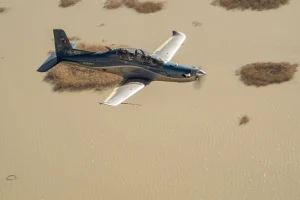
What is HÜRKUŞ? Turkey’s Turboprop Trainer Aircraft by TUSAŞ

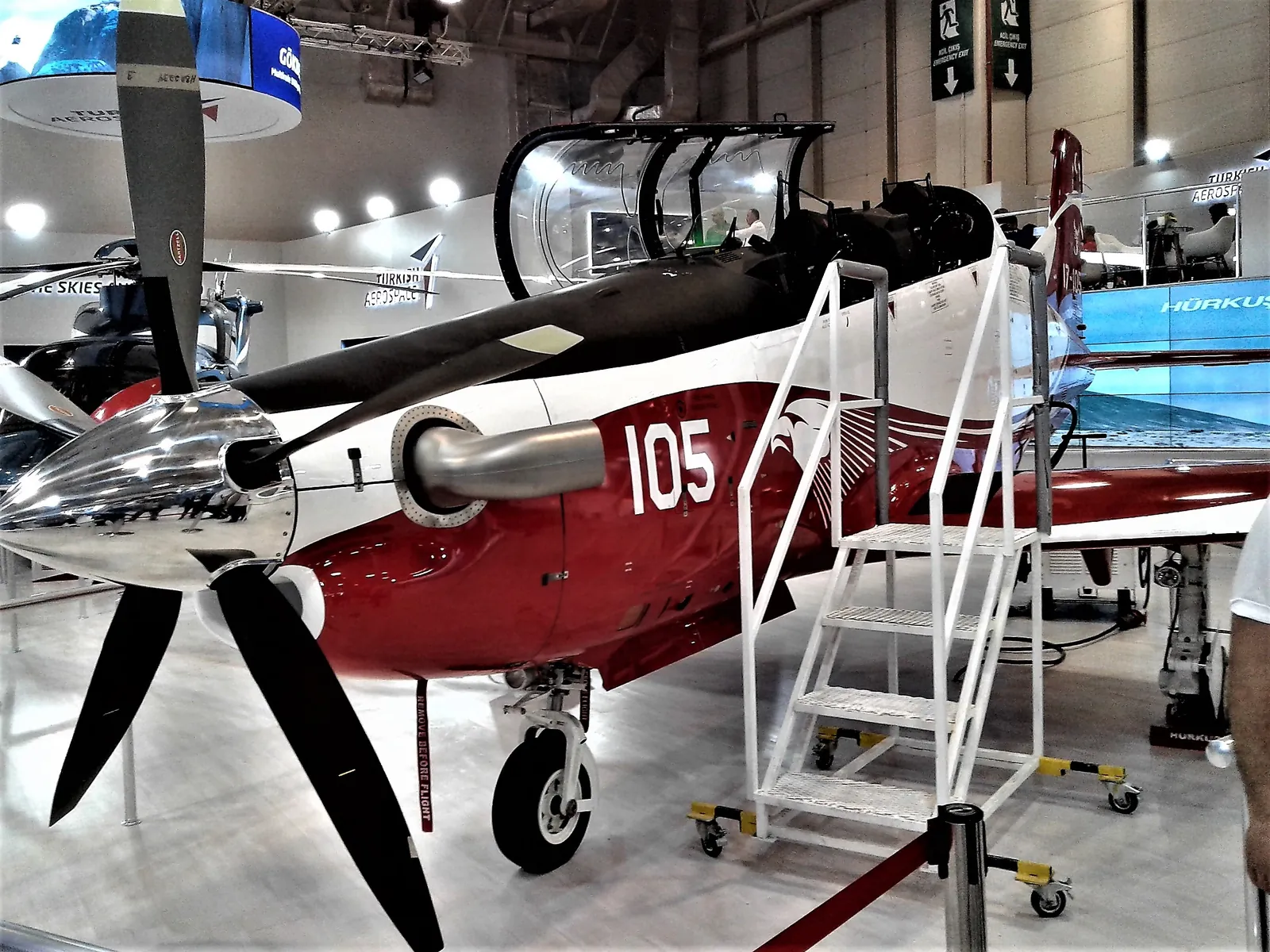
HÜRKUŞ is a single-engine, tandem two-seat turboprop basic and advanced trainer aircraft developed by Turkish Aerospace (TUSAŞ/TAI), with an armed variant covering the light attack role. It first flew on August 29, 2013, won EASA CS-23 certification in 2016, and the Turkish Air Force has ordered 55 of the current HÜRKUŞ-II version, the first two of which entered the inventory on September 28, 2026.
| HÜRKUŞ — Quick Facts | |
|---|---|
| Type | Single-engine turboprop basic and advanced trainer; armed light attack variant |
| Manufacturer | Turkish Aerospace (TUSAŞ/TAI), Kahramankazan, Ankara |
| First flight | August 29, 2013 (Ankara; a 33-minute flight) |
| Engine | 1× Pratt & Whitney Canada PT6A-68T turboprop, 1,600 shp (about 1,200 kW) — imported |
| Dimensions | Length 11.17 m, wingspan 9.96 m, height 3.70 m |
| Performance | Maximum speed 574 km/h; service ceiling 10,577 m (about 34,700 ft); endurance about 4.25 hours at 15,000 ft |
| Variants | HÜRKUŞ-A (civil certified), HÜRKUŞ-B (military trainer), HÜRKUŞ-C (armed), HÜRKUŞ-II (current production) |
| Turkish Air Force programme | 55 HÜRKUŞ-II under contract; first two aircraft delivered September 28, 2026 |
| Certifications | EASA CS-23 type certificate 2016 (HÜRKUŞ-A); military type certificate September 9, 2026 (HÜRKUŞ-II) |
What is HÜRKUŞ?
HÜRKUŞ is a single-engine turboprop aircraft designed by Turkish Aerospace (TUSAŞ/TAI) for basic and advanced pilot training, with a tandem two-seat cockpit fitted with zero-zero ejection seats. The aircraft is named after Vecihi Hürkuş, one of the first Turkish civil aviators, and it is among the first original fixed-wing aircraft Turkey has designed and produced since the Cold War. Within TUSAŞ’s family of indigenous platforms it is the first rung of a ladder that continues with the HÜRJET jet trainer and the KAAN fighter. TUSAŞ is the platform prime contractor; the engine is an imported Pratt & Whitney Canada PT6A-68T and the avionics are largely supplied by ASELSAN.
The prototype made its maiden flight on August 29, 2013 near Ankara, staying airborne for 33 minutes. In 2016 the HÜRKUŞ-A variant received an EASA CS-23 type certificate, a notable civil certification milestone for an aircraft developed in Turkey. Manufacturer data for the type lists a maximum speed of 574 km/h, a service ceiling of 10,577 m (about 34,700 ft) and an endurance of roughly 4.25 hours at 15,000 ft; figures such as maximum take-off weight have not been officially disclosed.
What roles does HÜRKUŞ perform?
HÜRKUŞ was built around the training mission, but the family now spans several roles:
- Basic and advanced flight training: the core role. The HÜRKUŞ-B military trainer carries integrated avionics with a head-up display, multi-function displays and a mission computer, in a cockpit layout close to the F-16’s, easing the transition to frontline jets.
- Light attack and close air support: the armed HÜRKUŞ-C carries a weapons load of about 1,500 kg (3,300 lb) and a FLIR electro-optical sensor.
- Backbone of the Turkish training chain: the HÜRKUŞ-II is planned to replace the Turkish Air Force’s current basic trainers and to anchor an all-indigenous syllabus running from HÜRKUŞ-II for basic training to HÜRJET for advanced jet training and on to the KAAN fighter.
- Export platform: HÜRKUŞ-B and HÜRKUŞ-C aircraft have been delivered to African operators according to open sources, and Azerbaijan became the first export customer for the HÜRKUŞ-II in 2026.
Four variants make up the HÜRKUŞ family. The distinction matters when reading procurement news: the aircraft delivered to African customers were HÜRKUŞ-B and HÜRKUŞ-C models, while the Turkish Air Force and Azerbaijan are buying the newer HÜRKUŞ-II, which flew for the first time on December 30, 2024.
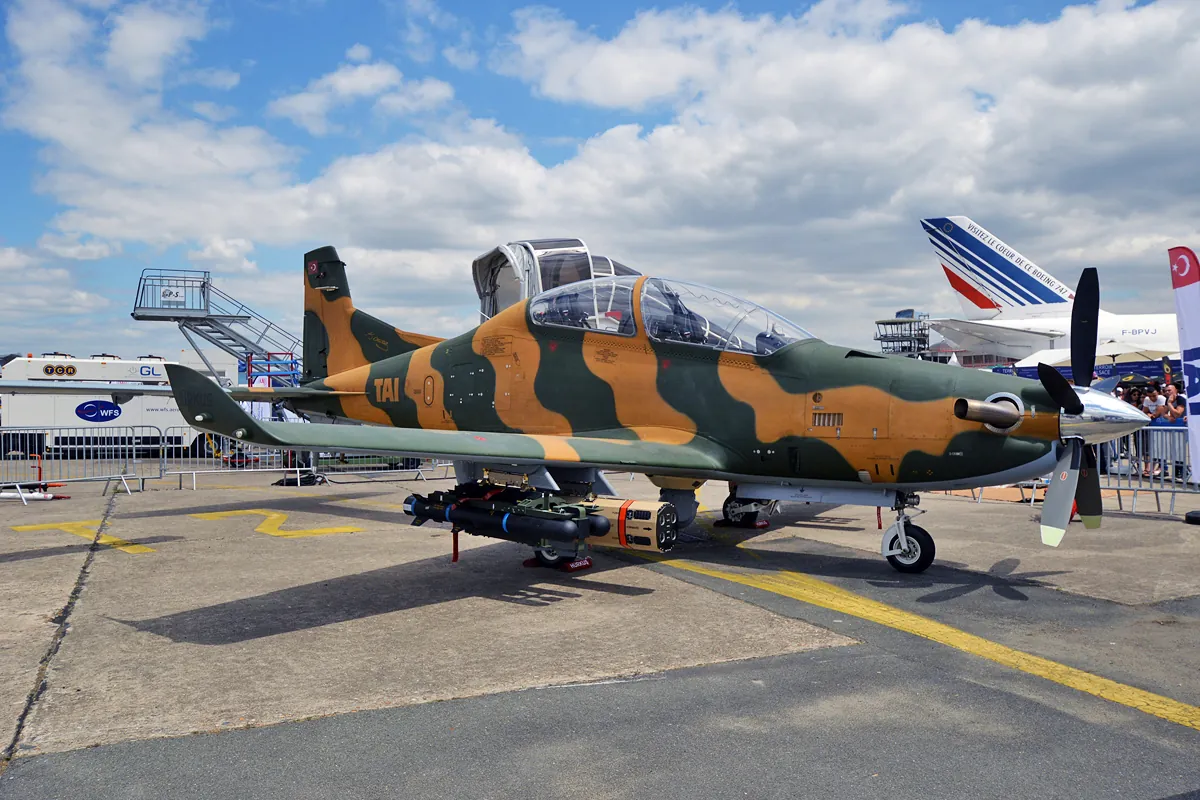
The table below lists HÜRKUŞ operators and orders as publicly reported. Export quantities for the African customers rest on open sources rather than official announcements, and unit prices for the aircraft have not been officially disclosed.
The Turkish Air Force programme and HÜRKUŞ-II
The current production version, the HÜRKUŞ-II or New Generation HÜRKUŞ, first flew on December 30, 2024. Compared with earlier aircraft it sheds roughly 450-500 kg through greater use of composites and aerodynamic refinements, and it carries largely domestic mission systems and avionics. The Turkish Air Force contract covers 55 aircraft, having grown from an initial 15 with a follow-on order for 40.
The programme passed two milestones in September 2026. The type received its military type certificate on September 9, 2026, and the first two HÜRKUŞ-II entered the Turkish Air Force inventory on September 28, 2026 at Kahramankazan. Twelve more aircraft are planned by the end of 2026, production is planned to run at about two aircraft per month from 2027, and the programme is targeted for completion in 2028. In service, the HÜRKUŞ-II is planned to replace the air force’s current basic trainers and to form the first step of a training chain that continues with the HÜRJET advanced jet trainer and leads to the KAAN fighter.
Exports and market position
HÜRKUŞ has four export customers reported to date, though most quantities rest on open sources rather than official statements. Niger was the first, with an order reported in November 2021 and 2-3 HÜRKUŞ-B delivered in 2023 according to open sources; the exact number has not been officially disclosed. Chad operates 3 armed HÜRKUŞ-C according to open sources, with deliveries reported in 2023. A HÜRKUŞ-C contract with Libya has been reported, with open sources mentioning 10 aircraft, but neither the quantity nor the schedule has been officially detailed.
The most significant export step came at ADEX 2026 in Baku (September 30 to October 2, 2026), where Azerbaijan signed a contract for 14 HÜRKUŞ-II, becoming the first export customer for the new version. Deliveries are expected to begin in 2026. Talks on subsystem production in Azerbaijan are ongoing; these remain discussions, not a signed industrial agreement. Unit prices across all HÜRKUŞ contracts have not been officially disclosed.
This page separates confirmed facts from reported figures. The Turkish Air Force order for 55 HÜRKUŞ-II and the Azerbaijani contract for 14 are signed deals; the quantities for Niger (2-3 HÜRKUŞ-B) and Chad (3 HÜRKUŞ-C) come from open sources, and the Libyan contract has been reported without official details. The aircraft exported to Africa are HÜRKUŞ-B and HÜRKUŞ-C models, not the newer HÜRKUŞ-II. Delivery and production targets beyond September 2026 are planned, not completed. The engine is an imported Pratt & Whitney Canada PT6A-68T; no indigenous engine has been officially announced for HÜRKUŞ. Unit prices and the maximum take-off weight have not been officially disclosed.
Frequently Asked Questions
What is HÜRKUŞ?
HÜRKUŞ is a single-engine, tandem two-seat turboprop trainer aircraft developed by Turkish Aerospace (TUSAŞ/TAI) for basic and advanced pilot training, with an armed variant for light attack. Named after the pioneering Turkish aviator Vecihi Hürkuş, it first flew on August 29, 2013 and received an EASA CS-23 type certificate in 2016. It is the first step in TUSAŞ’s indigenous platform family, ahead of the HÜRJET jet trainer and the KAAN fighter.
What is the difference between HÜRKUŞ-II and the earlier versions?
HÜRKUŞ-II is the new-generation production version that first flew on December 30, 2024. It is roughly 450-500 kg lighter than earlier aircraft thanks to greater composite use and aerodynamic refinements, and it carries largely domestic mission systems and avionics. It received its military type certificate on September 9, 2026, and it is the version the Turkish Air Force is taking into service and Azerbaijan has ordered, whereas earlier exports involved the HÜRKUŞ-B and HÜRKUŞ-C.
What engine powers HÜRKUŞ?
HÜRKUŞ is powered by a single Pratt & Whitney Canada PT6A-68T turboprop rated at 1,600 shp, about 1,200 kW. The engine is imported: TUSAŞ is the platform prime contractor, while the avionics are largely supplied by ASELSAN. No indigenous engine has been officially announced for HÜRKUŞ, so claims of a domestic powerplant for this aircraft are not supported by official statements.
Is HÜRKUŞ armed?
The trainer versions are not armed, but the family includes a dedicated armed variant. The HÜRKUŞ-C is configured for close air support and light attack, carrying a weapons load of about 1,500 kg (3,300 lb) on underwing pylons together with a FLIR electro-optical sensor. According to open sources, Chad operates 3 HÜRKUŞ-C, and a contract with Libya has been reported without official details on quantity or schedule.
How many HÜRKUŞ has the Turkish Air Force ordered?
The Turkish Air Force has 55 HÜRKUŞ-II under contract, an order that grew from an initial 15 aircraft with a follow-on for 40 more. The first two entered the inventory on September 28, 2026 at Kahramankazan, twelve more are planned by the end of 2026, and production is planned at about two aircraft per month from 2027, with the programme targeted for completion in 2028.
Which countries have bought HÜRKUŞ?
Besides Turkey, four export customers have been reported. Niger was the first, with 2-3 HÜRKUŞ-B delivered in 2023 according to open sources. Chad operates 3 HÜRKUŞ-C according to open sources. A HÜRKUŞ-C contract with Libya has been reported but not officially detailed. Azerbaijan signed for 14 HÜRKUŞ-II at ADEX 2026 in Baku, becoming the first export customer for the new version, with deliveries expected to begin in 2026.
What is the difference between HÜRKUŞ and HÜRJET?
HÜRKUŞ is a turboprop basic and advanced trainer powered by a 1,600 shp PT6A-68T, while HÜRJET is a supersonic jet trainer and light attack aircraft powered by a GE F404 turbofan. In the planned Turkish training chain they are consecutive steps: student pilots would fly the HÜRKUŞ-II for basic training, move to the HÜRJET for advanced jet training, and then transition to frontline fighters such as the KAAN. Both aircraft are developed by Turkish Aerospace.
Sources
- Turkish Aerospace (TUSAŞ/TAI) — official HÜRKUŞ product page, tusas.com (role, variant and performance data)
- Daily Sabah — first two HÜRKUŞ-II delivered to the Turkish Air Force at Kahramankazan, September 28, 2026
- Janes — Azerbaijan signs contract for 14 HÜRKUŞ-II at ADEX 2026, Baku, October 2026
- Wikipedia — TAI Hürkuş (first flight, dimensions, engine and performance data)
- AFM (afm.aero) and C4Defence — HÜRKUŞ-II military type certificate (September 9, 2026) and delivery reporting
- Military Africa and Turdef — HÜRKUŞ-B and HÜRKUŞ-C deliveries to Niger and Chad, 2023