Military Power of Estonia: How Many Tanks, Aircraft and Ships Are in the Inventory? (2026)

Estonia’s military inventory shows how a NATO country of 1.3 million with a 294 km land border with Russia builds deterrence. In the Global Firepower 2026 ranking Estonia is 106th of 145 countries with a PwrIndx score of 2.3201; it has no tanks or combat jets, but holds 2,579 armoured vehicles, 48 self-propelled guns, 6 rocket launchers and 8 naval platforms. Combining a small active force with a large reserve pool and a strong volunteer defence organisation, the country reached one of the highest ratios in the alliance in 2026 by spending 5.4 percent of GDP on defence. This article examines Estonia’s land, air, missile and naval inventory item by item using open-source data, and looks at the link with Türkiye that stretches from armoured vehicles to ammunition production and air policing.
At a Glance
- Active personnel: Global Firepower gives 7,700 active personnel, 230,000 reserves and 10,000 paramilitary. Conscription lasts 8 or 11 months, rising to 12 months from 2027; the rapid-response part of the wartime structure is about 38,800
- Main battle tanks: 0. Estonia operates no tanks; the armoured backbone is 44 CV9035EE infantry fighting vehicles, about 136 Patria Pasi and 230 Otokar ARMA 6×6 and Nurol Makina NMS 4×4 vehicles bought from Türkiye
- Military aircraft: 2 (Global Firepower): two M28 Skytruck transports. There are no combat jets or helicopters; the Robinson R44s were retired in December 2024. NATO allies based at Amari protect the airspace; from 1 August to 30 November 2026 the task is held by Turkish F-16s
- Artillery: Global Firepower gives 48 self-propelled guns and 6 rocket launchers: 36 K9 Kou, 12 CAESAR and 6 HIMARS. Another 12 CAESAR, 3 HIMARS and 9 K239 Chunmoo are on order
- Naval platforms: 8 (Global Firepower): 4 mine warfare and 4 patrol. The backbone is three Sandown-class minehunters bought from the UK in 2006; for coastal defence the Blue Spear anti-ship missile with a range of up to 290 km has been in service since 2024
- Defence budget: Global Firepower gives 2.375 billion dollars. The government raised 2026 defence spending to 5.4 percent of GDP; 3.4 billion euros are set aside for ammunition alone in 2025-2029
Note: The inventory figures below are approximate values drawn from open sources such as Global Firepower, the IISS Military Balance and SIPRI.
About the Estonia Armed Forces
The Estonian Defence Forces (Kaitsevagi) are land-centred. The combat core consists of the 1st Infantry Brigade at Tapa and the 2nd Infantry Brigade at Voru, with a division headquarters set up above them in 2023. The Navy in Tallinn, the Air Force at Amari, the Special Operations Forces and the volunteer Defence League (Kaitseliit) complete the structure. The UK-led NATO forward land forces battlegroup is stationed at Tapa.
The Global Firepower 2026 count shows 7,700 active personnel, 230,000 reserves and 10,000 paramilitary. Conscription lasts 8 or 11 months and will rise to 12 months from 2027; about 4,000 conscripts are trained each year. The rapid-response part of the wartime structure is about 38,800. Estonia’s defence model rests on the quick mobilisation of trained reservists and a total-defence concept that involves a broad part of society.
The Commander-in-Chief is President Alar Karis. The Minister of Defence is Hanno Pevkur of the Reform Party, and the Commander of the Defence Forces has been Lieutenant General Andrus Merilo since July 2024. Estonia attended the NATO Summit in Ankara in July 2026 as a country that had already met the 5 percent target.
The budget has multiplied over the past three years. Global Firepower gives a defence budget of 2.375 billion dollars. With the 2026 budget the government raised defence spending from about 3 percent of GDP to 5.4 percent, and 3.4 billion euros are set aside for ammunition alone in 2025-2029. The priorities are air defence, long-range artillery, ammunition stocks and the domestic defence industry.
A notable choice was made in force planning in 2026. On 14 April 2026 Defence Minister Pevkur cancelled the CV90 MkIV infantry fighting vehicle purchase worth about 500 million euros and redirected the money to air defence and unmanned systems, citing lessons from the war in Ukraine, rising armoured vehicle costs and the declining dominance of heavy equipment on the battlefield. The existing CV9035s will stay in service for another decade through a life extension of about 100 million euros.
Relative to GDP, Estonia has been among the largest military donors to Ukraine, sending Javelins, 155 mm FH70 howitzers, M14 rifles and 120 mm mortars. The gaps are being filled with HIMARS, CAESAR, Chunmoo and new ammunition purchases. The country also hosts the NATO Cooperative Cyber Defence Centre of Excellence in Tallinn.
Land Forces Inventory
| System type | Est. quantity |
|---|---|
| Main battle tanks | 0. Estonia has not operated tanks since independence; heavy armour is provided by the Challenger 2 tanks of the UK-led NATO forward land forces battlegroup stationed in the country and by allied reinforcements |
| Infantry fighting vehicles (CV9035EE) | 44, plus 37 CV90 hulls bought from Norway being converted into support vehicles. The vehicles came second-hand from the Netherlands and carry add-on armour. The CV90 MkIV replacement programme worth about 500 million euros was cancelled on 14 April 2026; instead a life extension of about 100 million euros will keep them in service for another decade |
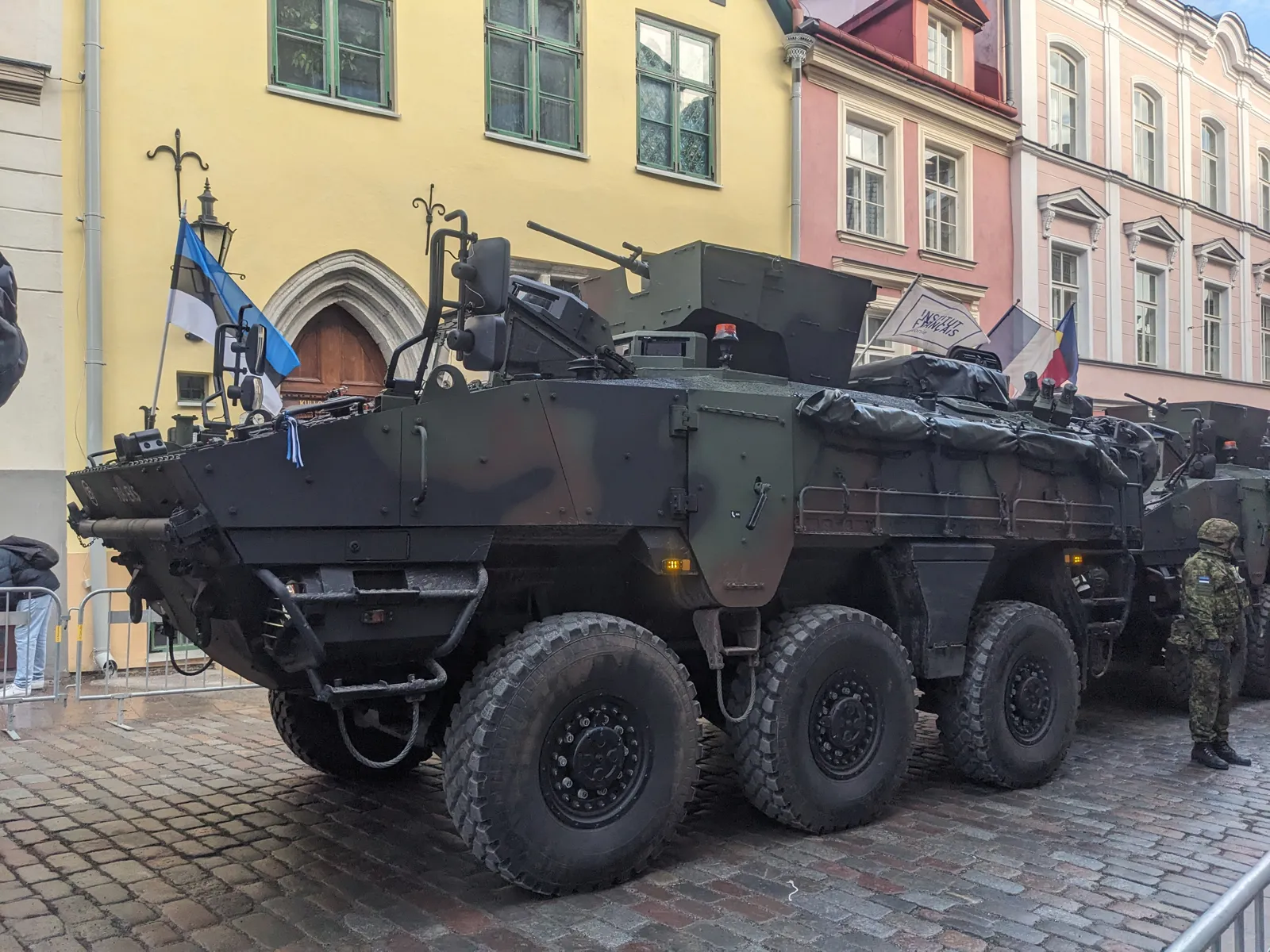
| Armoured personnel carriers (Otokar ARMA 6×6) | 130. The Estonian Centre for Defence Investments signed a contract worth about 130 million euros with Otokar on 18 October 2023, covering training, spare parts and maintenance support. Deliveries began in early 2025; the vehicles serve mainly with the 2nd Infantry Brigade and replace the older Patria XA-180s |
| Light armoured vehicles (Nurol Makina NMS 4×4) | 100. Ordered on the same day and in the same tender as the ARMA; the two contracts total 230 vehicles and about 200 million euros. About 50 ARMA and NMS vehicles had reached the 2nd Infantry Brigade by 11 March 2025, and the NMS also serves with the 1st Infantry Brigade. Defence Minister Pevkur said in May 2026 that deliveries were complete |
| Armoured personnel carriers (Patria Pasi) | 136: 56 XA-180s from Finland and 80 XA-188s from the Netherlands. The XA-180s are due to retire by 2030, while the XA-188s are to be modernised to serve until 2048 |
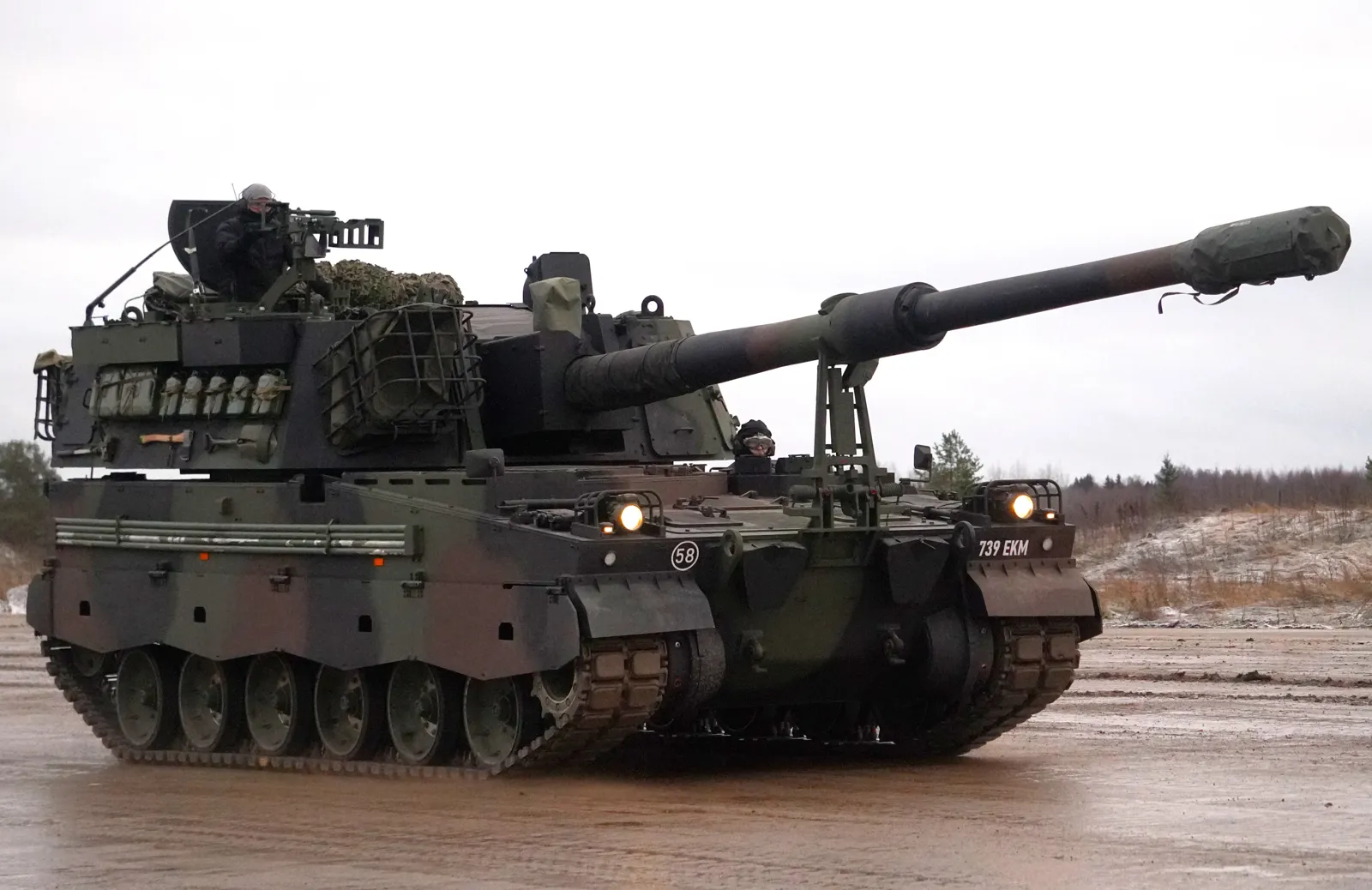
| Self-propelled howitzers (K9 Kou and CAESAR) | 48: 36 South Korean 155 mm K9 Kou howitzers, first delivered in 2018, and 12 CAESAR 6×6 ordered in June 2024 and delivered by August 2025. Another 12 CAESAR were ordered in February 2026 |
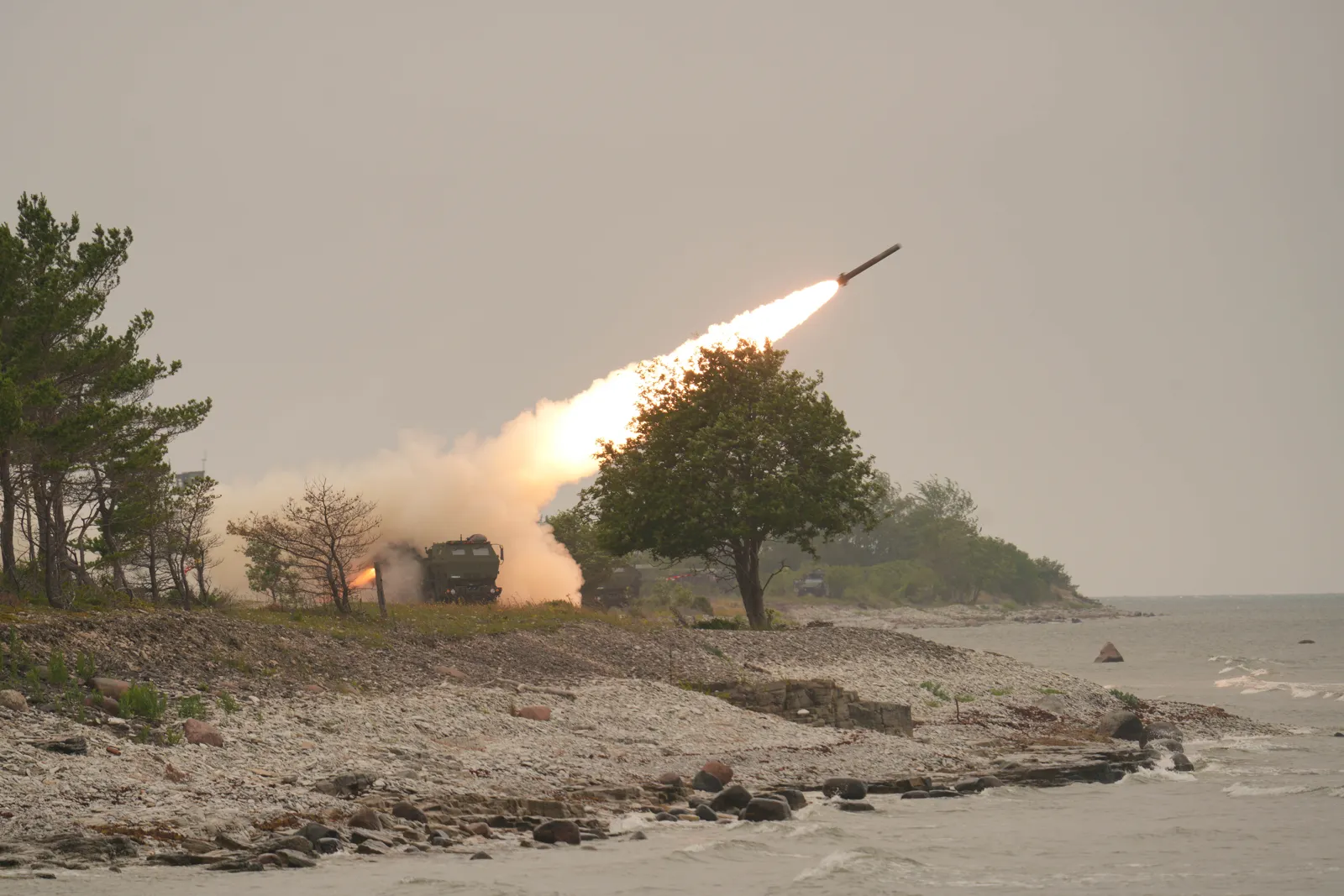
| Rocket artillery (HIMARS and Chunmoo) | Six HIMARS arrived in spring 2025 and made their first independent live fire at Undva on Saaremaa on 11 July 2025; three more launchers were ordered on 11 April 2026. Six K239 Chunmoo were bought for 290 million euros in December 2025 and three more in May 2026, with deliveries from the second half of 2027 |
| Anti-tank weapons | Javelin (80 launch units, with 800 missiles and 84 lightweight launch units on order), 18 Spike LR II systems and more than 500 Spike-SR bought in 2022, 300 Carl Gustaf M4 and over 10,000 Instalaza C90. The Milrem THeMIS unmanned ground vehicle and IAI Mini Harpy loitering munition are also in the inventory |
Air Force Inventory
| Platform | Est. quantity |
|---|---|
| Total military aircraft | 2 (Global Firepower): 0 fighters, 0 attack aircraft, 2 transports, 0 trainers and 0 helicopters. The Air Force’s weight lies less in aircraft than in running Amari Air Base, surveillance radars and ground-based air defence |
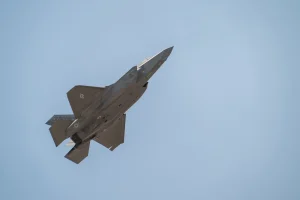
| Combat jets | 0. Since 2004 Estonia has left airspace protection to NATO’s Baltic mission. The mission was renamed the Baltic Air Defence Mission in 2026; the Turkish Air Force’s 181st Squadron is flying it from Amari for the first time with five F-16C/D Block 50+ and 76 personnel from 1 August to 30 November 2026 |
| Transport aircraft (M28 Skytruck) | 2. The Polish-built short take-off and landing M28s replaced the old An-2s. For strategic airlift Estonia uses its share of the three C-17 Globemaster IIIs of the Heavy Airlift Wing in Hungary |
| Trainer aircraft (L-39C, leased) | 2. The L-39Cs, leased from the local firm AeroHooldus, are used for joint terminal attack controller training and in the opposing-force role, which is why they do not appear in the Global Firepower count |
| Helicopters | 0. The Robinson R44 training helicopters were retired in December 2024. Search and rescue is carried out with the helicopters of the Police and Border Guard Board |
| Unmanned aerial vehicles | Stream C and KX-4 LE Titan reconnaissance drones from Estonia’s Threod Systems and the US-built RQ-20B Puma AE II. Much of the money freed by the infantry fighting vehicle programme cancelled in April 2026 was redirected to drones, counter-drone defence and air defence |
Missile and Air-Defence Systems
| System | Type / Note |
|---|---|
| Medium-range air defence (IRIS-T SLM) | 1 fire unit in service, 2 on order. Estonia and Latvia decided in May 2023 to procure the system jointly, and Estonia ordered three fire units. The first mobile unit was handed to the Air Defence Wing at Amari on 22 June 2026; the other two are due in 2027 |
| Short-range air defence (Mistral) | 209. The Mistral 2s bought in 2007 were joined by Mistral 3s in 2015, 2018 and 2023, and most launchers are truck-mounted. Some have been donated to Ukraine |
| Man-portable air defence (Piorun) | 100 launchers and 300 missiles. The Polish-built Piorun was ordered in September 2022, with deliveries from 2024. The inventory also holds 98 ZU-23-2 23 mm anti-aircraft guns |
| Anti-ship missiles (Blue Spear) | Coastal batteries. The Blue Spear 5G SSM, ordered in October 2021 and delivered in February 2024, is a Gabriel V derivative with a range of up to 290 km, carried on trucks. It gave Estonia its first sea-denial capability in the Gulf of Finland |
| Ballistic and tactical missiles | The HIMARS package includes GMLRS and extended-range GMLRS rockets as well as M57 ATACMS missiles. With the Chunmoo purchase, CTM-290 tactical ballistic missiles with a range of 290 km will also enter the inventory from 2027 |
| Radar and early warning | Two Ground Master 403s and one GM400a received in 2025 (another due in 2026), four or five Giraffe AMB, Giraffe 1X on order, an AN/TPS-77 and a VERA-E passive radar. Data are fed into NATO’s integrated air and missile defence system |
Naval Power
| Class / Type | Est. quantity |
|---|---|
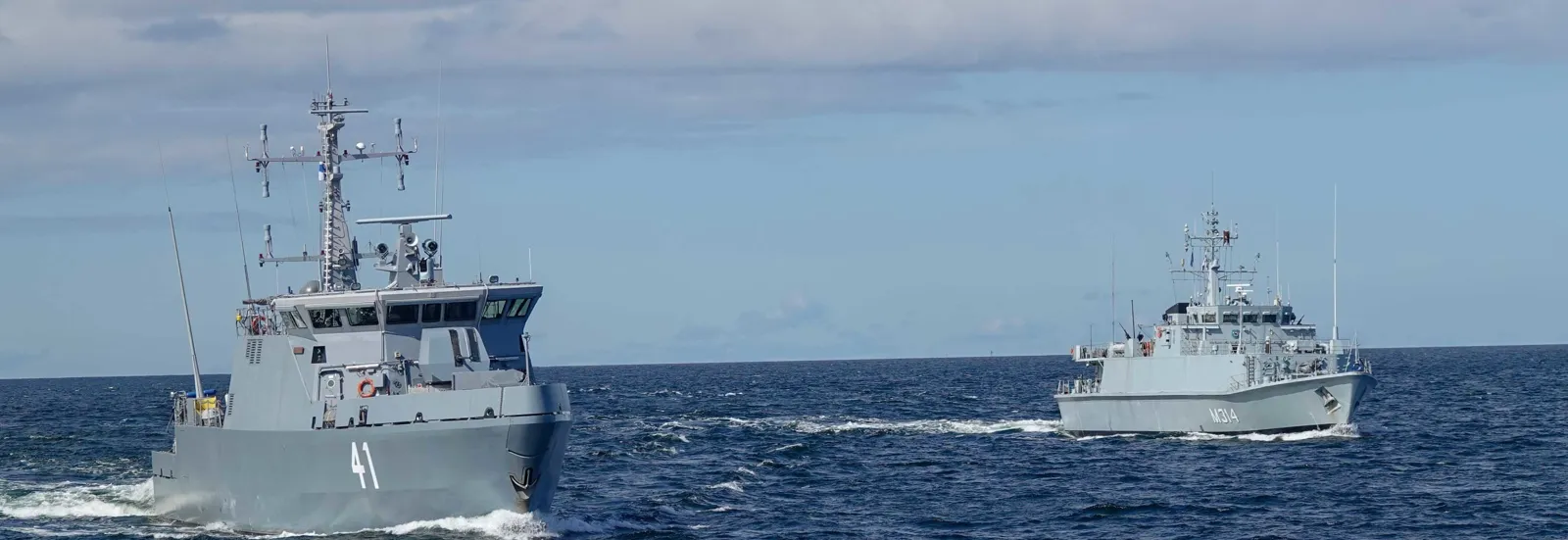
| Total naval platforms | 8 (Global Firepower): 4 mine warfare and 4 patrol. The navy is based at Miinisadam Naval Base in Tallinn; because of the Baltic’s heavy mine legacy, the fleet’s main task is mine countermeasures |
| Minehunters (Sandown class) | 3: EML Admiral Cowan, EML Sakala and EML Ugandi. The glass-fibre-hulled ships bought from the UK in 2006 were modernised in 2018-2020 to extend their lives to 2035; they regularly serve in NATO’s standing mine countermeasures groups and BALTOPS exercises |
| Support and minelaying ship (Wambola) | 1. EML Wambola, a former Danish Lindormen-class ship, serves as a support vessel and can lay mines. Finnish-built Blocker PM16 naval mines, delivered in December 2021, are used on all minelaying-capable ships |
| Patrol vessels and boats | 3: the multi-purpose pollution control ship EML Kindral Kurvits and the Estonian-built patrol boats EML Raju and EML Valve, transferred from the Police and Border Guard Board to the navy in 2023. The transfer brought maritime border and critical infrastructure surveillance under a single command |
| Frigates, corvettes and submarines | None. Estonia’s naval strategy relies on mines, coastal missile batteries and joint operations with allied navies rather than large combatants; together with Finland’s coastal systems, Blue Spear forms a denial line across both shores of the Gulf of Finland |
| Critical infrastructure protection | After the undersea cable and pipeline incidents in the Baltic, the navy contributes to NATO’s Baltic Sentry mission launched in January 2025, with unmanned systems and joint patrols alongside allied ships at the forefront of surveillance |
The Turkey Angle: Turkish Defence Industry
Estonia is one of the countries in Northern and Central Europe where the Turkish defence industry has achieved its most concrete results. At the heart of the link is an armoured vehicle purchase: on 18 October 2023 the Estonian Centre for Defence Investments signed two contracts with Otokar and Nurol Makina worth about 200 million euros in total. The package covers 230 vehicles, 130 Otokar ARMA 6×6 and 100 Nurol Makina NMS 4×4, plus documentation, training, special tools and spare parts; Otokar put the value of the ARMA contract at 130 million euros.
Deliveries began in early 2025, and on 11 March 2025 about 50 vehicles were handed to the 2nd Infantry Brigade. The ARMAs replace the older Patria XA-180s, while the NMS serves with both the 2nd and 1st Infantry Brigades. Speaking in Istanbul on 7 May 2026, Defence Minister Hanno Pevkur said the purchase agreed in 2023 had been completed, showing that Türkiye can fulfil agreements on time and with high quality.
The second ring is defence industry investment. Pevkur met Turkish Defence Minister Yasar Guler in Istanbul on 7 May 2026 during the SAHA 2026 exhibition. On the same day an agreement was signed between Türkiye’s ARCA Defense and the Estonian Ministry of Defence for a plant to produce 155 mm long-range artillery ammunition at the Pohja-Kivioli defence industry park in north-eastern Estonia. With an investment of about 300 million euros by ARCA Baltics Operations, the aim is up to 1,000 jobs and production from 2028; the Estonian state provides 141 hectares of land and 10 million euros of infrastructure. Pevkur also met executives of ASELSAN, Roketsan and Baykar at the exhibition.
The third ring is a direct military presence. The Turkish Air Force’s 181st Squadron took over NATO’s Baltic Air Defence Mission at Amari on 1 August 2026 with five F-16C/D Block 50+ and 76 personnel; the rotation runs until 30 November 2026. Türkiye had flown the mission twice before from Siauliai in Lithuania but is flying from Estonia for the first time. During his Istanbul visit Pevkur specifically stressed the importance for Estonia of the Turkish Air Force joining the mission.
The political framework of the relationship is shaped within NATO. The two countries have been allies since 2004; Estonia attended the Ankara Summit in July 2026 having met the 5 percent target, and summit preparations were on the agenda of the Pevkur-Guler meeting. There is no publicly announced separate bilateral military framework agreement; the link advances through completed supply, investment and alliance missions.
The areas where the link could grow are clear. By cancelling the CV90 replacement, Estonia shifted money to drones, counter-drone defence and air defence, fields where Turkish industry is strong. The retirement of the XA-180s by 2030 and the logistics base built around the ARMA fleet offer a natural basis for further 6×6 and 4×4 purchases. These areas have not yet turned into contracts, but they stand out as a potential market for the Turkish defence industry.
Frequently Asked Questions
How many tanks does Estonia have? Estonia has no tanks. The Global Firepower 2026 count shows 0 tanks, and the country has not operated main battle tanks since independence. The armoured backbone consists of 44 CV9035EE infantry fighting vehicles, about 136 Patria Pasi and 130 Otokar ARMA 6×6 and 100 Nurol Makina NMS 4×4 bought from Türkiye. Heavy armour support comes from the Challenger 2 tanks of the UK-led NATO battlegroup stationed in the country.
Does Estonia have fighter jets? No. Estonia operates no combat jets, and since 2004 its airspace has been protected by allied aircraft rotating through Amari Air Base under NATO’s Baltic mission. From 1 August to 30 November 2026 the task is carried out by five F-16s of the Turkish Air Force’s 181st Squadron. The Estonian Air Force inventory holds two M28 Skytruck transports and two leased L-39Cs; its helicopters were retired in December 2024.
Does Estonia have a navy? Yes, a small navy focused on mine warfare. Global Firepower counts 8 platforms: 4 mine warfare and 4 patrol. The backbone is three Sandown-class minehunters bought from the UK in 2006 (Admiral Cowan, Sakala, Ugandi), alongside the support and minelaying ship Wambola and vessels taken over from the Police and Border Guard Board in 2023. For coastal defence, Blue Spear anti-ship missiles with a range of up to 290 km have been in service since 2024.
What is Estonia’s air defence system? A layered structure is being built. For the medium range, IRIS-T SLM was bought from Germany: three fire units were ordered, the first was received at Amari on 22 June 2026 and the other two are due in 2027. At short range there are 209 Mistral and the Polish Piorun with 100 launchers, and at very short range 98 ZU-23-2 guns. Air surveillance is run with Ground Master, Giraffe and AN/TPS-77 radars linked to the NATO system.
Is there defence cooperation between Türkiye and Estonia? Yes, and it is concrete. On 18 October 2023 Estonia ordered 130 Otokar ARMA 6×6 and 100 Nurol Makina NMS 4×4 for about 200 million euros; deliveries began in 2025 and Defence Minister Pevkur announced their completion in May 2026. On 7 May 2026 an agreement was signed with ARCA Defense for a 155 mm ammunition plant in Estonia worth about 300 million euros. Turkish F-16s are also guarding Baltic airspace from Amari from 1 August to 30 November 2026.
Bottom Line
Estonia’s inventory shows how a small frontline country tries to generate high deterrence with a limited population. The numbers look modest at first sight: about 7,700 active personnel, zero tanks, zero combat jets and eight small naval platforms. But the picture does not end there: a reserve pool of 230,000, the volunteer Defence League, a strong howitzer park of 36 K9 Kou and 12 CAESAR, long-range fires with six HIMARS and nine Chunmoo on the way, a medium-range air defence layer opened with the first IRIS-T SLM unit, and Blue Spear batteries covering the Gulf of Finland. The weaknesses are also clear: air defence will not reach full capacity until 2027, heavy armour depends entirely on allies, the CV90 fleet is being life-extended rather than replaced, and a population of 1.3 million is a natural limit on personnel growth. The CV90 decision of April 2026 shows how Estonia reads these constraints: shifting money from expensive heavy platforms to air defence, unmanned systems and ammunition. For Türkiye, Estonia is one of the strongest examples in this series. The on-time completion of the 230-vehicle Otokar ARMA and Nurol Makina NMS delivery shows Turkish land vehicles gaining a reference in one of NATO’s most demanding frontline armies. ARCA Defense’s 155 mm ammunition plant takes the relationship from buyer and seller to local production and participation in the European supply chain, while the Turkish F-16 mission at Amari adds a direct military dimension. Open questions such as counter-drone defence, unmanned systems and the replacement of the XA-180s will shape the next stage of this relationship.
Related Reading
Sources
- Global Firepower — Estonia
- IISS — The Military Balance
- SIPRI — Arms Transfers Database
- Wikipedia — Estonian Defence Forces
- Wikipedia — Equipment of the Estonian Defence Forces
- Anadolu Agency — Türkiye to supply Estonia with 230 armoured vehicles
- Nurol Holding — NMS 4×4 and Otokar ARMA 6×6 delivered to Estonia
- The Baltic Times — Pevkur in Istanbul
- Yeni Safak — ARCA Defense to build ammunition plant in Estonia
- ItaMilRadar — Turkish F-16s arrive in Estonia
- ERR — Estonia halts 500 million euro combat vehicle procurement
- Estonian World — Estonia receives its first IRIS-T system
- Government of Estonia — Defence budget above 5 percent