Why Was Roketsan Founded? Stinger and Turkey’s Missile Goal

Roketsan was established on 14 June 1988 by a decision of Turkey’s Defence Industry Executive Committee (SSİK), for two reasons: no Turkish company existed that could manufacture the composite solid propellant rocket motors Turkey had committed to produce under the Stinger European Co-Production Programme, and the Turkish Armed Forces needed a national prime contractor to design, develop and build rockets and missiles at home. The company was thus born of both a concrete programme obligation and a long-term national technology goal.
| The Founding of Roketsan — At a Glance | |
|---|---|
| Founded | 14 June 1988, Ankara |
| Deciding body | Defence Industry Executive Committee (SSİK) |
| Official purpose | To be Turkey’s lead organisation for designing, developing and producing rockets and missiles |
| Immediate trigger | Turkey’s workshare of composite solid propellant motors in the Stinger European Co-Production Programme |
| First address | İskitler (Ankara), a rented building — a core team of about 25 people |
| Main facility | Elmadağ (Ankara); investments completed between 1988 and 1991 |
| Founding shareholders | TSKGV, ASELSAN, MKE and VakıfBank, alongside private partners such as Kutlutaş and Kalekalıp |
| Ownership today | TSKGV 55%, ASELSAN 15%, MKE 15%, VakıfBank 10%, other 5% |
Why was Roketsan founded? The short answer
The official rationale is spelled out in the Defence Industry Executive Committee’s founding decision: to meet the Turkish Armed Forces’ rocket and missile requirements and to give the country a lead organisation for the design, development and production of rockets and missiles. In the late 1980s, almost every rocket and missile in Turkey’s inventory was imported; the design and manufacturing know-how sat abroad.
A concrete obligation turned that strategic goal into an urgent one. Through the Stinger European Co-Production Programme, which Turkey had joined alongside its NATO allies, Ankara had committed to manufacturing the missile’s composite solid propellant launch and flight motors and propulsion systems at home — among the most critical subsystems of the weapon. At the time, however, not a single Turkish organisation possessed composite solid propellant technology. Rather than assign the work to an existing factory, the Ministry of National Defence opted to create an entirely new company for the job. That company became Roketsan.
The 1980s backdrop: an embargo’s lesson and Law No. 3238
The founding decision was not taken in a vacuum. The US arms embargo imposed after Turkey’s 1974 Cyprus operation had shown Ankara exactly what an import-dependent defence inventory means in a crisis. That lesson was given an institutional framework by Law No. 3238 of 1985, which created the Undersecretariat for Defence Industries (SSM, today’s Presidency of Defence Industries) and the Defence Industry Executive Committee, the sector’s highest decision-making body.
The new mechanism’s mandate was to build a modern national defence industrial base through companies. Roketsan is that model applied to rockets and missiles: the state set the strategic objective, a company was incorporated with foundation and industrial partners, and its first job arrived from inside an international programme.
The Stinger programme: the founding’s concrete trigger
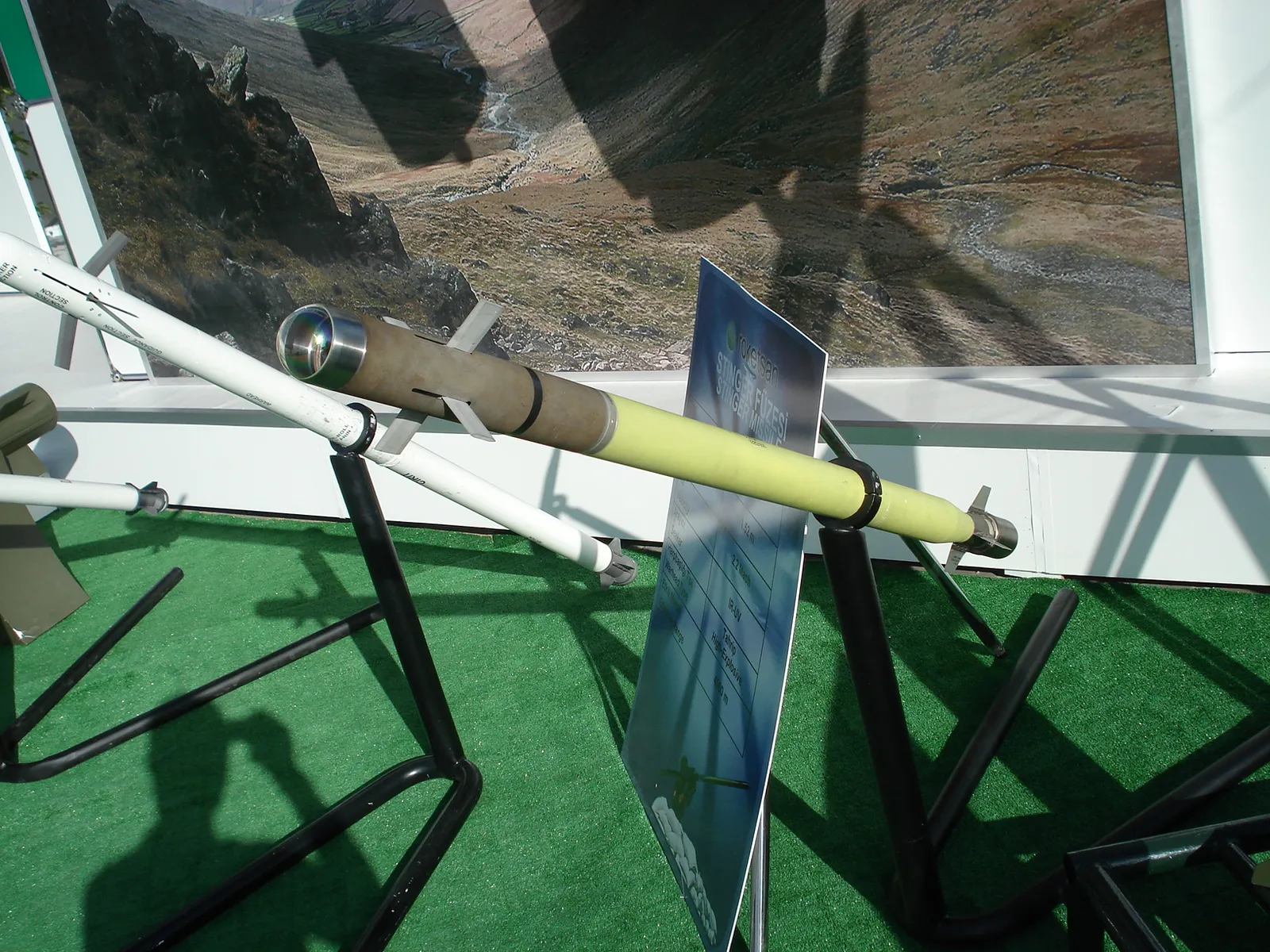
The Stinger European Co-Production Programme provided for the US-designed FIM-92 Stinger, a man-portable air defence missile, to be built in Europe by a co-production consortium of Germany, the Netherlands, Greece and Turkey. Turkey’s workshare covered the missile’s launch and flight motors and propulsion systems — technologically one of the programme’s most demanding work packages.
Roughly a year after its establishment, on 20 June 1989, Roketsan signed a subcontract with the German firm LFK. Facility investments at Elmadağ were completed between 1988 and 1991, deliveries began in the second half of 1991, and the programme ran until its final deliveries in 2004. The project gave the company far more than revenue: it built up composite solid propellant expertise, precision manufacturing and a NATO-standard quality assurance infrastructure. The facilities and engineers of that era underpin the production base of today’s national programmes such as CİRİT, HİSAR and ATMACA.
The early days: a rented building in İskitler, a team of 25
Immediately after the founding decision, the company set up shop in a rented building in Ankara’s İskitler district with a core team of about 25 people. The agenda of those first years was building the production plant at Elmadağ, absorbing composite propellant technology and training an engineering workforce.
The Elmadağ campus remains the company’s main production and test centre today. The organisation that began with 25 people in 1988 had grown to roughly 5,000 employees, including an R&D staff of about 2,000, by 2024 — and with the Lalahan and Kırıkkale plants opened in April 2026, it set out to raise production capacity around fivefold.
Nothing demonstrates whether the founding purpose was fulfilled more clearly than the product timeline. Having accumulated technology through Stinger motor production, the company began fielding systems of its own design with the Turkish Armed Forces from the mid-1990s onward.

The founding shareholders: a mixed public-private model
Roketsan was not incorporated as a state economic enterprise but as a joint-stock company bringing together a foundation, a state bank, defence firms and the private sector. The founding shareholders included the Turkish Armed Forces Foundation (TSKGV), ASELSAN, the Mechanical and Chemical Industry Corporation (MKE) and VakıfBank, alongside private companies such as Kutlutaş and Kalekalıp. The hybrid model sought to combine state-directed strategic purpose with private-sector flexibility under one roof.
Over time the private partners transferred their stakes and the structure became foundation-dominated. Today TSKGV holds 55% of the shares, ASELSAN 15%, MKE 15% and VakıfBank 10%; the company is not publicly traded. For a detailed ownership analysis, see Who owns Roketsan?
How does the founding purpose stand today?
The SSİK decision’s goal of a ‘lead organisation designing, developing and producing rockets and missiles’ has been met and then some. Roketsan is Turkey’s only missile manufacturer with a full product portfolio: the ATMACA and ÇAKIR cruise missiles, the TAYFUN ballistic missile, the HİSAR and SİPER air defence systems, the UMTAS-OMTAS-KARAOK anti-tank family, the CİRİT laser-guided missile, the MAM smart munition family and the AKYA torpedo.
The financial picture shows the scale of the achievement. Ranked #71 on the Defense News Top 100 list for 2025, the company posted 2024 defence revenue of roughly $1.55 billion; according to General Manager Murat İkinci, 2025 turnover exceeded $2 billion, and the total order book has reached about $10 billion with new contracts. A company founded in 1988 to build motors for a single programme has become a technology exporter signing co-production agreements across three continents.
The founding rationales and dates in this file have been verified against Roketsan’s official corporate statements, publicly available records of the Defence Industry Executive Committee decision and industry publications. Because the exact shareholding percentages at the time of founding were not officially disclosed, only the shareholders’ names are given for that period and the current distribution is used. The 25-person core team figure is based on the company’s own corporate account.
Frequently Asked Questions
Why was Roketsan founded?
For two reasons: no Turkish organisation existed that could manufacture the composite solid propellant rocket motors Turkey had taken on under the Stinger European Co-Production Programme, and the country aimed to create a lead organisation that would meet the armed forces’ rocket and missile needs with national resources. The decision was taken by the Defence Industry Executive Committee on 14 June 1988.
Who founded Roketsan?
The founding decision was taken by the Defence Industry Executive Committee (SSİK). The founding shareholders combined public-leaning institutions — TSKGV, ASELSAN, MKE and VakıfBank — with private companies such as Kutlutaş and Kalekalıp; over time the structure became foundation-dominated.
What role did the Stinger programme play in Roketsan’s founding?
Turkey had committed to producing the missile’s composite solid propellant launch and flight motors under the Stinger European Co-Production Programme, but no organisation in the country held the technology. The Ministry of National Defence decided a new company should be created for the job, and the programme became Roketsan’s first major contract.
How many people did Roketsan start with, and where?
The company began work in a rented building in Ankara’s İskitler district with a core team of about 25 people. Investments in the Elmadağ campus, its main production facility, were completed between 1988 and 1991.
What were Roketsan’s first national products?
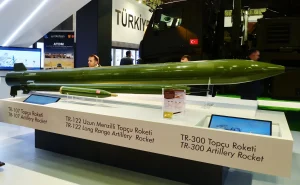
Its first systems of its own design entered the inventory in the 1990s: TR-122 rockets in 1996, TR-107 in 1997, the KASIRGA rocket system in 1998, and the J-600T YILDIRIM ballistic missile, accepted into the Turkish Armed Forces inventory in 2002.
Has Roketsan’s founding purpose been fulfilled?
Yes. With a full portfolio spanning cruise and ballistic missiles, air defence and anti-tank systems, the company has surpassed the ‘lead organisation’ goal in the SSİK decision; its 2025 turnover passed $2 billion, and it has signed technology-transferring co-production agreements with Saudi Arabia and Indonesia.
Sources
- Roketsan official corporate page: About us and founding purpose — roketsan.com.tr
- Turkish Armed Forces Foundation (TSKGV): affiliated companies — tskgv.org.tr
- Presidency of Defence Industries (SSB): Law No. 3238 and the SSİK — ssb.gov.tr
- Defence Turkey: Roketsan — Turkey’s Focal Point for Missile and Rocket Technologies — defenceturkey.com
- Sanayi Gazetesi: account of Roketsan’s founding and the Stinger programme — sanayigazetesi.com.tr