What is HÜRJET? Turkey’s Jet Trainer and Light Attack Aircraft

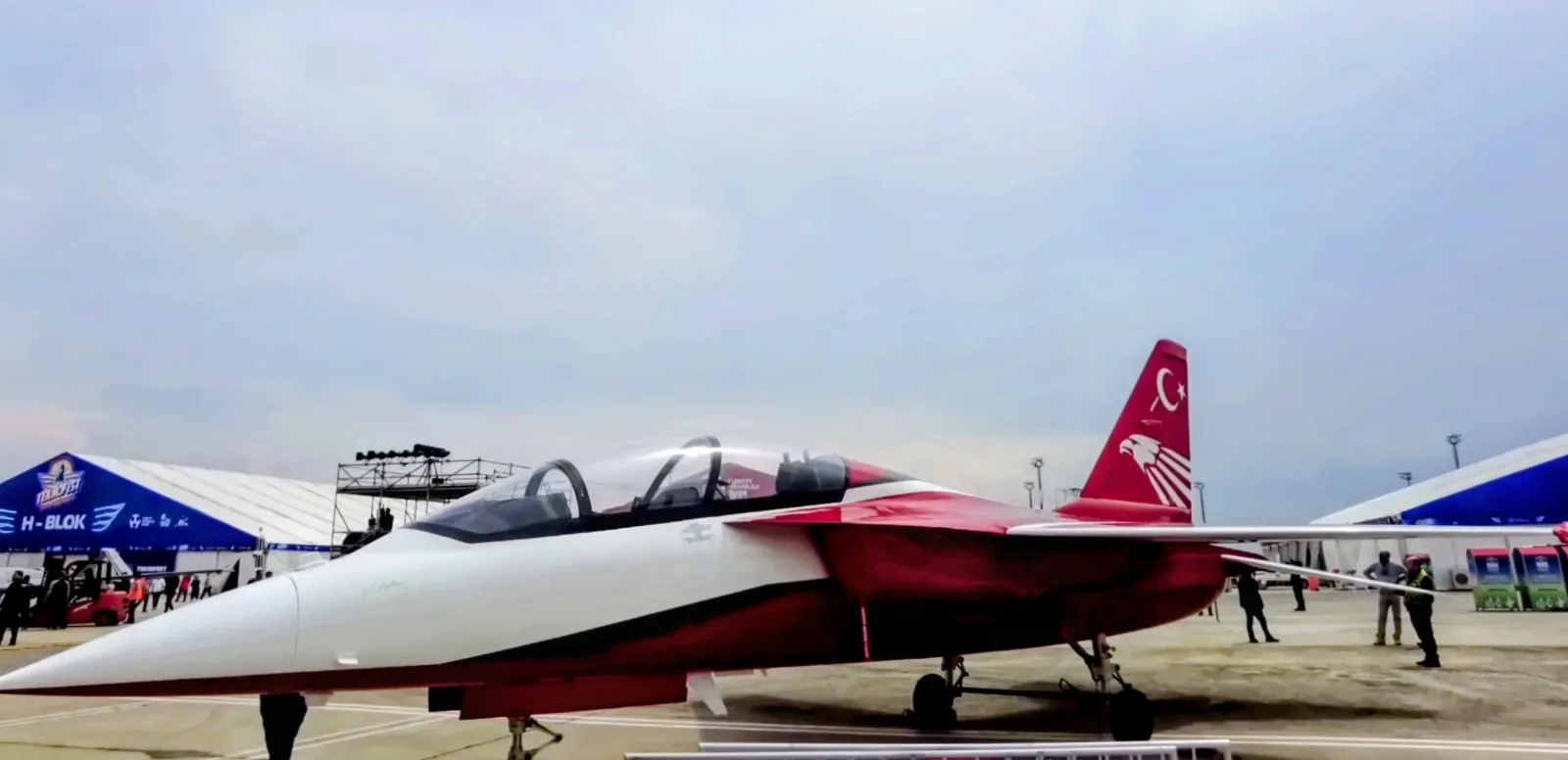
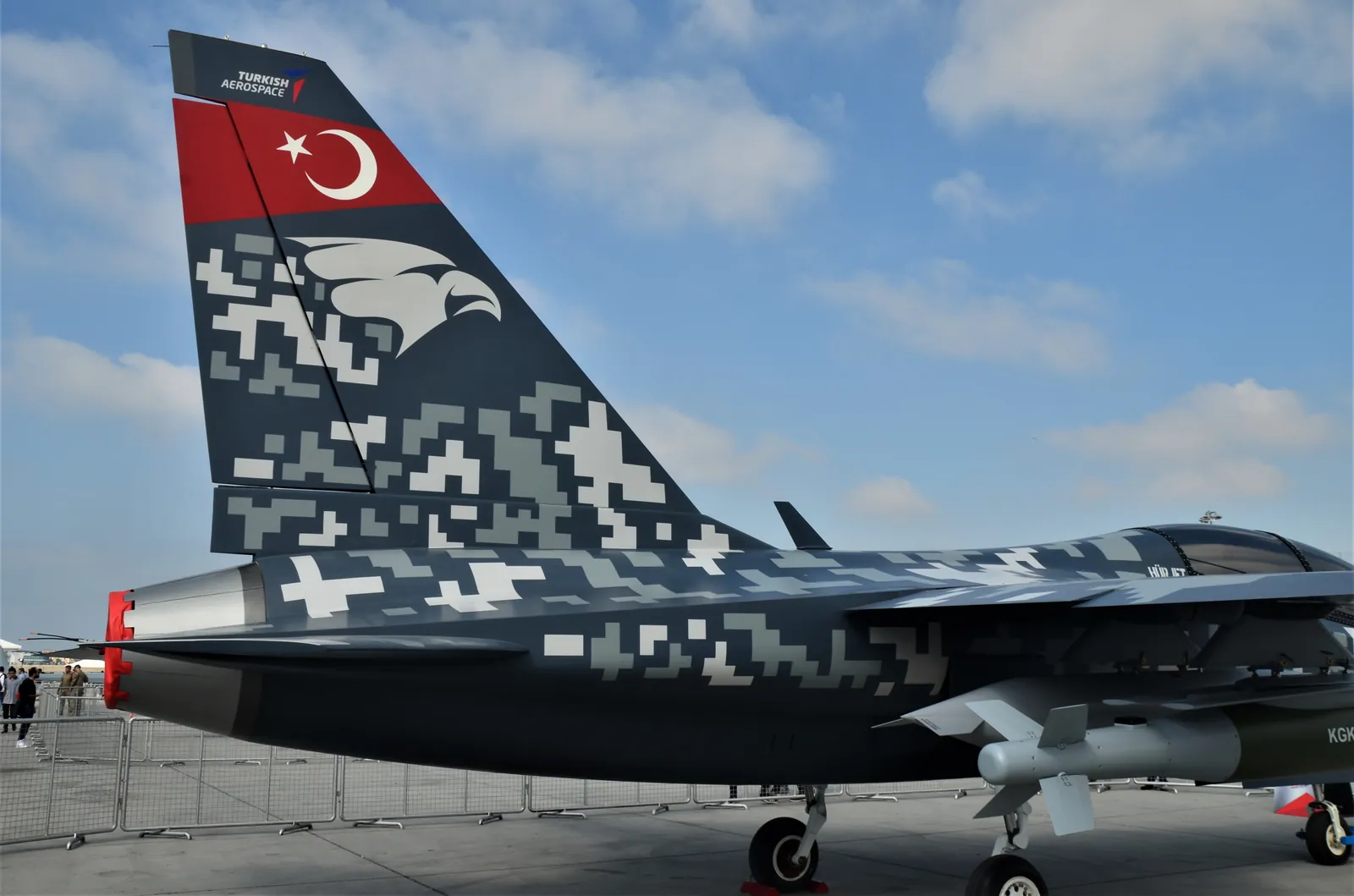
HÜRJET is a single-engine, tandem-seat, supersonic jet trainer and light attack aircraft developed by Turkish Aerospace (TAI). It is powered by one General Electric F404 turbofan and made its maiden flight on 25 April 2023. HÜRJET belongs to the advanced jet trainer / Lead-In Fighter Trainer (LIFT) class and is intended to replace the Turkish Air Force’s ageing Northrop T-38 and F-5 trainers. As of 2026 it remains in flight test and development; it is not yet in serial production, and no signed export contract has been officially disclosed.
| HÜRJET — Key Facts | |
|---|---|
| Type | Single-engine, tandem-seat supersonic jet trainer and light attack aircraft |
| Manufacturer | Turkish Aerospace (TAI), Kahramankazan, Ankara |
| Class | Advanced jet trainer / Lead-In Fighter Trainer (LIFT) |
| Engine | 1× General Electric F404 turbofan (imported, with afterburner) |
| First flight | 25 April 2023 (roll-out ceremony March 2023) |
| Avionics | ASELSAN digital cockpit, multifunction displays, mission computer, HUD |
| Intended role | Replace Turkish Air Force T-38 / F-5 trainers; jet training and light attack |
| Program status | Prototype flight test; serial production and delivery schedule not officially disclosed |
| Exact performance | Top speed / range / ceiling / weapon load not officially disclosed |
What is HÜRJET?
HÜRJET is an advanced jet trainer and light attack aircraft developed by Turkish Aerospace (TAI), the prime contractor, at its Kahramankazan facility near Ankara. It is a single-engine, tandem two-seat, supersonic design positioned in the Lead-In Fighter Trainer (LIFT) segment. The roll-out ceremony took place in March 2023, and the aircraft completed its maiden flight on 25 April 2023. As of 2026 the program is in the prototype flight test phase; HÜRJET is not yet in serial production.
The aircraft is powered by a single General Electric F404 turbofan (F404-GE-102 class, with afterburner). This is an imported engine, not a domestic one. It is important not to confuse HÜRJET with KAAN: the KAAN prototype uses two GE F110 engines, while HÜRJET uses one F404. The avionics and glass cockpit are supplied largely by ASELSAN, and the airframe makes extensive use of composite structures produced by Turkish Aerospace. HÜRJET is developed primarily to replace the Turkish Air Force’s ageing Northrop T-38 and F-5 advanced trainers, and it is also being evaluated for the Turkish Stars aerobatic team.
What does HÜRJET do?
HÜRJET is designed to cover two overlapping missions: advanced pilot training and light attack. Its main functions are:
- Advanced jet training: Prepare pilots for frontline fighters, filling the Lead-In Fighter Trainer role and replacing the T-38 and F-5.
- Light attack: Underwing pylons / hardpoints allow it to carry air-to-ground stores; integration of ASELSAN and ROKETSAN munitions and domestic precision weapons is targeted, though the serial-production loadout has not been officially disclosed.
- Aerobatic display: Evaluation as a potential platform for the Turkish Stars demonstration team.
- Digital mission systems: An ASELSAN glass cockpit with multifunction displays, a mission computer and a HUD support both training and operational tasks.
- Export candidate: Positioned in the international trainer / LIFT market against established competitors, with talks reported but no signed contract officially disclosed.
The table below lists the verified design and program facts for HÜRJET. Several exact performance figures are not officially disclosed: supersonic references in open sources (roughly Mach 1.2–1.4) are targets or estimates, and a prototype’s data must not be read as a serial-production standard.
HÜRJET is best read alongside the corporate capacity of its manufacturer, Turkish Aerospace (TAI). The indicators below are verified corporate figures that frame the program; HÜRJET’s unit cost and program budget have not been officially disclosed.
Engine and avionics: what powers HÜRJET
HÜRJET is powered by a single General Electric F404 turbofan (F404-GE-102 class, with afterburner) — an imported engine widely used on aircraft such as the KAI T-50/FA-50 and the earlier F/A-18. Turkish Aerospace is the prime contractor for the airframe, but not every subsystem is a TAI product. The avionics are supplied largely by ASELSAN, including the digital glass cockpit, multifunction displays, mission computer and head-up display; the composite-heavy structure is produced by Turkish Aerospace. This split is deliberate: it keeps the sensor and mission software in domestic hands while relying on a proven Western engine. A single-engine supersonic trainer with modern digital avionics is what places HÜRJET in the same competitive bracket as the M-346, T-50/FA-50 and Hawk.
Export and collaboration: talks, not signed deals
HÜRJET has attracted international interest, but reported discussions should not be presented as confirmed sales. The most cited case is Spain: within the Airbus–Turkish Aerospace framework, HÜRJET has been discussed and evaluated for the Spanish Air Force’s trainer requirement (an F-5 replacement). A firm, signed export contract has not been officially disclosed — as of 2026 this is best described as a talks / evaluation stage, not a closed deal. Interest and discussions with several other countries have also been reported, and these should be treated as potential rather than confirmed exports. HÜRJET’s export prospects rest on price, delivery timing and how it matures against established competitors that are already in service.
HÜRJET is a single-engine (1× GE F404), tandem-seat, supersonic jet trainer and light attack aircraft developed by Turkish Aerospace (TAI); it made its first flight on 25 April 2023 and remains a development prototype, not a serial-production aircraft. Its exact top speed, range, ceiling and weapon load have not been officially disclosed, and supersonic figures circulating in open sources are targets or estimates. No signed export contract has been officially disclosed; reported talks — including with Spain — are evaluation-stage, not confirmed deals. A prototype’s maiden flight or an air-show appearance must not be read as an operational, exported aircraft.
Frequently Asked Questions
What is HÜRJET?
HÜRJET is a single-engine, tandem two-seat, supersonic jet trainer and light attack aircraft developed by Turkish Aerospace (TAI). It belongs to the advanced jet trainer / Lead-In Fighter Trainer class and is intended to replace the Turkish Air Force’s ageing T-38 and F-5 trainers. It first flew on 25 April 2023 and, as of 2026, remains in prototype flight test rather than serial production.
Who makes HÜRJET?
HÜRJET is developed and built by Turkish Aerospace (TAI), the prime contractor, at its Kahramankazan facility near Ankara. Turkish Aerospace is responsible for the airframe and overall integration, while the avionics and glass cockpit are supplied largely by ASELSAN. TAI is the same company behind KAAN, HÜRKUŞ, the ANKA family and the T625 GÖKBEY helicopter.
What engine does HÜRJET use?
HÜRJET is powered by a single General Electric F404 turbofan (F404-GE-102 class, with afterburner). This is an imported engine, not a domestic one, and the same family powers aircraft such as the KAI T-50/FA-50. It should not be confused with KAAN, whose prototype uses two GE F110 engines; HÜRJET has one F404.
When did HÜRJET first fly?
HÜRJET completed its maiden flight on 25 April 2023, following a roll-out ceremony in March 2023. Since then it has continued in the prototype flight test phase. The exact serial-production and delivery schedule has not been officially disclosed, so the program is best described as being in development rather than in service.
Is HÜRJET a fighter jet?
HÜRJET is primarily an advanced jet trainer, with a secondary light attack role. It is designed to train pilots for frontline fighters and can carry air-to-ground stores on underwing hardpoints, but it is not a dedicated air-superiority fighter like KAAN. Its class is Lead-In Fighter Trainer (LIFT), the same segment as the M-346, T-50/FA-50 and Hawk.
What are HÜRJET’s rivals?
In the international advanced trainer and LIFT market, HÜRJET competes with the Leonardo M-346 Master, the KAI T-50/FA-50, the BAE Systems Hawk, and the L-39/L-159 and Boeing–Saab T-7A. Several of these are already operational and exported, whereas HÜRJET is still a development prototype, so competition depends on price, delivery timing and maturity.
Has HÜRJET been exported?
No signed export contract has been officially disclosed. HÜRJET has attracted international interest, and the most cited case is Spain, where it has been discussed within the Airbus–Turkish Aerospace framework for the Spanish Air Force’s trainer requirement. As of 2026 this remains a talks and evaluation stage; reported interest from other countries should be treated as potential rather than confirmed.
Sources
- Turkish Aerospace (TAI) official corporate website — tusas.com (HÜRJET program information)
- Presidency of Defence Industries (SSB) — HÜRJET program statements
- Anadolu Agency / Daily Sabah — HÜRJET maiden flight and program coverage
- Defense News Top 100 (2025) — Turkish Aerospace corporate ranking data
- General Electric — F404 turbofan manufacturer information
- Wikipedia — TAI Hürjet (open source; estimated performance values flagged separately)