ANKA Specifications: Size, Engine, Endurance and Sensors (2026)

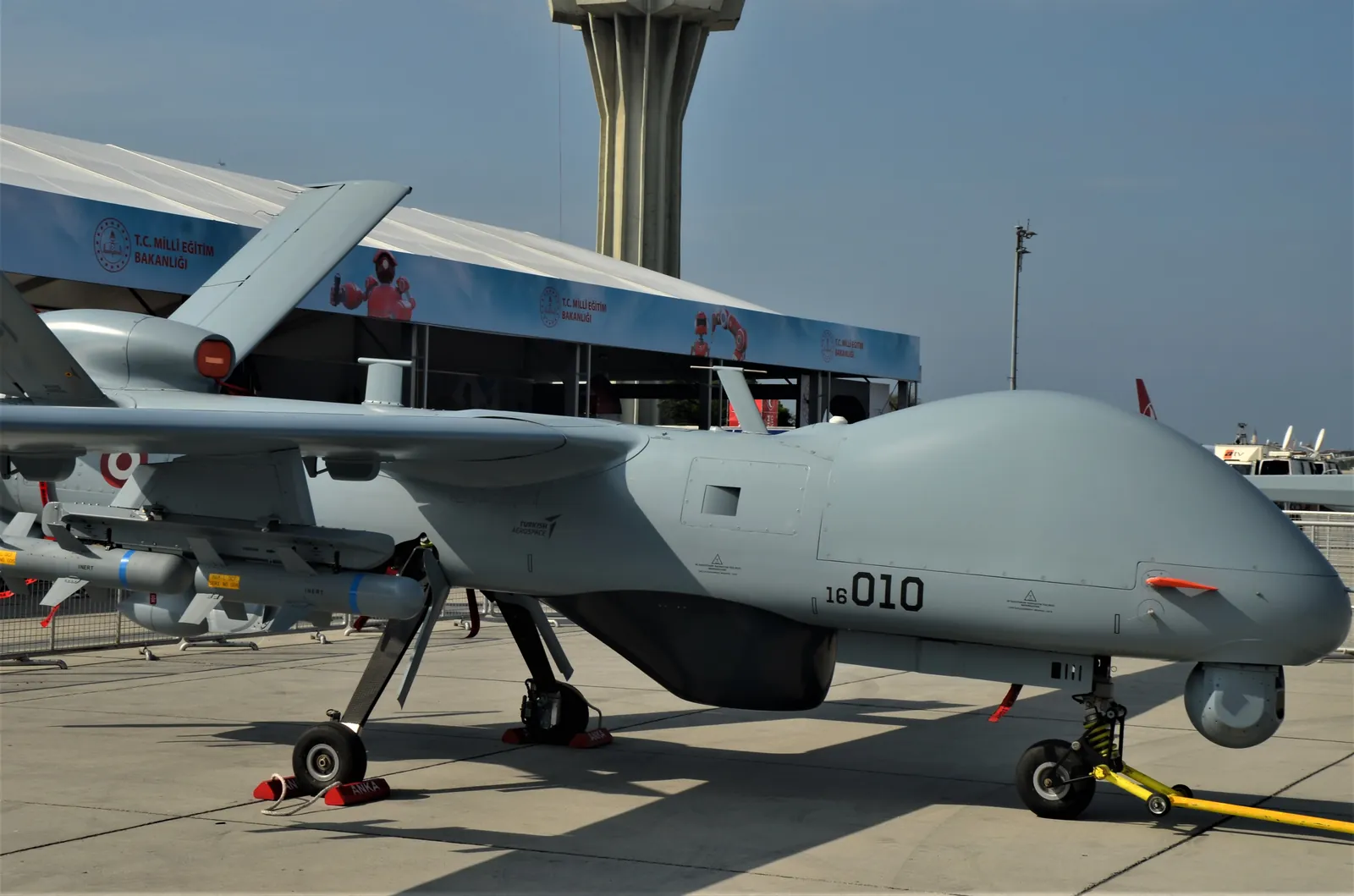
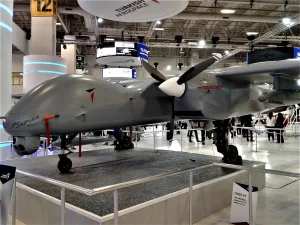
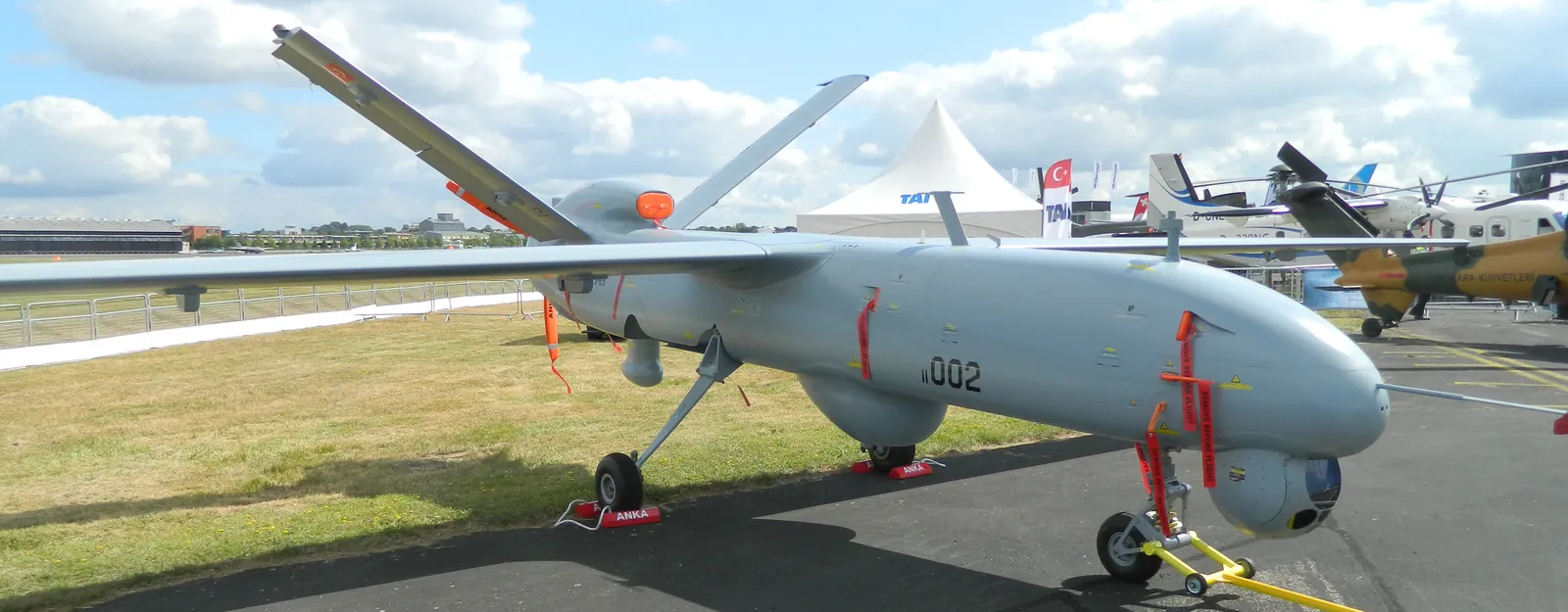
The ANKA-S has a wingspan of 17.5 m, a length of 8.6 m and a maximum take-off weight (MTOW) of 1,700 kg. According to current TUSAŞ data it carries a payload of 350+ kg, stays aloft for 30+ hours and reaches a maximum altitude of 30,000 ft. The single-engine, twin-tail, pusher-propeller UAV first flew as a prototype in 2010 and has a 250+ km line-of-sight data link.
| ANKA-S — Technical Fact Sheet | |
|---|---|
| Type | Medium-altitude long-endurance (MALE) unmanned aerial vehicle; twin-tail, pusher propeller, retractable landing gear |
| Manufacturer | Turkish Aerospace (TUSAŞ/TAI), Kahramankazan, Ankara |
| First flight | December 30, 2010 (prototype) |
| Engine | 1× TEI-PD170 heavy-fuel (diesel-type) engine, roughly 170 hp (130 kW) class; JP-8 compatible |
| Wingspan | 17.5 m (length 8.6 m, height 3.25 m) |
| MTOW and payload | MTOW 1,700 kg; payload 350+ kg (current TUSAŞ data) |
| Endurance and ceiling | 30+ hours; maximum altitude 30,000 ft (MSL); mission altitude 18,000-23,000 ft |
| Communications | Data link of 250+ km line of sight; SATCOM for beyond-line-of-sight control |
| Ground control station | NATO-compatible (STANAG 4586) station; automatic take-off and landing, redundant control, icing detection and protection |
ANKA dimensions and performance
According to the current TUSAŞ product sheet, the ANKA-S has a wingspan of 17.5 m, a fuselage length of 8.6 m and a height of 3.25 m. Its maximum take-off weight is 1,700 kg and it carries a payload of 350+ kg. Empty weight and fuel capacity have not been officially disclosed.
Propulsion comes from a single TEI-PD170 engine. The heavy-fuel unit, in the roughly 170 hp (130 kW) class, drives the rear pusher propeller and is compatible with JP-8 fuel; sources quote the output between 155 and 170 hp. Endurance is 30+ hours, the maximum altitude is 30,000 ft and the mission altitude is 18,000-23,000 ft. Open sources mention a maximum speed of about 217 km/h, but no official speed figure is given on this page. A range figure has not been officially disclosed either; beyond-line-of-sight operation relies on satellite communications.
Older datasheets list a 200 kg payload, 24 hours of endurance and a 200 km data link. The current datasheet values take priority, and differences between sources are mostly a matter of when the data was published.
Sensors, communications and mission systems
The ANKA’s mission capability depends on the payload fitted. Most avionics and payload subsystems are supplied by ASELSAN, while TUSAŞ is the prime contractor.
- EO/IR: electro-optical and infrared cameras for day and night observation and target tracking.
- SAR/GMTI radar: carried by the ANKA-B and ANKA-S for all-weather imaging and moving-target detection.
- SIGINT: a signals intelligence payload on the ANKA-I variant; details have not been disclosed.
- Data link: 250+ km line-of-sight range, with SATCOM beyond that.
- Ground control: a NATO-compatible STANAG 4586 station, automatic take-off and landing (DGPS/radar), redundant control, icing detection and protection.
The ANKA name covers several configurations. ANKA-A, ANKA-B, ANKA-S and ANKA-I belong to the same twin-tail, propeller-driven line, whereas ANKA-3 is a separate flying-wing jet platform that is treated as its own topic.
The table below sets the ANKA-S beside TUSAŞ’s own AKSUNGUR and Baykar’s Bayraktar TB2, a product of a different manufacturer, using verified facts only. Uncertain cells point to the relevant page or are marked as not disclosed.
Why do datasheet values differ?
Published ANKA figures vary by source and date. Older datasheets show a payload of 200 kg, endurance of 24 hours and a data link range of 200 km, while the current TUSAŞ product page gives 350+ kg, 30+ hours and 250+ km. The gap comes from the platform’s development over time and from different configurations (ANKA-A, ANKA-B, ANKA-S) being called by the same name.
Engine output is also quoted between 155 and 170 hp, which is why the text uses the roughly 170 hp (130 kW) class. The maximum speed rests on open sources, while empty weight, fuel capacity and range have not been officially disclosed. A value should be treated as firm only when official manufacturer data supports it; otherwise the period and source should be stated.
The boundary with ANKA-3 and AKSUNGUR
ANKA-3 is not an upgraded ANKA-S. It is a separate flying-wing, jet-powered, low-observable platform that first flew in December 2023, with a series delivery target of late 2026 to early 2027. The fact sheet values on this page do not apply to it.
AKSUNGUR is TUSAŞ’s twin-engine MALE platform, larger than the ANKA-S, and is covered as its own subject with its own figures. The Bayraktar TB2 belongs to a different manufacturer, Baykar; it is not a TUSAŞ product and is not compared figure by figure here.
This page separates official data from reported values. The fact sheet rests on the current TUSAŞ product sheet and open sources; older datasheets list lower figures, so values change with the datasheet version. Empty weight, fuel capacity, range and unit price are not officially disclosed. ANKA, ANKA-3 and AKSUNGUR are three different platforms, and the Bayraktar family is the product of another company.
Frequently Asked Questions
What is the wingspan of the ANKA?
The ANKA-S has a wingspan of 17.5 m according to current TUSAŞ data. Its fuselage length is given as 8.6 m and its height as 3.25 m. The platform has a twin-tail layout, a rear-mounted pusher propeller and retractable landing gear. Because different configurations share the ANKA name, older sources can show small differences, but 17.5 m is the value used for the ANKA-S fact sheet.
What is the maximum take-off weight (MTOW) of the ANKA?
The ANKA-S has a maximum take-off weight of 1,700 kg. This includes a payload capability of 350+ kg; older datasheets list 200 kg. Empty weight and fuel capacity have not been officially disclosed, so no estimated figures are given for these two values.
How long can the ANKA stay in the air?
According to current TUSAŞ data the ANKA-S can stay aloft for 30+ hours; older datasheet versions list 24 hours. The mission altitude is 18,000-23,000 ft and the maximum altitude is 30,000 ft (MSL). Actual mission time depends on payload and tasking, and no official operational range figure has been disclosed.
What engine does the ANKA use?
The ANKA is powered by a single TEI-PD170 heavy-fuel engine. This diesel-type unit is in the roughly 170 hp (130 kW) class and is compatible with JP-8 fuel; sources quote the output between 155 and 170 hp. TEI produces and integrates the engine, and TUSAŞ is the prime contractor for the platform.
What is the range of the ANKA?
No official range figure has been disclosed. The known value is a data link with a 250+ km line-of-sight range, listed as 200 km on older datasheets. Satellite communications (SATCOM) allow the aircraft to be controlled beyond line of sight, which extends operational reach past the data link limit.
How much payload can the ANKA carry?
According to current TUSAŞ data the payload is 350+ kg; older datasheets list 200 kg. Sensors include an EO/IR camera, SAR/GMTI radar on the ANKA-B and ANKA-S, and SIGINT on the ANKA-I variant. Most avionics and payload subsystems are supplied by ASELSAN.
What is the difference between ANKA and ANKA-S?
ANKA is the name of the family and covers the ANKA-A, ANKA-B, ANKA-S and ANKA-I. The ANKA-S is the series-production configuration, with a SATCOM antenna, an indigenous flight control computer and retractable landing gear. Deliveries began in early 2017. The values in the fact sheet are for the ANKA-S; ANKA-3 is a separate jet-powered platform.
Sources
- Turkish Aerospace (TUSAŞ/TAI) — official ANKA product page, tusas.com (dimension, weight, performance and variant data)
- Wikipedia — TAI Anka (development history, variants and datasheet comparison)
- Sanayi Gazetesi — ANKA programme reporting
- Anadolu Agency and Ensonhaber — ANKA delivery and contract reporting
- Haber7 — ANKA inventory and export reporting
- Open-source UAV inventory lists — values such as maximum speed and engine output, with source differences noted