




When and Why Was TUSAŞ Founded? History of Turkish Aerospace

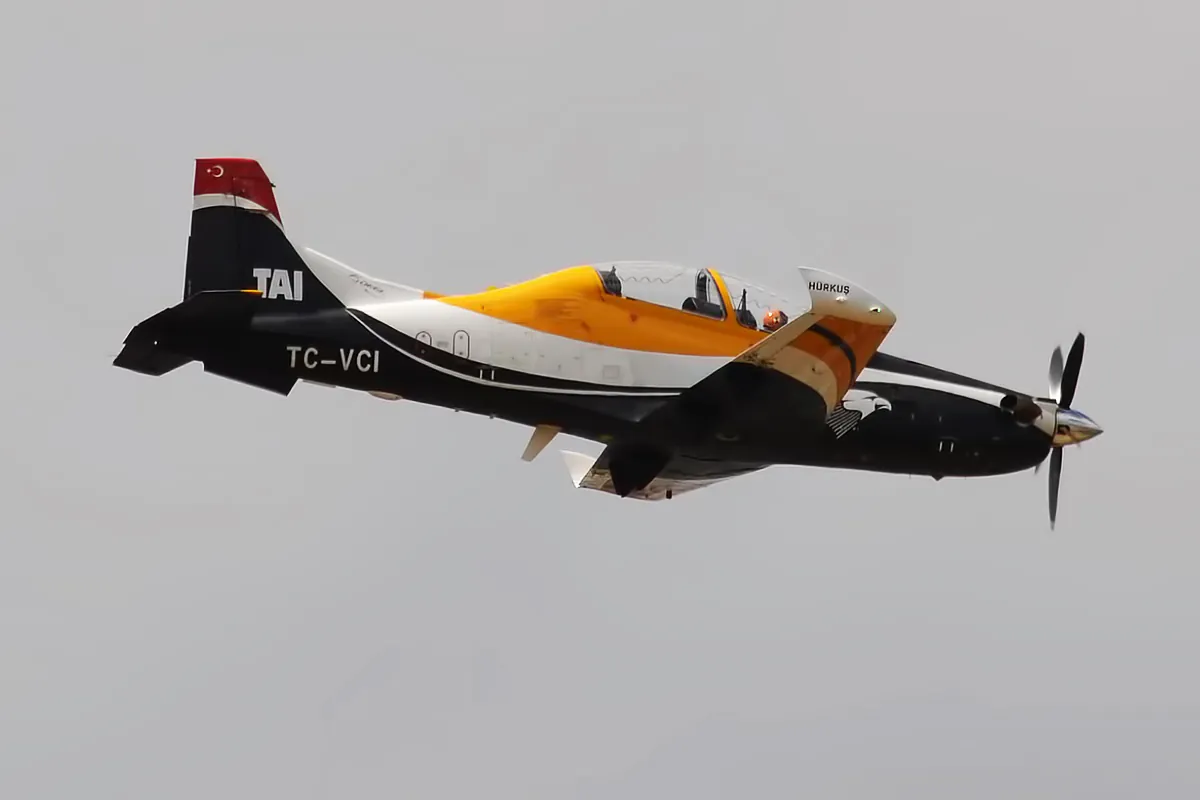
Turkish Aerospace Industries (TUSAŞ / TAI) was founded on 28 June 1973 to reduce Turkey’s dependence on imported aircraft and to build a domestic aviation manufacturing capability. In 1984, a Turkish–American joint venture called TAI was set up to co-produce F-16 fighters; in 2005 the two structures were merged under a single roof. From that base the company has developed a platform family reaching from HÜRKUŞ and ANKA to HÜRJET and the KAAN fighter.
| TUSAŞ Founding — At a Glance | |
|---|---|
| Founded | 28 June 1973 |
| Purpose | Reduce aviation import dependency; build indigenous production |
| Founding body | State initiative under the Ministry of Industry and Technology |
| TAI created | 1984 (Turkish–US joint venture for F-16 co-production, 25-year term) |
| Merger | 2005 — TAI and TUSAŞ unified |
| Headquarters | Kahramankazan, Ankara |
| Current name | Turkish Aerospace Industries Inc. (TUSAŞ / TAI) |
| Ownership | TSKGV 54.49% · SSB 45.45% · THK 0.06% — not publicly traded |
When Was TUSAŞ Founded?
TUSAŞ was founded on 28 June 1973. At a time when Turkey depended heavily on imports for aircraft and aviation products, the company was launched as a state initiative to give the country its own aviation industry. It was conceived not as a single production line but as the first step in a long-term localization effort.
Why Was TUSAŞ Founded?
The core rationale was to reduce Turkey’s dependence on foreign suppliers in both defence and civil aviation. The international tensions and arms embargoes of the 1970s showed that access to ready-made platforms could become hostage to political conditions. That reality strengthened the case for an industrial base capable of designing and producing aircraft and subsystems at home. The founding goals can be summarized as follows:
- Cutting import dependency: replacing imports of critical aviation products with domestic design and production.
- Technology transfer and know-how: bringing engineering, manufacturing and test knowledge into the country through co-production and licensed production.
- Building industrial infrastructure: creating lasting facilities and a skilled workforce for airframes, composites and assembly.
- Long-term originality: developing an engineering capability able to move from co-production to indigenous platform development over time.
TUSAŞ History: Key Milestones
The path from its founding to today can be summarized through the main milestones below. Prototype and first-flight dates are kept separate from series production, and unconfirmed figures follow official statements.
1973–1984: Founding and Infrastructure
The years between 1973 and 1984 were a period of establishment and infrastructure for TUSAŞ. The emphasis fell on building facilities, training qualified engineers and technicians, and preparing the industrial ground needed for aviation manufacturing. While designing an indigenous jet was set as a long-term goal, the priority of this first period was to create a durable manufacturing and engineering culture.
1984: TAI and F-16 Co-Production
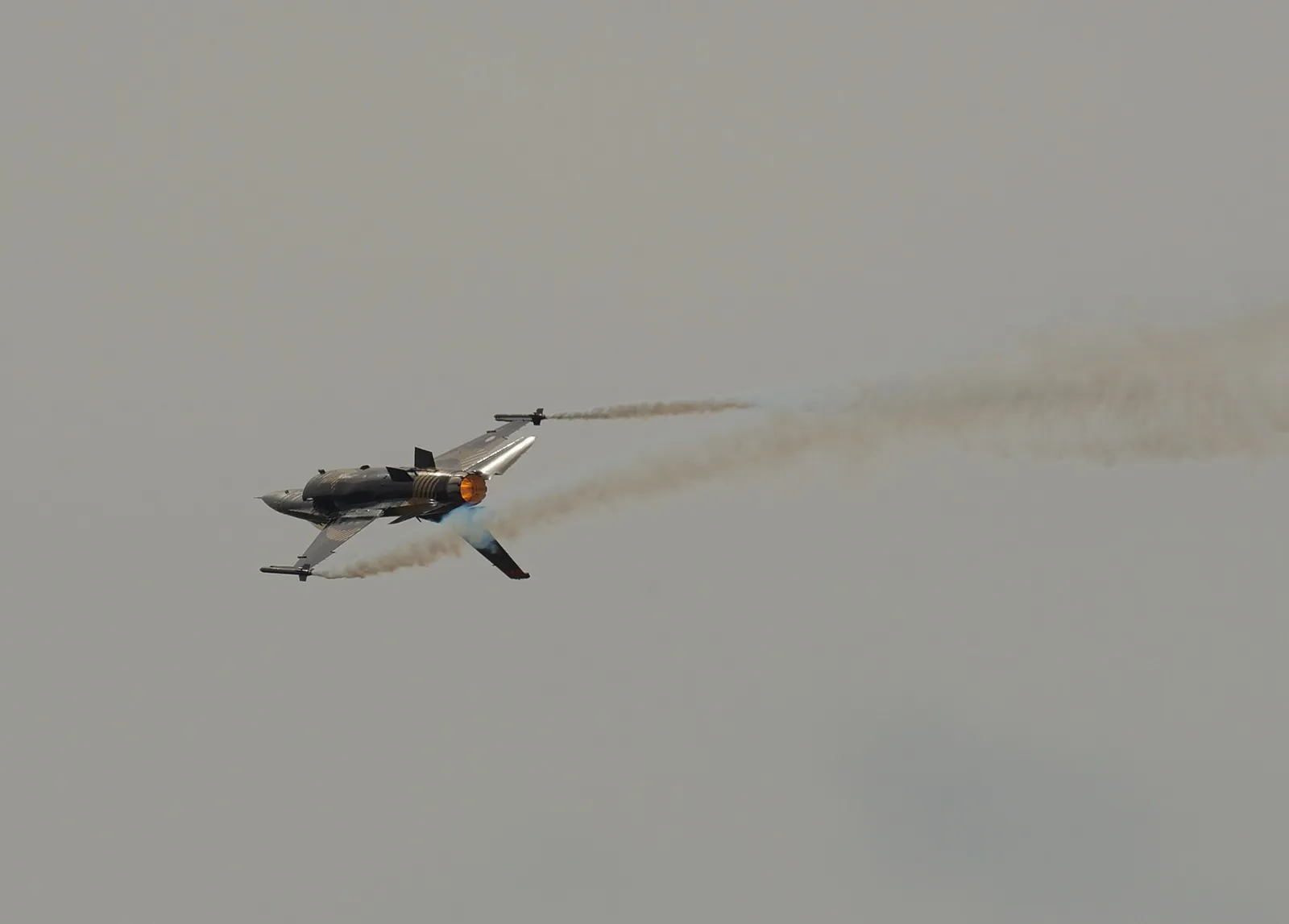
The second major threshold came in 1984. The Turkish Air Force’s decision to acquire F-16 Fighting Falcon fighters included producing a significant share of those aircraft in Turkey. For this purpose, TAI (Turkish Aerospace Industries) was created as a joint venture between Turkish and American partners, structured for a 25-year term. From 1987, F-16s were co-produced and assembled at the Ankara facilities. The program gave Turkey extensive technology and production experience in the airframe manufacturing, assembly and testing of a modern fighter — widely regarded as one of the cornerstones of today’s indigenous platform-development capability.
2005: The Merger of TAI and TUSAŞ
For years, aviation activities had been run through two separate entities (TUSAŞ and TAI). In 2005 these were merged under the name Turkish Aerospace Industries Inc. This both simplified the corporate structure and brought indigenous platform development, co-production and structural work packages together under a single prime contractor. The English name Turkish Aerospace Inc. (TAI) remains in use for international activities today.
2005 to Today: The Era of Indigenous Platforms
After 2005, TUSAŞ shifted from a co-production-heavy structure into a developer of indigenous platforms. The HÜRKUŞ turboprop trainer, the ANKA and AKSUNGUR unmanned aerial vehicles, and the T129 ATAK and T625 GÖKBEY helicopters were among the products of this era. With the first flights of the HÜRJET jet trainer and the KAAN fighter in 2023–2024, the company joined the limited group of organizations developing a fifth-generation fighter. TUSAŞ today ranks 47th on the Defense News Top 100 (2025) list with about $2.2 billion in defence revenue.
In this history, prototype and first-flight data are kept separate from series-production figures. The 1973 founding, 1984 TAI and 2005 merger are official data; platform first-flight years indicate the development phase and should not be confused with series delivery. Unconfirmed details are marked “not officially disclosed” and updated as verified.
Frequently Asked Questions
When was TUSAŞ founded?
TUSAŞ was founded on 28 June 1973. It was launched as a state initiative to reduce Turkey’s dependence on imported aircraft and to build an indigenous aircraft-production capability.
Why was TUSAŞ founded?
The main aim was to reduce import dependency in both defence and civil aviation. The embargoes and international tensions of the 1970s showed that access to ready-made platforms could be tied to political conditions, so an industrial base able to design and produce at home was prioritized.
When was TAI created and how is it related to TUSAŞ?
TAI was created in 1984 as a Turkish–US joint venture for F-16 co-production, on a 25-year term. In 2005 TAI and TUSAŞ were merged; today the two names refer to the same company, Turkish Aerospace Industries Inc.
Are TUSAŞ and TAI the same company?
Yes. TAI (Turkish Aerospace Inc.) is the company’s English name. The TAI founded in 1984 merged with TUSAŞ in 2005; both names now describe the same organization.
What were the first aircraft TUSAŞ produced?
After its founding, TUSAŞ took on the co-production and assembly of F-16s from 1987. Its first indigenous product, the HÜRKUŞ turboprop trainer, made its first flight in 2013.
Where has TUSAŞ been based since its founding?
TUSAŞ’s headquarters and main production campus are in the Kahramankazan (formerly Kazan) district of Ankara, where its aircraft, helicopter, UAV and satellite production, integration and test facilities are located.
Is TUSAŞ a state company?
TUSAŞ is a predominantly public joint-stock company and is not publicly traded. Its largest shareholder, with 54.49%, is the Turkish Armed Forces Foundation (TSKGV); 45.45% belongs to the Presidency of Defence Industries (SSB).
Sources
- Turkish Aerospace official website — tusas.com
- Turkish Aerospace corporate / history pages — tusas.com
- Presidency of Defence Industries (SSB) — ssb.gov.tr
- Defense News Top 100 (2025) — defence revenue ranking.
- Anadolu Agency / Daily Sabah / Hürriyet Daily News — Turkish Aerospace and Defense News coverage.
- Wikipedia — Turkish Aerospace Industries (for source discovery and history).