OMTAS Rivals Compared: Spike-MR and FGM-148 Javelin

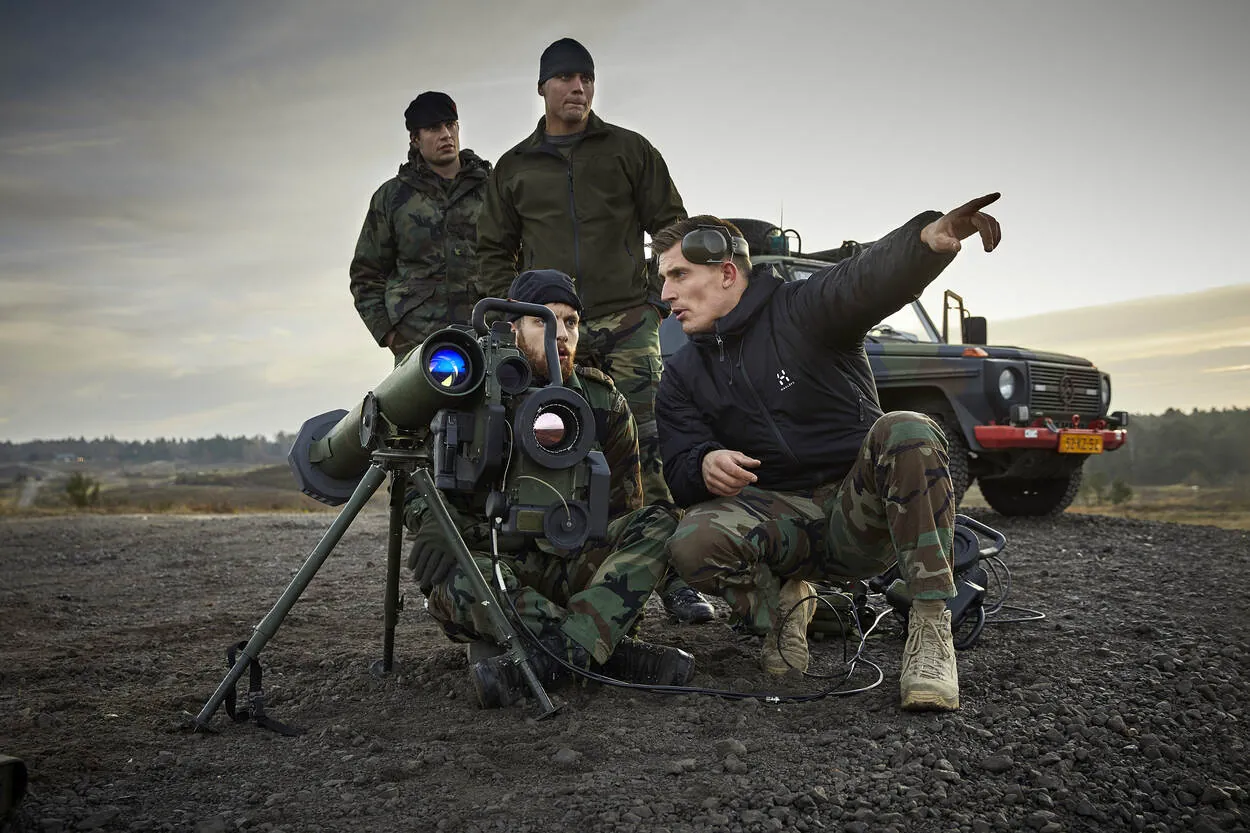
OMTAS is ROKETSAN’s medium-range anti-tank guided missile (ATGM) with a 0.2–4 km envelope and an imaging-infrared (IIR) seeker. On the global market its direct rivals are Israel’s Spike-MR and the American FGM-148 Javelin. All three are fire-and-forget, top-attack weapons; what sets OMTAS apart is a fire-and-update mode via an RF datalink.
| OMTAS — At a Glance | |
|---|---|
| System | OMTAS medium-range anti-tank guided missile |
| Manufacturer | ROKETSAN (IIR seeker: ASELSAN) |
| Range | 0.2–4 km |
| Weight | 35 kg (missile + launch tube) |
| Guidance | IIR fire-and-forget + fire-and-update via RF datalink |
| Warhead | Tandem HEAT / blast-fragmentation / thermobaric (selectable) |
| In service | 2017 — Turkish Armed Forces |
| Exports | Kosovo (reported in open sources) |
Which class does OMTAS compete in?
Anti-tank guided missiles fall into three broad range brackets: shoulder-fired short-range weapons (NLAW, KARAOK class), the medium-range 2–4 km bracket, and long-range systems of 8 km and beyond (UMTAS, Spike-ER class). OMTAS sits squarely in the middle bracket — the standard battalion- and company-level tank killer of modern infantry. Globally, that bracket has two entrenched incumbents: Rafael’s Spike-MR and the FGM-148 Javelin, built by the Raytheon–Lockheed Martin joint venture. Both are combat-proven and exported to dozens of countries; OMTAS, fielded by the Turkish Armed Forces in 2017, is the newest entrant.
The common denominator is the imaging-infrared seeker: the gunner locks the target, fires, and can immediately displace. The differences begin with what happens after launch.
Guidance philosophy: fire-and-forget vs fire-and-update
The Javelin is a pure fire-and-forget weapon — once the missile leaves the tube, the gunner has no further input. The Spike-MR version of Rafael’s family is likewise employed in fire-and-forget mode; post-launch guidance via fibre-optic link is reserved for the longer-ranged Spike-LR and above. OMTAS pairs its IIR seeker with an RF datalink: the operator can release the missile entirely, or retain control in flight — switching targets, refining the lock or aborting the engagement (fire-and-update). In environments with strict rules of engagement or a high risk of civilian presence, that last-second control matters.
- OMTAS: IIR + RF datalink; fire-and-forget and fire-and-update
- Spike-MR: IIR fire-and-forget (datalink on LR/ER family members)
- Javelin: IIR fire-and-forget
All three support the top-attack profile, diving onto the thin turret roof of a main battle tank; OMTAS and Javelin also retain a direct-attack mode for bunkers, buildings and light armour.
The table below compares the three systems on headline parameters drawn from open sources. Figures come from manufacturer statements and defence publications and can vary by variant and configuration.
Where OMTAS wins — and where it does not
The table deserves an honest reading. On weight, OMTAS is at a disadvantage: at 35 kg for missile and tube, it is not a shoulder-fired weapon like the ~22–26 kg Javelin and Spike-MR, and needs a tripod, vehicle mount or remote weapon station. On range, however, its 4 km ceiling exceeds Spike-MR’s ~2.5 km and matches from day one the figure Javelin reaches only with its newest blocks and the lightweight LWCLU sight. The selectable warhead options — tandem HEAT, blast-fragmentation, thermobaric — give OMTAS flexibility against non-tank targets that rivals cover only through separate variants.
The biggest structural advantage lies in procurement politics. Javelin sales require US Foreign Military Sales approval; Spike is subject to Israel’s export regime. OMTAS can be exported by Türkiye without either filter — the reported sale to Kosovo fits that pattern. Against this, the rivals hold the strongest card in marketing terms: combat records (Javelin most visibly in Ukraine) and a user network built over decades.
Platform integration and the cost dimension
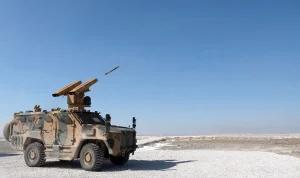
In this class, the carrier architecture matters almost as much as the missile. Beyond the tripod, OMTAS integrates onto ground vehicles and remote weapon stations (RCWS); configurations shown in Türkiye on 4×4 armoured vehicles and weapon stations make it an organic weapon of mechanised units rather than a purely dismounted one. The Spike family enjoys a comparable vehicle-integration ecosystem, while the Javelin has historically remained an infantry weapon first, with vehicle mounts arriving relatively recently.
On cost, none of the three manufacturers publishes official unit prices. Publicly reported procurement contracts indicate that a Javelin round (excluding the launch unit) sits in the six-figure dollar range. Given the pricing pattern of Turkish defence exports and a fully domestic supply chain, OMTAS is generally assessed as competitive on total cost of ownership — but since no unit price has been officially disclosed, this page quotes no firm figure. What often outweighs price is logistics: munition resupply, training simulators and life-cycle support delivered from a single country without political conditions is a decisive argument for users exposed to embargo risk.
L-OMTAS and where the class is heading
ROKETSAN has added a laser-guided sibling, L-OMTAS, stretching the reach to roughly 5.5 km, with serial production announced for 2026. Laser guidance offers a cheaper engagement option where the cost of an IIR seeker is unnecessary and a designator is available. The competition is moving too: the Javelin joint venture is fielding extended-range FGM-148F/G blocks and the lighter LWCLU command launch unit, while Rafael keeps refreshing the family with Spike LR2 and ER2. Expect the medium-range bracket to keep competing on three axes — more range, less weight, lower cost per shot.
This comparison is based on open sources. Range, weight and warhead figures are compiled from manufacturer statements and defence publications and may vary by variant and configuration. Some Spike-MR and Javelin parameters have not been fully disclosed officially, so approximate values are used. This page is a neutral technical comparison, not a promotion of any system.
Frequently Asked Questions
Which missiles are OMTAS’s direct rivals?
In the medium-range (2–4 km) anti-tank class, OMTAS competes globally with Rafael’s Spike-MR and the American FGM-148 Javelin. All three are IIR-guided, fire-and-forget, top-attack capable systems.
Does OMTAS outrange the Javelin?
OMTAS is rated at 0.2–4 km. The Javelin’s classic range is ~2.5 km, extended to roughly 4 km with newer missile blocks and the lightweight command launch unit (LWCLU). On paper the ceilings are similar — OMTAS has offered that figure since its first version.
Can OMTAS be shoulder-fired?
No. At 35 kg for missile and tube, OMTAS fires from a tripod, ground vehicle or remote weapon station. ROKETSAN’s shoulder-fired product is the separate KARAOK; among the three compared here, only the Javelin is man-portable in the shoulder-launch sense.
What does fire-and-update actually add?
OMTAS’s RF datalink lets the operator switch targets, refine the seeker lock or abort the shot while the missile is in flight. Pure fire-and-forget systems such as Javelin and Spike-MR allow no post-launch input — a meaningful difference in cluttered or civilian-risk environments.
What is L-OMTAS and when does it arrive?
L-OMTAS is the laser-guided variant of OMTAS, extending range to about 5.5 km. Serial production has been announced for 2026.
Has OMTAS been exported?
Open sources report an OMTAS sale to Kosovo; ROKETSAN does not publish a full customer list. Because Turkish exports do not depend on US or Israeli approval processes, OMTAS is considered competitive in markets where those filters are an obstacle.
Sources
- ROKETSAN official product page (OMTAS) — roketsan.com.tr
- Rafael Advanced Defense Systems — Spike family documentation — rafael.co.il
- Lockheed Martin / Javelin Joint Venture — FGM-148 programme pages — lockheedmartin.com
- Army Recognition and defence trade press — medium-range ATGM analyses and Kosovo export reporting